Archive for the ‘Ancient’ Category

Roman mass-market consumer goods found

Friday, December 5th, 2008

I read an excellent book a while back (mentioned in this entry) which looked at the fall of Rome from a consumer standpoint, as the “the loss of comfort” when the global Roman economy crumbled.

One of the goods he followed was mass-produced, low cost, high quality pottery. Pottery was a major consumer need for food storage, transportation, lighting, cooking, you name it. Roman production spread easily purchasable pottery from Britain to Africa to Asia, thereby extending consumer comforts far and wide across geographic distance and all social classes.

When the trade routes broke down and the Germanic tribes took over/destroyed production centers, high quality pottery basically disappears from the European archaeological record until the Renaissance. That’s such a major blow to quality of life it’s hard to conceive of today.

With that in mind, here’s a great example of the Roman consumer production machine, a pottery factory uncovered in Modena.

“We found a large ancient Roman dumping filled with pottery scraps. There were vases, bottles, bricks, but most of all, hundreds of oil lamps, each bearing their maker’s name,” Donato Labate, the archaeologist in charge of the dig, told Discovery News.

Firmalampen, or “factory lamps,” were one of the first mass-produced goods in Roman times and they carried brand names clearly stamped on their clay bottoms.

The ancient dumping in Modena contained lamps by the most famous brands of the time: Strobili, Communis, Phoetaspi, Eucarpi and Fortis.

All these manufacturers had their products sold on the markets of three continents. Fortis was the trendiest of all pottery brands and its products were used up to the end of the second century A.D.

Surprisingly familiar isn’t it? I could totally see Fortis brand lamps available at my local Home Depot. Now imagine losing something so basic for a thousand years.

Christie’s tries to sell stolen Nimrud earrings

Thursday, December 4th, 2008

Allegedly, at least. The former director of the Iraq Museum, Donny George, is absolutely convinced the 9,000 year old Neo-Assyrian gold earrings came from the excavation of Nimrud which he personally witnessed.

The treasures of Nimrud, considered one of the most spectacular finds of the 20th century and compared with the treasures of King Tut’s tomb, include eight pairs of seemingly identical earrings. Of the thousands of archaeological sites in Iraq, the ancient capital of the Assyrian Empire was one of the richest.

The highlight was the intricate gold jewelry, using techniques not seen again for thousands of years. [...]

After the fall of Baghdad in 2003 and the subsequent looting of the Iraq Museum, US investigators and Iraqi officials tracked down the treasures of Nimrud to a vault within a vault in the basement of Iraq’s burned and flooded central bank.

Christie’s claims in the catalogue that they are “similar” to a pair found at Nimrud, but that the previous owner acquired them in 1969, a convenient date indeed given that the UNESCO convention on illegal antiquities — the standard cutoff for questionably-sourced artifacts — was enacted in 1970.

Donny George knows of no “similar” finds outside of the Nimrud pieces. That’s what made them so special: the quality was astonishing and entirely unique.

As of yesterday, the earrings were still listed on Christie’s site. Iraqi officials have petitioned to halt the sale, but the auction is next week so they don’t have much time.

Edit: Looks the CSM story got results. Christie’s withdrew the lot this morning. :boogie:

Update: Artifacts stolen by US pilot returned to Egypt

Wednesday, December 3rd, 2008

Back in February, I posted this ugly story of cupidity and disrespect about a US pilot who stole ancient artifacts from the Ma’adi Museum when he was deployed to Egypt in 2002.

He was arrested in February for selling stolen goods, but not with the theft itself, so in the end he pled to possession and sale and got a measly 18 months probation.

Anyway, a fraction of the stolen antiquities were returned to Egypt in an offical ceremony in Manhattan today.

Officials said the items, including several small urns on display at the ceremony, came from the Ma’adi archaeological site outside Cairo and date to 3600 B.C. or earlier.

“When (the military officer) stole these items from Egypt, he robbed a nation of part of its history,” said Peter J. Smith, head of U.S. Immigration and Customs Enforcement’s New York office. “The repatriation of the Ma’adi artifacts reunites the people of Egypt with an important piece of their cultural heritage.”

Unfortunately, most of the approximately 370 artifacts stolen have yet to be recovered. The shady dealer only bought 80 of them and he scattered them to the four winds. The rest could be anywhere.

Edit: Here’s a fun fact from the Immigration and Customs Enforcement’s press release about the return (emphasis mine):

n 2003, the owner of Sands of Time Antiquities, then located in Atlanta, Sue McGovern, purchased approximately 100 Egyptian antiquities from Johnson, who said he had inherited the large collection from his grandfather who had worked in Egypt in the mining industry in the late 1920’s and early 1930’s. In fact, Johnson had used his diplomatic status to illegally ship the Ma’adi artifacts he had acquired in Egypt to the U.S., in violation of Egypt’s export laws, diplomatic protocol as outlined in the Vienna Convention, and U.S. law for smuggling the artifacts into the country.

On buying the collection, McGovern discovered inside some of the pieces, paper from a 1932 calendar with markings and numbers indicative of excavation notes (plot numbers, etc.).

In 2004, she sold some of the pieces to other antiquities dealers in New York, Holland and London, where an expert on the Ma’adi excavations recognized that the story behind their acquisition was false and notified the dealer.

So the dealer knew as soon as she got the goods that the backstory had to be bullshit, but she just kept right on trucking until she couldn’t deny it anymore.

5,500-year-old settlement found in Peru

Sunday, November 30th, 2008

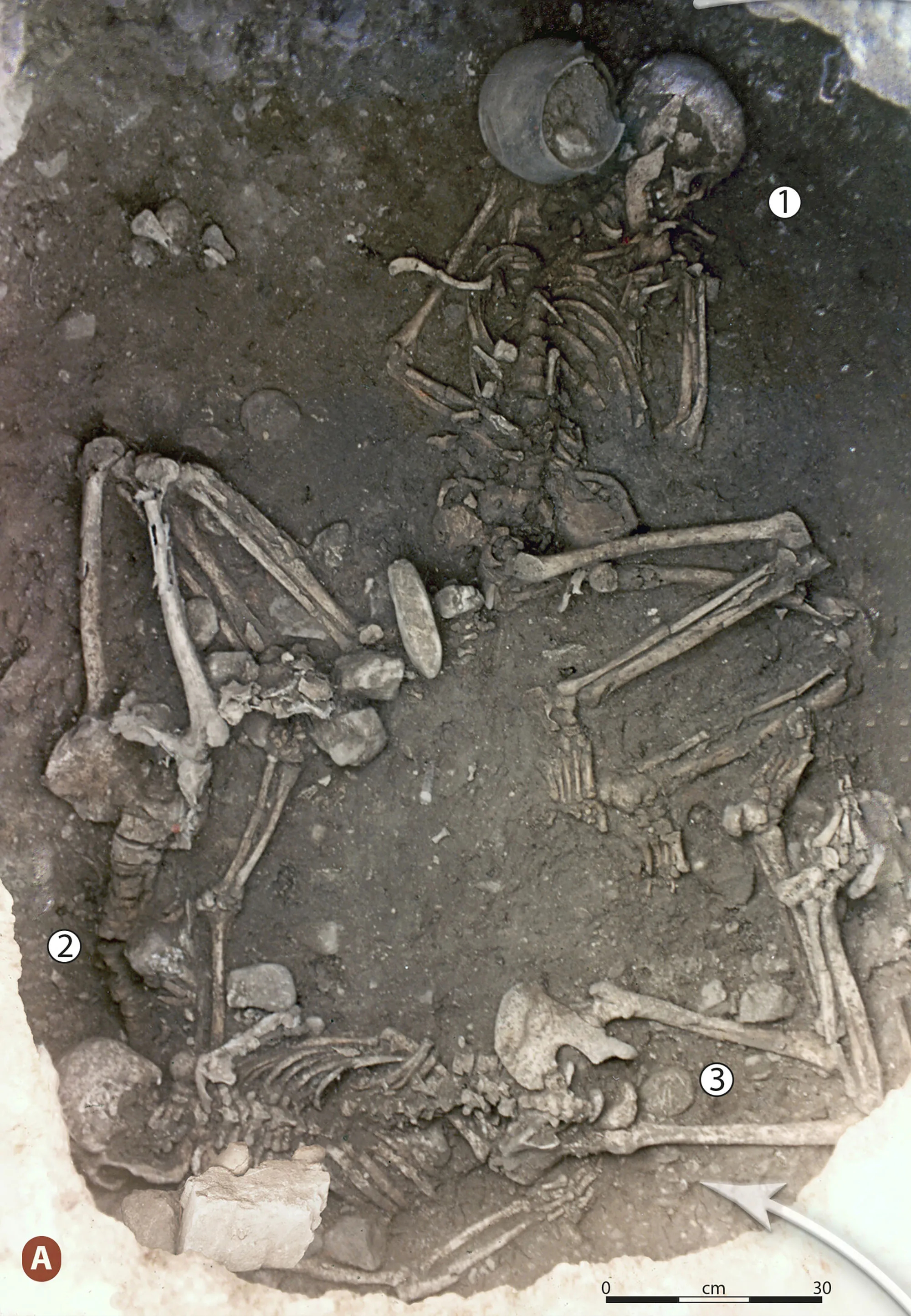
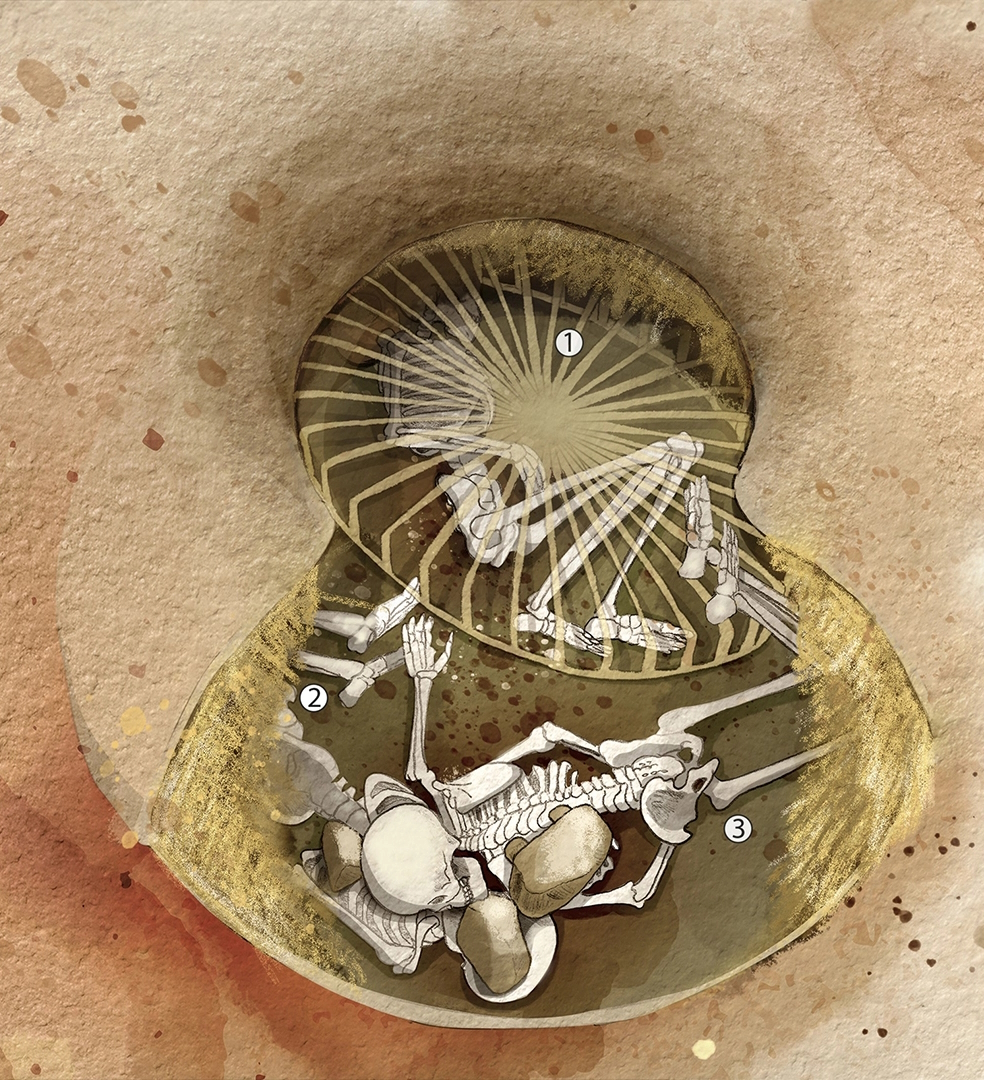
Archaeologists excavating near Nazca, Peru, have discovered a cluster of homes and graves that date back 5,500 years.

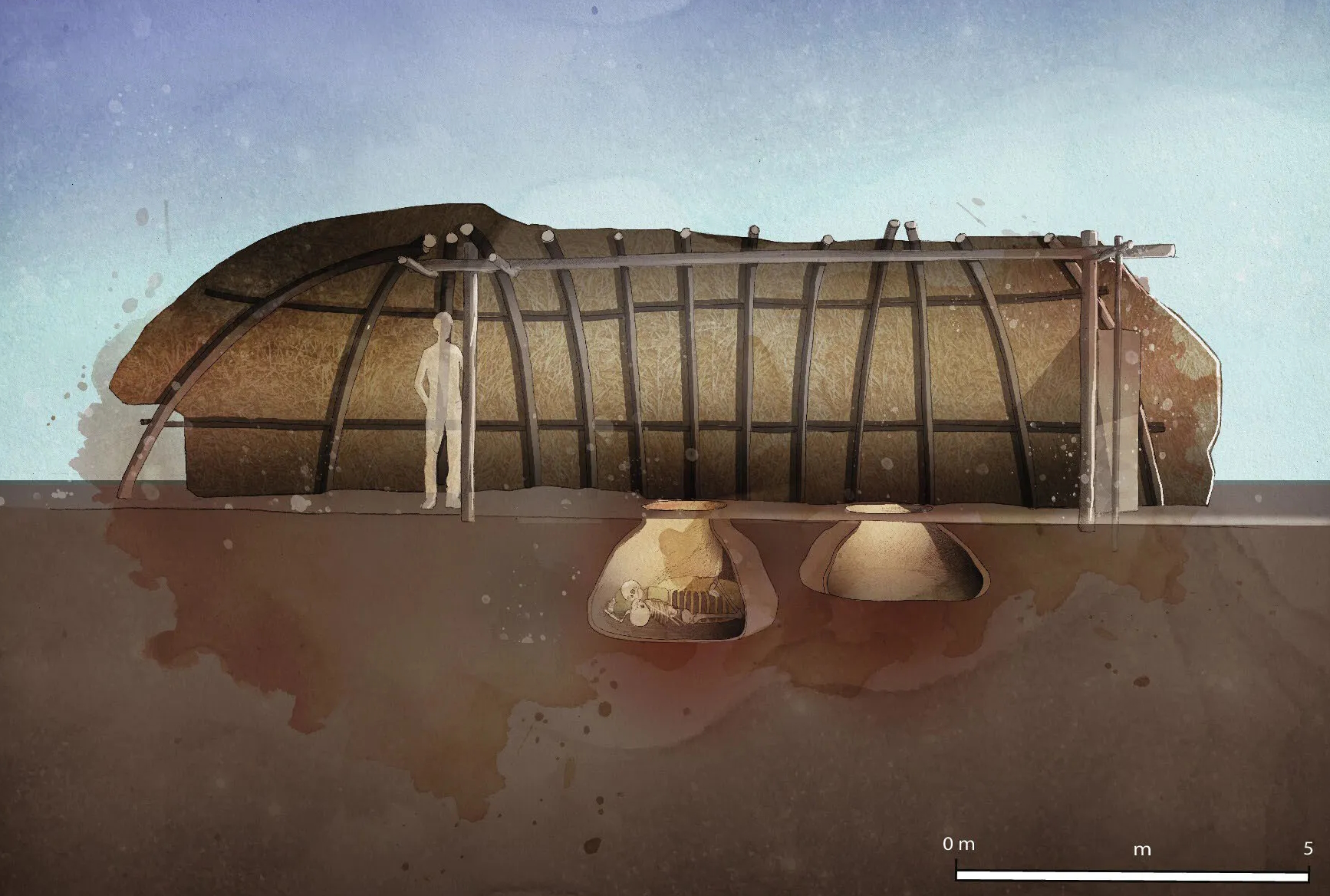
One of the project researchers said that the excavations made at the site since last October enabled the team to find the remains of eight small oval-shaped and circular homes made by digging deep pits in the ground.

Also found were up to 19 graves of children and adults interred individually inside the homes, which would seem to indicate that they were buried there after the homes were abandoned.

In some of the graves, archaeologists found carved bones and snail-shells, deer horns, necklaces and bracelets made from shells, but there was no concrete evidence of offerings to the dead or to dieties.

This is the first human remains found in Peru from the late archaic period. The circular plaza found last February dates to the same time, and it’s thought to be the oldest urban structure in the Americas.

There’s a large lacuna in Peruvian archaeology between prehistory and the 16th c. Inca civilization, so this find is a big step in filling in some of the blanks, as was the Wari mummy discovery earlier this year in Lima.

Still looking for pics, darnitall.

Ancient wooden boat found in Black Sea

Saturday, November 29th, 2008

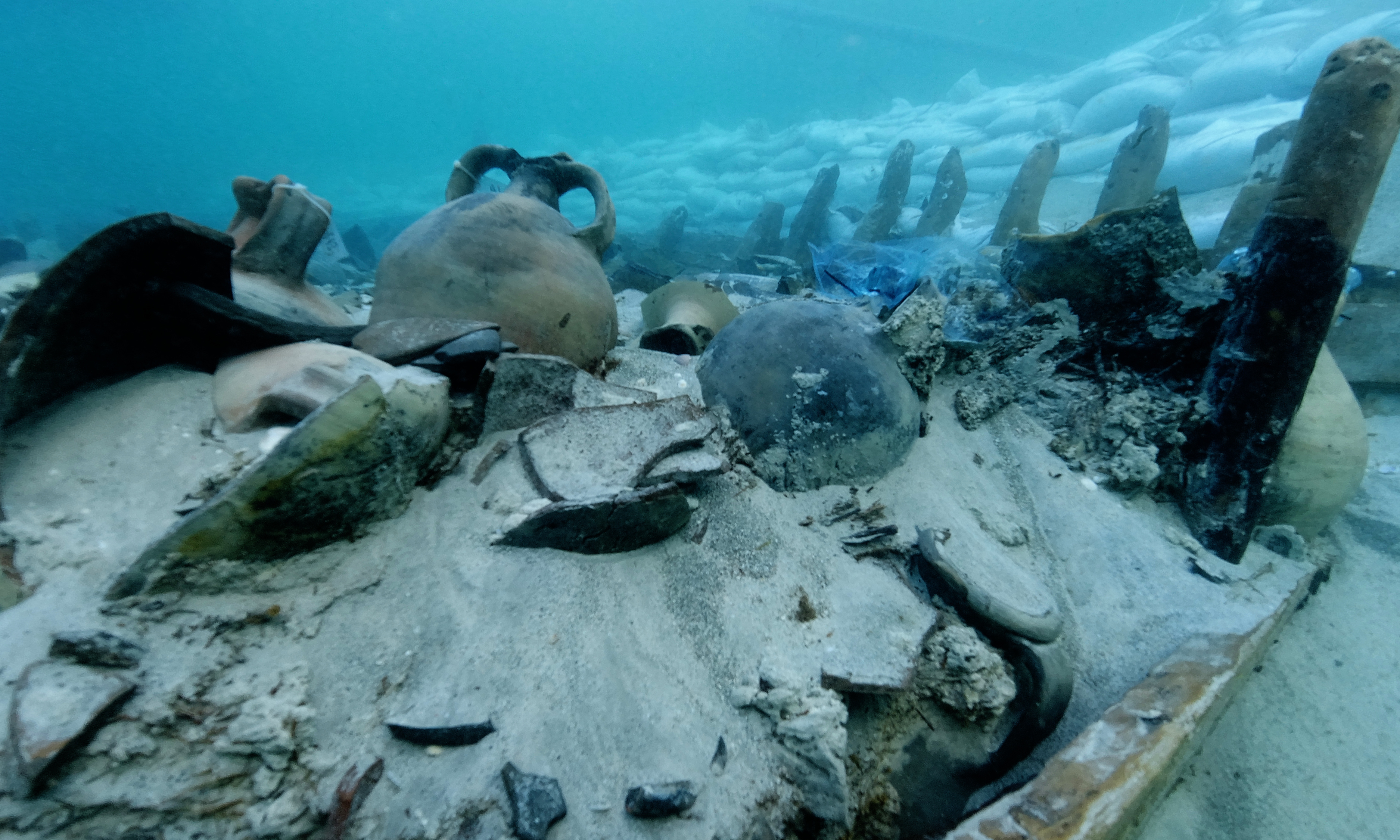
Fishermen trailing nets 15 miles off the Bulgarian coast of the Black Sea uncovered a wooden dugout canoe, most likely dating to prehistoric times.

“The dugout is 2.6 meters (8.5 feet) long and 70 centimeters (27.5 inches) wide, and it is made most probably of oak,” Nedkov told The Associated Press.

Bulgarian explorers have found four ancient vessels in remarkably good condition in the Black Sea, whose oxygen-depleted deep water preserves wrecks without the worm damage and deterioration that normally affects wooden vessels.

Finding a wooden ship older than 300 years is pretty much unheard of anywhere but in the Black Sea. This one looks neat, too. Oak ages handsomely even under water for thousands of years.

Slap a coat of poly on it and flip it upside down and you could sell it to Pier One as a coffee table.

Cleveland coughs up

Friday, November 28th, 2008

Following in the hallowed footsteps of institutional receivers of stolen goods like the Getty and the Metropolitan, the Cleveland Museum of Art is returning 14 antiques to Italy.

The Cleveland Museum of Art has agreed to hand over 13 ancient artifacts and an early Renaissance cross to Italy after long negotiations, the museum and Italian officials announced here on Wednesday. [...]

The processional cross, dating from around 1350, was not excavated but apparently was kept at a church near Siena, Italy, until the 1970s. The museum purchased it in 1977 from a German dealer, Cleveland officials said. [...]

For the most part the objects claimed from the Cleveland museum — including a fourth-century B.C. Apulian volute krater by the so-called Darius Painter and a ninth-to-sixth-century B.C. bronze of a warrior from Sardinia — were acquired in the 1970s and 1980s. Several were donations.

It’s the usual deal. In exchange for getting the stuff back, the Italians promise not to prosecute any of the employees who had a hand in buying the stolen objects and loan equivalent pieces to fill in the blanks on the gallery floor.

There are still a couple of artifacts under negotiation: a winged victory from a 1st c. chariot, and a bronze Apollo thought to have been made by Praxiteles purchased from a pair of ubershady dealers with a long track record of falsifying provenance and laundering looted antiquities for major dealers like Robert Hecht, currently on trial in Italy for conspiracy to traffic in illegal antiquities.

David Gill has a complete list of all the antiquities the Cleveland Museum of Art is returning to Italy.

Update: “Revolutionary” Basque find a fake

Wednesday, November 26th, 2008

Way back when the earth was new and I first began to blog, I wrote this entry about a “potentially revolutionary find” of 3rd c. Christian and Basque language inscriptions.

They would have been the earliest representation of Calvary and the earliest recorded instance of Euskera, the Basque language.

Well, not only are the inscriptions modern fakes, but they’re so fake it’s embarrassing.

Now experts who have studied the pieces in depth say the fakes, some of which used modern glue, should have rung warning bells immediately. References were found to non-existent gods, 19th-century names and even to the 17th-century philosopher Descartes.

Words in Euskara used impossible spellings. The hieroglyphs included references to Queen Nefertiti which would have been almost impossible to make prior to the 19th century.

The Calvary scene, meanwhile, included the inscription “RIP”. “It is a formula that can only be applied to people who are dead,” Almagro told El Correo newspaper. “To say that Jesus Christ is dead would be a heresy. I haven’t seen anything quite so funny in the whole history of Christianity.”

The forger either had fragments of third century pottery which he buried on site, or he had access to the lab where the fragments were examined and planted the forgeries there.

I feel sheepish as hell just for having relayed the story. I can’t imagine what the archaeologists on site were thinking. I mean, dig director Eliseo Gil called the find on a par with Pompeii and Rome itself.

Dude, srlsy. You have a degree. I mean, Decartes? :facepalm:

Lapis Niger uncovered by rain

Tuesday, November 25th, 2008

The Lapis Niger is a slab of black marble said to memorialize the spot where the co-founder and first king of Rome, Romulus, was torn to pieces by pissed off senators. (The alternate story is he was assumed whole body into heaven and deified as Quirinus, the spirit of the city itself, but Plutarch and Livy smelled a regicidal rat with that story.)

It was discovered in 1899 and covered with cement for its own protection in the 50s. Now that cement covering has been damaged by rain, so for the first time in 50 years, people will get a chance to see the Lapis Niger while archaeologists restore it.

A canopy would be erected over the exposed “murder site” - first discovered in 1899 - so that archeologists could work on it while visitors to the Forum watched.

Tourists don’t often get to see archaeologists at work in the city, so that’s a big thing.

For a rivetingly detailed description of the Lapis Niger site from 1906, see Lacus Curtius’ transcription of The Roman Forum by Christian Hülsen.

The awesome bit about all the different things ancient Romans thought the Lapis Niger commemorated is worth reading through the second paragraph at least.

Buddha relic found in mini pagoda

Monday, November 24th, 2008

Or so archaeologists in Nanjing think.

The four-storey pagoda, which is almost four feet high and one-and-a-half feet wide, is thought by archaeologists to be one of the 84,000 pagodas commissioned by Ashoka the Great in the second century BC to house the remains of the Buddha. [...]

The pagoda found in Nanjing is crafted from wood, gilded with silver and inlaid with gold, coloured glass and amber. It matches a description of another of Ashoka’s pagodas which used to be housed underneath the Changgan Buddhist temple in Nanjing.

A description of the contents of the pagoda was also found: a gold coffin bearing part of Buddha’s skull inside a silver box. Although scans have confirmed that there are two small metal boxes inside the pagoda, experts have not yet peered inside.

The pagoda was found in August on the site of a temple, encased in an iron box. They’ve removed the pagoda from the box and put it on display in the Nanjing Museum, but they haven’t opened the little metal boxes which are expected to contain the piece of Siddhartha Gautama’s skull.

It’s not like the many, many pieces of the “true cross” floating about out there. This is the only known pagoda to have contained remains of the Buddha’s skull, so there’s of excitement, and I would imagine, trepidation.

If there’s nothing in there, it’ll be a massive disappointment and blow to the huge potential pilgrim tourism. If they open it wrong and damage such a unique, religiously important relic, it would be a horrid black eye.

Another Bulgarian Chariot

Saturday, November 22nd, 2008

Bulgaria lands another excellently-preserved ancient chariot.

The latest find is an 1,800-year-old Thracian chariot uncovered in the village of Karanovo, south of Sofia.

The bronze-plated wooden chariot is decorated with scenes from Thracian mythology, including figures of a jumping panther and the carving of a mythological animal with the body of a panther and the tail of a dolphin, Ignatov said.

He said the chariot, with wheels measuring 1.2 meters (four feet) across, was found during excavations in a funerary mound that archaeologists believe was the grave of a wealthy Thracian aristocrat, as he was buried along with his belongings.

The team also unearthed well-preserved wooden and leather objects, some of which the archaeologists believe were horse harnesses. The remains of horses were uncovered nearby.

There are an estimated 10,000 Thracian tombs spread all over Bulgaria, but (surprise, surprise) looting has destroyed 90% of them. Until this August, the only chariots archaeologists found were in pieces because looters got to the site first.

Oh, and check this: Veselin Ignatov, the head of the Karanov dig, got a whopping $12,500 from the Bulgarian Culture Ministry for the entire excavation. :angry: