The power of Roman fashion at The Glyptotek

A new exhibition this fall at the Glyptotek museum in Copenhagen will examine the link between fashion, power and culture in ancient Rome. The Power of Fashion in the Roman Empire draws from the Glyptotek’s exceptional collection of antiquities combined with loans from other institutions, including pieces that have never been on loan before.

Based on the museum’s long-standing research on colour and ancient dress and fashion, the exhibition presents the latest findings on the clothing, perfumes, jewellery and hairstyles those in power used to signal their position in the social hierarchy.

Covering over 1,000 m2, The Power of Fashion in the Roman Empire is an exhibition that appeals to the senses. Custom-made scents, research-based colours, a scenography of textiles and audio narratives all contribute to an immersive experience and space for reflection on people’s obsession – then as now – with status, identity and appearance.
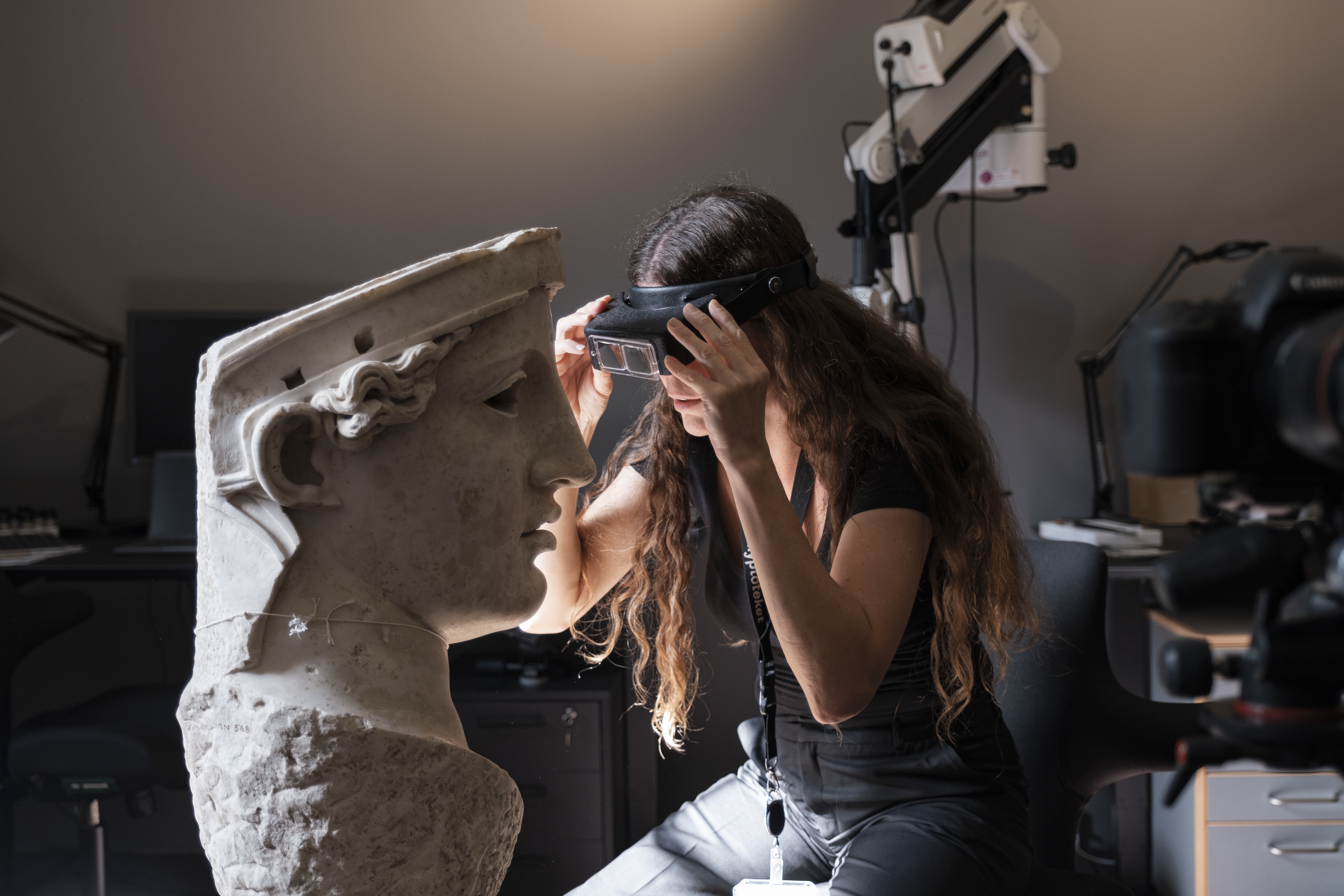
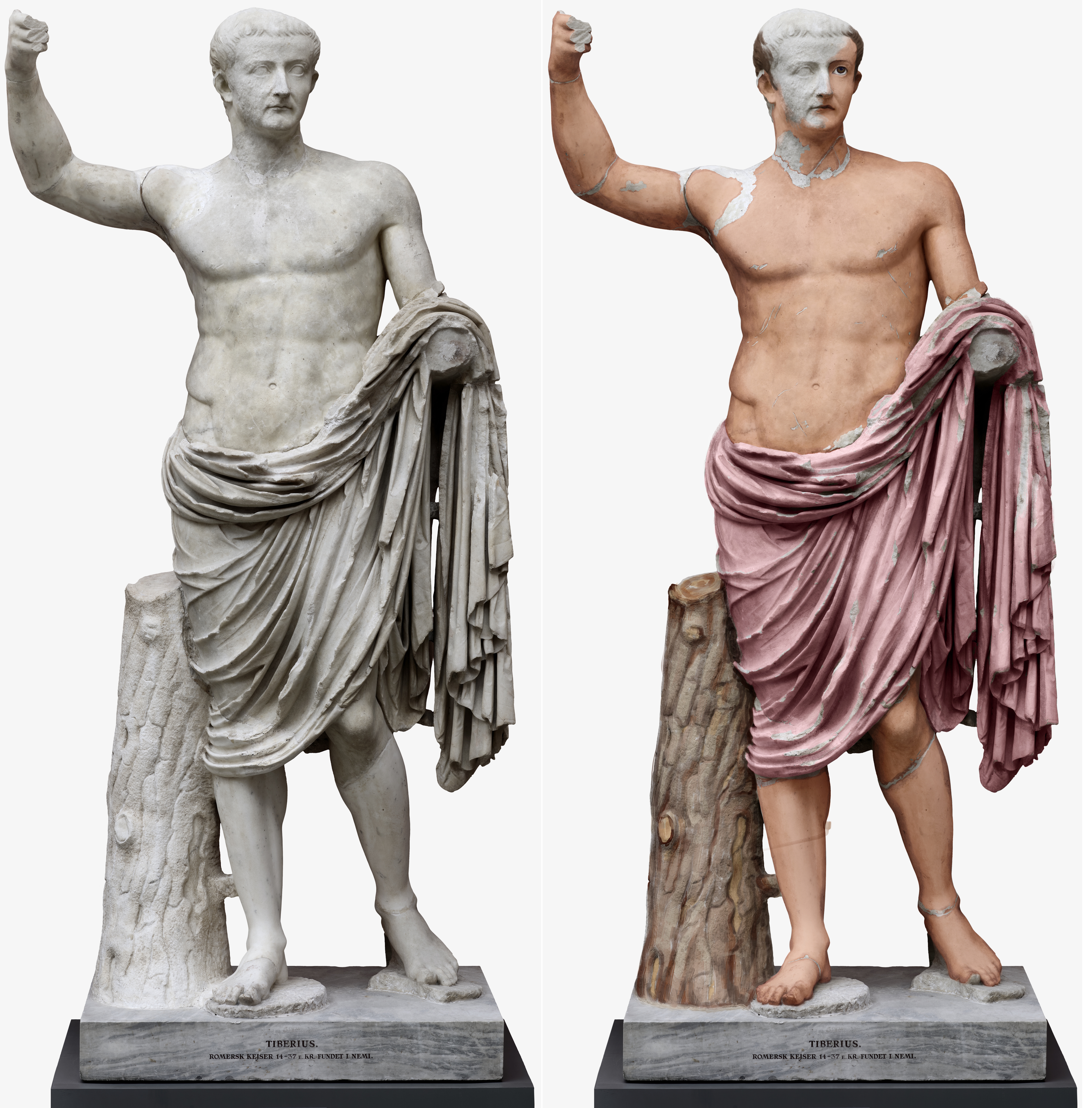
The Glyptotek has been breaking new ground in researching the clothing, colors, accessories and perfumes of ancient Rome, investigating sculptures for traces of original polychromy, allowing researchers to make links between how draping, garment styles and colors conveyed social position and power. For example, a portrait sculpture of the emperor Tiberius with his torso and legs bare, a garment draped around his waist and over his arm, was presenting him as a demi-god hero or deity, conveying even more strength than a military costume would have. Research into the garment’s original coloring discovered that it was pink, a color then associated with divinity and power.

The museum isn’t only relying on traces of color on sculptures, however. They have secured three exceedingly rare tunics from the British Museum that have never before left the confines of the museum. Another first-time loan is the leg of a monumental sculpture of Emperor Septimius Severus from the archaeological museum in Burdur, Turkey. The leg is wearing lionskin boots, symbol of regal power, and heroic attributes like Hercules wearing the skin of the Nemean Lion.

Perfumes get special attention, too, and just as with the colors, the scent palette in antiquity had very different meaning than it does today.

The Glyptotek has worked with the Danish skincare company Karmameju to create scents based on ancient perfume recipes. There are four scent stations providing insight into Roman perfumes and their relationship to gender roles and status. Men, for example, wore flower scents for special occasions, whereas women tended to use stronger, more pungent perfumes.

This landmark show will be the last major exhibition at the Glyptotek before it closes to embark on an ambitious restoration project to preserve its historic buildings while improving accessibility, repairing structural issues and damaged mosaic floors, and modernizing its technical systems of climate control and fire safety to ensure the optimal conservation conditions for its collection of classical sculpture, antiquities and 19th century French and Danish art. The Glyptotek of the Future project is funded in large part by a grant from the Carlsberg Foundation, a fitting callback to brewer and philanthropist Carl Jacobsen who founded the museum 130 years ago with the goal of making his private art and antiquities collection available to the public.

The restoration is scheduled to begin in 2028 and will take four to six years. More than 10,000 individual works from the museum’s collections will be removed and stored. The museum will be closed for part of that time, and the Glyptotek will be taking advantage of the downtime to exhibit some of its works elsewhere in Denmark and internationally. That will set them up nicely to get loans in exchange once the new facilities are up and running.

Bronze Age shaman identified as female gold worker

The Upton Lovell Shaman, a gold worker who was buried with rich furnishings 4,000 years ago, the period when Stonehenge was constructed, has been identified by DNA analysis as a woman, unpending two centuries of presumed sex. She was also a gold metal worker and a religious leader in her community.

The artefacts date to about 1,800BC, a time when the ability of metalworkers to transform lumps of rock into molten metal would have given them a special – possibly even spiritual – position in society. Such roles, many had assumed, would have been reserved for men, but this narrative has been turned on its head by the latest analysis.

“It completely tears up previous assumptions,” said David Dawson, director of the Wiltshire Museum, which holds the remains. “It’s a fantastic revelation of the position of women in society. We’re so used to the assumption of men do everything, men are the leaders, men are the metalworkers. Here we have smoking gun evidence of a female metalworker. And metalworking was the space science of its day.”

The grave was discovered in Upton Lovell, a village 10 miles away from Stonehenge, in 1801 and excavated by antiquarian William Cunnington. Underneath a barrow bowl 40 feet in diameter and less than two feet high, Cunnington unearthed an oval cist burial chamber with the remains of one individual lying supine, head placed pointing north, and a second individual seated in the same grave. (These remains are now lost.) Because the primary burials was laid to rest with a stone axe and 17 perforated bone points on the chest, Cunnington assumed it was a man with the secondary burial his female companion.

Neolithic flint axes from shaman grave. Photo courtesy Wiltshire Museum.He was dubbed the Upton Lovell Shaman because of the elaborate bone furnishings found in the grave — pierced animal bones decorating a ceremonial cloak, boar’s tusks adorning a pouch — suggest he performed a spiritual role. Other grave goods — a heavy dolemite stone battle axe, Neolithic flint axes already 1,000 years old at the time of the burial, smooth river stones, a battle axe broken in two — contributed to the presupposition that this was a man’s grave.

The grave goods of the Upton Lovell Shaman burial went on display at the Wiltshire Museum in Devizes. In 2000, the barrow was re-excavated with modern archaeological methods and technologies. The human remains were recovered and for the first time, traces of gold were discovered on one of the stones. In 2022, the objects in the burial were re-examined by researchers from the University of Leicester.

This new research has identified a further four stone objects with gold on their surfaces and characteristic wear traces, linking a wider suite of items from the burial to the goldworking process. It also demonstrates that these gold traces are ancient. The team suggests the tools were used to make multi-material objects where a core object was crafted in a material like jet, shale, amber, wood or copper and decorated with a thin layer of gold sheet.

Researchers also found traces of ochre on the surface of the Neolithic flint axes, which in addition to being a widespread dye and paint pigment, was also a fine powder used to polish metal. Traces of ochre were also found in four cups made from fossil sponges, as were adhesives so they were used as working containers, perhaps in metal polishing or as part of a tattooing set along with an a bronze awl found in the tomb. There were also touchstones, smooth, dark river stones that gold workers used to determine the quality of the precious metal just by wiping a tiny sample of it against them and assaying its purity by the color.

The Upton Lovell Shaman was DNA tested as part of a We Go Way Back, a new exhibition that opened last month at the Francis Crick Institute dedicated to what new ancient DNA research has revealed to us about our ancient and prehistoric ancestors.

Analysis of DNA extracted from the skeleton’s skull, tooth and toe bone revealed that they had XX sex chromosomes, typical in those who present as female. Analysis of the bones showed that she was probably over 45 years old when she died and had arthritis in her right wrist, consistent with lifelong use of metal working tools.

One large stone battle axe broken in two pieces was found in her grave. Heavy wear and tear on the two pieces indicate they were used as hammerstones. These are the tools she wielded to create thin sheets of gold, that ultimately gave her arthritis.

Lisa Brown, Curator of the Wiltshire Museum, said This groundbreaking research, using cutting edge techniques, shows the importance of making museum collections available for scientific analysis. We now have a whole new understanding of this burial, rewriting their story, breaking stereotypes, and putting women front and centre in our understanding of early Bronze Age society.

11,000-year-old sculpture of man riding a leopard found in Turkey

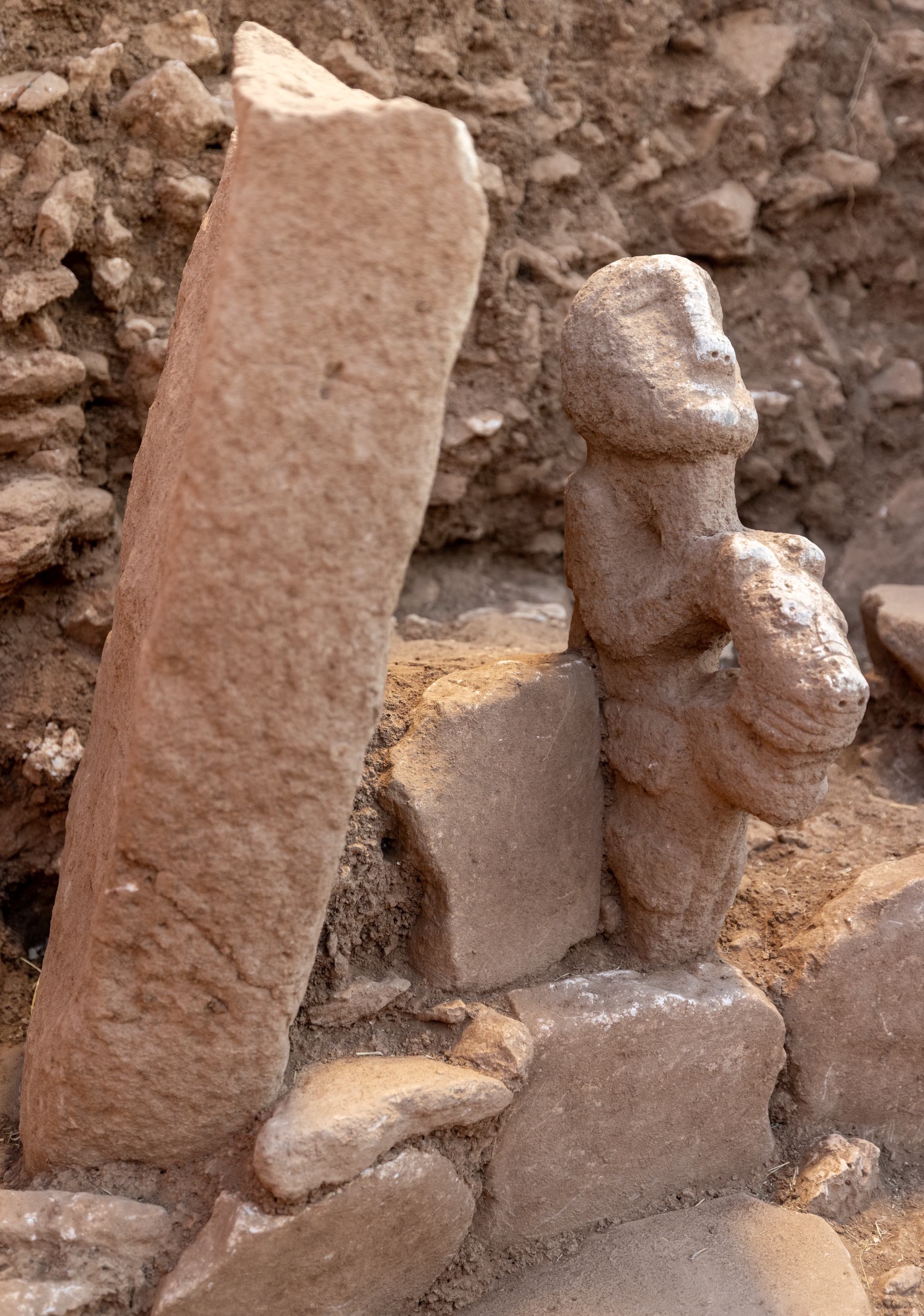
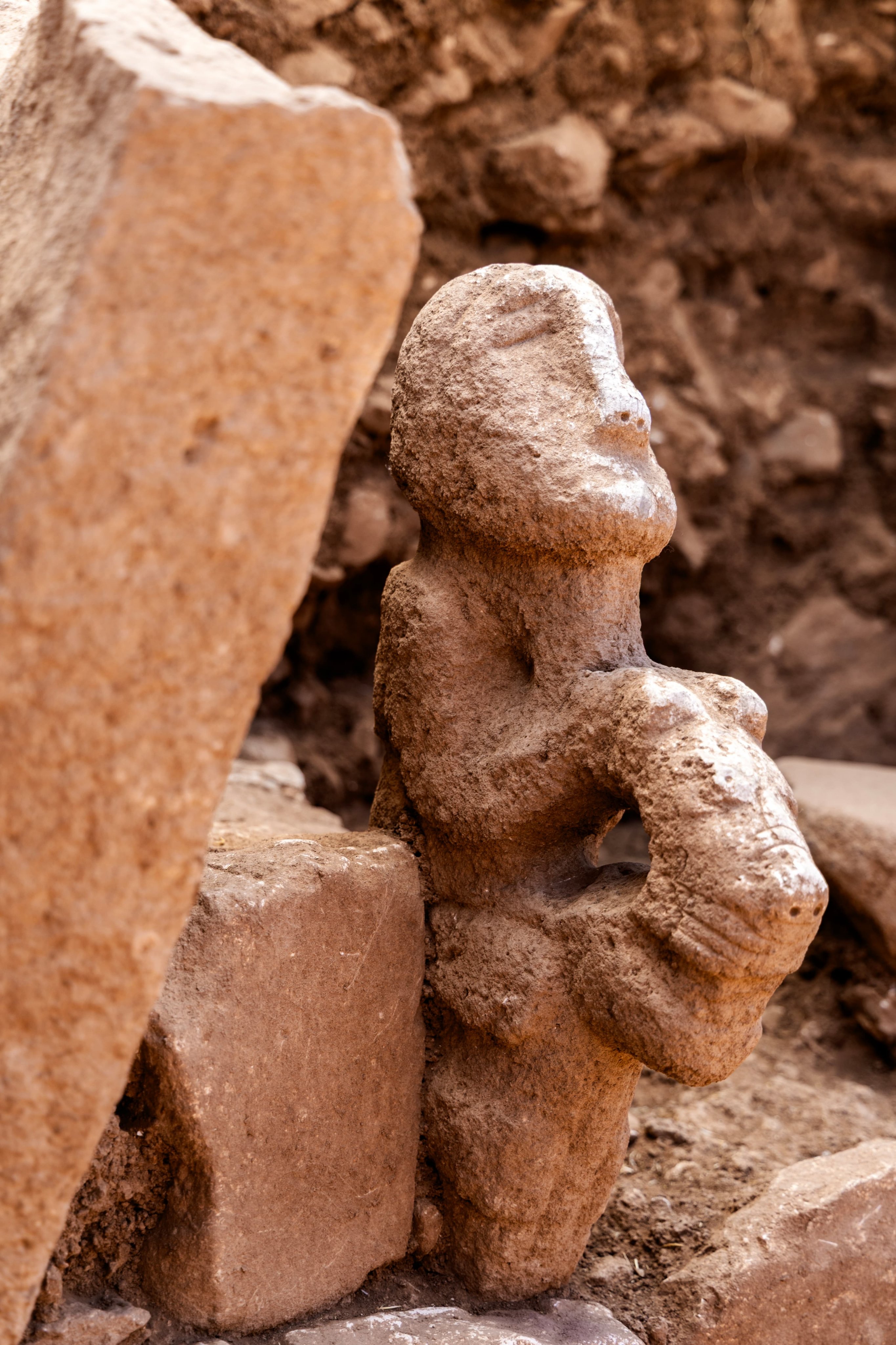
A unique statue depicting a human sitting on the back of a leopard has been unearthed from the Neolithic site of Karahan Tepe near Şanlıurfa, southern Turkey. The figure is 70 cm (27.6 inches) high and was discovered in what archaeologists believe was its original location: on a stone platform along the wall of a circular structure about 10 feet in diameter paved with flat stones.

Karahan Tepe is approximately 30 miles east of Göbekli Tepe, the Pre-Pottery Neolithic monumental complex. The two sites both share structures in common, characteristic T-shaped pillars, more than 250 of which have been found at Karahan Tepe, and similar animal iconography representations that suggest they were related. Karahan Tepe has its own distinctive features, however, especially in the preponderance of rock-cut spaces and human figures carved in three dimensions.

Since systematic excavations began in 2019, a number of anthropomorphic and zoomorphic figural sculptures have been found at Karahan Tepe, often in unusual combinations. Several examples of a human carrying a leopard on his back. The leopards in these sculptures are not slung on the man’s back as if he had killed them in the hunt or tamed them enough to carry them, but rather are depicted snarling, with teeth bared, very much alive and very much unfriendly.

The newly announced sculpture appears to reverse that visual formula. Instead of the human carrying the leopard, the human is seated on the animal. Whether that reversal conveyed a different narrative, status or symbolic relationship cannot yet be determined, but the composition gives archaeologists another piece of evidence for examining how Karahantepe’s inhabitants imagined the boundary between humans and powerful wild animals.

Leopards feature prominently in the iconography of Karahan Tepe, both in combination with humans and on their own. Leopard heads and figurines have been unearthed, as have leopards incised on the megalithic standing stones of the site. Less than 12 miles away from Karahan Tepe, a high relief of a man gripping his phallus flanked by two roaring/biting leopards carved into the stone is the earliest narrative scene ever discovered.

The location of the sculpture on the platform against the wall suggests it was meant to be visible and accessible, although there’s no evidence yet to indicate whether the the man-on-leopard was located there from the beginning or moved there when the space was deliberately closed.

Norfolk Bronze Age axe hoard includes rare button

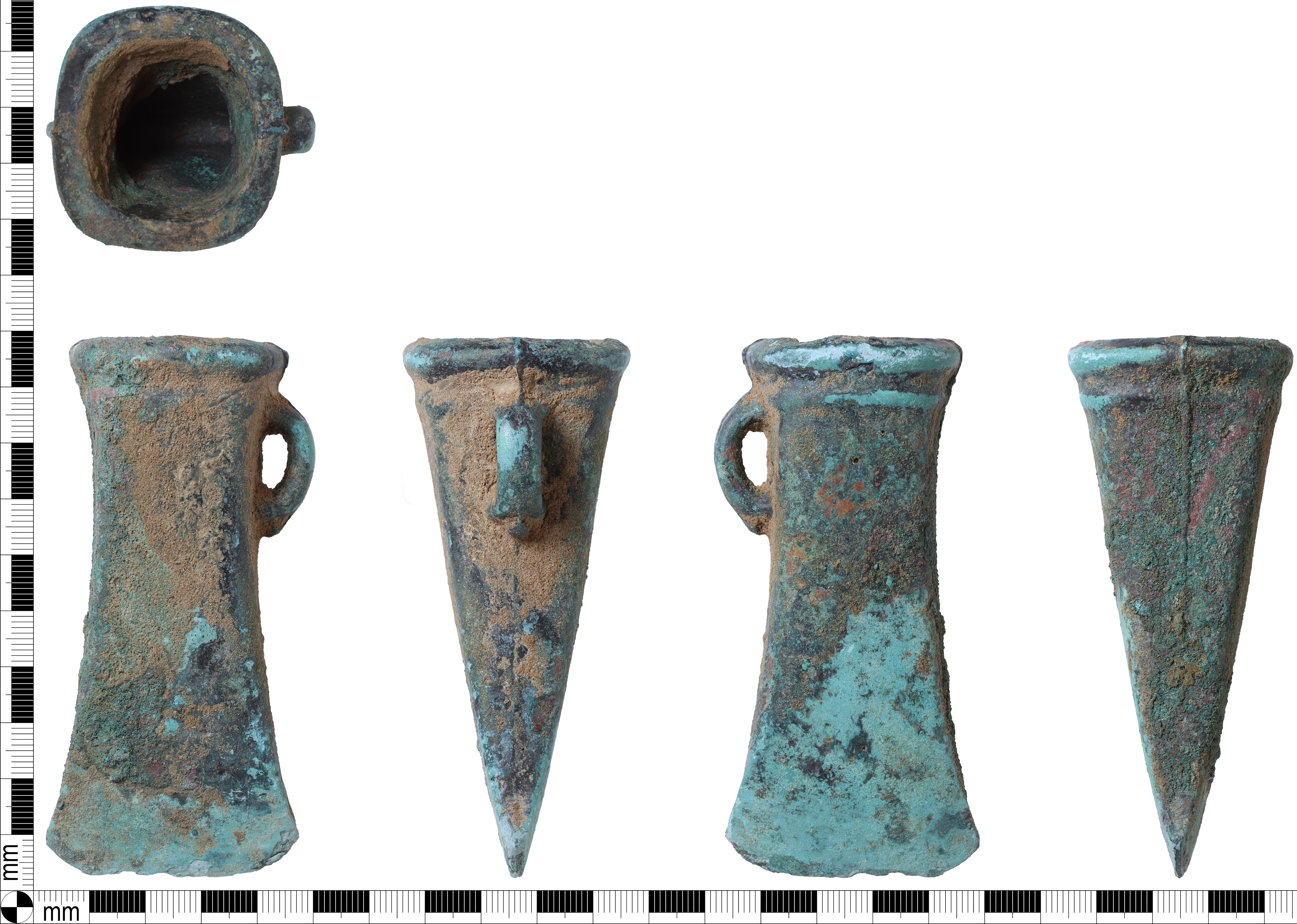
A small Bronze Age axe hoard with a rare button has been discovered near Barton Turf in Norfolk. It is one of only 19 Bronze Age buttons ever reported to the Portable Antiquities Scheme in Britain, and only the third found in Norfolk.

The hoard was discovered by metal detectorists in two stages. One socketed axe was found in March 2021. The second socketed axe and the button were found in 2023. The objects date to between 1000 B.C. and 700 B.C.

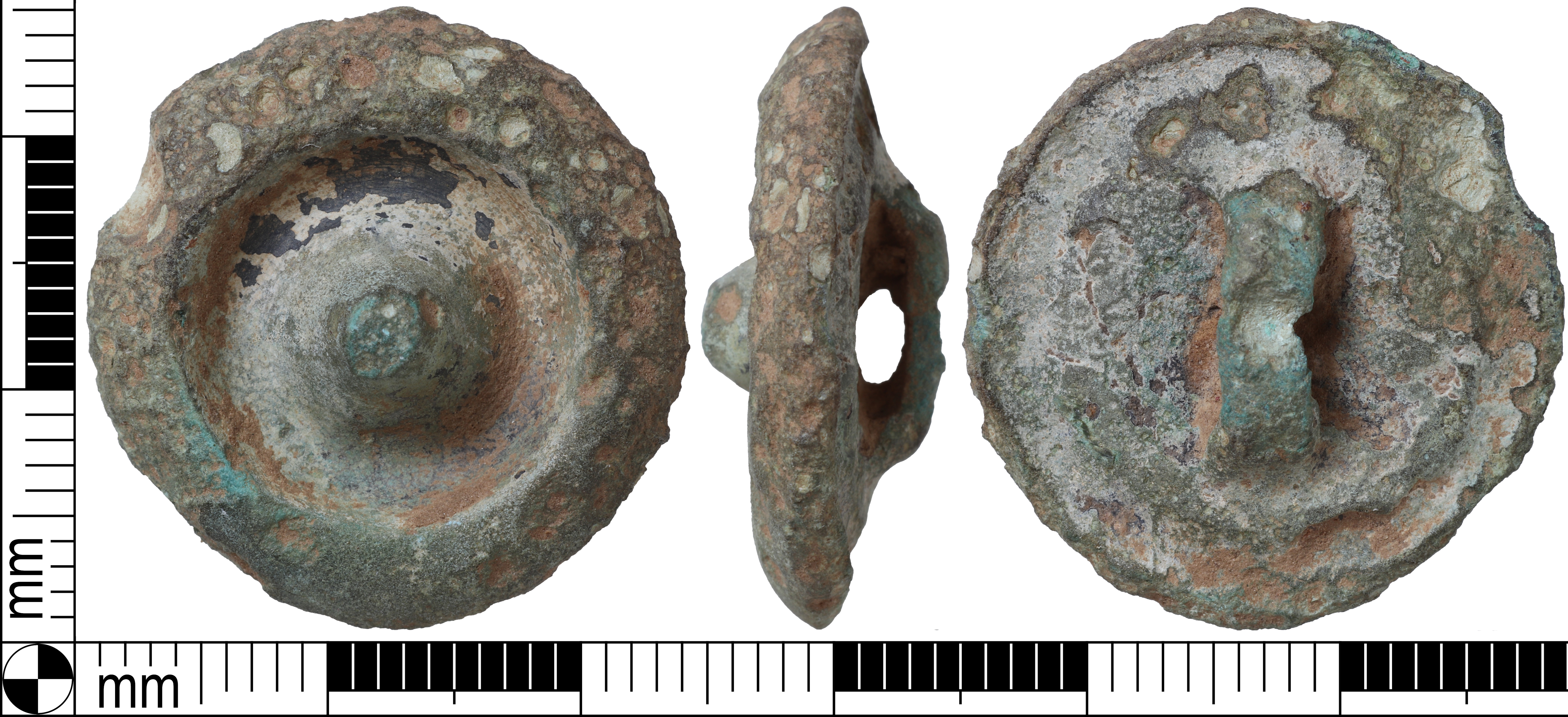
The button is circular with a central boss set in a deep concave circle that rises to a thick outer rim. The boss is conical and originally came to a tip, but that is now gone, probably from corrosion rather than breakage. This is the only of the 19 recorded Bronze Age buttons to have a central conical boss. While the known buttons are all different, they generally follow this design of a central boss surrounded by concentric rings or mouldings. On the back of the button a short rectangular loop from which it was attached.

Archaeologists are not certain how (or if) they were worn in Bronze Age Britain. There’s no explanatory context in a hoard and while a couple of comparable buttons have been found in graves in northwestern Europe, it was not clear if they were fasteners or even mounted to garments as opposed to, say, a horse harness.

According to Oxfordshire’s finds liaison officer and Bronze Age small finds specialist Dr Ed Caswell:

“This type of button is only found in the late Bronze Age, and to find it with axe heads, when they are all perfectly usable, does suggest it was intentionally deposited in the ground.”

Experts are still debating whether people did that to recycle the objects for use later, or because there was some sort of ritual behind it.

“The exciting thing is when we see it, we call it a button, but in UK context we have never found it showing how it was attached,” Caswell added. “It does give us a hint about how people want to decorate themselves, but buttons do seem to go out of fashion from the Iron Age onwards (from about 750BC), replaced by brooches.”

Earliest dragon and phoenix combination found in northern China

The earliest known clearly identifiable figures of the dragon and phoenix combination in northern China have been discovered in a tomb at the Zhaizita Stone City site in Ordos City, Inner Mongolia. It dates to around 2300 B.C., the middle-to-late Longshan Culture period.

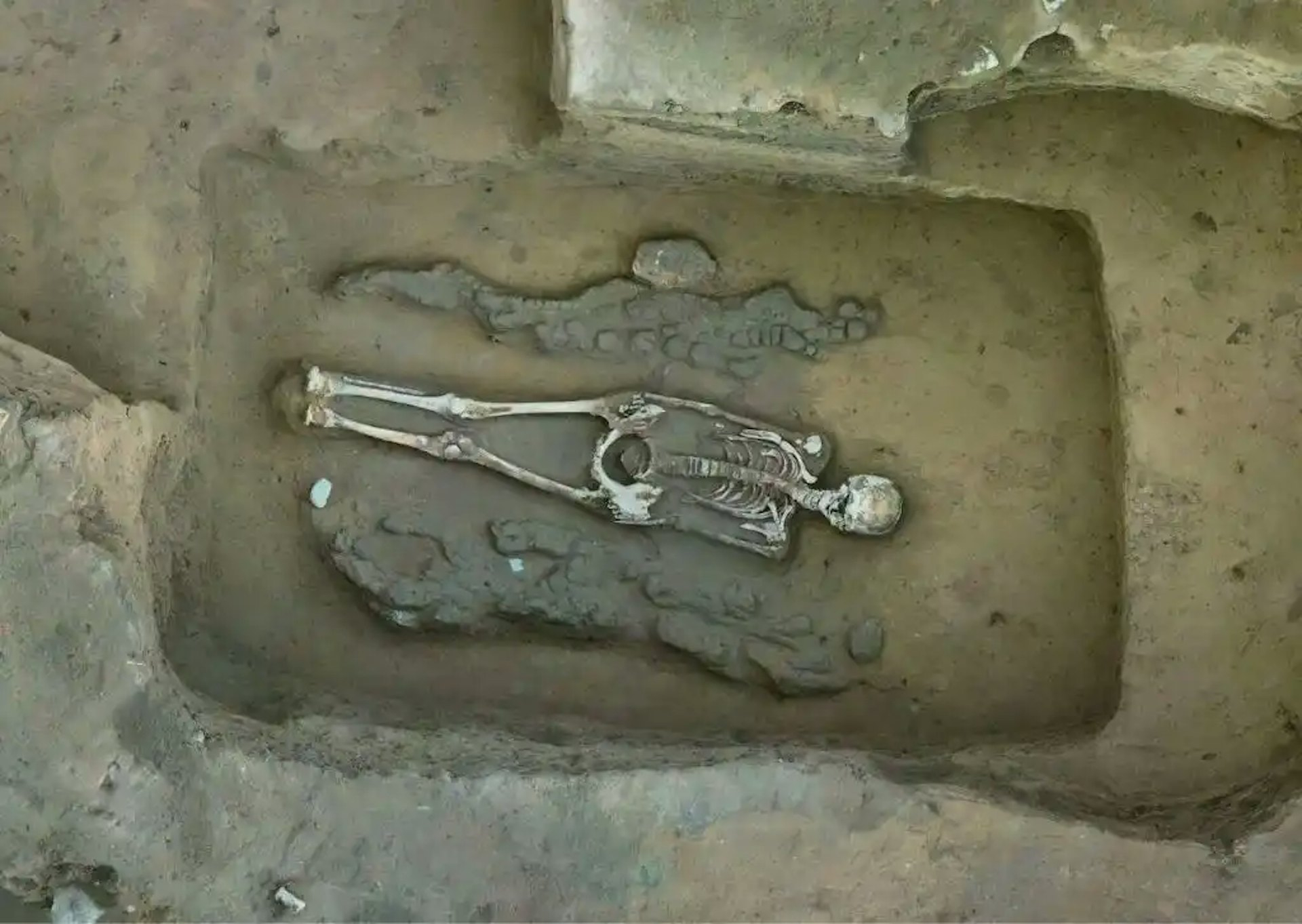
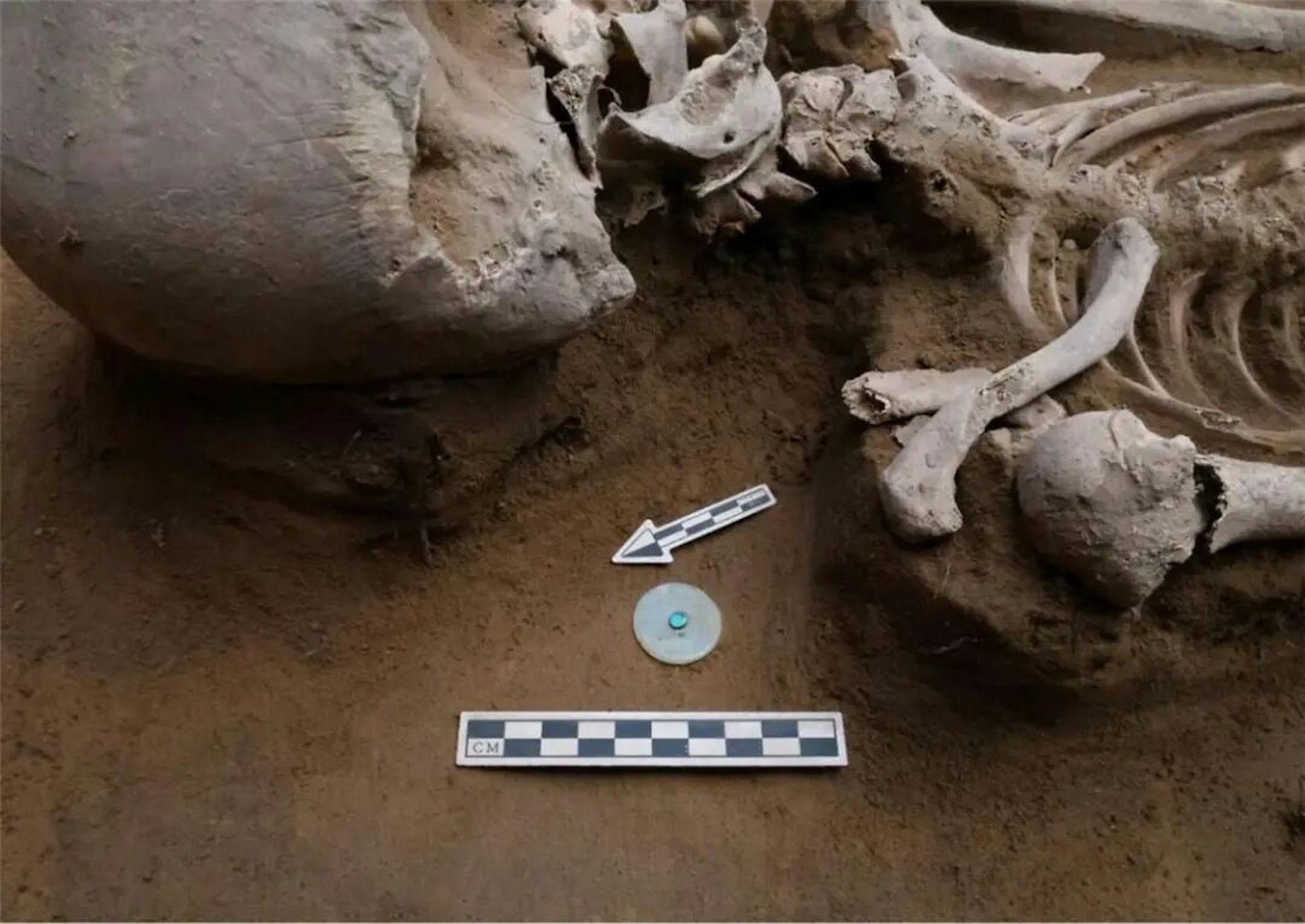
Tomb M38 is a rectangular pit and shaft tomb. The skeletal remains of the deceased were found in supine position head facing northeast, with legs extended and arms straight at his sides. A circular jade bi inlaid in the center with a turquoise stone was placed to the right of his neck. Large clay figurines almost the length of his full body were placed on each side of his body. The dragon figure is on the deceased’s right side, its head facing northeast like the tomb’s occupant. The phoenix is on his left, facing the opposite direction, captured in the moment of rising in flight.

Stable isotope analysis of the deceased’s tooth enamel revealed that he consumed a diet based on millet, but with more animal protein than most people of the period would have had access to. This confirms that the person was of high status and had significant wealth during his life.

The Neolithic Longshan culture occupied the Yellow River valley of northern and central China between 3000 and 1900 B.C. It is notable for its advanced pottery making techniques, and the thin-walled black in intricate shapes they created on pottery wheels is so characteristic that it was also known as the Black Pottery Culture. Their skill in pottery in evident in the large scale and high quality of the dragon and phoenix figures.

Sun Jinsong said that the ‘dragon and phoenix’ clay figurines at the Zhaizita Stone City site are the earliest and most clearly modeled physical combination of dragon and phoenix discovered so far in northern China, pushing the appearance of figurative ‘dragon and phoenix’ back to the Longshan period. This provides valuable material for studying the spiritual beliefs and burial concepts of the ancestors of the Longshan period. In addition, this discovery shows that the Hetao region made a unique contribution to the creation of early spiritual culture in China, providing evidence for the pluralistic and unified structure of Chinese civilization.