Update: shackled men in mass grave were native Athenians

A new study of the remains of men discovered with iron shackles on their wrist in a mass grave in Athens, Greece, in 2016 has revealed that they were Athenian locals, not invaders or immigrants.

The mass grave was one of three, dubbed the “Esplanada,” that were found in an excavation of the Phaleron necropolis, in use from the 8th to the 5th century B.C. Pottery found inside the grave dates it to between 675 and 650 B.C. The bodies of 79 adult men, all young and healthy, all killed at the same time by the same method, so a deliberate execution rather than a battle, were discovered arms above their heads shackled at the wrists. They had been laid out in three orderly rows and buried with respect.

In the decade since the discovery, there has been much debate on who these men may have been and why they were executed. One possibility was that they were the noble youths who joined the failed coup of Cylon of Athens in 632 B.C., but the radiocarbon dates don’t quite fit. Another possibility was a mass execution of criminals at the dawn of state-enforced judicial power in Athens.

Researchers from Arizona State University’s Center for Bioarchaeological Research recently sought to answer some of the questions using strontium isotope analysis.

Strontium is absorbed into teeth from local food and water during childhood, leaving a chemical signature tied to where a person grew up. By comparing that signature to known local values, researchers can tell whether someone spent their early years near where they were later buried.

The team tested samples from 66 of the men in the Esplanada grave, along with 97 other individuals buried elsewhere at Phaleron. The results showed that nearly all of them, about 97 percent of the men in the mass grave, had local origins.

That figure closely matched the broader Phaleron population, where about 96 percent of those tested were also local.

These results confirm that the individuals interred in the Esplanada were killed by their neighbors, and that they had no significant differences in geographic background. The homogeneity of the results throughout the necropolis support the argument that Attica in the Archaic period was still insular with limited migration, even though the wider Aegean area was seeing increasing interaction and population movement.

5th c. B.C. grave with wrestler coins found in Aspendos

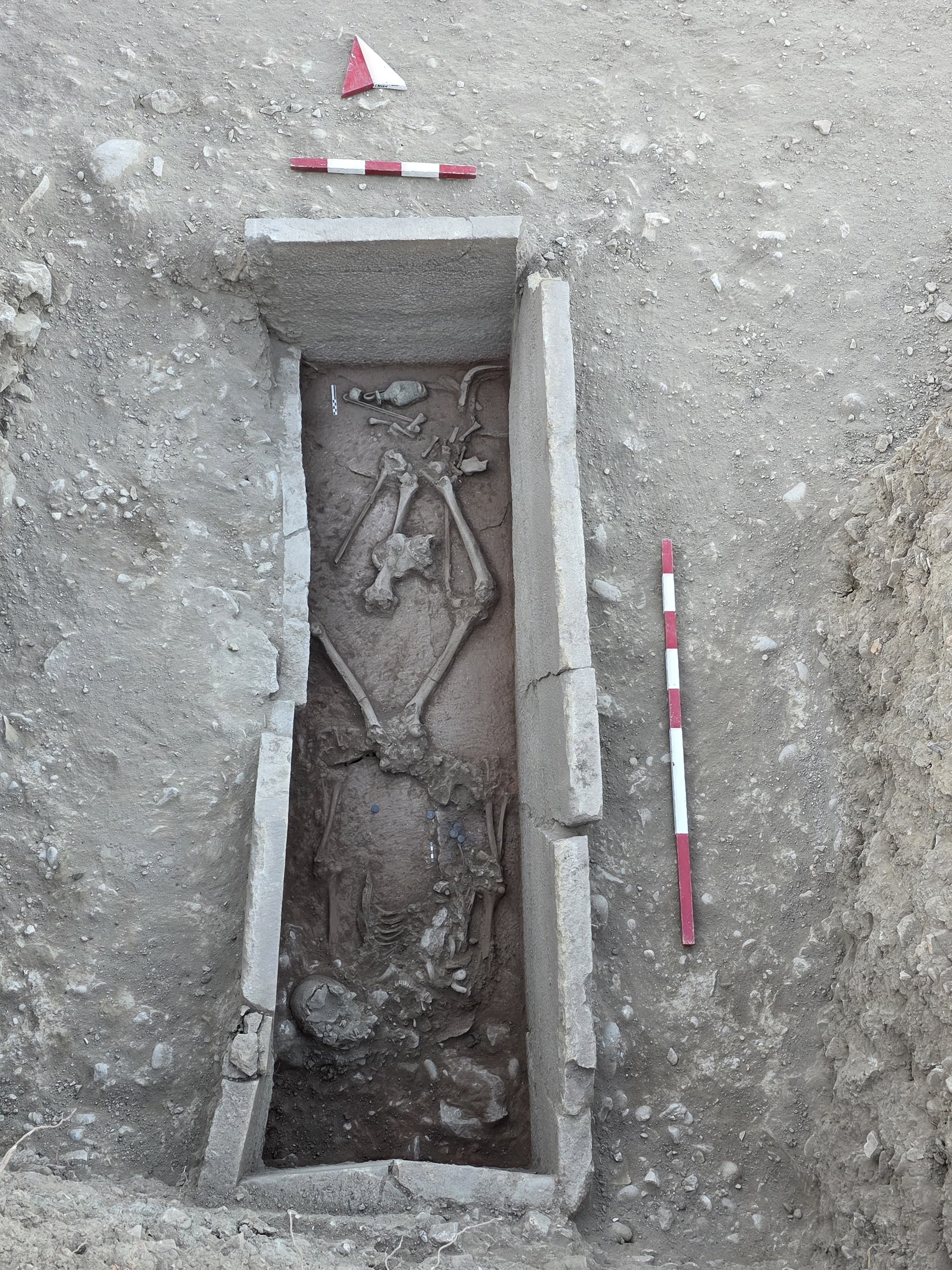
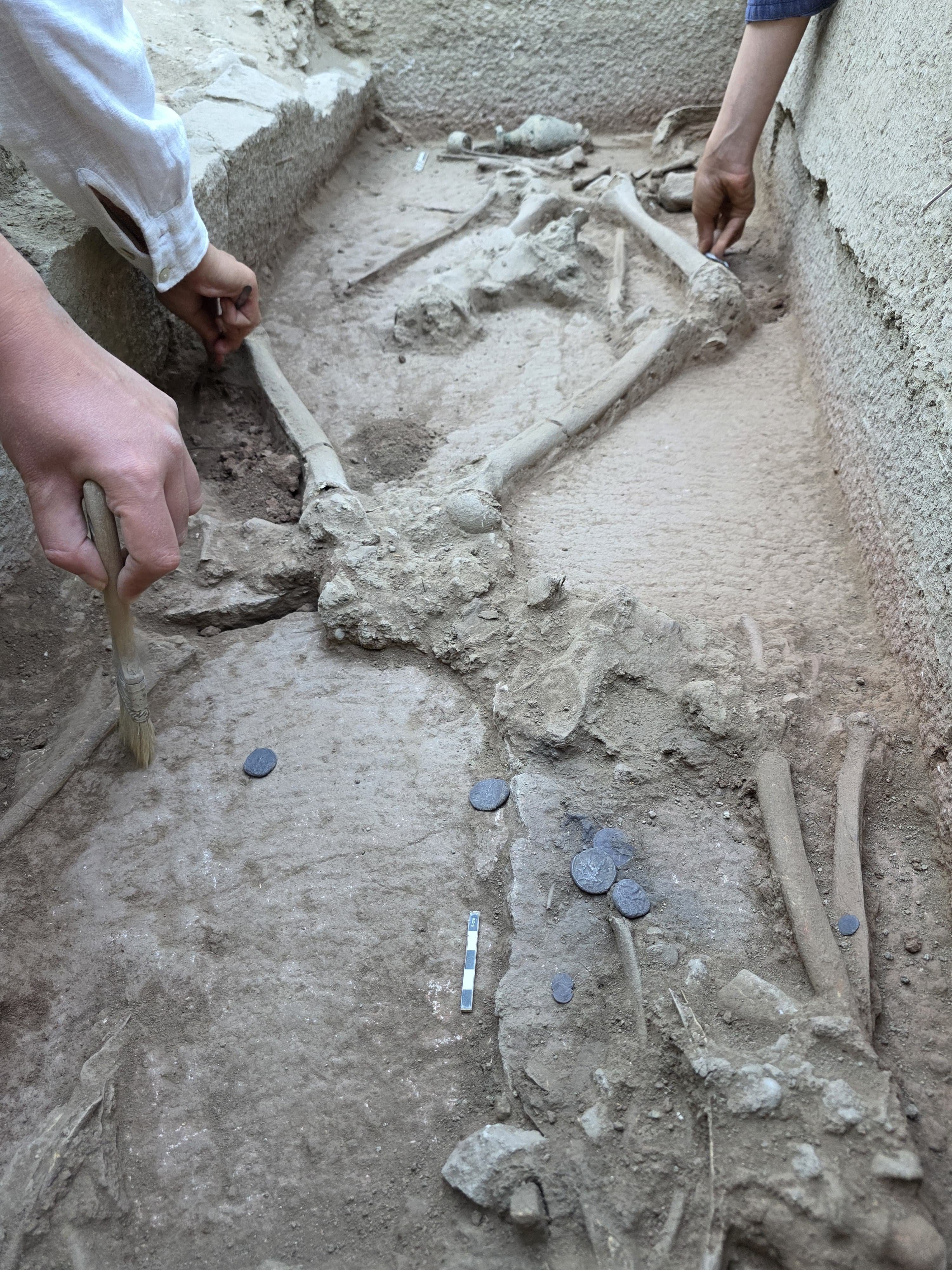
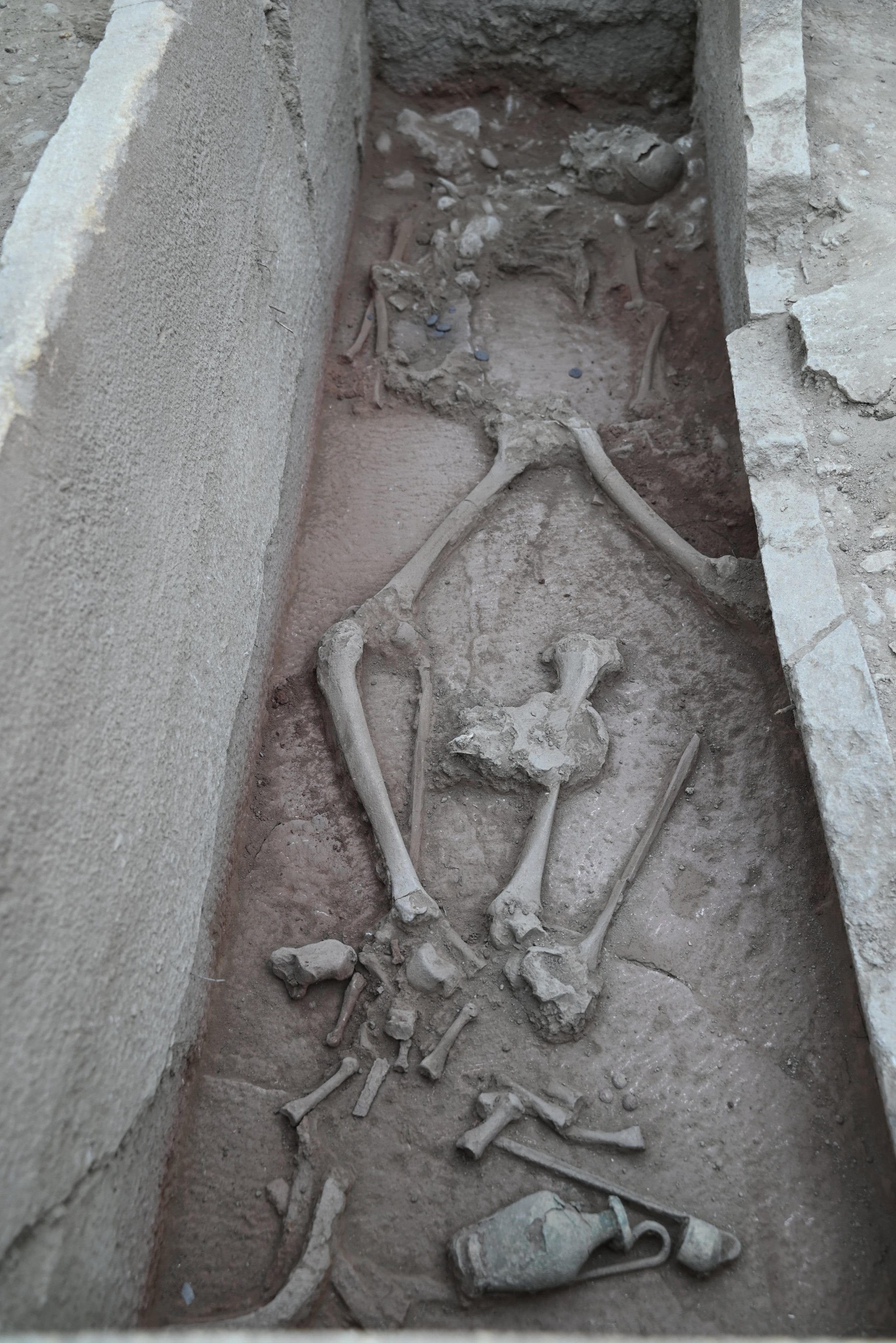
An excavation in the ancient city of Aspendos, Turkey, has uncovered a cist tomb in the Eastern Necropolis dating to between the last quarter of the 5th century B.C. and the 4th century B.C. Grave goods buried inside the tomb include silver staters that depict pairs of wrestlers.

The necropolis was discovered on a street that goes up the hill from the eastern defensive walls of the city towards the 2nd century Roman theater, one of the best preserved ancient theaters in the former Roman Empire. The tomb, constructed by erected flat, smooth stone slabs to form a sarcophagus-like enclosure, contained the skeletal remains of one adult, pottery and the silver coins.

Turkey’s Minister of Culture is promoting the hypothesis that the occupant was involved in sports and may even have been a wrestler himself Aspendos was famous for, but the presence of the coins is not sufficient evidence of a professional sportsman. They were minted from the 5th century B.C. through the first half of the 3rd century B.C. and display wrestlers in 16 different fight positions. The staters attest to the cultural significance of wrestling in Aspendos and were in wide use.

“There will need to be much more analysis before a positive identification of the body as a wrestler can be determined,” Sarah E. Bond, a historian at the University of Iowa who was not involved in the discovery, told Live Science. For example, signs of a broken and healed nose could indicate the person was an athlete.

“Coins alone cannot indicate this was a Classical era Greek wrestler,” Bond said, because “these coins were numerous and used as payment by the entire populace, not by wrestlers alone.”

Roman Republic-era shipwreck with hundreds of amphorae found off Sicily

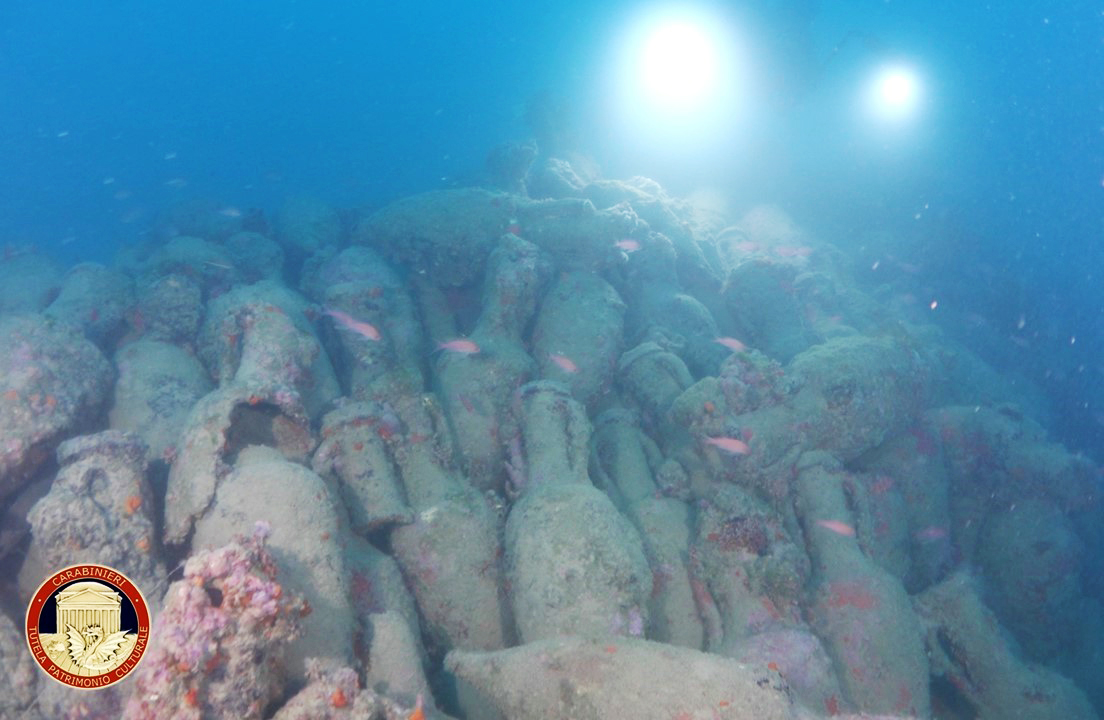
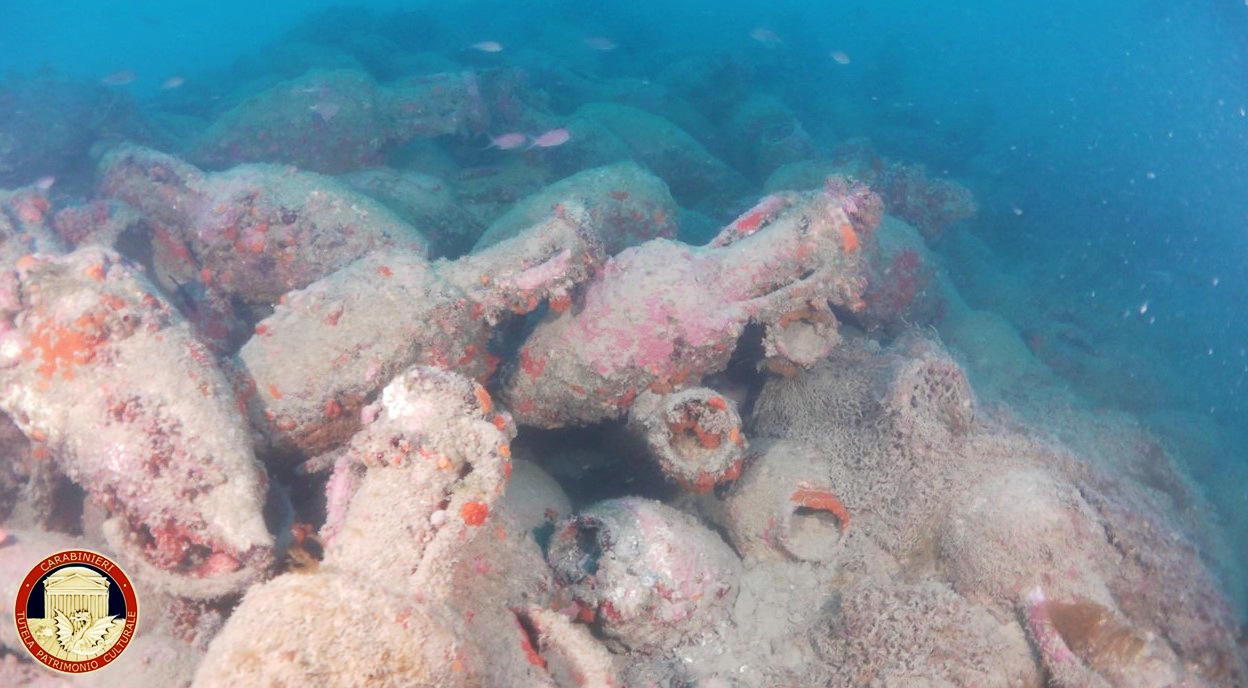
A Roman Republic-era shipwreck carrying approximately 500 amphorae has been discovered off the coast of Sicily. It dates to between the 2nd and 1st centuries B.C.

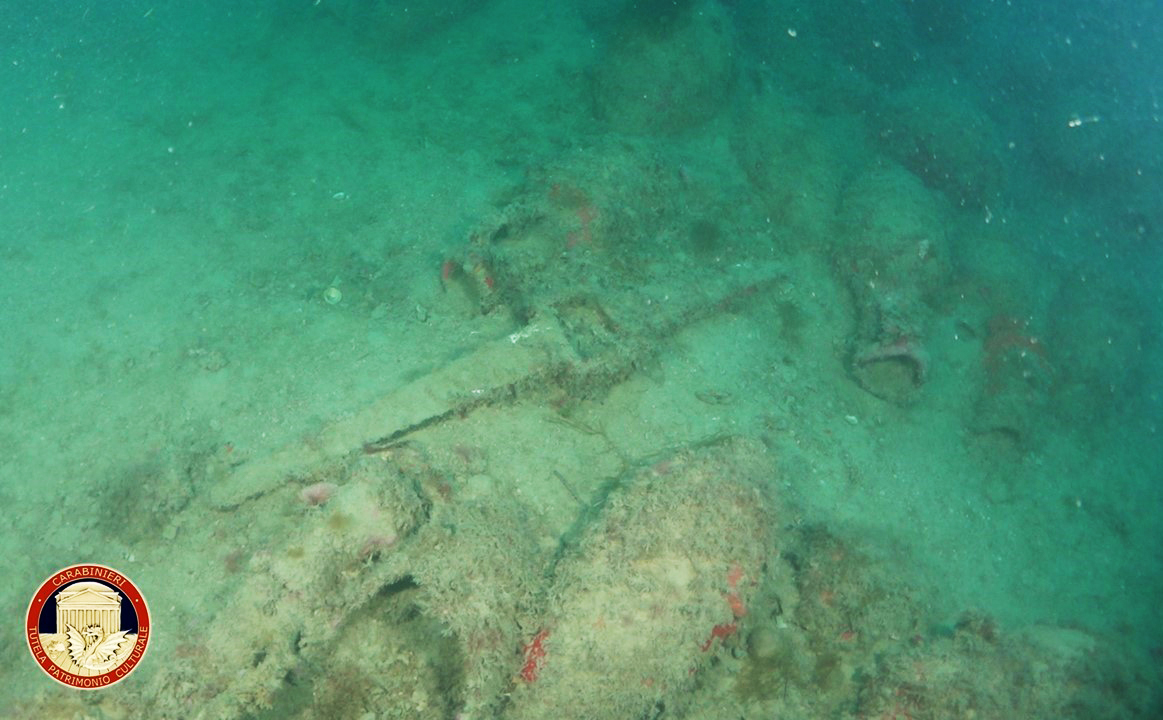
A report from two spear fishermen led the Carabinieri cultural heritage division and Sicilian heritage officials to the site three nautical miles off the coast of Mazaro del Vallo in western Sicily where divers spotted a field of amphorae at a depth of 46 meters (151 feet). The amphorae are primarily of the Dressel 1A type, large two-handled vessels widely typically used to transport wine in the second and first centuries B.C. They were manufactured in central Italy — Etruria, Lazio and south to Campania — and shipped throughout the Mediterranean trade routes. There are also Lamboglia 2 type from northern Africa, and one Neo-Punic type.

The amphora field is approximately 21 meters (69 feet) long, six meters (19’8″) wide and two meters (6’7″) deep. Divers also located two anchor stocks made of lead and a third lead object that may be part of a lead pipe.

The wreck … was described by Italy’s culture minister, Alessandro Giuli, as “one of the most important underwater archaeological discoveries of recent years”.

Giuli said the wreck offered “precious fragments of our history” and provided further evidence of the trade routes and exchanges that made the Mediterranean “a crossroads of civilisations”. […]

Over the coming months, Sicily’s superintendency of the sea is expected to carry out a new phase of scientific documentation and research at the site. Archaeologists will seek to establish more precisely the date of the wreck, the origin and intended destination of its cargo, and the condition of the surviving material, while also drawing up measures to protect what officials have described as a site of exceptional archaeological significance.

5th c. B.C. Syracusan gold coin found in Agrigento

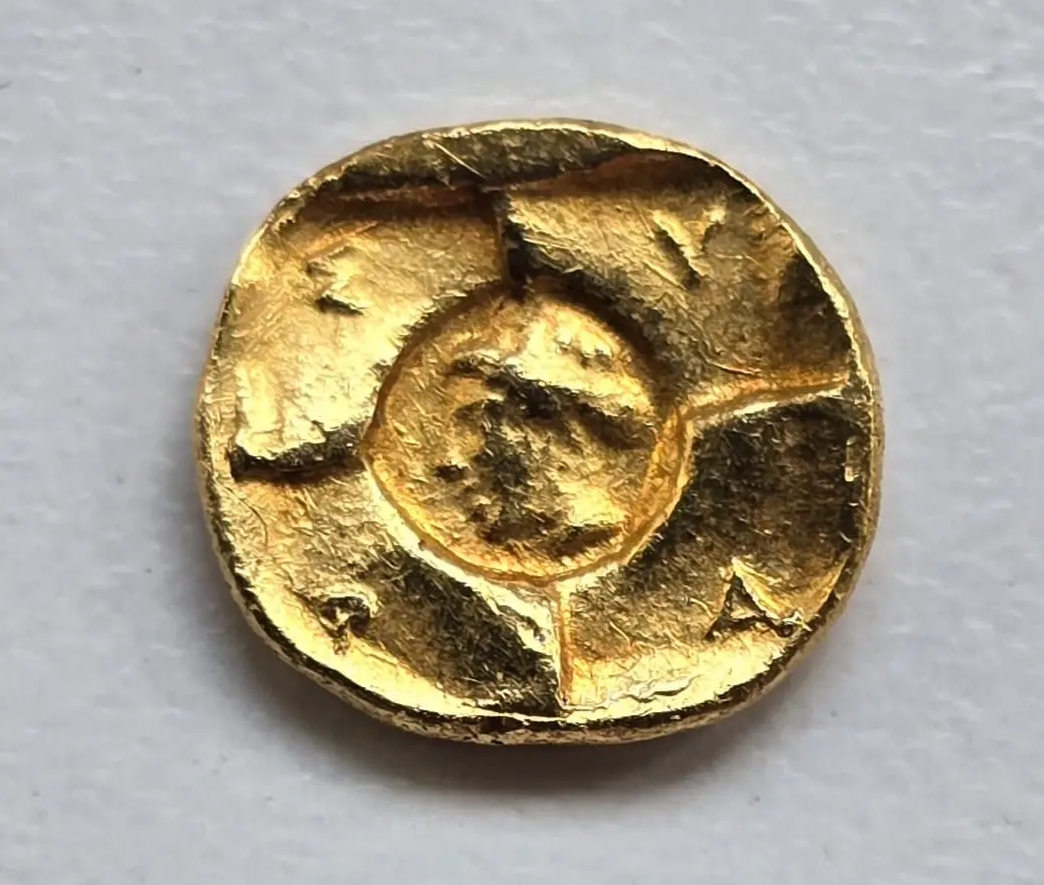
A rare 5th century B.C. gold coin minted during the Carthaginian invasion of Sicily has been found in the ancient city of Agrigento, Sicily. It was minted around 405 B.C. by the tyrant of Syracuse, Dionysius I the Elder.

The coin was found during an emergency excavation to salvage a Greek-era tile-lined capuchin tomb at the mouth of the Akragas River. The tomb was part of the Maddalusa burial ground, in active use from the first quarter of the 6th century B.C. until the end of the 5th century B.C.

It is a 20 Litrai coin weighing over a gram that is in excellent condition. On the obverse is the profile head of Heracles wearing the skin of the Nemean lion. The reverse features a four-part incuse square with a female head in the center. Four Greek letters — ΣΥΡΑ — are inscribed in the corners of the incuse square, meaning “Syra” for Syracuse.

Founded as the city of Akragas by Greek colonists from Gela, Crete and Rhodes in 582–580 B.C., Agrigento was besieged and sacked in 406 B.C. during the conquest of Sicily by Carthaginian general Himilco. Syracusan general Dionysius had fought against Carthage since the invasion began in 409 B.C. and took power as the tyrant of Syracuse (formerly a democratic polis) in 405 B.C.

After a brief period of peace bought with enormous concessions of territory that expanded Punic control over almost all of Sicily, in 398 B.C. Dionysius I of Syracuse marshalled his forces and fought to expel Carthage from Sicily. He reduced their territories, but wasn’t able to boot Carthage from Sicily. Dionysius never stopped trying, though, alternating between peace treaties and war until his death in 367 B.C.

The [coin] is particularly significant not only for the rarity of the specimen but especially because it is situated in a specific historical moment: during the dramatic Carthaginian invasion of Sicily, at the end of the 5th century B.C., Syracuse, allied with Akrágas, minted extraordinary gold issues to support the war effort. The coin that was found belongs to this series, which recalls the tragic events that shook Greek Sicily, culminating in the conquest and destruction of Akrágas by the Carthaginians in 406 B.C.

Etruscan well with votives, human remains found in northern Italy

Archaeologists have discovered a ritual well containing votive offerings and human remains in the Etruscan city of Kainua near Marzabotto, in northern Italy’s Emilia Romagna region. The find reveals the sacred nature of water in Etruscan ritual and sheds new light on the religious rites performed at the founding of Etruscan cities.

Located on a well-traveled natural route across the Apennines, Kainua was first settled in the 6th century B.C. but did not become an organized, planned urban development until the end of the 6th century and the beginning of the 5th century B.C. The name “Kainua,” known from surviving Etruscan inscriptions, is believed to mean “the new one,” and scholars hypothesize it refers to the reorganization of the city based on the combination of Greek urban grid design with Etruscan cosmological concepts.

Kainua was abandoned in the 4th century B.C., under pressure from the Celtic migrations into northern Italy. When the area was Romanized, they built new road systems that no longer relied on the route from the Reno river valley through the northern Apennines, so the Kainua area became peripheral to traffic and no new city was built on top of the abandoned one. That makes it one of the most archaeologically significant Etruscan sites because excavations have revealed almost the entire urban fabric — streets, residences, shops, sacred precincts, the acropolis at the center and necropoli on the northern and eastern outskirts of the inhabited city.

The University of Bologna has been excavating the site continuously since 1988. The well was discovered at the end of the 39th excavation season in the sacred area dedicated to the goddess Uni. It is 4.4 meters (14.5 feet) and lined with stones from top to bottom. This distinguishes it from more than 50 other wells found in the city, marking it as a sacred place connecting the human world to the water and underworld deities.

This exceptional condition of the well and its fill have made it possible for archaeologists to reconstruct the timeline of its use. Two bronze statuettes of female figures were discovered at the bottom of the well. They are of the korai type, the Archaic Greek idealized young females with the “archaic smile” wearing a long, draped garment. They wear a headdress/diadem and one arm extended in the act of ritual offering.

They are both large and heavy, made of solid copper, attesting to their value and importance of the deposition. The larger of the two figures consists of three pounds of solid bronze. They are still bright and copper-colored from having remained fully immersed in water and therefore protected from oxidation.

Next to the statuettes, the excavation uncovered a very rare bronze plate in perfect condition and an intact key, an intricate bronze vase applique decorated with winged horses, and ceramic vessels used during the ritual ceremony. A new inscription was discovered among the materials, a reference to the goddess Cavatha, the Etruscan underworld and fertility goddess comparable to the Greek Persephone.

All of these votive offerings date to the end of the 6th century B.C. or beginning of the 5th century B.C., the time of the refounding of the city. They were placed there in the religious ceremonies attending the Kainua’s rebirth.

The fill tells the opposite story: the ceremonies marking the city’s demise. At a depth of about 11’6″, the skeletons of two adult humans were found. Initial osteological examination revealed that they belonged to a senior woman and a young man. They appear to have been deposited in a closing ritual, but further analyses including radiocarbon dating, DNA and stable isotope, will hopefully answer more questions of chronology, health, origins and death of these individuals.

According to scholars, the discovery demonstrates that the well did not only serve a practical function of water supply, but also had a profound and complex sacred and ritual significance linked to the very foundation of the city and the cult of water.

The ritual well is located in the sacred urban area of ​​Kainua . Two imposing monumental temples were discovered here, which Etruscan inscriptions attribute to the supreme divine couple of the pantheon: Tinia (corresponding to the Greco-Roman Zeus/Jupiter) and his consort Uni (Hera/Juno). The area dedicated to Uni also documents the cult of Vei (Demeter/Ceres), protector of agricultural and human fertility.

“It is precisely within this rich cultic framework that the newly discovered ritual well fits,” explains Govi . “The results of this excavation campaign therefore enrich our knowledge of the foundation rites of Etruscan cities and Etruscan religiosity with new, precious details.”