Archive for the ‘Treasures’ Category

Ancient Celtic coin cache found in Netherlands

Monday, November 17th, 2008

Man, those Celts really got around: Ireland, Scotland, England, France, Spain, Germany, Belgium, the Netherlands.

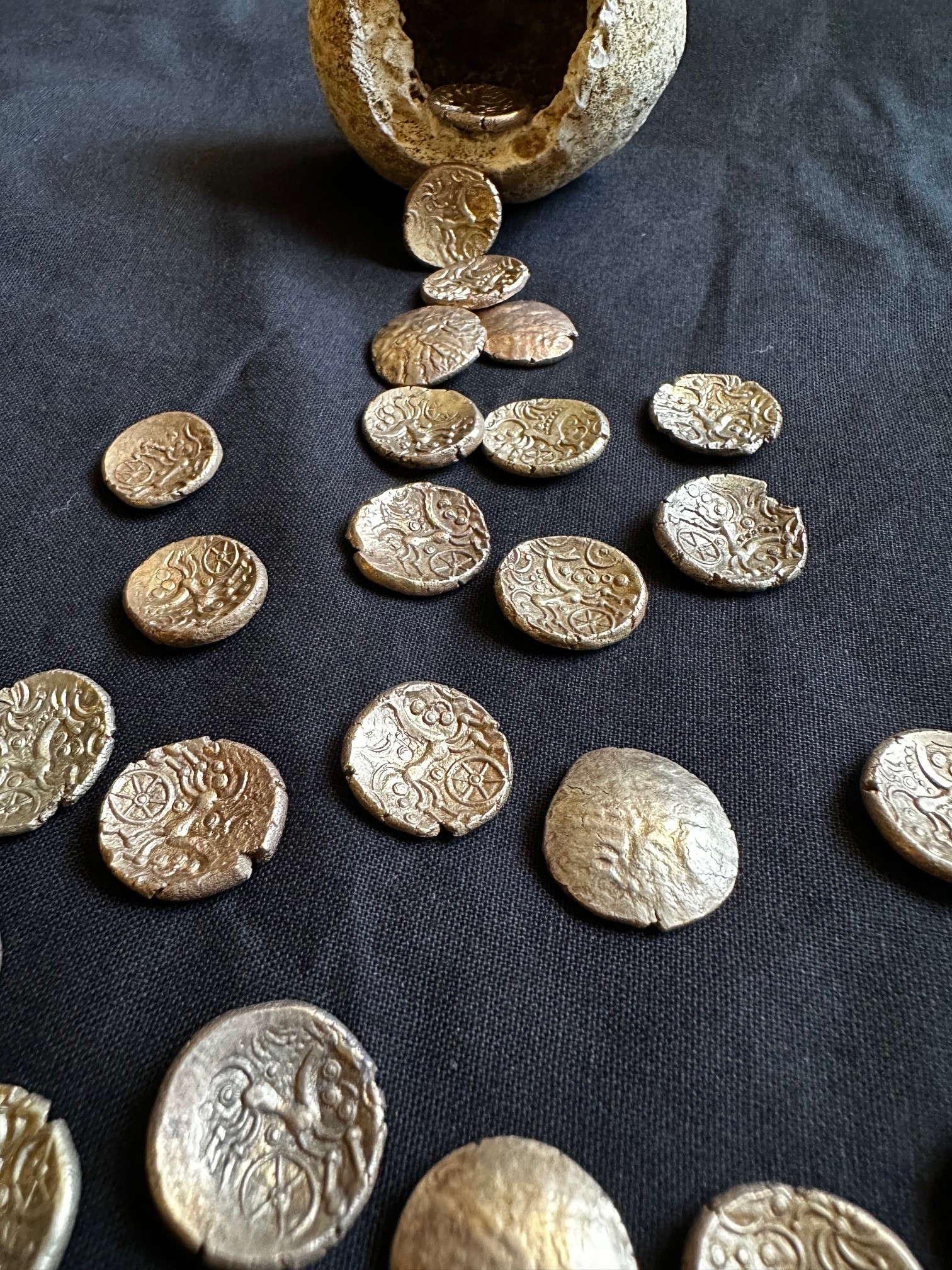
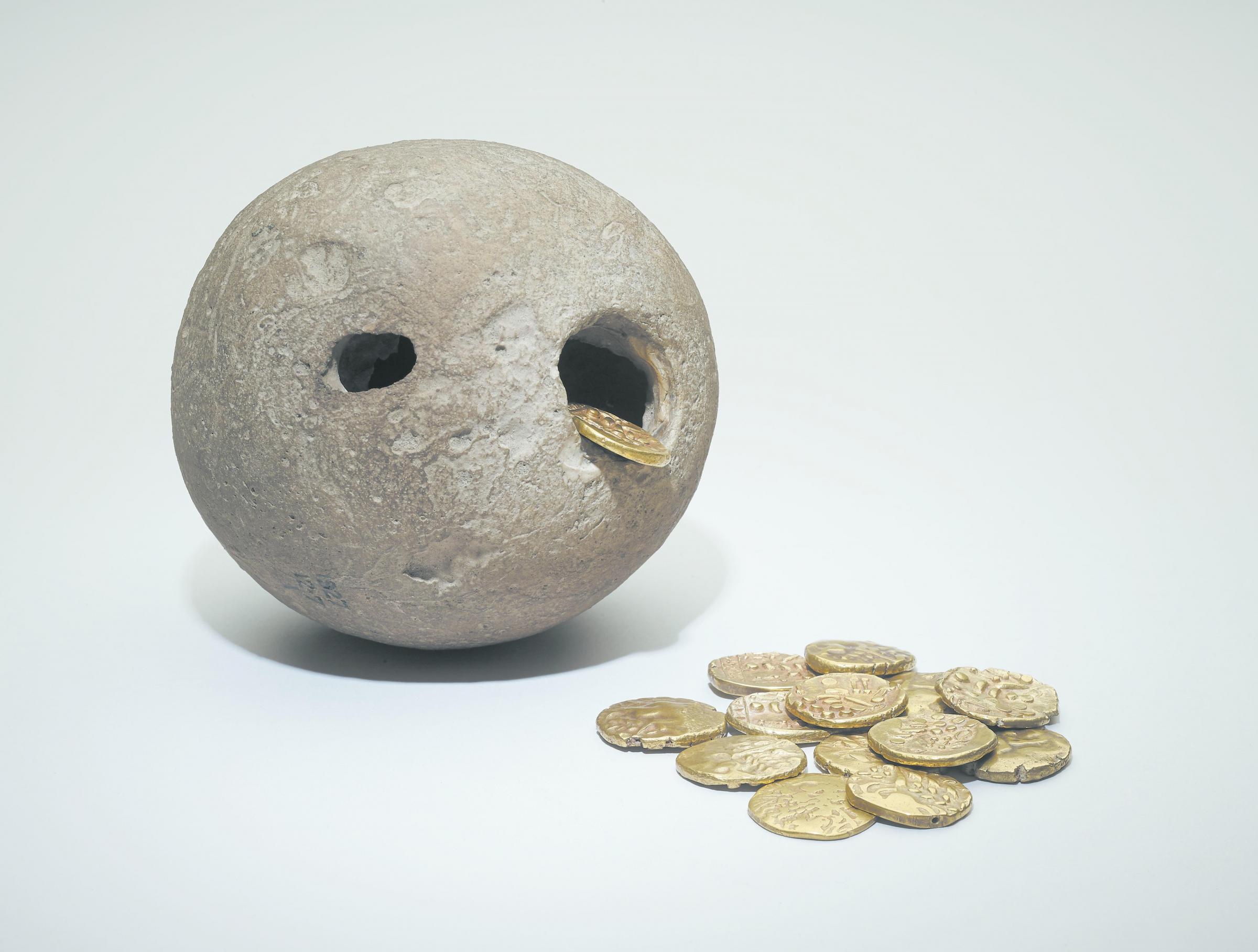
Caches of Celtic coin have been found in Germany and Belgium before, and now in the Netherlands.

Archaeologists say the trove of 39 gold and 70 silver coins was minted in the middle of the first century B.C. as the future Roman ruler Julius Caesar led a campaign against Celtic tribes in the area.[...]

Nico Roymans, the archaeologist who led the academic investigation of the find, believes the gold coins in the cache were minted by a tribe called the Eburones that Caesar claimed to have wiped out in 53 B.C. after they conspired with other groups in an attack that killed 6,000 Roman soldiers.

The Eburones “put up strong resistance to Caesar’s journeys of conquest,” Roymans said.

The silver coins were made by tribes further to the north — possible evidence of cooperation against Caesar, he said.

The dating is notable not only because of the (tenuous) link to Caesar, but because by early in the first century A.D., the Celts had been chased off the European mainland by the growing Roman Empire and Germanic migrations. So this first century B.C. cache is sort of a last hurrah for continental Celts.

2,000-year-old gold earring found in Jerusalem

Monday, November 10th, 2008

You’d think finding ancient jewelry would be a relatively common occurrence in a city as ancient as Jerusalem, but in fact, such finds, especially of Roman-era jewelry, are extremely rare because Titus razed the city in the late first century AD, and in the many invasions that followed these sorts of delicate artifacts were often destroyed, sold away or melted for the gold value.

That’s why this beautiful gold, pearl and emerald earring dating from the time of Christ is so remarkable a find. It’s in in astonishingly good shape, too. It looks like something you’d see in a Cartier window.

Gorgeous, neh?

The piece was found in a Byzantine structure built several centuries after the jeweled earring was made, showing it was likely passed down through generations, he said.

The find is luxurious: A large pearl inlaid in gold with two drop pieces, each with an emerald and pearl set in gold.

“It must have belonged to someone of the elite in Jerusalem,” Ben-Ami said. “Such a precious item, it couldn’t be one of just ordinary people.”

Britain’s most important archaeological discovery found in a drawer

Sunday, November 9th, 2008

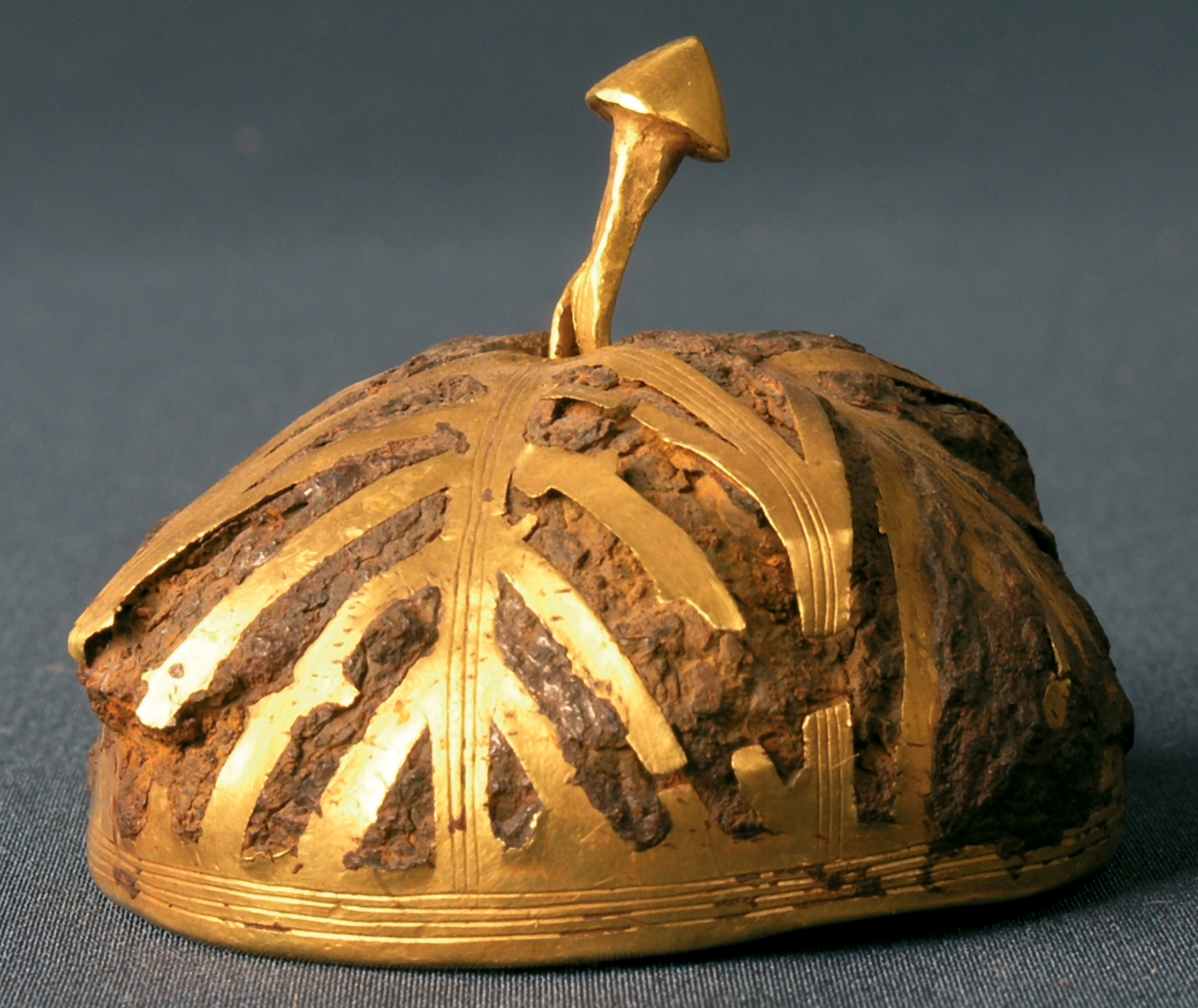
In 1808, archeologists excavated the Bush Barrow burial mound near Stonehenge. They found a dagger and thousand tiny gold studs the size of pinheads.

In 1960, one Professor Richard Atkinson borrowed the gold to study it and promptly died. His successor popped the goods in his desk drawer, which is where they stayed until he died 3 years ago.

Finally, his successor, Niall Sharples, found the gold studs, actually recognized them for a change, and will now return them to the Wiltshire Heritage Museum.

The gold pins, thought to come from Ireland, were fashioned by craftsmen in Brittany, France, and inlaid in an intricate herringbone pattern into the handle of the ceremonial dagger, which had an eight inch bronze blade.

It is the richest and most important Bronze Age grave on the Salisbury Plain and in Britain, according to experts.

And its riches were lost in a desk drawer for 50 years. :facepalm:

Speaking of anti-semitic German trash

Thursday, October 30th, 2008

Archaeologists are excavating three sites from Martin Luther’s life: the floor of the building where Luther was born, his parents’ house, and his residence in the monastery of Wittenberg where he lived with his family after the Reformation.

They’ve found all kinds of interesting little discarded geegaws in his kitchen trash.

The digs exposed toys and food remains, broken dishes and grain (dated to the year 1500, using the C-14 method). The archeologists also found his wife’s wedding ring and a hoard of 250 silver coins. [...]

The archeologists have already been hard at work in the old abbey in Wittenberg. They scored a direct hit in the rear courtyard, where they found a waste pit filled with a collection of the family’s refuse.

The find reveals that the doctor worked in a heated room with a view of the Elbe River. He spent his evenings writing in the light of lamps filled with animal fat. The dig contained the bindings of parchment books, several “quill knives” to sharpen goose quills, as well as four writing sets containing sand, ink and styluses.

He lived in style as a boy, too, despite his tall tales of being a poor miner’s son. His family trash testifies to his gourmet diet and expensive toys.

It was on this farm that young Martin and his siblings played, surrounded by flocks of geese and chickens. The fragments at the site reveal that they played with crossbows, clay marbles and bowling pins made of beef bones — toys not every family could afford at the time.

The remains of kitchen scraps discovered on the property reveal that the family frequently ate roast goose and the tender meat of young pigs. During Lent, the Luther family ate expensive ocean fish, like herring, codfish and plaice.

This remarkable collection of Lutherian artifacts will be going on display starting tomorrow at the German State Museum of Prehistory.

Fun fact: he claimed to chase the devil away with his farts. For. Reals.

Artifacts from Kristallnacht found in dump

Wednesday, October 29th, 2008

Israeli researchers have found a unique trove of artifacts from Kristallnacht, the 1938 Nazi riot of anti-semitic violence which resulted in massive destruction of Jewish-owned property and 30,000 men sent to concentration camps.

Despite the importance of the event, very few artifacts have ever surfaced. There are plenty of descriptions from witnesses, some pictures, a movie or two, but almost no material remains.

That’s because the Nazis piled the loot in trains and sent it to Klandorf. The locals knew about it, but no historians or researchers did until a fortuitous forest encounter.

Werner Russ, a retired forester, was gathering mushrooms when he ran into Yaron Svoray, an Israeli writer and former detective who was researching stolen artifacts once stashed in a nearby hunting lodge that belonged to Hermann Göring, the Luftwaffe commander. Mr. Russ, 73, confirmed to Mr. Svoray what people of Klandorf had always known about the local dump. “We’re away from everything here,” he said. “I thought surely it would not interest anyone.”

Mr. Svoray, though, was decidedly interested. He returned in spring, bringing along three friends with shovels and picks. They dug up a green bottle with a Star of David stamped into the bottom, mezuzot and burnt armrests of chairs from synagogues. Mr. Svoray also found an ornamental metal swastika.

Now that it’s made the press, though, this pristine site needs to be kept from neo-Nazi shitheads diving for swastikas, not to mention from garden variety looters.

A Holocaust museum and research center in Israel, The Ghetto Fighters’ House, has a neat idea.

The Ghetto Fighters’ House hopes to set up a living history center that would bring young Germans and Israelis together to sift through the contents of the dump. Such a project could help the area, one of the many economically depressed parts of the former East Germany.

Lincoln’s coat: preserve or display?

Tuesday, October 21st, 2008

The Brooks Brothers (!) coat Abraham Lincoln was wearing the night of his assassination is part of Ford’s Theater permanent collection.

Until last year when Ford’s closed for renovations, the coat had been on exhibit since the museum acquired it in 1968, but now that reopening approaches, some conservators are concerned that the coat can’t take being on public display much longer.

Light and gravity can doom historic clothing, they say. And the Brooks Brothers coat, like other Lincoln garments, had been on almost continuous display from the time they were acquired in 1968 until Ford’s was closed for renovation last year, officials said.

“It might be that it’s time to put these things away and not to exhibit them to the public if there’s any hope of saving them for future generations,” said Cathy Heffner, president of Textile Preservation Associates, who said she examined the clothes for the National Park Service last month.

The concern illustrates an ongoing debate over the display of national treasures: the desire to preserve items for posterity vs. the right of citizens to experience them.

It’s a tough question. Light damages textiles irreparably. There is no way to restore them once the UV rays have done their thing. UV blocking technology can help delay the inevitable, but it’s not a long-term solution.

Meanwhile, people want to see these kinds of deeply personal artifacts of iconic figures. How much closer can you get to the great man himself than to see his blood on his coat?

Roman Elvis underdelivers

Friday, October 17th, 2008

He sold for £24,000 ($41,000). The estimate was between £25,000 and £30,000, so somebody got themselves a bargain.

Apparently the whole Bonhams auction sold a lot less than expected, despite the publicity from Roman Elvis and Italy demanding some of their stuff back.

David Gill lays it out adroitly.

Out of three lots that got the most attention, one (Elvis) sold under estimate, one (the Hydria) was withdrawn due to its being stolen goods, and one just didn’t sell. The overall sales total was projected to be something in the $1.3 million range. Instead, they made $814,000, and many lots remain unsold.

Perhaps the bleak economic news is making people less willing to spend big on Roman bouffants.

Toy hedgehog found in child grave at Stonehenge

Monday, October 13th, 2008

Archaeologists digging west of Stonehenge have found a child buried with a chalk hedgehog figurine. The child was buried about 3000 years ago.

Archaeologists who discovered the grave, where the child was laying on his or her side, believe the toy - perhaps placed there by a doting father - is the earliest known depiction of a hedgehog in British history. [...]

Dr Joshua Pollard, of the Stonehenge Riverside Project, said: ‘Representational art from this period is very rare and so far as I’m aware, if the identification is correct, it’s the only known prehistoric depiction of a hedgehog from Britain.’

Hmm… Not quite seeing the hedgehog there. It does remind me of a Zuni animal fetish, though.

Eritrea: Art Deco time capsule

Tuesday, October 7th, 2008

Eritrea, the small country nestled between Sudan, Ethiopia and the Red Sea, was Italy’s one venture into colonialism. Architecturally, it seems to have paid off.

The desert air and the years of warfare have managed to keep the country in something of a time warp. There’s almost no crime, no pollution, no big crowds, the weather is like Hawaii, the hotels are cheap and in the 30’s Italians packed the place with crazy cool architecture.

Asmara [the capital] became an Art Deco laboratory during the 1930s for designs that seemed, well, just too out there for mainland Italy. Rationalism, Novecento, neo-Classicism, neo-Baroque and monumentalism are among the varied avant-garde styles played with here. The result today is hundreds of aging, sherbet-colored buildings that are still standing, some needing a coat of paint — or two — but otherwise intact. With its plentiful palms and sunshine, the whole city has a decidedly Miami Beach vibe, minus the miniskirts and Ferraris.

The star of the show, and for good reason, is the Fiat Tagliero gas station, designed in 1938 by Giuseppe Pettazzi to look like an airplane, a spaceship or possibly a bat. Mr. Pettazzi’s extraordinary flourish was the concrete wings that jut out a total of more than 90 feet. The municipal authorities at the time required him to build pillars under the wings so they wouldn’t collapse, which was an unforgivable insult to Mr. Pettazzi. According to local legend, Mr. Pettazzi installed detachable pillars, and at the station’s opening, he pulled out a pistol and forced the builder to remove the supports. Needless to say, the wings are still there.

There’s a coal-fired steam engine built by the Italians beginning in the 1880’s, still chugging along. Oh, and there’s Italian everywhere! Language, food, all the good stuff.

I simply must make my way to Eritrea someday, perhaps when diplomatic relations with the US are smoother than they are right now.

Bosphorus chunnel dig reveals medieval shipwrecks

Sunday, October 5th, 2008

Workers in Istanbul are currently excavating a rail tunnel underneath the Bosphorus. Like the Chunnel linking France and England, only this one will link the continents of Asia and Europe.

The 2.6 billion dollar project began in 2004 and almost immediately encountered a major archaeological roadblock in the form of the 4th c. port of Eleutherios harbour where a railway hub was supposed to go.

Since then, they’ve found enormous piles of stuff, including over 30 shipwrecks transporting material from far and wide. These discoveries are writing a whole new chapter in the history of Byzantine trade.

Keep in mind that these shipwrecks are the first ever found in Istanbul, despite its fortuitous location straddling two seas.

For more on the Bosphorus finds, see this AFP story: