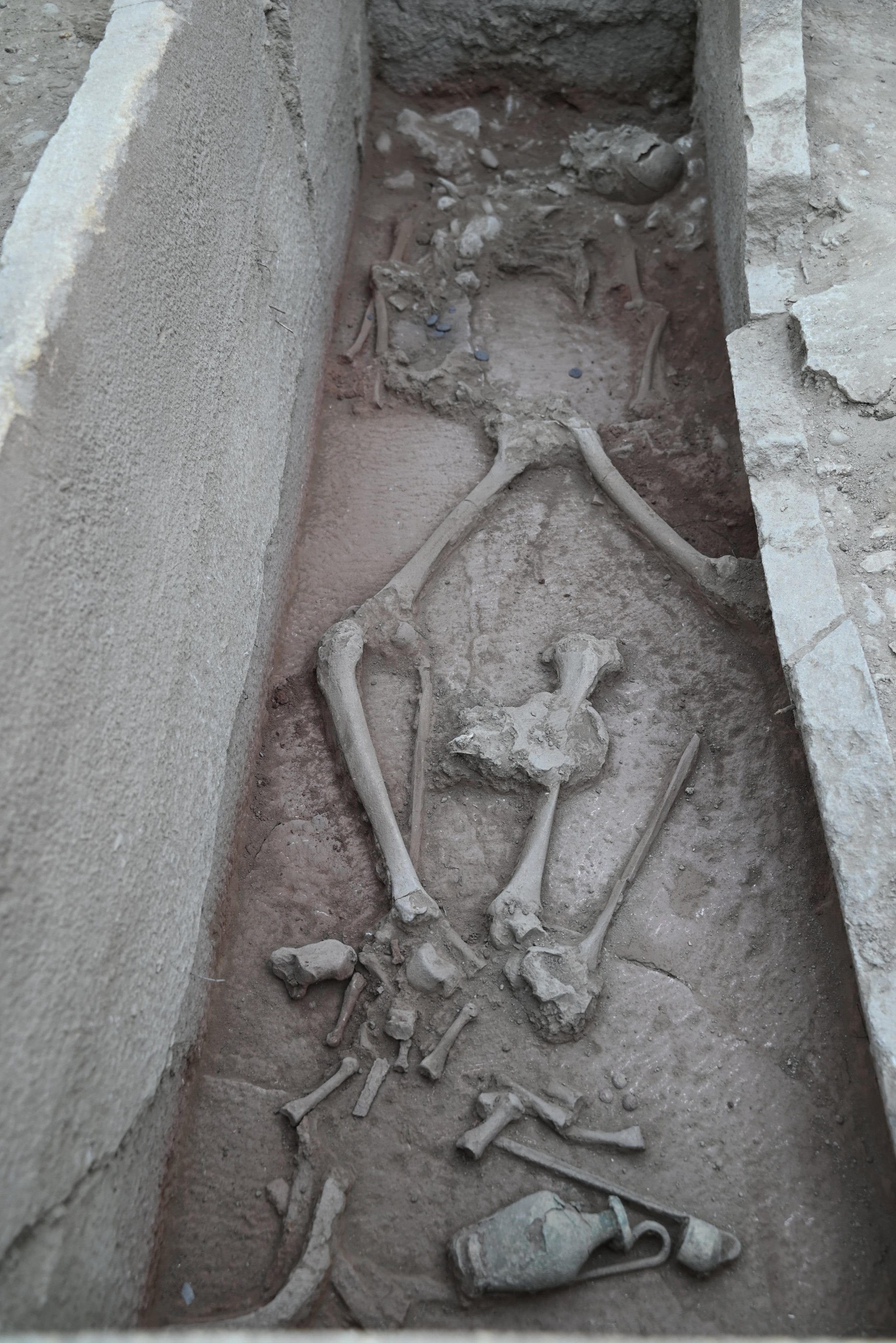
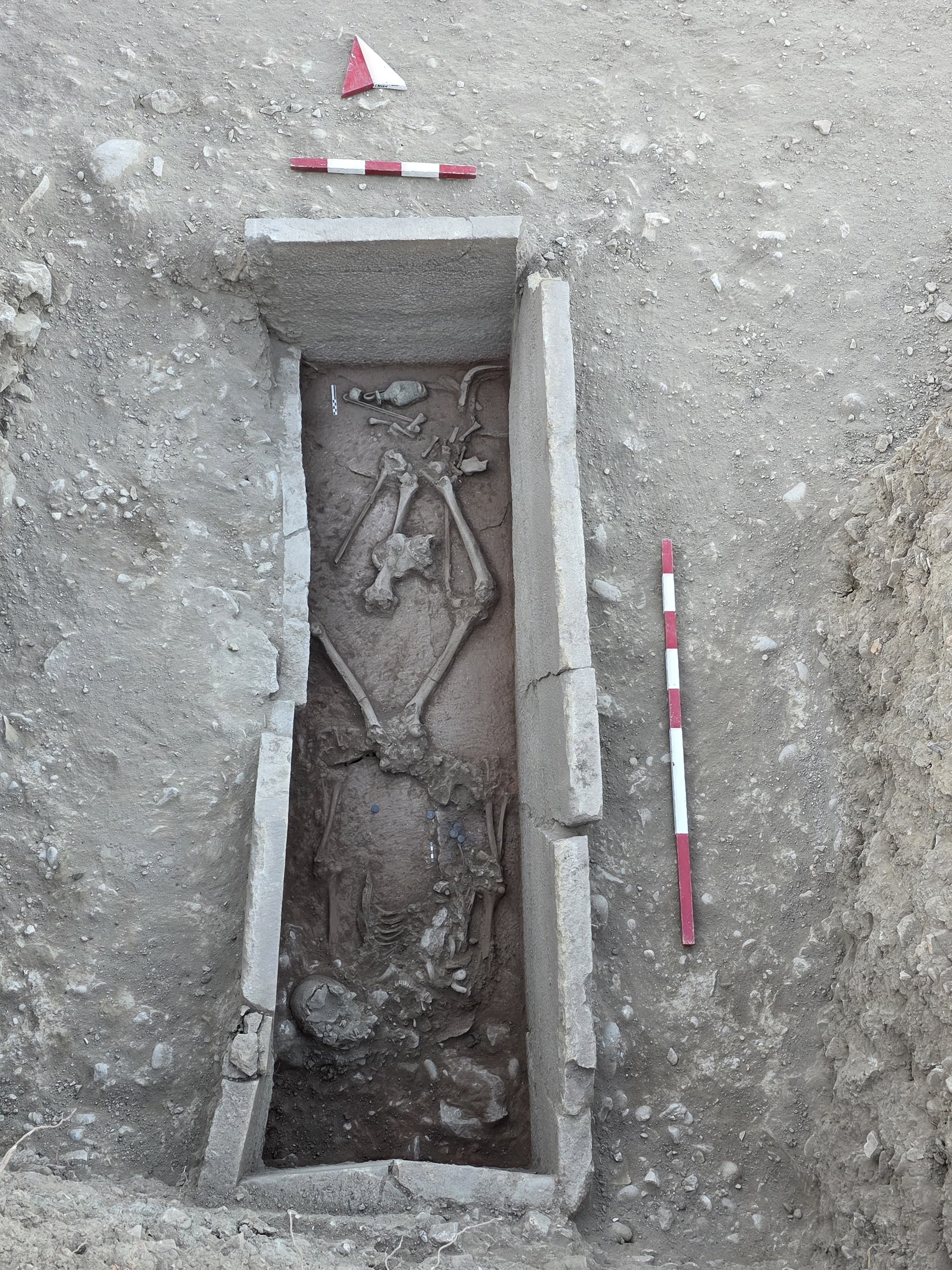
 An excavation in the ancient city of Aspendos, Turkey, has uncovered a cist tomb in the Eastern Necropolis dating to between the last quarter of the 5th century B.C. and the 4th century B.C. Grave goods buried inside the tomb include silver staters that depict pairs of wrestlers.
The necropolis was discovered on a street that goes up the hill from the eastern defensive walls of the city towards the 2nd century Roman theater, one of the best preserved ancient theaters in the former Roman Empire. The tomb, constructed by erected flat, smooth stone slabs to form a sarcophagus-like enclosure, contained the skeletal remains of one adult, pottery and the silver coins.
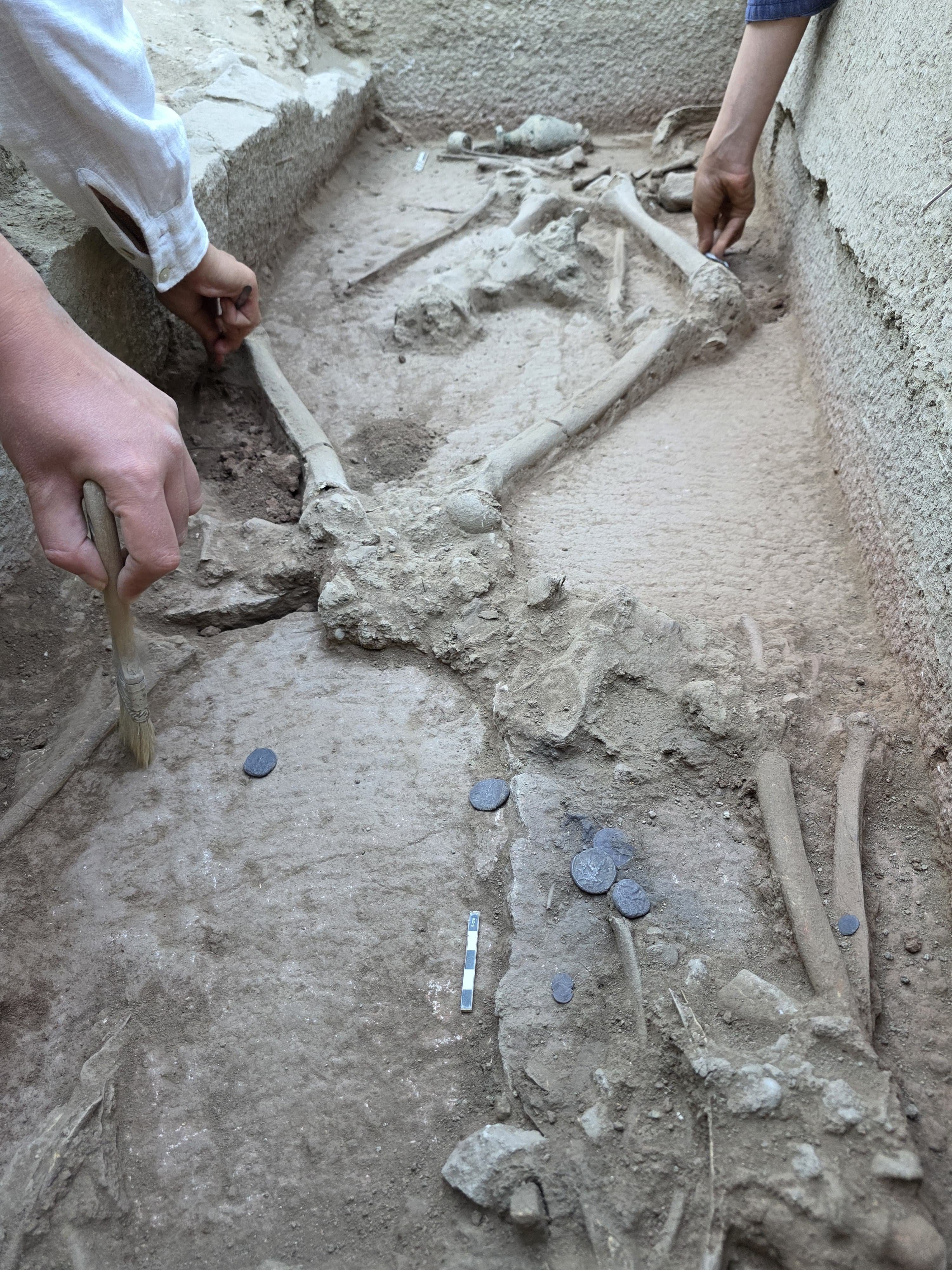 Turkey’s Minister of Culture is promoting the hypothesis that the occupant was involved in sports and may even have been a wrestler himself Aspendos was famous for, but the presence of the coins is not sufficient evidence of a professional sportsman. They were minted from the 5th century B.C. through the first half of the 3rd century B.C. and display wrestlers in 16 different fight positions. The staters attest to the cultural significance of wrestling in Aspendos and were in wide use.
“There will need to be much more analysis before a positive identification of the body as a wrestler can be determined,” Sarah E. Bond, a historian at the University of Iowa who was not involved in the discovery, told Live Science. For example, signs of a broken and healed nose could indicate the person was an athlete.
“Coins alone cannot indicate this was a Classical era Greek wrestler,” Bond said, because “these coins were numerous and used as payment by the entire populace, not by wrestlers alone.”