
A 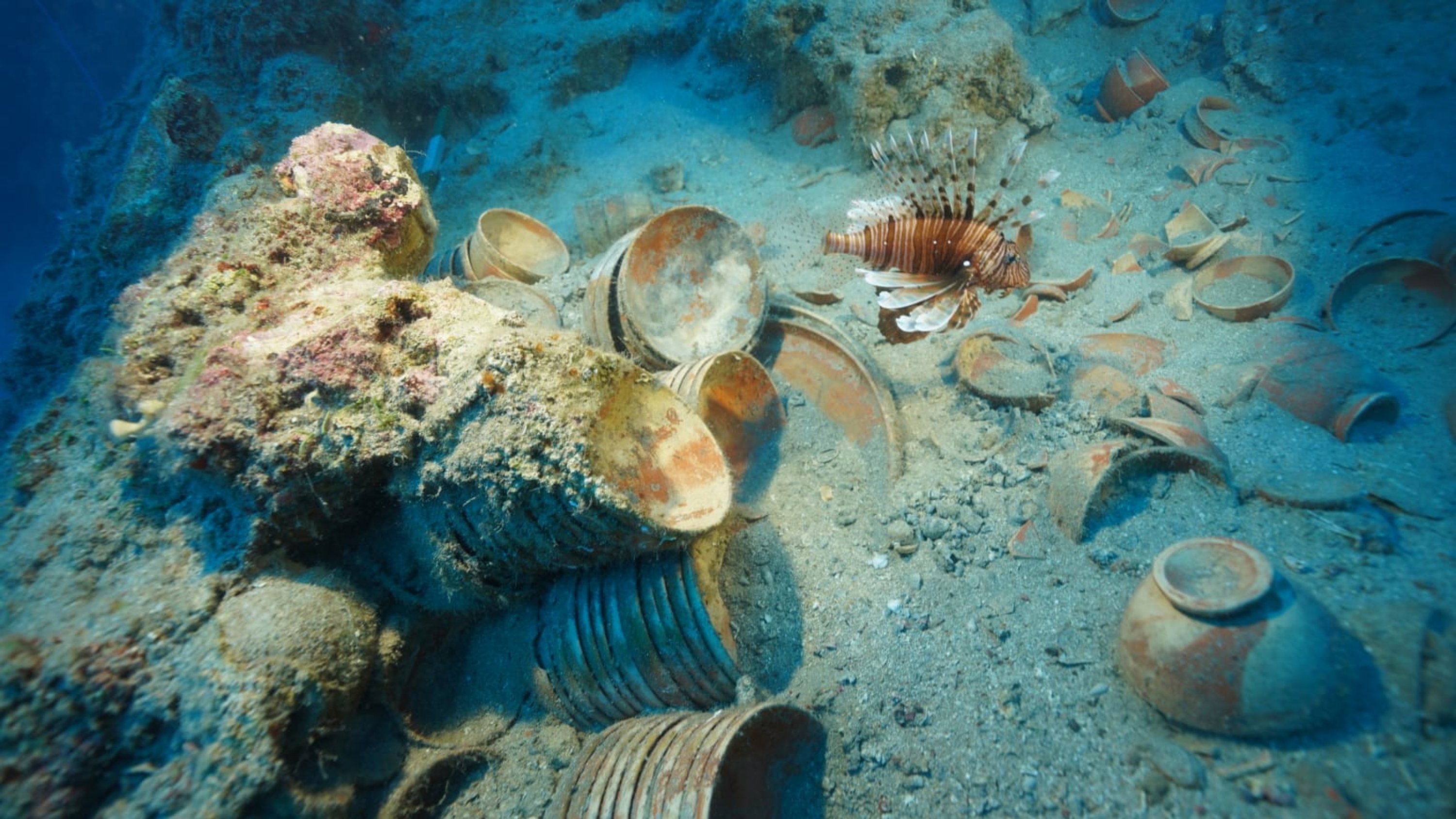 Roman shipwreck with more than 6,000 pieces of intact tableware has been discovered off the Mediterranean coast of Adrasan in Antalya, Turkey. The unprecedented find includes stacks of still-nested plates, bowls and platters in 122 different shapes and sizes. It dates to the Late Hellenistic or Early Roman period, ca. 2,100 years ago.
Underwater archaeologists began excavating the site in 2025. At a depth of between 42 and 55 meters (138-180 feet ), they found an unusually large and diverse cargo of ceramics. In the first season of excavation, they recovered 6,511 intact pieces of ceramic tableware, plus thousands of fragments. The intact ceramics were transferred to Antalya Museum for conservation. The fragments went to Akdeniz University’s Conservation and Restoration Laboratory in Kemer to be puzzled back together, if possible.
The extraordinary high number of fragile ceramics to survive intact is attributable to the way the ship’s cargo was packed. The dishes were nested into each other, then packed in wooden crates with clay shock-absorbers between them. The system was so effective that the plates didn’t even break when the ship sank.
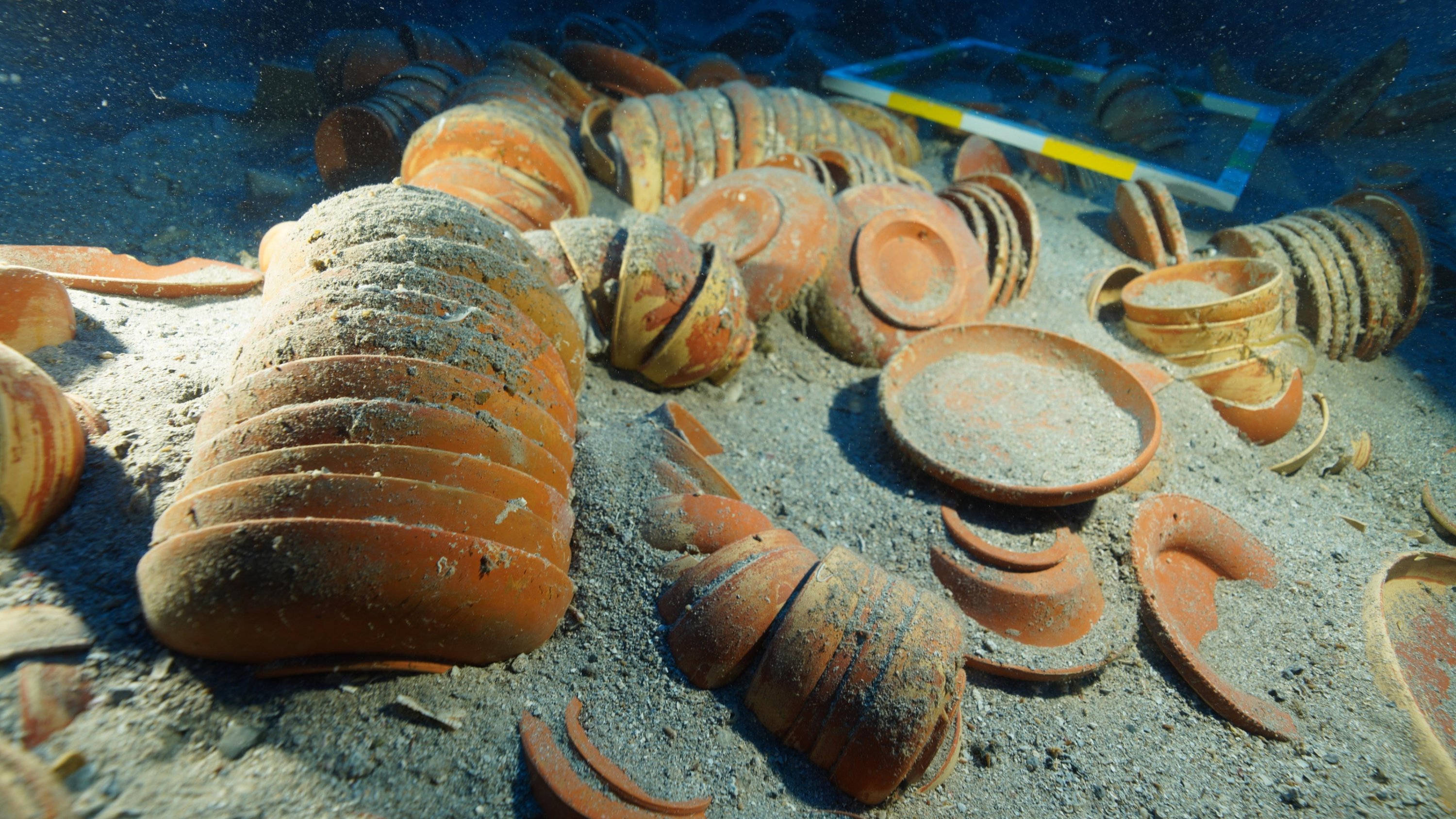 The ceramic tableware was manufactured in the ancient city of Rhosus (modern-day Arsuz) on the tip of the Iskenderun peninsula more than 250 nautical miles east of Adrasan. Rhosus was one of the foremost ceramic producers in the Roman world. It was synonymous with luxury tableware, even appearing in a letter statesman Marcus Tullius Cicero wrote to his friend Titus Pomponius Atticus in 50 B.C., teasing him about why he’d need such fine pottery.
“I have ordered the Rhosian ware for you. But what the deuce will you serve up in fine pottery, when you are accustomed to give us vegetarian fare on fern-pattern plates and in magnificent baskets?”
The ship wasn’t only carrying Rhosian ware. Amphorae manufactured on Aegean islands was also part of the cargo, as were coins from Antioch dating to the 1st century B.C.
The findings indicate that the ship was operating within a trade network connecting Antioch, the Aegean, Greece and the Italian coast around the middle of the 1st century B.C.
Researchers believe the ship departed from Rhosus and was likely sailing toward Rome when it struck a shallow area during a storm and sank.