
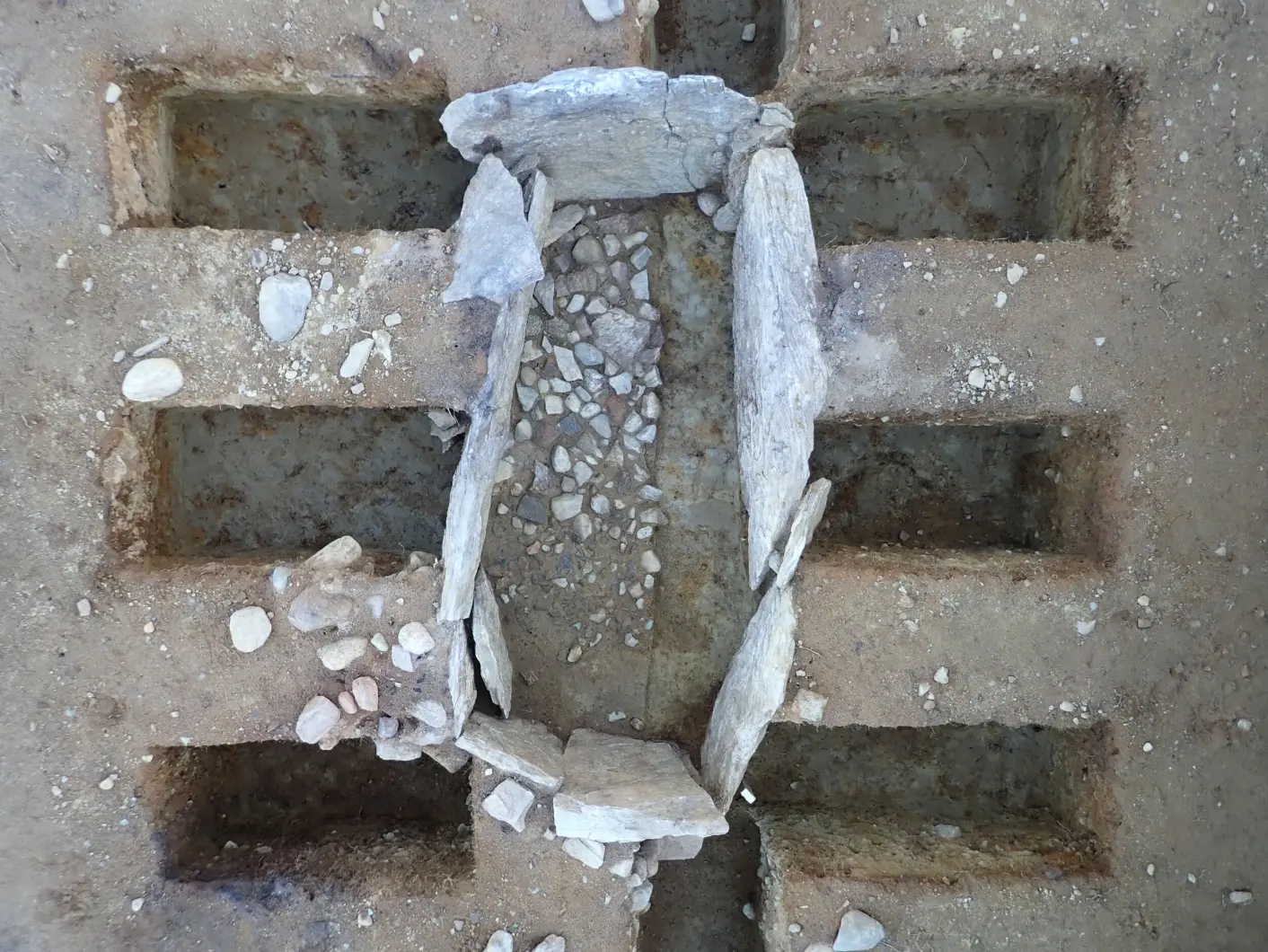
 What at first sight looked like an ancient firepit has proven to be a rare 4,000-year-old stone cist grave in Halden, southeastern Norway. It is one of only about 20 stone cists found in Norway, in contrast to Sweden where 2,000 are known, and this is the only ever to be excavated by professional archaeologists.
Just a few miles from the border with Sweden, the area is slated for development into a new industrial park. Archaeologists are excavating the site to document and recover everything they can find before construction begins. The team uncovered some stones sticking up out of the soil, and a charcoal layer which suggested to them it was an ancient firepit. It was only when they removed some of the stones that they saw the stone slab sides of a cist grave.
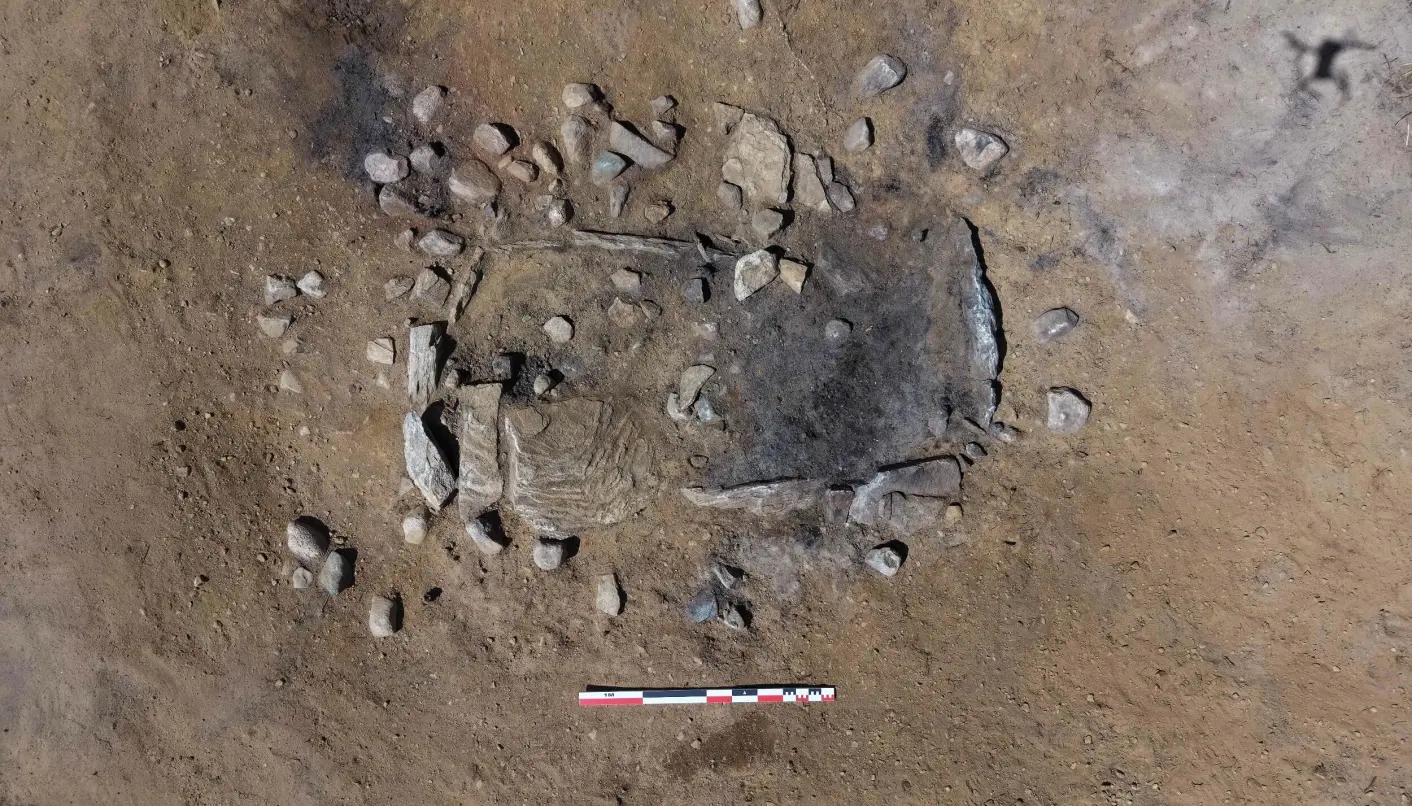 The cist was built using stone slabs weighing hundreds of pounds with wedges driven down into the corners to create an in-ground coffin. The stone slabs are neatly placed and carefully wedged to keep them stable. Small, smooth stones were used to line the bottom of the grave creating a floor.
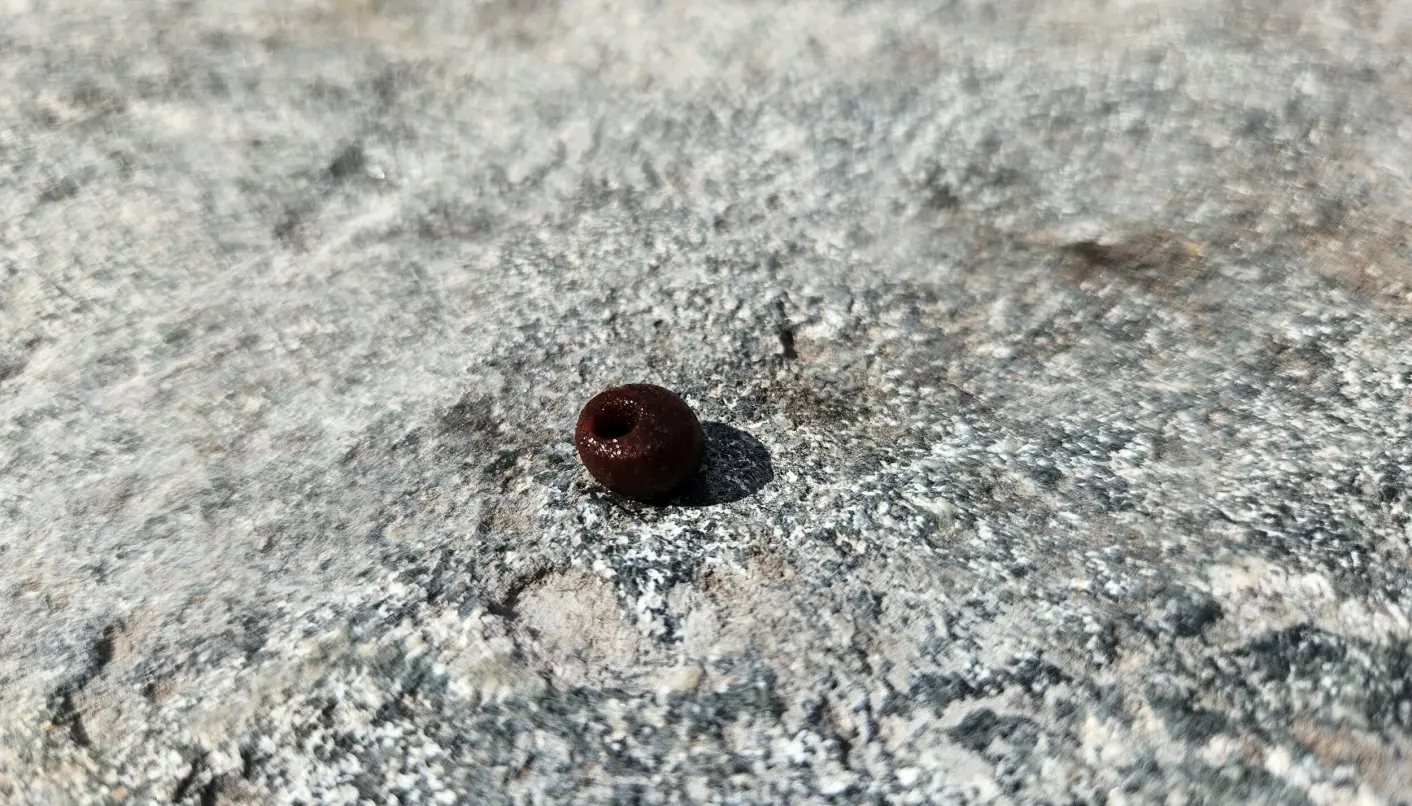
 No traces of human remains were found inside the grave. Comparable examples have contained the skeletal remains of young men, some showing evidence of battle injuries. They were buried with daggers and arrowheads, suggesting they may have been warriors in life. The Halden cist did contain an arrowhead, but no daggers. They also found one amber bead and a fragment of corded ware pottery.
 Archaeologists believe the deceased was likely a local resident, perhaps a farmer. To answer some of the questions about the grave and its owner, archaeologists are employing an experimental technique: they will be extracting DNA from soil samples. The body has decomposed, but the soil it decomposed into is still there and still retains traces of DNA. Archaeologists hope they’ll be able to find out more about the deceased from those traces.
The Cultural History Museum is now discussing the fate of the cist grave with Østfold County Council. The debate is whether it should be allowed to remain in situ so that people can visit it in its original location, or recovered and reconstructed inside the museum.