
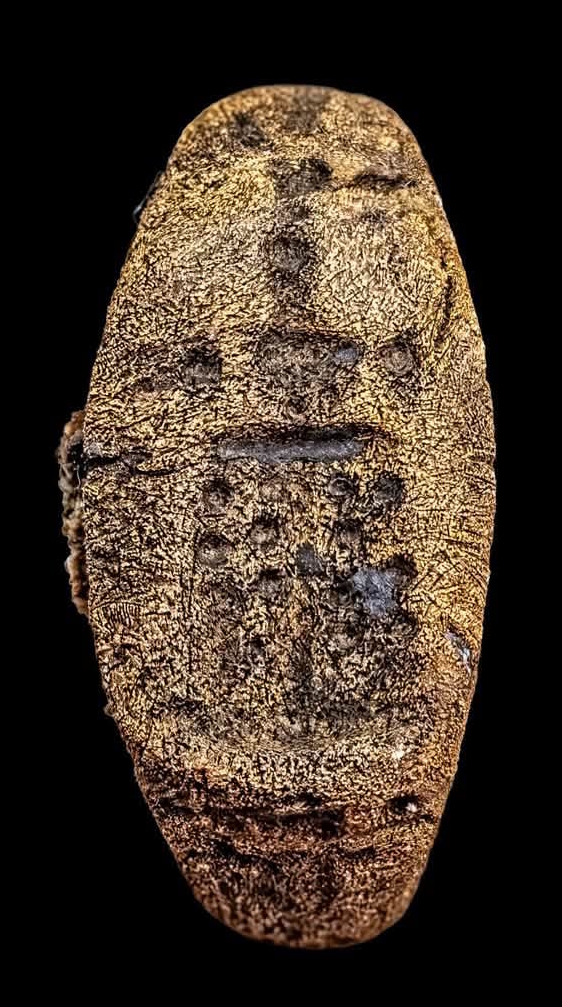
 A unique bronze seal ring engraved with a depiction of the famed Lighthouse of Alexandria, one of the Seven Wonders of the Ancient World, has been discovered in the city’s harbour. It is the first depiction of the Lighthouse ever found on a seal ring.
Underwater archaeologists found the ring in an exploration of the submerged royal island of Antirhodos which was part of ancient Alexandria’s Eastern Harbour. The discovery location is significant because Antirhodos was the site of a Ptolemaic royal palace documented by geographer Strabo when he visited Alexandria between 29 and 25 B.C.
Other objects recovered near the ring include pottery, glass, tableware, amphorae, bottles, lamps and other utilitarian objects dating from the 4th century B.C. to the 4th century A.D.
The Lighthouse of Alexandria was built on the island of Pharos at the entrance to the Portus Magnus, the great harbor, during the reign of Ptolemy II Philadelphus in the 3rd century B.C. It consisted of three levels: a square base, an octagonal body and a circular tower topped with the great fire. The flames were fueled by wood and resin, and amplified by metal mirrors. It could be seen from at least two dozen miles away and guided ships navigating the coast safely into the harbour.
It was a symbol of Alexandria and its commercial success, and an acknowledged architectural masterpiece. Depictions of it appeared on coins in the Ptolemaic era and under Roman imperial rule. The image engraved on the ring is similar to the depictions of the Lighthouse on 2nd century coins, so archaeologists have tentatively dated the ring to that period.