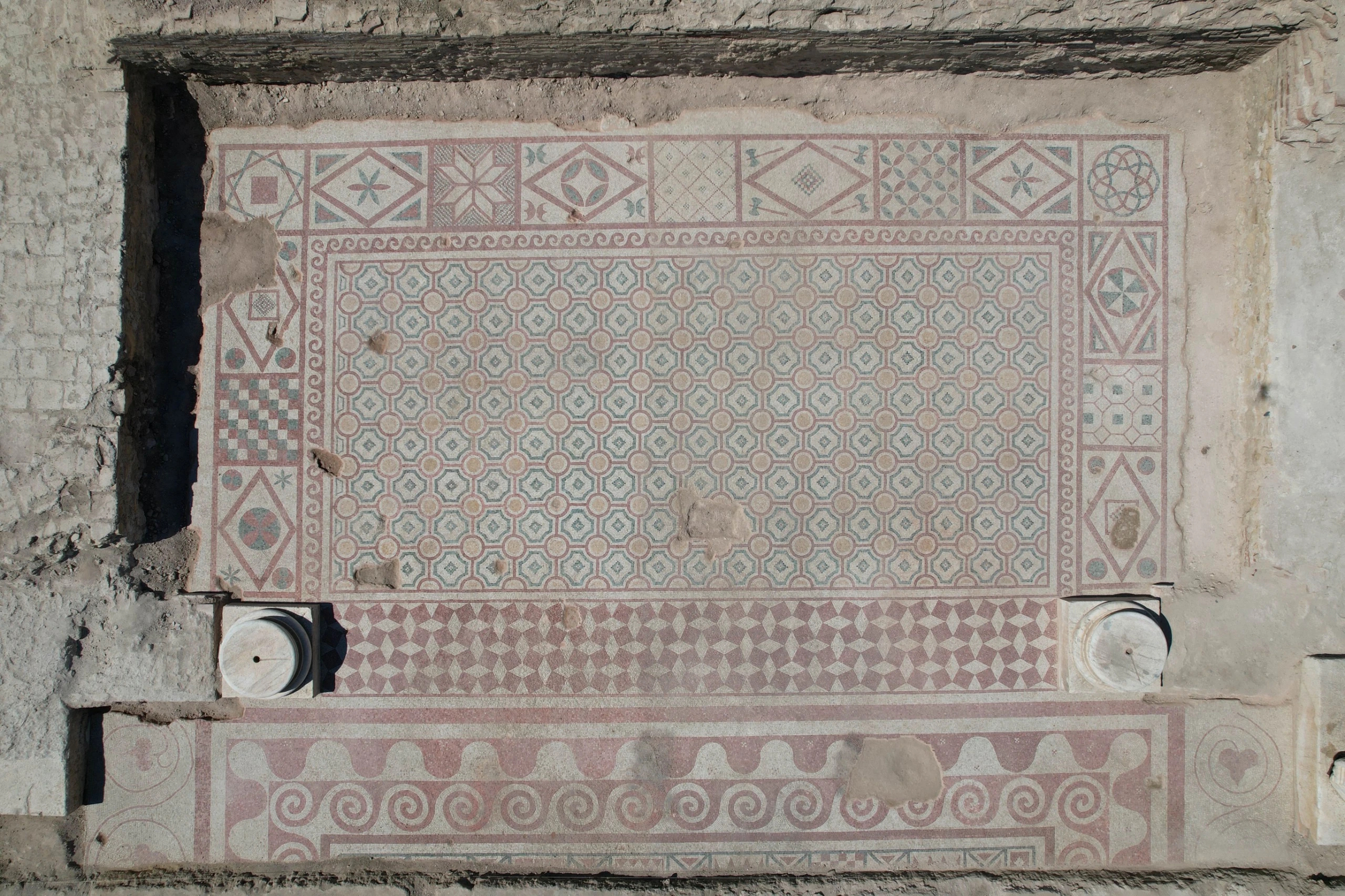
 An intricately patterned mosaic floor in beautiful condition has been unearthed in ancient Pompeiopolis, on northern Turkey’s Black Sea coast. The mosaic is about 105 square meters (1,130 square feet) and is decorated with intricate geometric patterns, including double-headed axes, wave motifs, diamond shapes, overlapping rings, hexagons, spirals and more. It dates to the 4th century A.D.
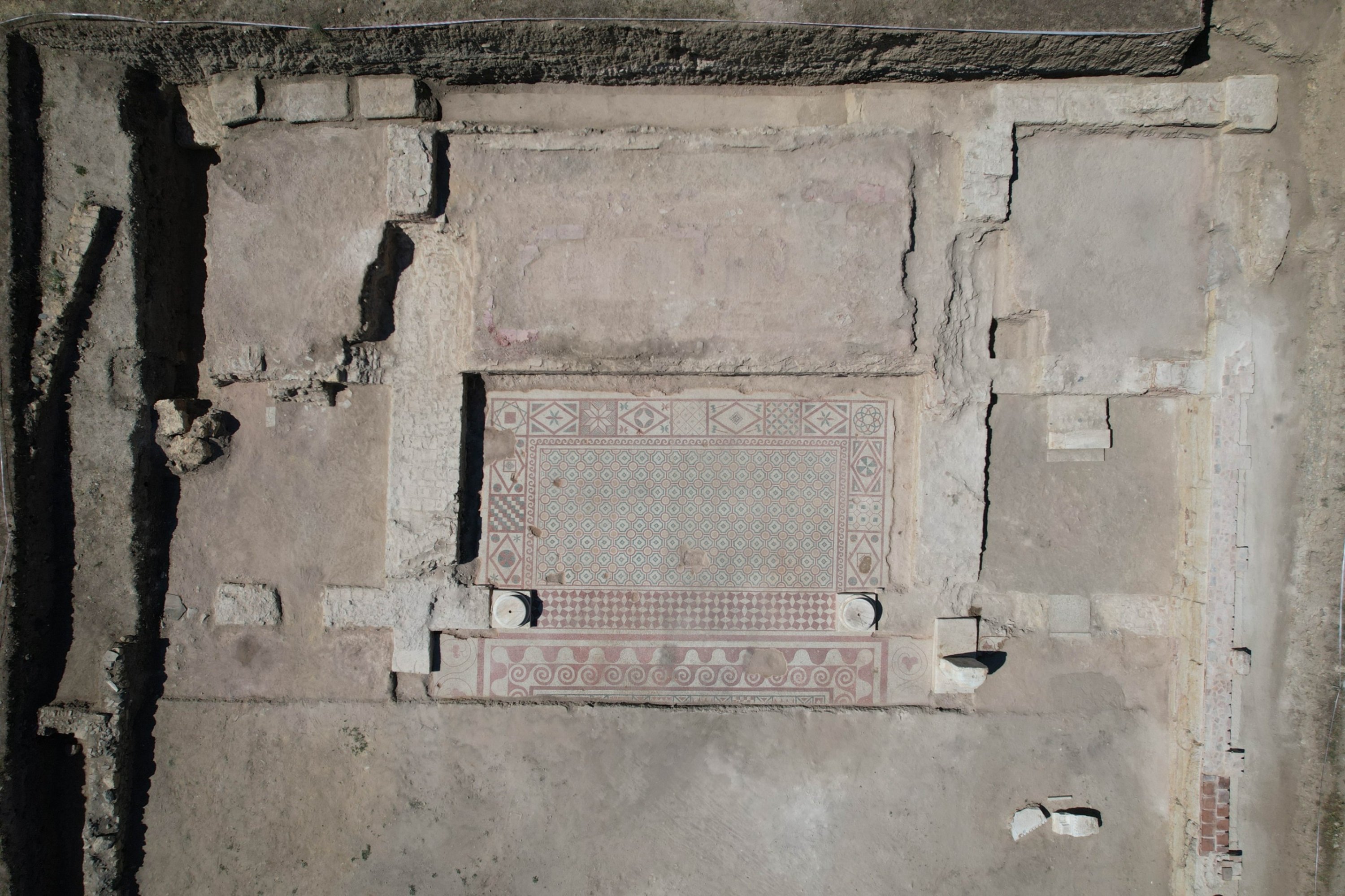 Pompeiopolis was the capital of the Roman province of Paphlagonia in the 2nd century A.D. Between 150 and 160 A.D., a basilica was built in the provincial capital. This was a large public building where civic business was transacted. Constantine used the floorplan of the traditional Roman basilica for the original St. Peter’s in Rome, and other Christian churches followed in his footsteps.
Historians believe that Pompeiopolis became an episcopal see in the 4th century, and the basilica would have been repurposed into a church shortly thereafter. It remained a religious center until the 13th century when the region was conquered by the Seljuk Turks.
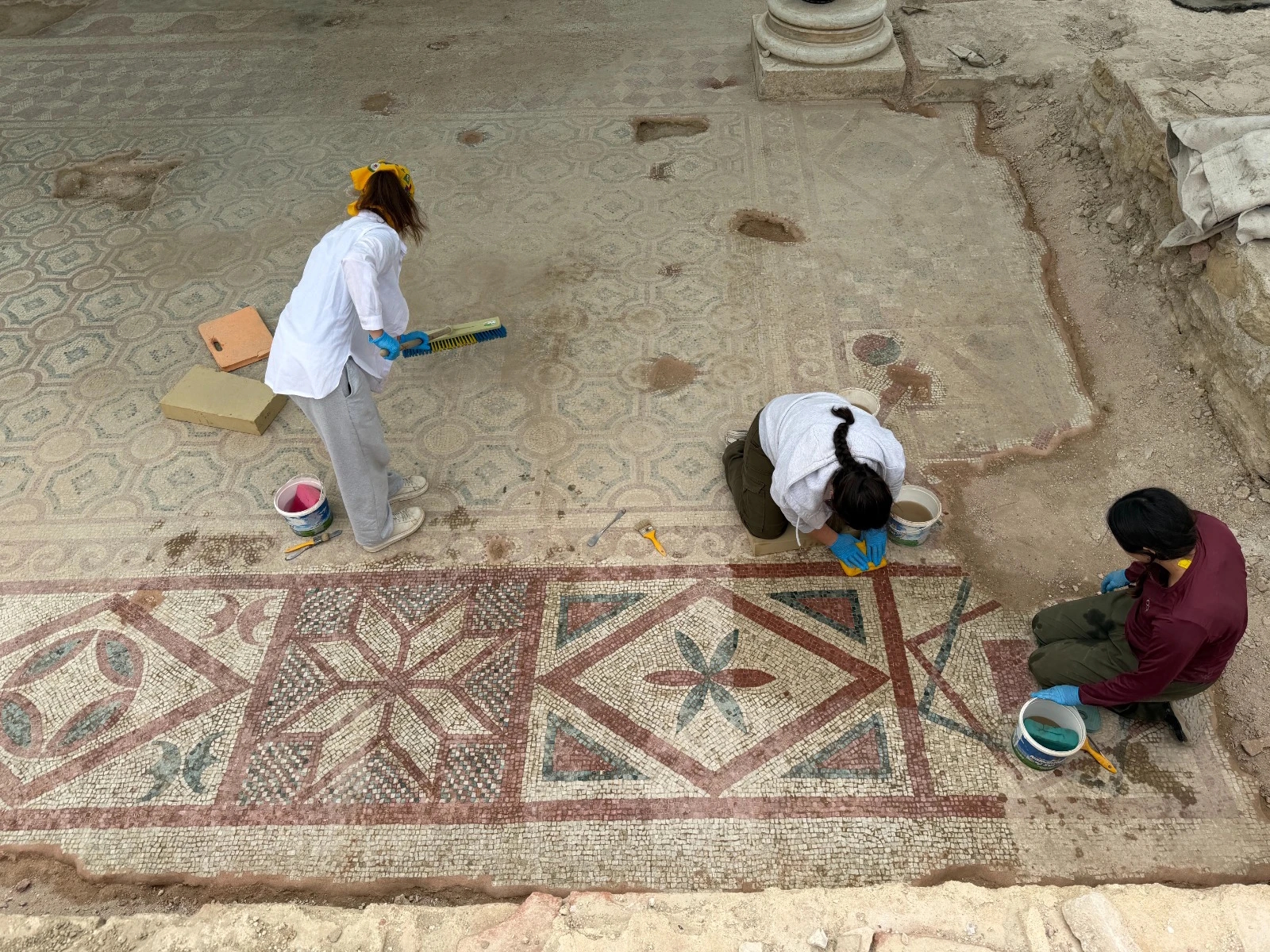
The 105-square-meter mosaic belongs to that second life of the building. Dated to the 4th century, it decorates the basilica’s central nave. Ersoy has noted that the pavement isn’t complete — more of it likely lies beneath still-unexcavated ground — and that conservation work has focused on stabilizing what’s already exposed before digging further. In other words, 105 square meters is what’s been documented so far, not the floor’s original size, which was almost certainly larger.
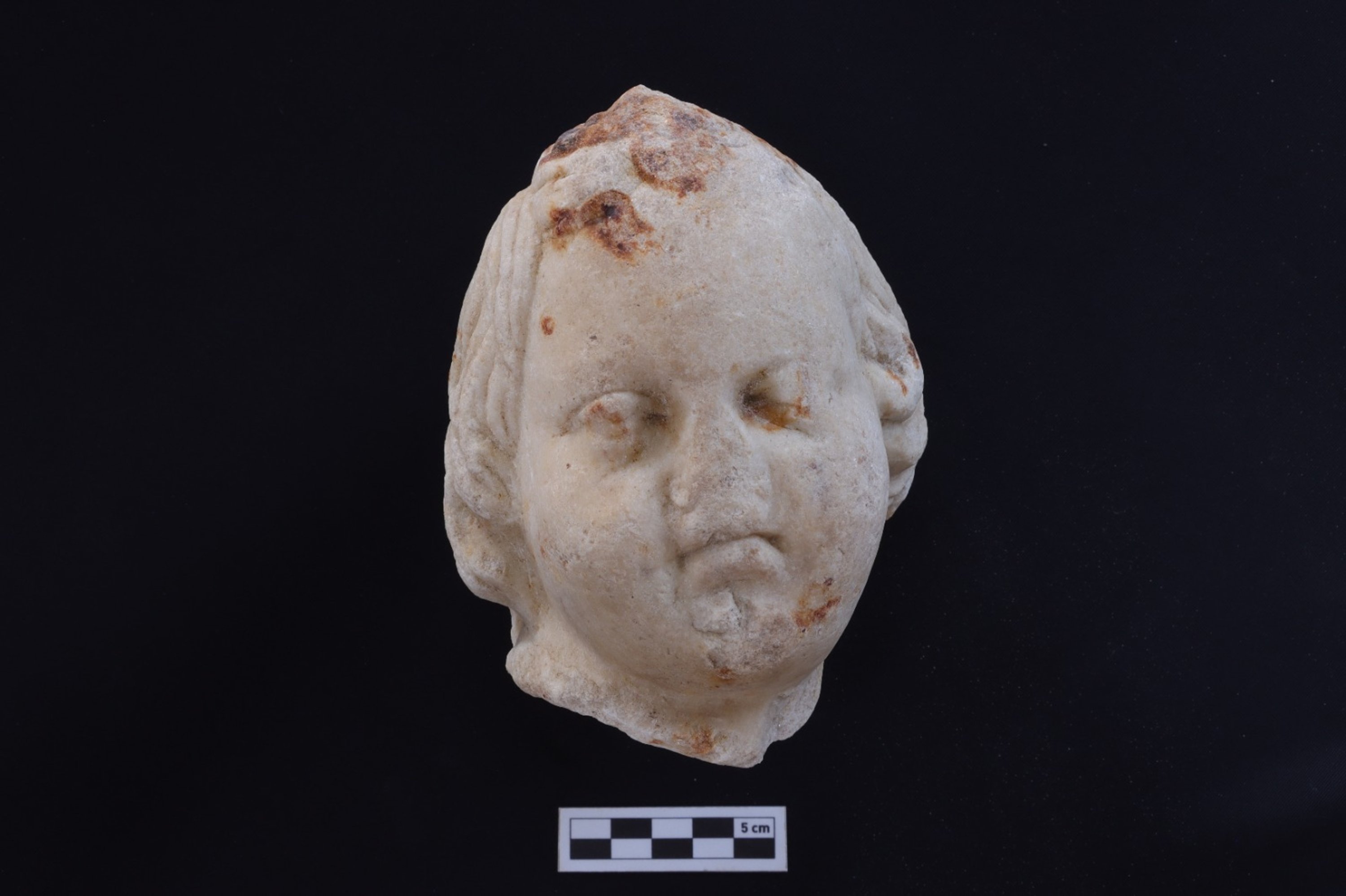
The excavation also uncovered the head of an Eros statue in the basilica. It dates to the second half of the 2nd century A.D., so before the building was a church. It was found in the pastophorium, a small side chamber next to the altar where liturgical objects were kept.
A statue of a pagan god of love, tucked away next to a church altar, says something about how these transformations actually worked: older material wasn’t always destroyed when a building changed hands between religions. Sometimes it was simply moved out of the way. For researchers, the piece now offers concrete evidence about the artistic and cultural life of Pompeiopolis during the Roman imperial period, when several local families rose into the senatorial aristocracy at Rome.