
 An excavation in the city of Troyes in northeastern France has unearthed three burials from Late Antiquity with well-preserved grave goods, including intact glass vessels. The fine glassware is an extremely rare find in the area.
A team from the French National Institute for Preventive Archaeological Research (INRAP) excavated the site on the bank of the Vienne River prior to construction of a new housing development. They found the remains of a post-built settlement from early antiquity (1st century A.D.) that was protected by a sturdy ditched wall. A large palisade divided the settlement, and most of the 300 domestic structures unearthed were on the east side.
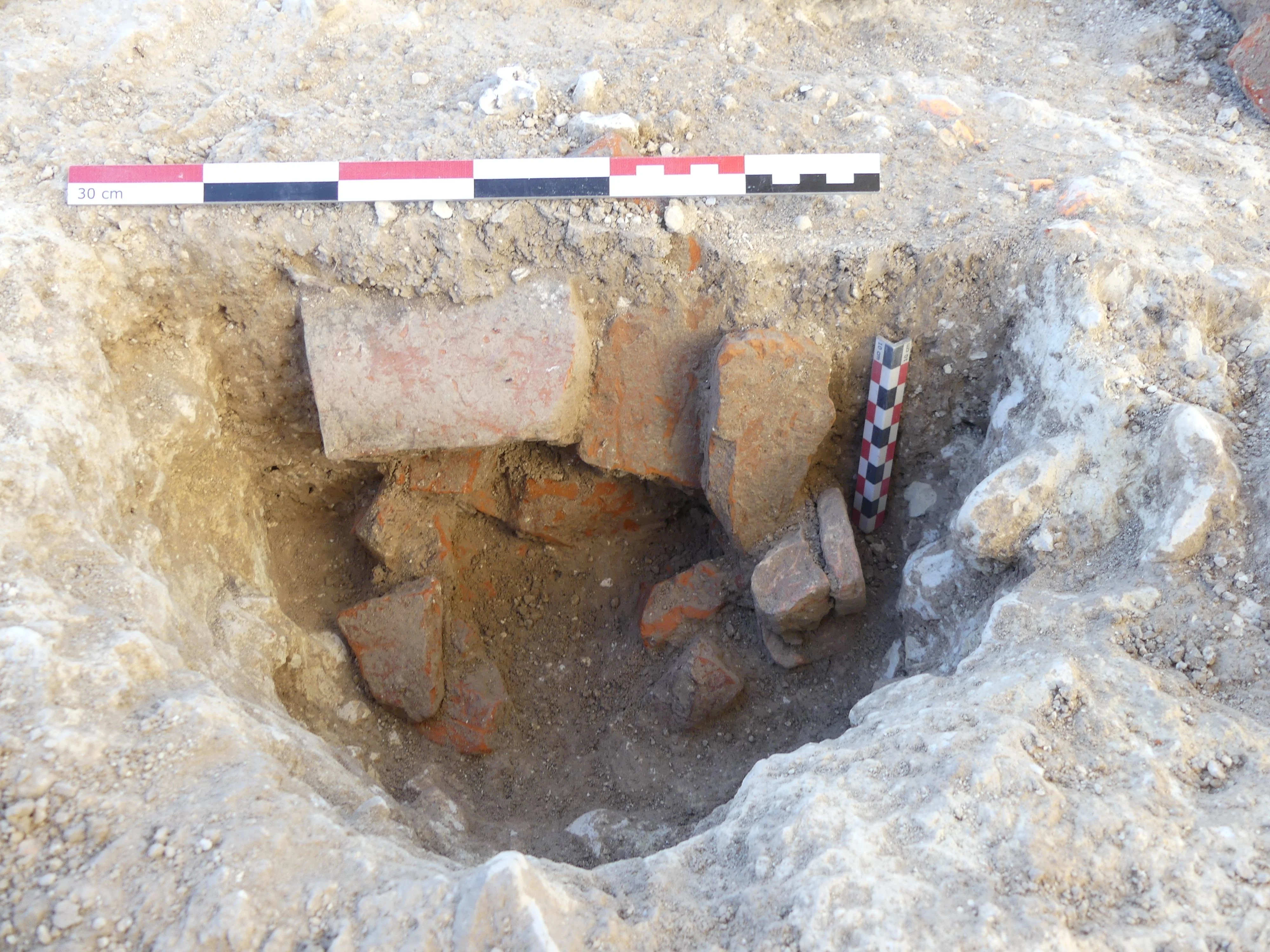 There’s evidence of a second phase of construction in which masonry buildings were raised next to the post-built ones. Tegulae, roof tiles, and hypocaust tile pillars confirm masonry construction of urban buildings, and judging from the profusion of metal artifacts like coins, fibulae and furniture fittings, the town was well-populated and prosperous.
 The three burials were discovered outside the ditched perimeter of the settlement. They date to the late 3rd or early 4th century A.D. They were dug very closely together and contain the skeletal remains of an adult woman, a child and a second adult whose bones are too degraded to determine their sex. Archaeologists believe it was a family grouping.
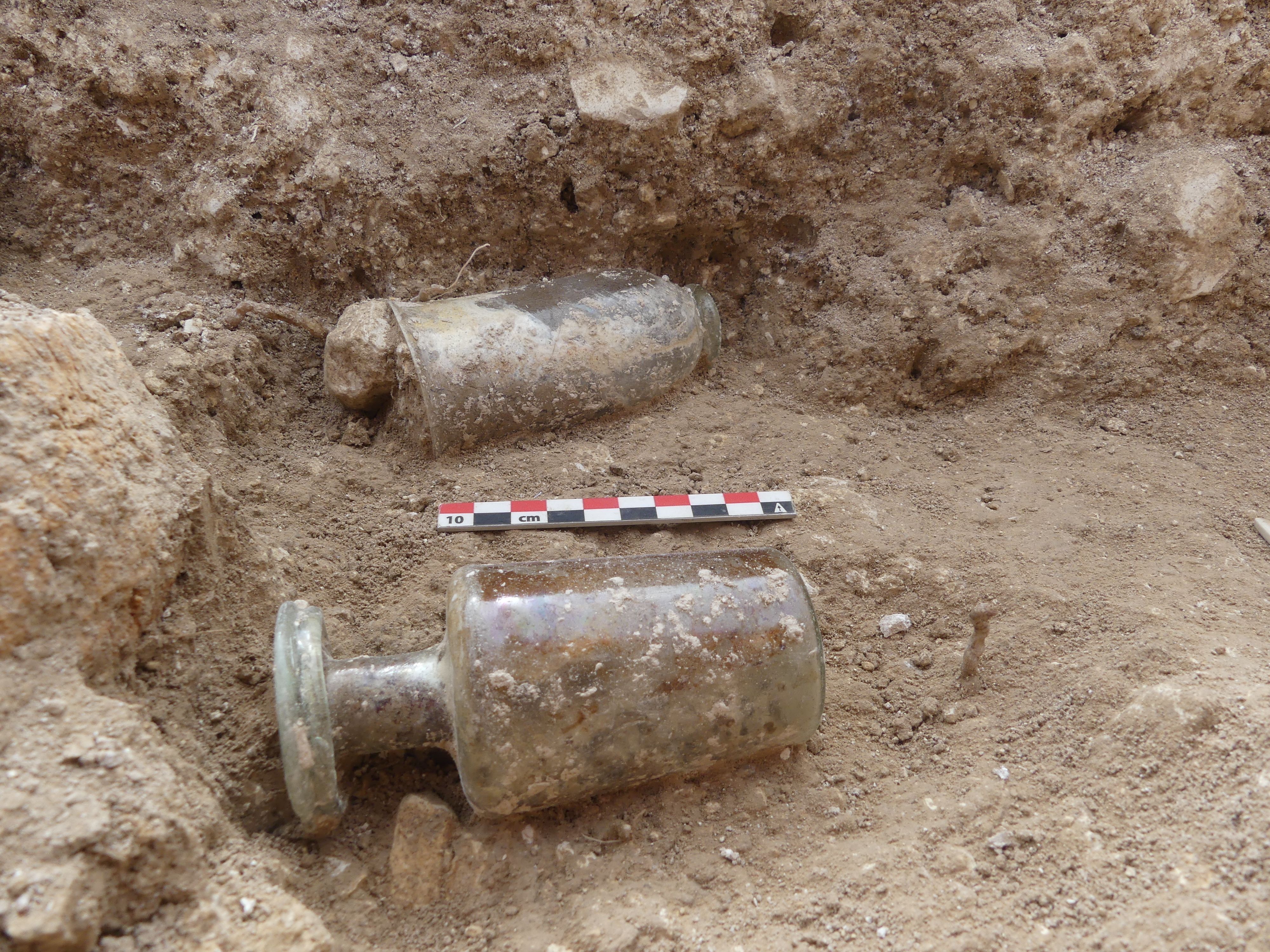 One of the adults was buried with glass vessels around their head. Two of the vessels are cylindrical and with thin glass walls. An intact pot-bellied amphora was found at the feet of the deceased. It was locally made and of good quality.
The site appears to have been abandoned after Late Antiquity, although the excavation did uncover a small group of huts from the turn of the 11th/12th century just to the north of the ancient town. There was a well and a silo, so it seems to have been a small community, although it’s not possible to tell from the sparse artifacts how long it was inhabited.