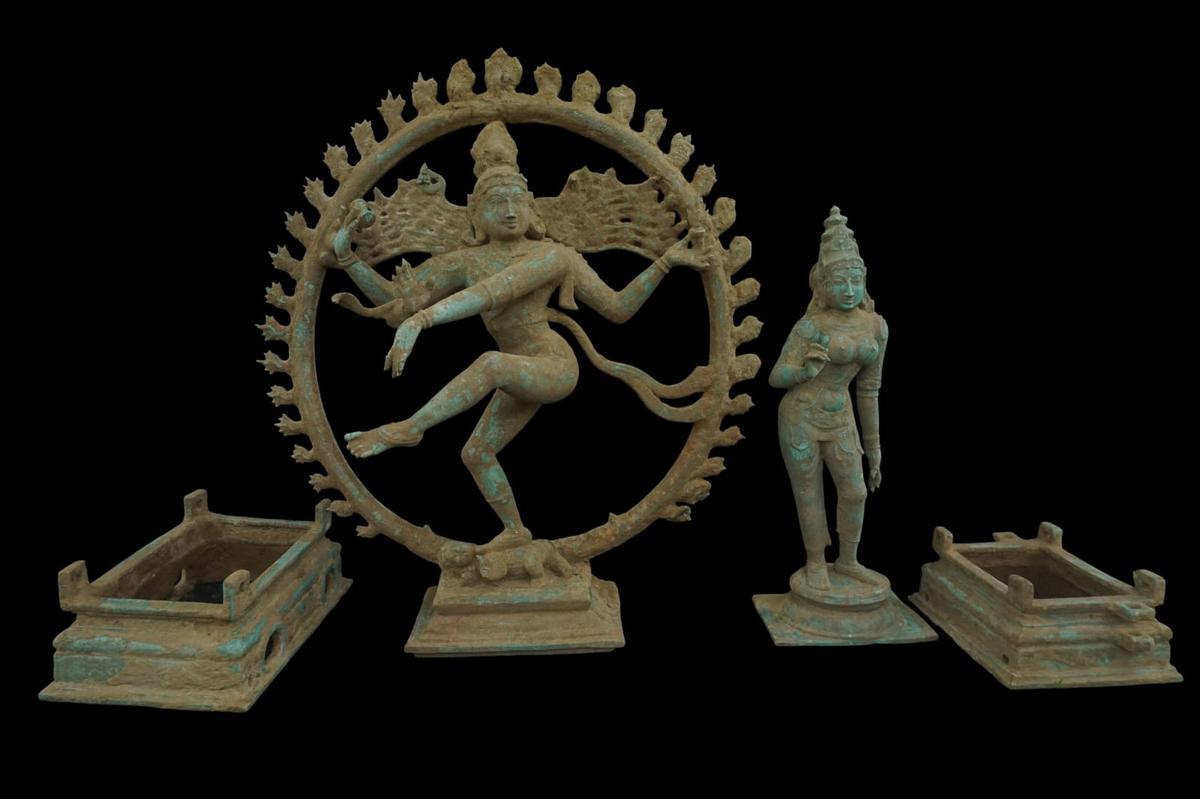
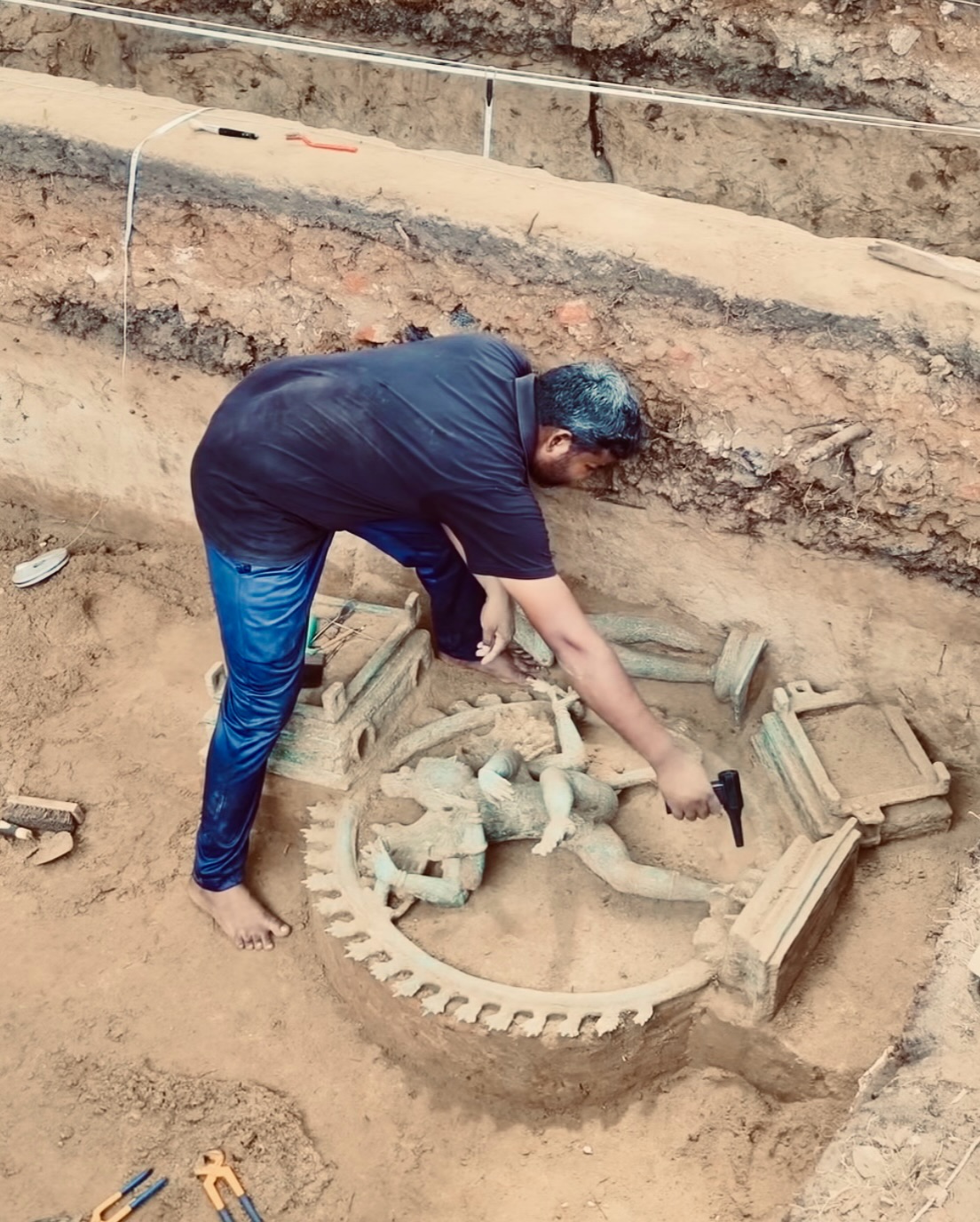
 Two 12th century bronzes of Hindu deities from the Chola Empire have been discovered in Nagapattinam, Tamil Nadu, India. They depict the deities Nataraja, the dancing form of Shiva, and Sivakami Amman, a form of the goddess Parvati and consort of Shiva. They are the first example of bronze statues of their kind unearthed in a scientific excavation by the Tamil Nadu State Department of Archaeology.
The Nataraja is the larger of the two at 110 cm high and 100 cm wide. Shiva has for arms and one leg raised crossed over the over, dancing the Anansa Tandava, the dance of bliss. The right leg is slightly bent and the foot rests on a figure believed to represent ignorance. The Sivakami statue is 82 cm high and 23 cm wide. She stands in an curved posture known as tribhanga, with one arm raised and the opposite leg bent.
The statues were found in August buried together next to their pedestals. Archaeologists dated them to the 12th century based on their design style and bronze craftsmanship.
Bronze sculptures reached a particularly sophisticated level under the Chola rulers. Images of Hindu deities were not simply decorative objects. Many were created for worship and could be carried in religious processions, allowing divine images to move beyond the inner spaces of temples. Whether the newly discovered statues served such a purpose has not yet been established.
Nagapattinam was an important port city during the Chola period, serving as the empire’s primary entry point and exit point for east-bound travel across the Bay of Bengal. In addition to the commercial traffic, the city welcomed religious pilgrims who came to visit the Chudamani Vihara Buddhist monastery and the Soundarajaperumal Temple to Vishnu that is referenced in the Vaishnava canon, holy books written by the Alvars, Tamil poet-saints.
Both bronzes have been transported to Chennai for chemical conservation. Researchers also plan metallurgical analyses to examine the materials used in their manufacture.