Book with notes by John Milton found in Phoenix public library

A rare book with handwritten annotations by Paradise Lost author John Milton has been discovered in a public library in Phoenix, Arizona. This is only the third book with Milton’s notes known to survive, and one of only nine surviving books from his library.

The notes in two volumes of Holinshed’s Chronicles, a history of England, Ireland and Scotland published in 1587, were spotted by researchers in the Rare Book Room of the Burton Barr Central Library this March. Arizona State University faculty invited four visiting scholars to examine a selection of books collected by Alfred Knight, a real estate magnate, bibliophile and philanthropist who bequeathed his collection of more than 2,300 items, including a wide range of literary output from illuminated manuscripts to cuneiform tablets, Shakespeare folios and rare first editions, to the people of Phoenix in 1958. Knight had two fine first editions Milton’s Paradise Lost (1667–8) and collected prose (1697), but he had no idea that his copy of Holinshed was part of the great author’s personal library.

The Holinshed was among the books pulled for the research forum, and two of the visiting researchers recognized the distinctive italic handwriting in the notes as that of John Milton. Dr Aaron Pratt, Curator of Early Books & Manuscripts at University of Texas, was the first to notice that a letter “e” looked a lot like Milton’s “e.” Claire Bourne, the associate professor of English at Penn State who in 2019 had found Milton’s annotations in Shakespeare’s First Folio at the Philadelphia Free Library, compared the Holinshed’s notes to the Shakespeare ones, and found them so similar, she sent photos of the notes to Professor Jason Scott-Warren at the University of Cambridge. He didn’t hesitate to agree that this was Milton’s hand.

John Milton censors Raphael Holinshed's lewd anecdote about the mother of William the Conqueror, Arlete. Milton crosses the passage out with a diagonal line and adds a note saying: "an unbecom[ing] / tale for a hist[ory] / and as pedlerl[y] / expresst". Photo courtesy the Phoenix Public Library.The researchers found more than 100 annotations in the first volume alone. In one of them he takes umbrage at a passage, striking the entire paragraph with a diagonal line on the grounds that it is “an unbecoming tale for a history and as pedlerly expresst.” “Pedlerly” means junky, like something a peddler would sell. Milton was clutching his pearls over a rather juicy story, to be fair: the conception of William the Bastard, later known as William the Conqueror.

In the yéere of Christ 1030, Robert, the second sonne of Richard the second duke of Normandie, and brother to Richard the third duke of that name there having with great honour and wisedome gouerned his dukedome seven yéeres, for performance of a penance that he had set to himselfe, appointed a pilgrimage to Jerusalem; leaving behind him this William a yoong prince, whome seven yéeres before he had begotten upon his paramour Arlete (whom after he held as his wife) with whose beautifull favour, lovelie grace and presence, at hir dansing on a time then as he was tenderlie touched, for familiar utterance of his mind what he had further to say, would néeds that night she should be his bedfellow, who else as wivelesse should have lien alone: where when she was bestowed, thinking that if she should have laid hir selfe naked, it might have séemed not so maidenlie a part: so when the duke was about (as the maner is) to have lift up hir linnen, she in an humble modestie staid hir lords hand, and rent downe hir smocke asunder, from the collar to the verie skirt. Heereat the duke all smiling did aske hir what thereby she ment? In great lowlines, with a feate question she answerd againe; “My lord, were it méet that any part of my garments dependant about me downeward, should presume to be mountant to my sovereignes mouth vpward? Let your grace pardon me.” He liked hir answer: and so and so foorth for that time.

So basically, instead of letting Robert I take her shirt off, Arlete tore it off her body Chippendales’ style from neckline to waist. Nine months later, a bouncing baby Conqueror was born.

The researchers believe that the discovery opens up new perspectives on his engagement with a major source for his writings, including Of “Reformation “(1641) and “The History of Britain” (1670). He would have been working on both around the time—or shortly after—he was reading the “Chronicles”.

Several of Milton’s notes cite other books known to have been in his library. These include John Stow’s “Annales”, another key source of historical information. Milton also marked out Holinshed quoting Giovanni Villani’s “Chroniche di Firenze” (“Chronicles of Florence”), a book which Milton included in the curriculum he developed for his nephews in the 1640s.

The notes also emphasize Milton’s interest in continental poetry. Under Holinshed’s assertion that Richard the Lionheart was “not very notorious,” Milton added, “the booke of Provenzall poets numbers him in / the catalogue, telling of his poetrie, and his Provenzal / mistresses.” The researchers believe this book refers to Jean de Nostredame’s “Les vies des plus célèbres et anciens poètes provençaux” (Lyon, 1575), which discusses Richard’s poetry and mistresses.

Iron Age human sacrifice victim found in Dorset

A woman buried in a grave in Iron Age Dorset has been identified as a likely victim of human sacrifice. There is evidence that she did hard physical labor in her short life, died from being stabbed in the neck, and her body was buried in an anomalous, highly ritualized way. This combination of elements is rare physical and circumstantial evidence that the deceased was killed as an offering.

The grave containing human and animal bones was discovered in 2010 in an excavation of an Iron Age banjo enclosure (round areas bounded by a ditch and embankment with an entrance passage that gives them a banjo-like shape) at Winterborne Kingston in Dorset. Archaeologists found multiple burial pits and traces of roundhouses in the enclosure. In pit 5013, the fully articulated skeleton of an adult was discovered over a layer of animal bones.

Analysis found the body belonged to a woman in her late 20s at time of death. Despite her young age, her vertebrae were damaged from exertion and showed signs of arthritic changes. The areas of muscle attachment indicate her muscles were well-developed from rigorous and consistent physical activity. Stable isotope analysis of her teeth found she grew up more than 20 miles from the Winterborne Kingston enclosure.

The animal bones had been deliberately placed, not just tossed in, with different species (sheep, cow, horse, dog) placed parallel to each other in an off crescent-shaped arrangement. The human body, on the other hand, received no such consideration. She was face down on top of the animal bones, head and legs towards the left side, arms bent at the elbows, hands beneath the body.

Banjo enclosures were in use from around 400 B.C. until the mid-1st century A.D. Accelerator mass spectrometry dating of the bones in pit 5013 to around 351-3 B.C., so this burial dates to the early years of the enclosure practice. It is unique compared to the other burials at Winterborne Kingston and to Iron Age cemeteries elsewhere in Dorset. Typically, bodies were buried with pottery and meat offerings and were respectfully laid to rest.

She also suffered a rib fracture caused by blunt force trauma about three weeks before her death. Healing had begun and appeared to be progressing well when she met her end. Cut marks on her cervical vertebrae indicate a fine bladed weapon had been inserted into her neck from behind, just under the base of the skull. This wound showed no signs of healing, so it was inflicted right before her death. The placement of the body suggests she was killed inside the pit, perhaps with her hands tied, and buried where she fell.

“All the significant facts we have found such as the problems with her spine, her tough working life, the major injury to her rib, the fact she could have come from elsewhere, and the way she was buried could be explained away in isolation,” [Dr. Martin Smith, Associate Professor in Forensic and Biological Anthropology at Bournemouth University,] said.

“But when you put them all together with her deposition face down on a platform of animal bone, the most plausible conclusion is that she has been the victim of a ritual killing. And of course, we found a large cut mark on her neck which could be the smoking gun,” he added.

The team highlight that as well as providing evidence of human sacrifice, being able to understand the life of the Iron Age woman has been important, both in terms of telling her individual story but also in understanding more about less-fortunate members of society in the past.

“The burials that get the most attention tend to be those of higher status, privileged people,” Dr Smith explained. “However, being able to humanise the story of this woman’s life has given us a valuable glimpse into the other side of Iron Age society. Behind every ancient burial we find is someone’s story waiting to be told.”

The findings have been published in The Antiquaries Journal and can be read here.

Missing head of Deva statue found at Angkor Thom

The long-lost head of a Deva statue from the Victory Gate of Angkor Thom has been discovered in a pit at the statue’s feet. Archaeologists from Cambodia’s national heritage authority APSARA unearthed the head in an excavation of the Victory Gate, where the body it was once attached to, the 23rd Deva, still stands guard along with 53 of its colleagues. The head is in comparatively good condition, considering its decapitation and burial. It is only missing its nose and its upper lip.

Established by King Jayavarman VII (r. 1181–1218) in the late 12th century, Angkor Thom was the last capital of the Khmer Empire. Jayavarman built 26-foot high walls surrounding the city with a wide moat around the perimeter. The walled city was entered and exited via five monumental gates, one at each of the cardinal directions, plus a fifth one, the Victory Gate, at the northeast. The extra gate was built to accommodate a pre-existing road that connected the Royal Palace to the East Baray (a man-made water reservoir built around 900 A.D.).

Visitors to the city crossed a causeway over the moat as they approached the gate. The causeway was flanked on both sides with statues of 54 devas and 54 demons, a reference to a Hindu myth of the Churning of the Ocean of Milk in which the opposing powers — gods and demons — worked together to make amrita, the nectar of life that would grant them immortality.

The current excavation at Victory Gate is the assessment phase of a larger restoration project to ensure the long-term stability of

Further excavation revealed that the foundations of the balustrades at the Victory Gate are still strong, as they had been repaired during the post-Angkor and French periods. However, stakeholders have suggested additional digging to assess the overall condition of the bridge and the previous repairs before planning future restoration work on the balustrade statues.

The discovery of the Deva statue head adds to the rich archaeological heritage of Angkor Thom and provides valuable insights into the history and craftsmanship of the ancient Khmer civilization.

Findings published from Narbonne’s extraordinary Roman necropolis

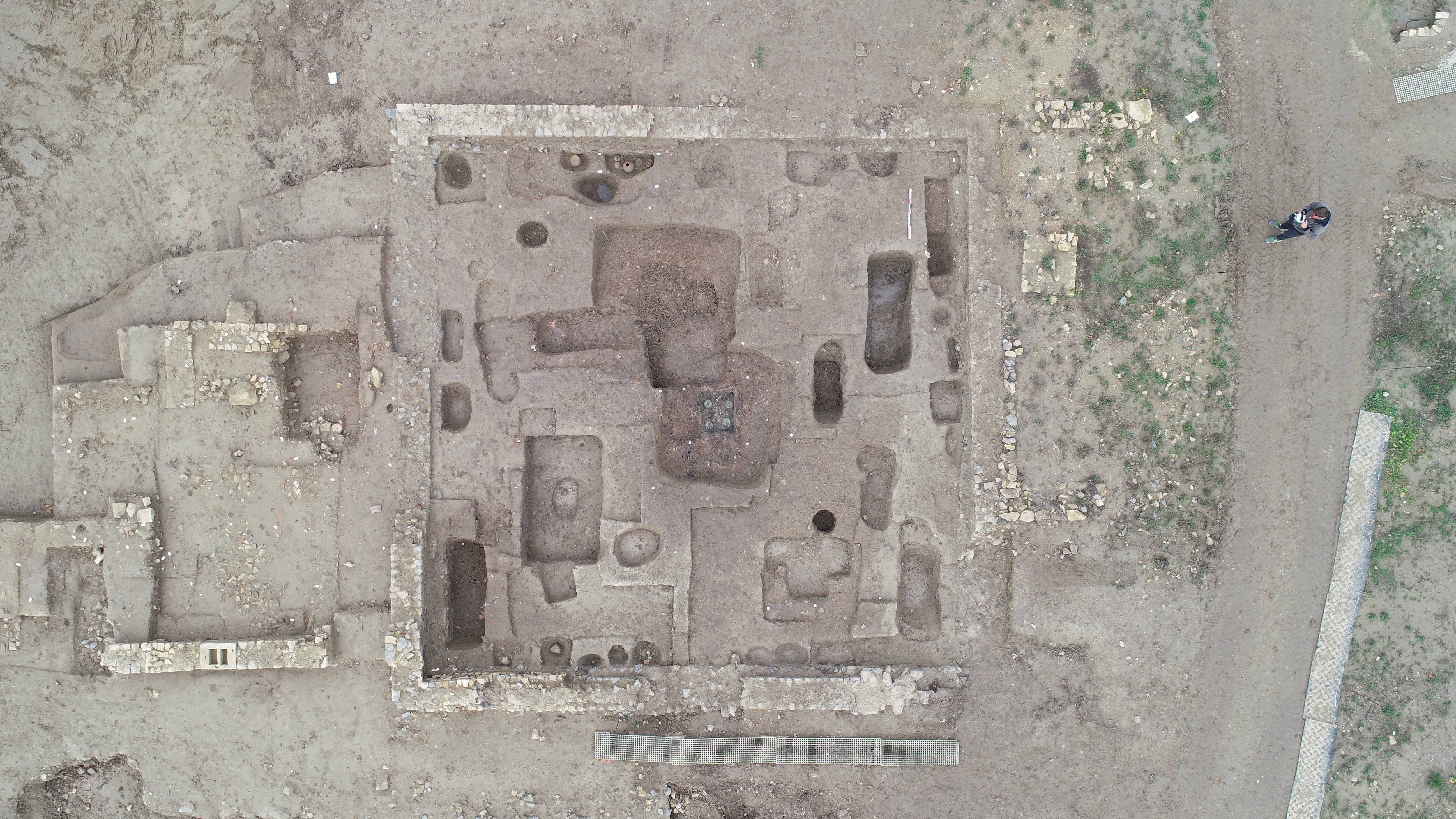
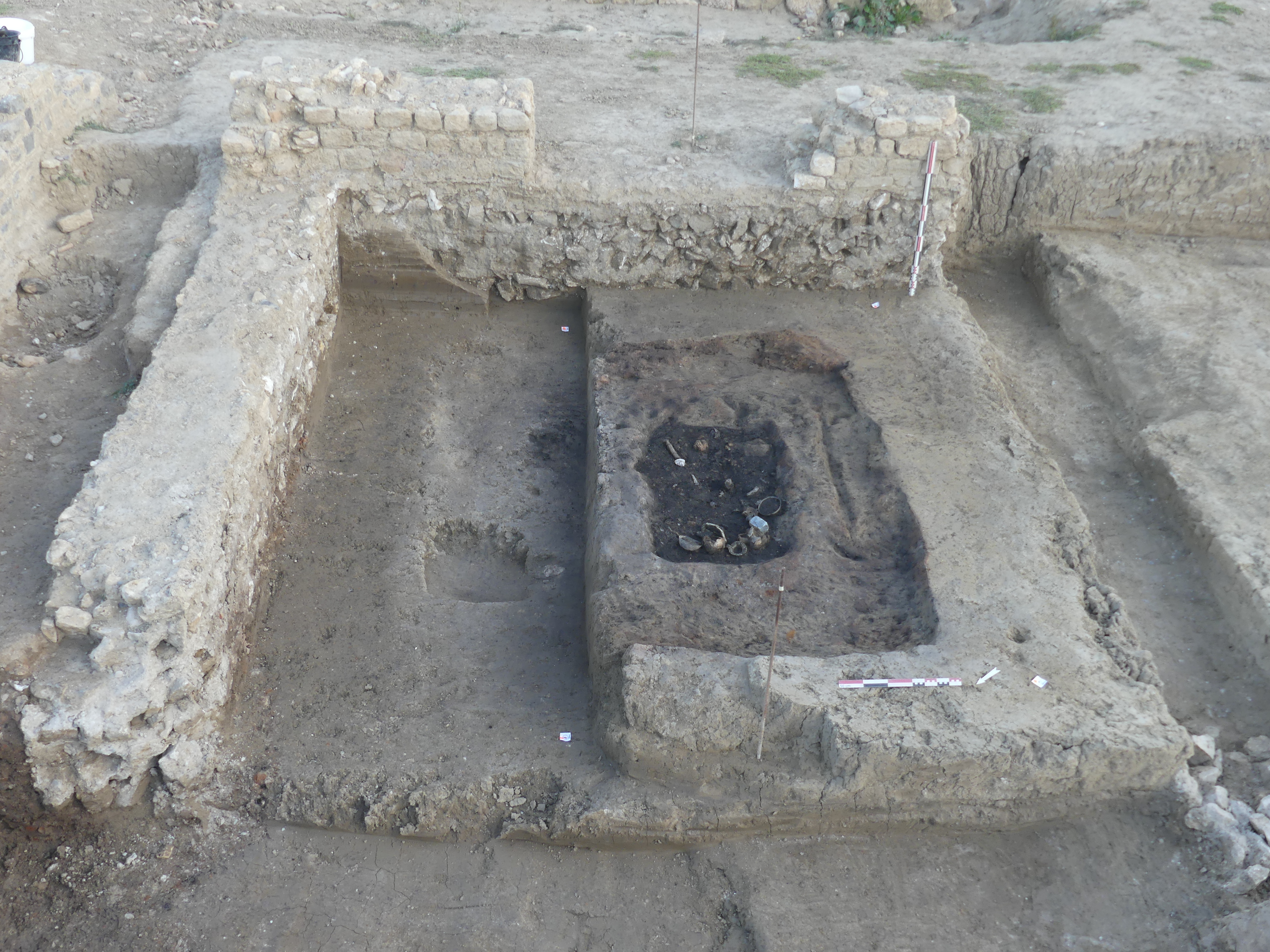
The final report of the excavation of the exceptional La Robine Roman necropolis in Narbonne has been released and the large number of artifacts recovered from the graves have been formally handed over to the Narbo Via museum.

Between 2017 and 2020, Archaeologists from the National Institute for Preventive Archaeological Research (INRAP) excavated 1.2 acres less than half a mile east of the ancient city walls prior to the construction of new residential buildings. In 18 months of excavation of the necropolis after the first graves were discovered, a total of 1,430 burials and another 450 funerary structures from the Early Imperial period (1st-early 3rd century A.D.) were unearthed.

The architecture and contents of the necropolis were in an excellent state of conservation, preserved under a thick layer of silt from the Aude River. The condition, number and diversity of the structures and tombs make his burial ground a unique reference site for the funerary practices of Roman Gaul.

The necropolis was divided into funerary enclosures delineated by masonry walls and service roads for access. Cremation was the most common, with 1166 structures relating to the cremation of bodies and containing cinerary remains. Inhumation burial was found in 266 tombs, half of which contained the remains of children.

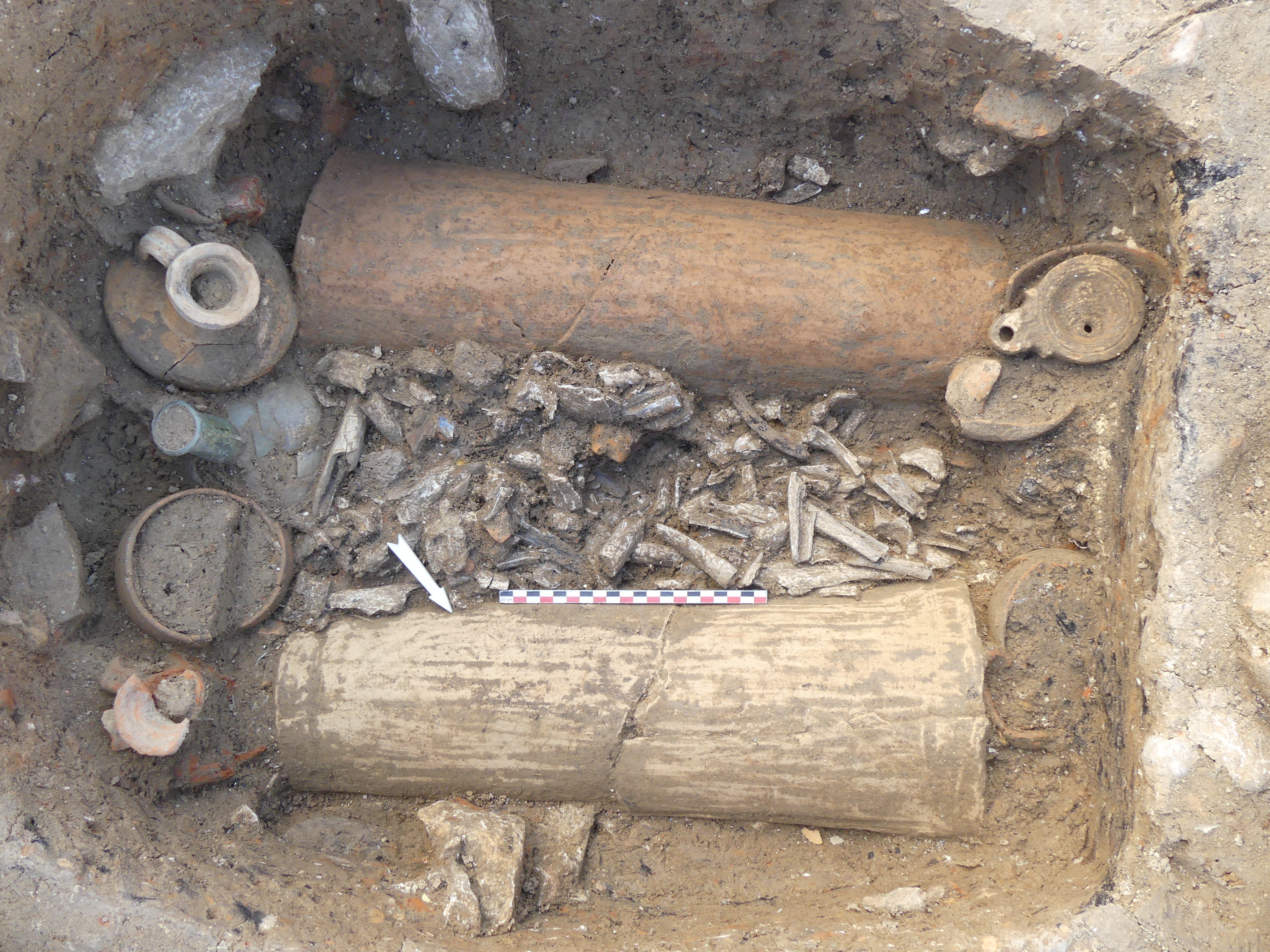
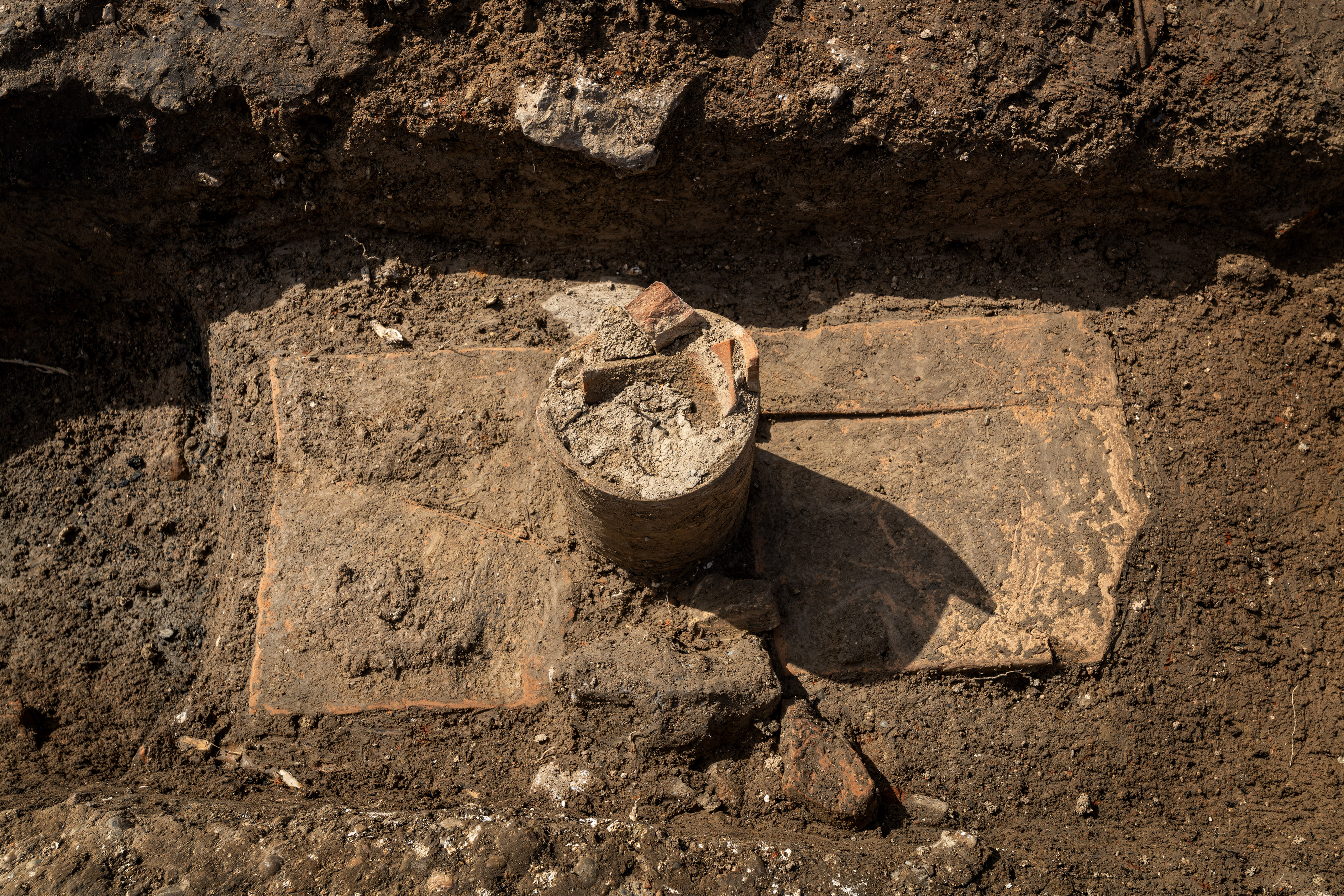
The Robine necropolis exceptionally documents the funeral rites carried out at the beginning of our era. This is the case for libation conduits, often destroyed by later developments: this device is identified here in half of the pyre tombs and a quarter of the secondary deposits. These tubes, often made up of pieces of amphorae, made it possible to introduce the offerings inside the tomb, as close as possible to the remains of the deceased, whose memory was thus perpetuated, particularly on the occasion of annual funeral festivals such as the Parentalia. Celebrated in Rome in February, they ended with the Feralia during which the family shared a meal near the tomb and offered a sacrifice in honor of the Mane gods. Evidence of these activities was found at La Robine, where several triclinia , that is to say masonry banquet beds that could accommodate meals organized by the family, were unearthed.

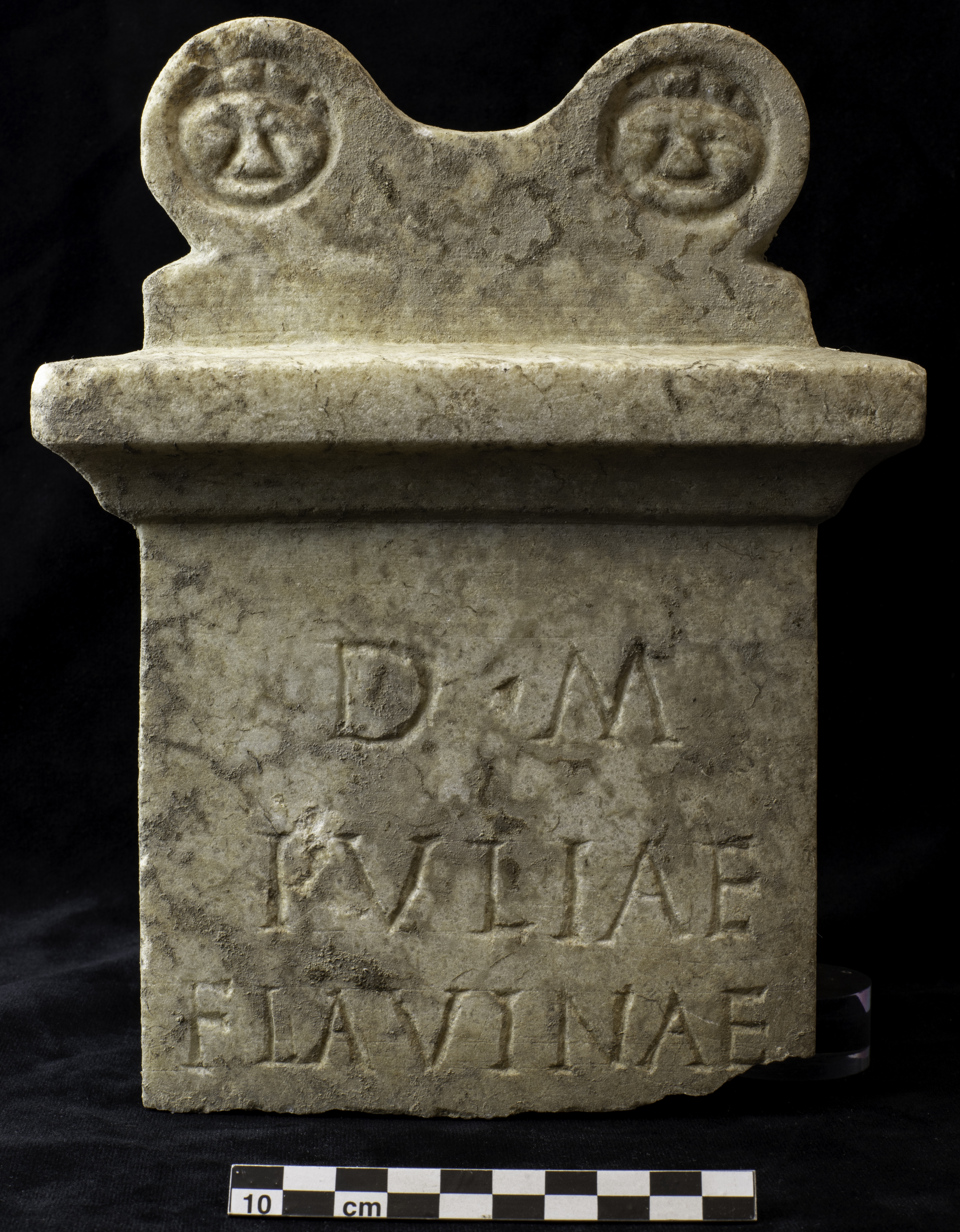
The evolution of the necropolis has been carefully studied. Inrap archaeologists have highlighted rearrangements by moving boundaries, grouping plots together or, on the contrary, by subdivisions and recompositions. From the middle of the 1st century, large masonry enclosures were created in the northern district on the site of several plots, and encroaching on circulation spaces. From the end of the 1st century, the increase in the number of burials required the extension of the necropolis and new masonry enclosures were created in several places in the funerary district. These plots closed by high walls could be decorated with marble funerary plaques bearing epitaphs. These, often found reused, provide information through onomastics about the population of this necropolis. Mainly made up of freedmen of Italian origin, it is representative of the plebs who animated the economic life of the city.

Analysis of the inhumation remains found that burial method was connected to the age of the deceased, with adults placed in wooden coffins and children placed in covered pits. Analysis of the residues in pyres and ossuary vessels found that the volume of cinerary remains varied significantly based on the type of enclosure, indicating different enclosures had different kinds of pyres.

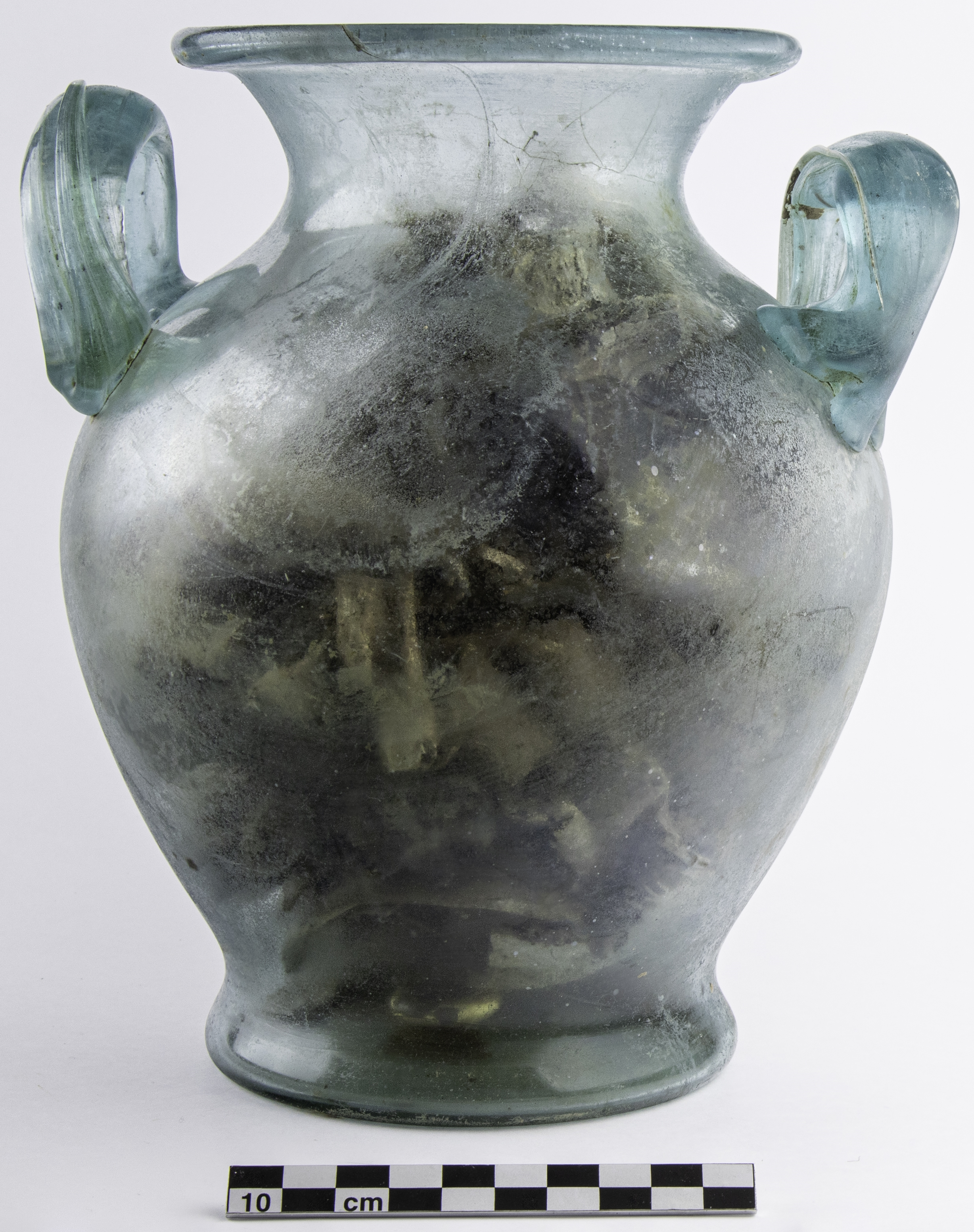
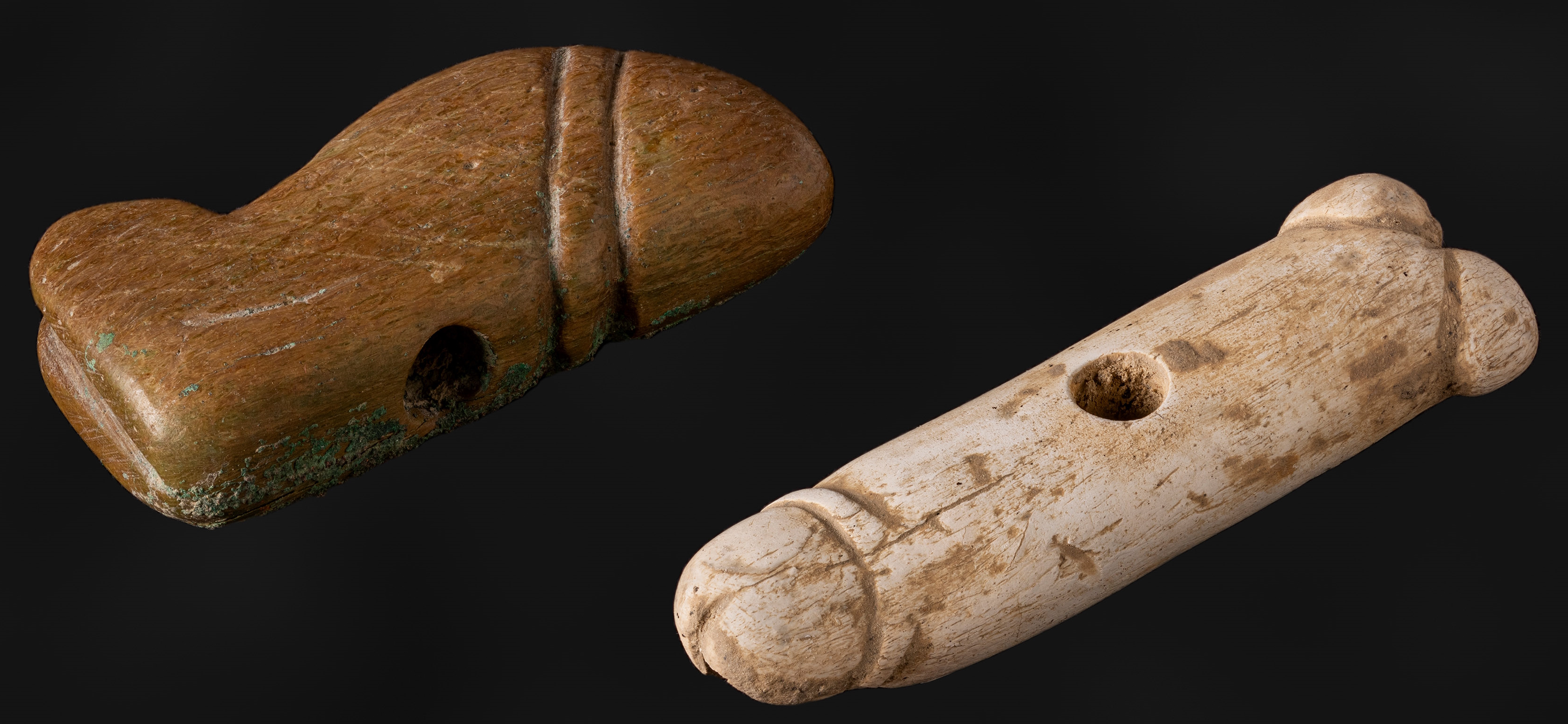
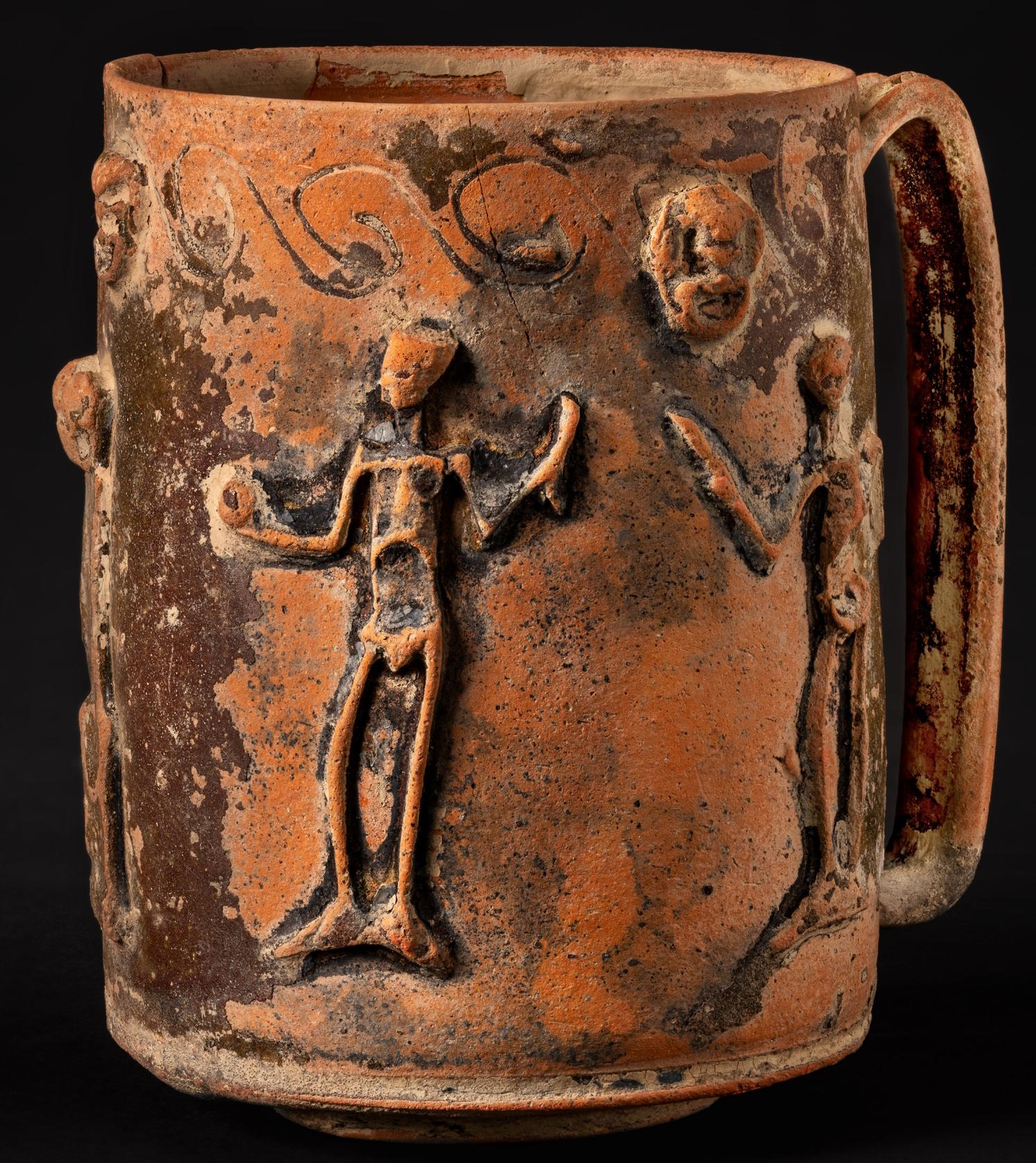
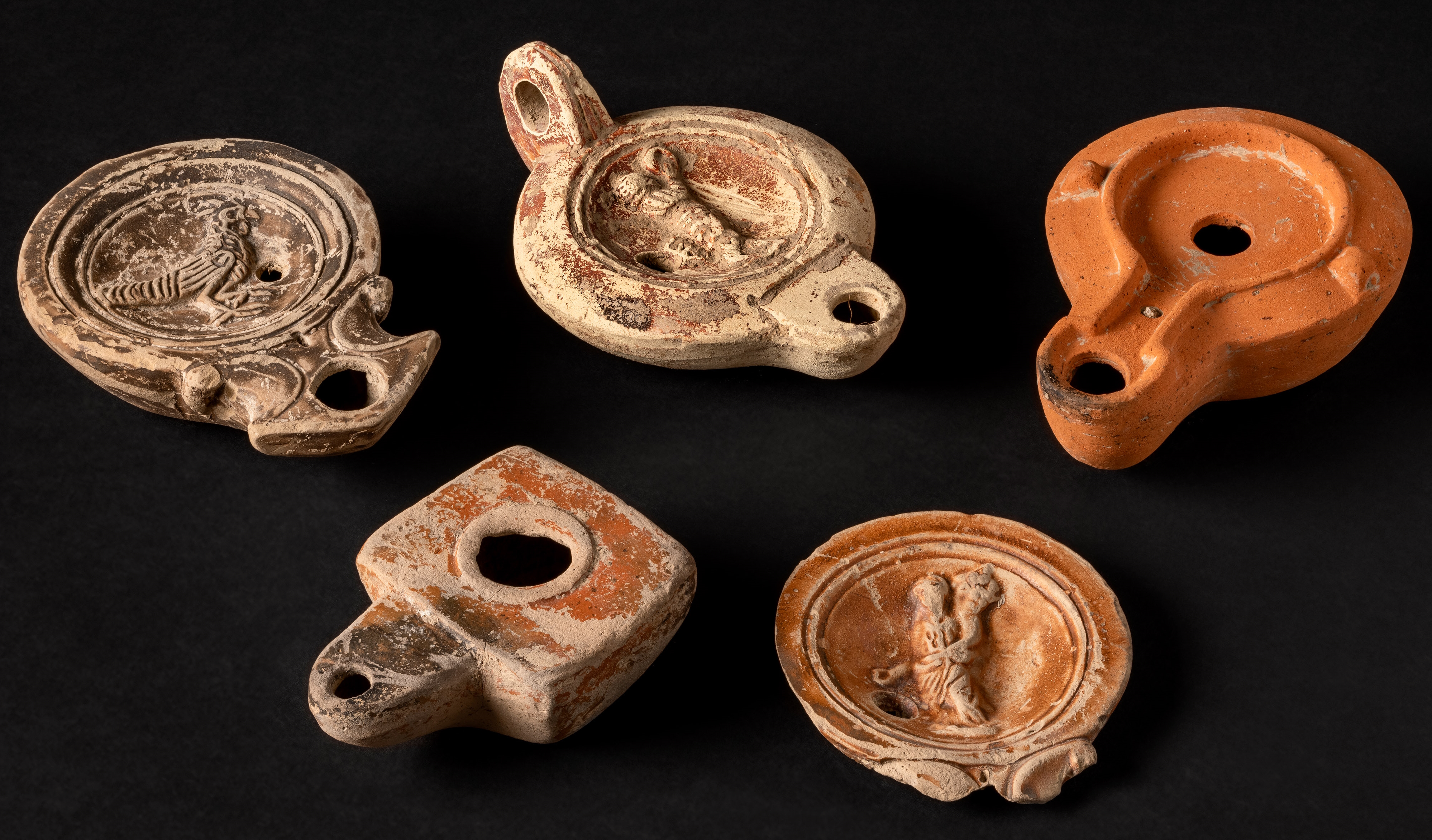
Both cremation and inhumation burials contained drinking vessels, lamps and unguent/perfume bottles, sometimes deliberately broken or flipped upside down. Large quantities of grave goods were found placed in the burials intact: ceramic vases, amphorae, glass vessels, coins, jewelry, decorative objects made of bone, ivory and metal, amulets made of beads, animal teeth, bells and phallic pendants. The charred remains of food offerings are primarily plant material, including dates, figs, cereals and bread.

Carved bull heads found in Roman-era tomb in Turkey

Excavations at the ancient site of Tharsa, near Kuyulu village in southeastern Turkey, have unearthed a tomb with two carved bull heads guarding the entrance. The bull heads are decorated with garlands and rosettes between the horns.

The bull head, called bucranium after the Greek for “ox skull,” was a common decorative motif in Classical religious and funerary architecture. They referred to an even more ancient practice of displaying the heads of sacrificed oxen on temple walls. In Imperial Rome, the bull sacrifice was connected to the worship of Cybele introduced from Asia Minor. The sacrificial ritual represented purification and rebirth into eternal life, and the carved bucrania performed the same function at the entrance to the tomb.

Tharsa was located on a major Roman road from Doliche to Samosata. It is marked on the Tabula Peutingeriana (Segmentum XI, 2), the Late Imperial map of the Roman state road network made in the 4th century based on a 1st century map made by Augustus’ right hand man and son-in-law Marcus Vipsanius Agrippa. The archaeological site today consists of two settlement mounds — the Big Mound and the Small Mound — and a large necropolis with tombs cut into the living rock. The tombs were in use from the 3rd century into the Byzantine era.

The first excavations of the rock tombs took place in 1999, but did not resume again until 2021 when a revitalization project cleared 10 acres of land. Sixty tombs have been unearthed since then, each individually carved with different designs and decorative motifs.

The new dig season began in April of this year and has uncovered another two tombs, one of which was the bulls’ head tomb. Like the other rock tombs in the necropolis, the bulls head tomb was carved down into the bedrock. A dozen steps were carved out descending into to the burial chamber which has three acrosolia (arched niches where bodies were placed). The carved bull heads are worn

A new drainage system is being built to prevent rainwater runoff from seeping into the graves and damaging them. Excavation and removal of soil and rocks from the graves will continue until September.