
 A Bronze Age hoard found near Blyth Bridge in the Scottish Borders contains exceptional surviving raw materials for metal work, including the first copper ingot ever discovered from Bronze Age Scotland and casting moulds used for producing decorative fittings like the ones in the Peebles Hoard.
The Blyth Hoard was discovered in 2022 just seven miles from the Peebles Hoard, the most diverse agglomeration of Bronze Age artifacts in Europe. Amazingly enough, the same metal detectorist, Mariusz Stępień, discovered both hoards, and while he is apparently a magical Bronze Age hoard magnet, he is also so archaeologically conscientious that as soon as he found a socketed axe, he stopped digging and reported it to the Treasure Trove Unit.
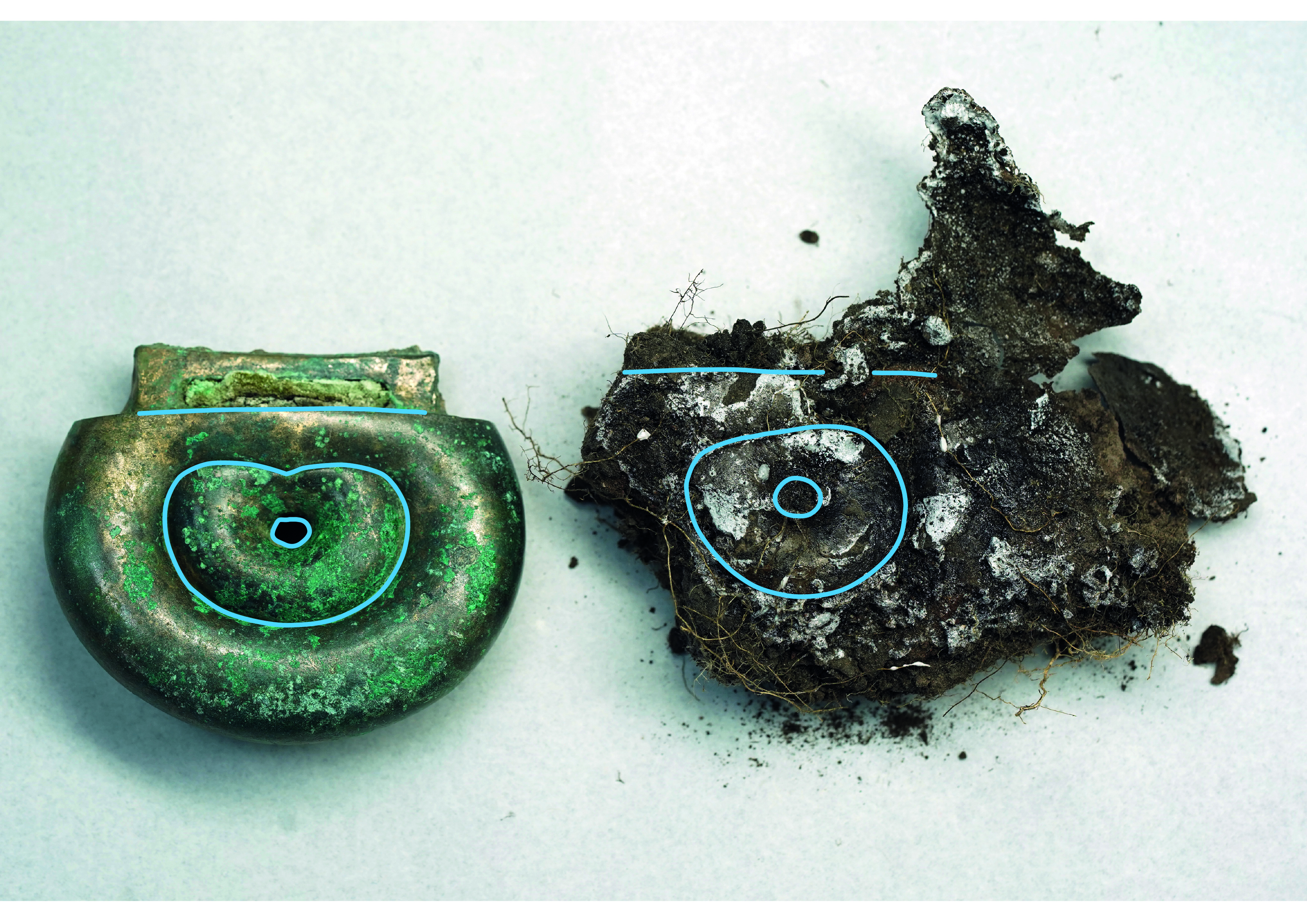 Because of Stępień’s scrupulousness, the Blyth hoard was professionally excavated by archeologists from National Museums Scotland. They unearthed a second socketed axe head, a large copper ingot and three fragments of clay moulds used to cast bronze objects. The hoard dates to the Late Bronze Age, 1150-800 B.C.
The copper ingot is complete and is the first of its kind from Scotland. Ingots are more common in southern Britain, particularly on the south coast, but have never been found north of the Border. It is important evidence that raw material was being imported into Scotland 3000 years ago. People weren’t simply recycling existing objects – there was a supply of fresh metal into the area.
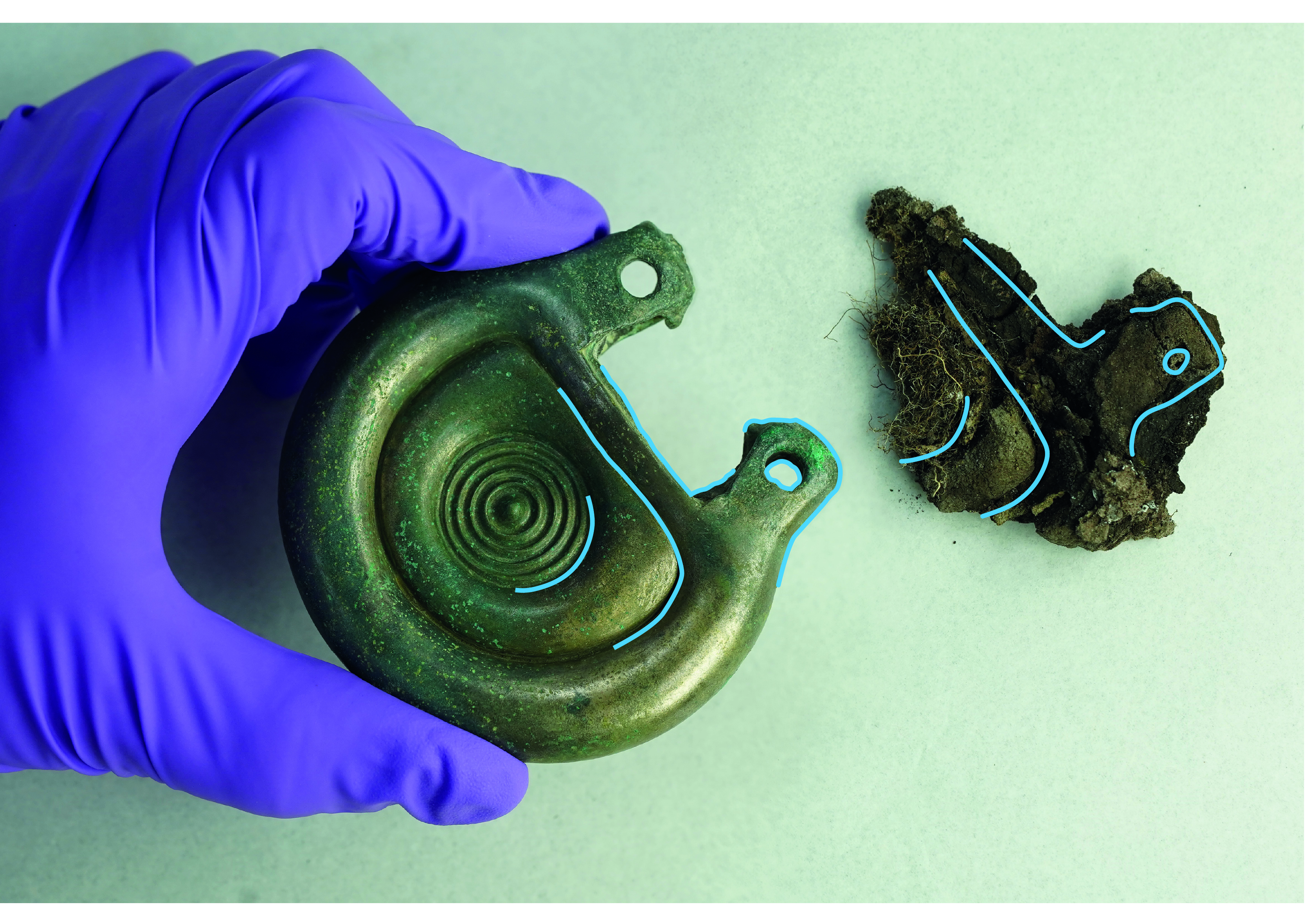 Most of the Late Bronze Age moulds that have survived were used to produce weapons or tools. The Blyth moulds, on the other hand, are shaped and patterned to produce smaller decorative pieces. Because Peebles was found two years before the Blyth Hoard, when archaeologists examined the fragments of casting moulds, they were able to recognize the spiral and outlines of the Peebles fittings.
It is rare to find any moulds that link to specific objects from the Bronze Age. This makes the discovery at Blyth quite exceptional. Given the unique nature of the Peebles Hoard fittings, it is highly probable that whoever buried the Blyth Hoard may have been involved in making some, or all, of the Peebles Hoard fittings. This is especially striking given the presence of an ingot.
The survival of metalwork and the remains of manufacturing materials together is rare in Britain, and previously unknown in Scotland. The Blyth Hoard is an opportunity to examine some of the relationships between metal objects, production and deposition. The socketed axeheads and ingot may represent the raw material for casting into new objects, such as the Peebles-style fittings. The person (or people) who buried the Blyth Hoard may have been a metalworker, skilled at making moulds and casting objects.
