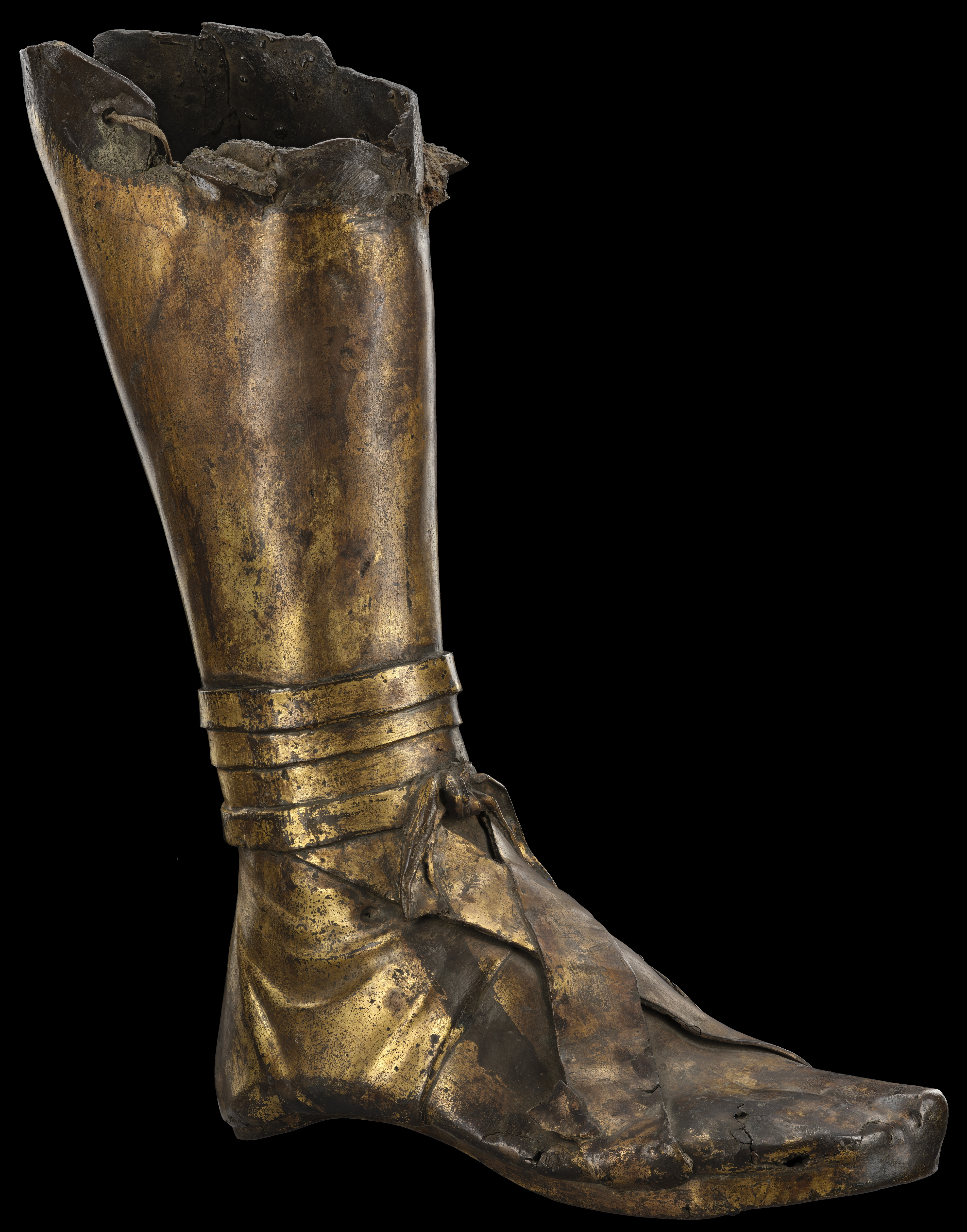
 A larger-than-life-sized gilded bronze leg discovered in 1820 has been newly identified as a fragment of a monumental statue of Roman Emperor Antoninus Pius erected in the Scottish Borders. Since its discovery, the leg was believed to have come from England, likely the urban center of Eboracum, modern-day York.
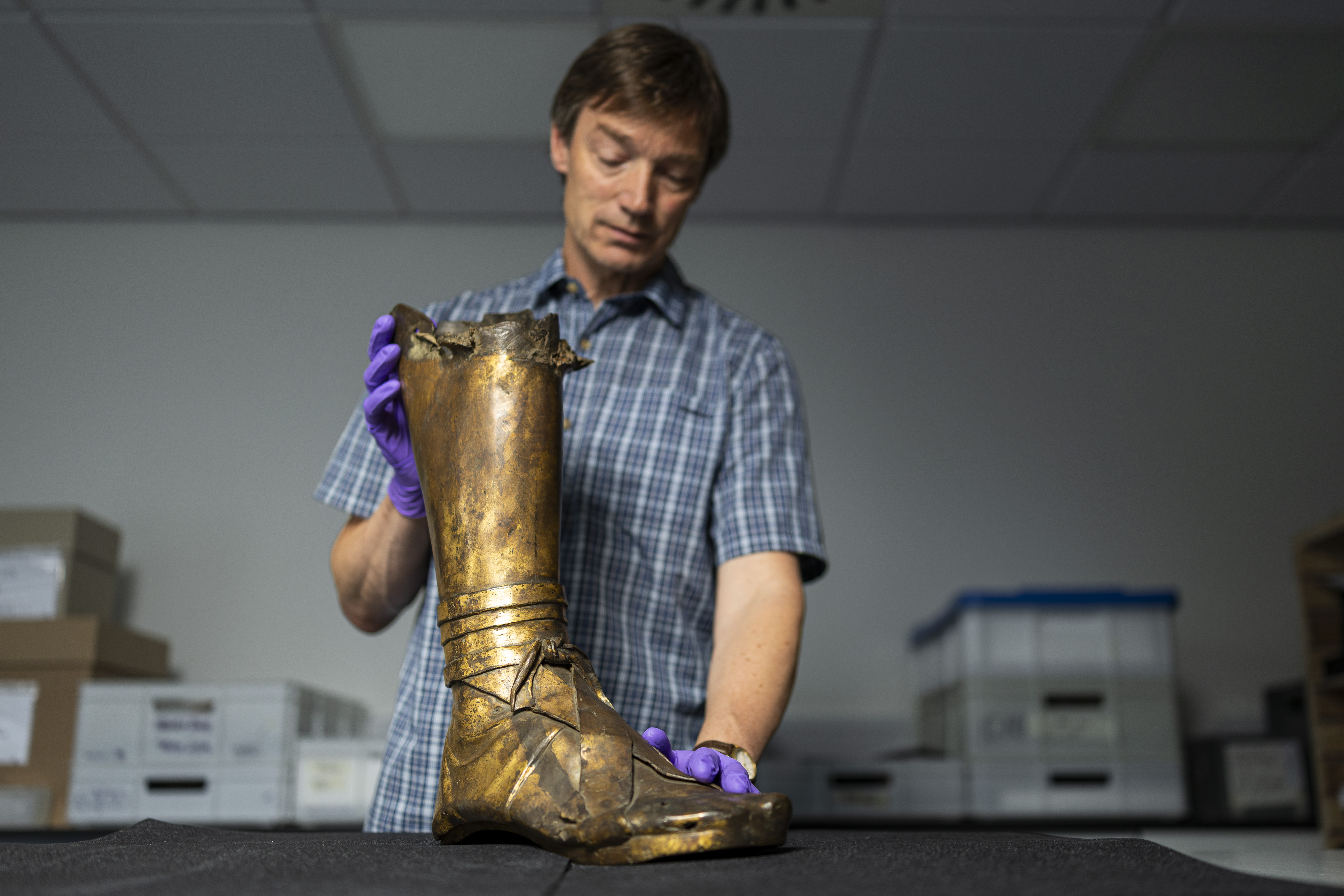
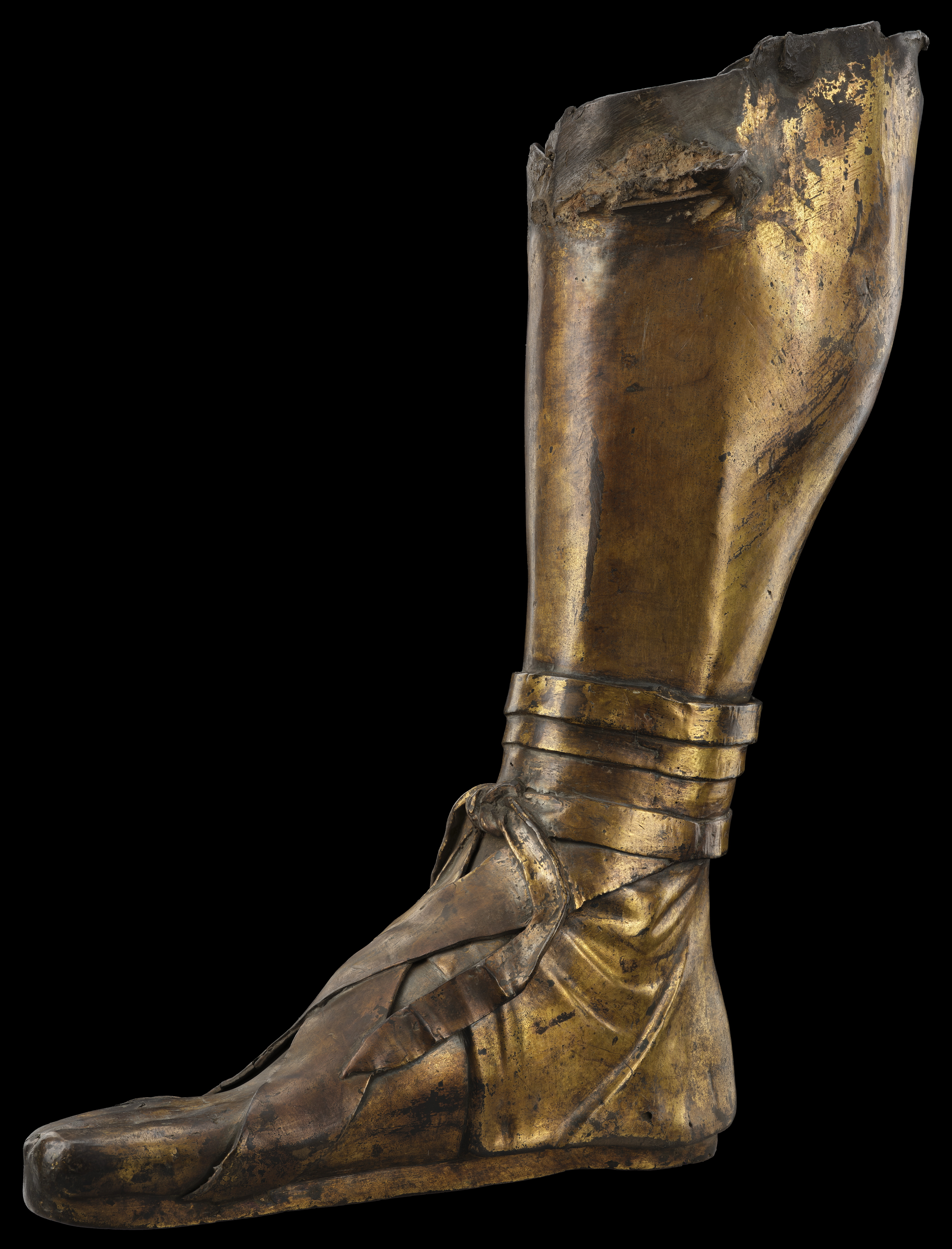 The leg was found in a bog in Milsington near Hawick. It was exceptional for its great size and condition, with much of its original gilding still intact. It is a lower leg below the knee wearing with straps crossed the top of the foot, wrapping around the ankle and tied in front knot. It dates to 140 A.D.
Scholars initially thought it came from northern England because its high quality and rich gilding suggested close proximity to expensive craftspeople and materials, but more recent studies of Roman statue fragments has found that in fact, frontier forts on the Scottish border did erect bronze statues of the emperor, even equestrian ones.
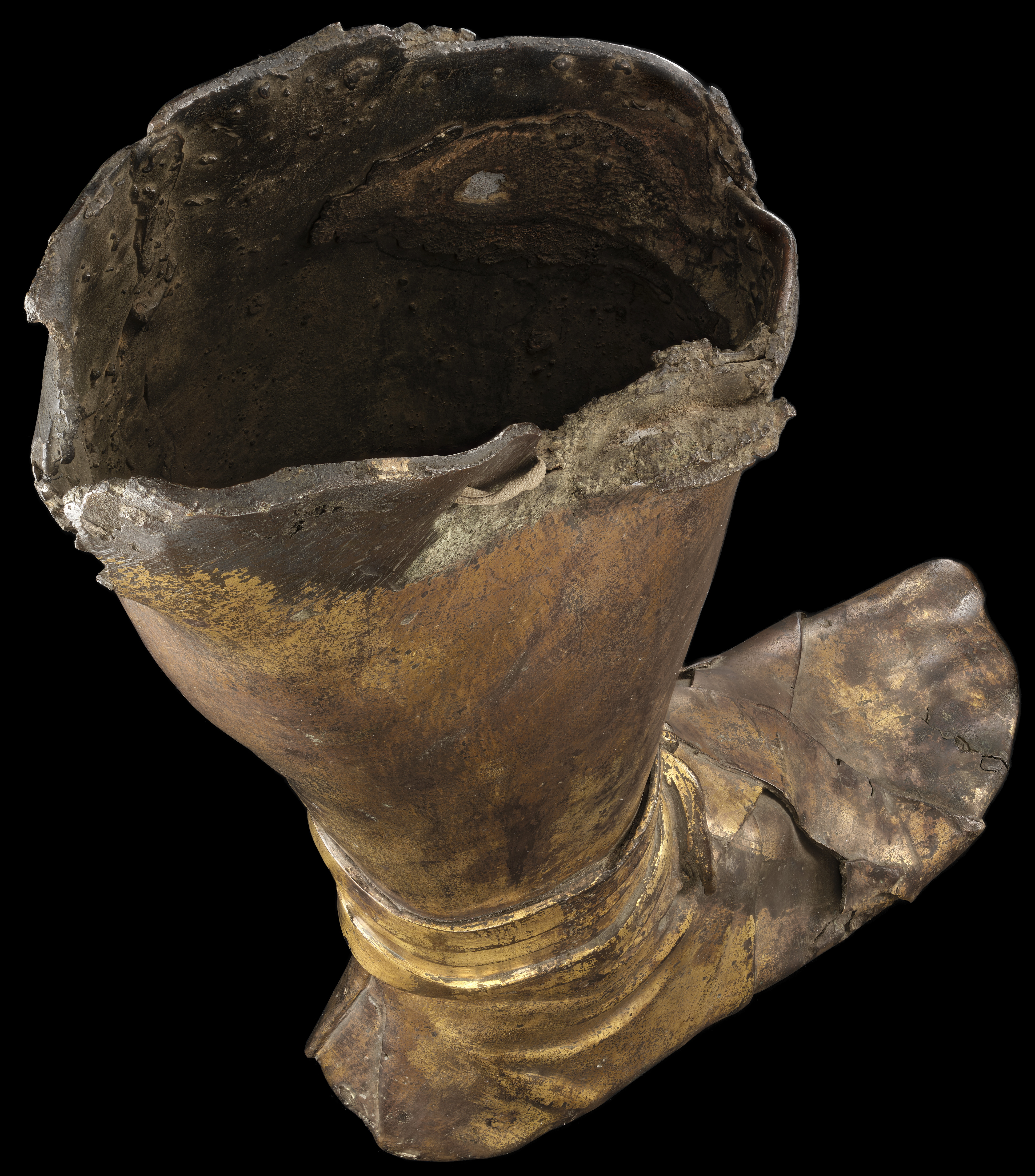 In addition, the cut line where the leg was removed was handled very gently. There are no cut marks on the top. It was taken down as cast. Had the statue been dismembered by angry locals after the Romans withdrew from southern Scotland in 160-180 A.D., it would have been hacked off, not carefully removed, and chopped up for scrap.
Once curators had established that the statue was likely to have been erected in Scotland, they looked to answer the question of who it depicted. Just one emperor paid particular heed to his Scottish victories – Antoninus Pius. His conquest of southern Scotland was the only foreign adventure that he commemorated with the title Imperator, a battle-honour meaning ‘commander’ which marked an emperor’s victory.
Dr Fraser Hunter, Principal Curator of Prehistoric and Roman Archaeology at National Museums Scotland said:
“This really turns on its head our understanding of Rome’s second attempt at conquering Scotland. This was a big deal for the Emperor, something which was worth celebrating. It offers us a tantalising glimpse into the kind of grand monuments which once stood in southern Scotland and shows the importance Pius placed on his victories in Scotland. But it begs the question … where is the rest of the statue?”
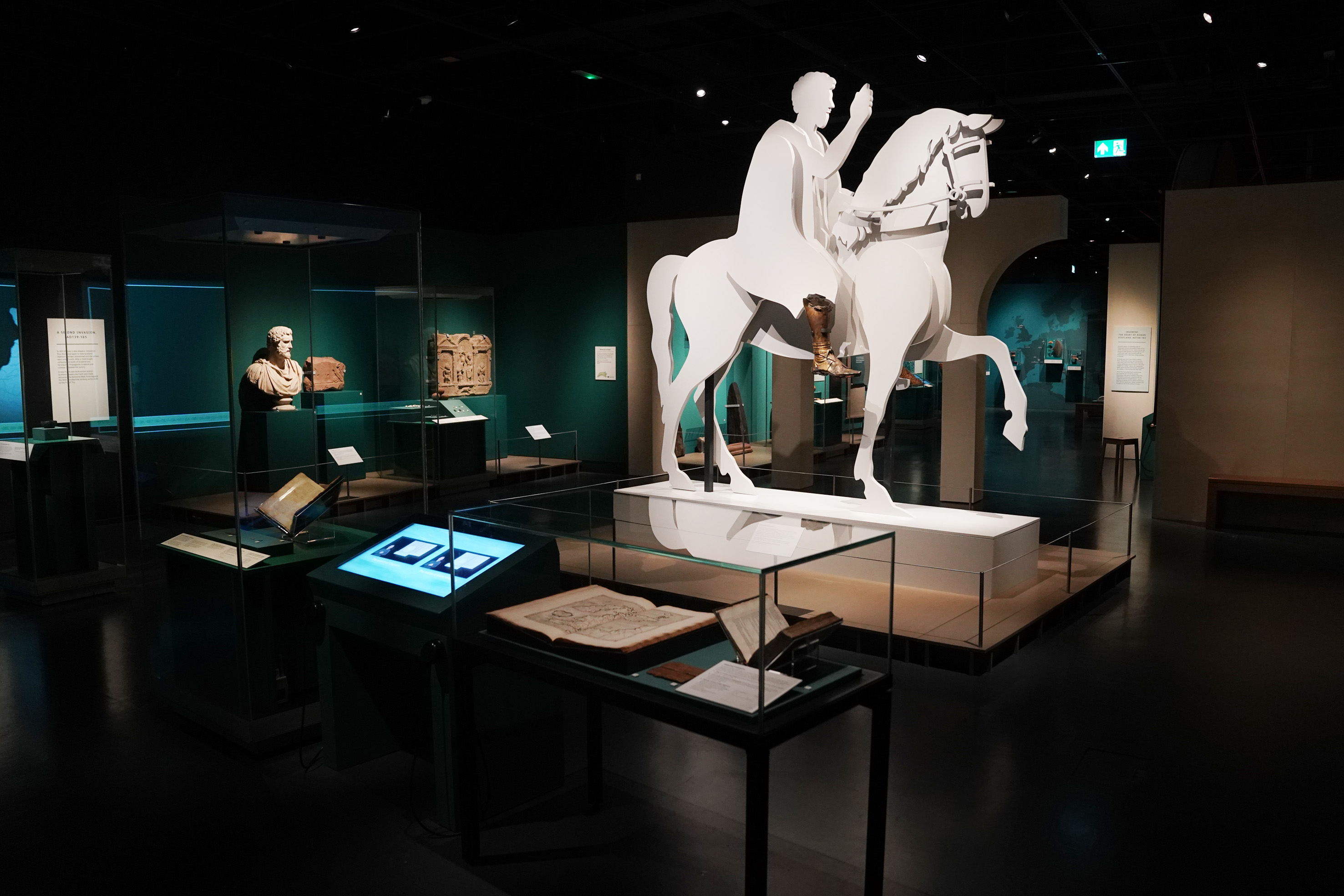 Mounted to a model of an equestrian statue like the iconic Marcus Aurelius in the Capitoline Museums in Rome, the leg is now on display in Roman Scotland: Life on the Edge of Empire, alongside a wealth of other priceless Roman-era artifacts, including the incredible Mithraic altar with the cutouts of the sun god Sol so it glowed when lit from behind found at Inveresk. The exhibition opened Saturday and runs through April 18th, 2027.