
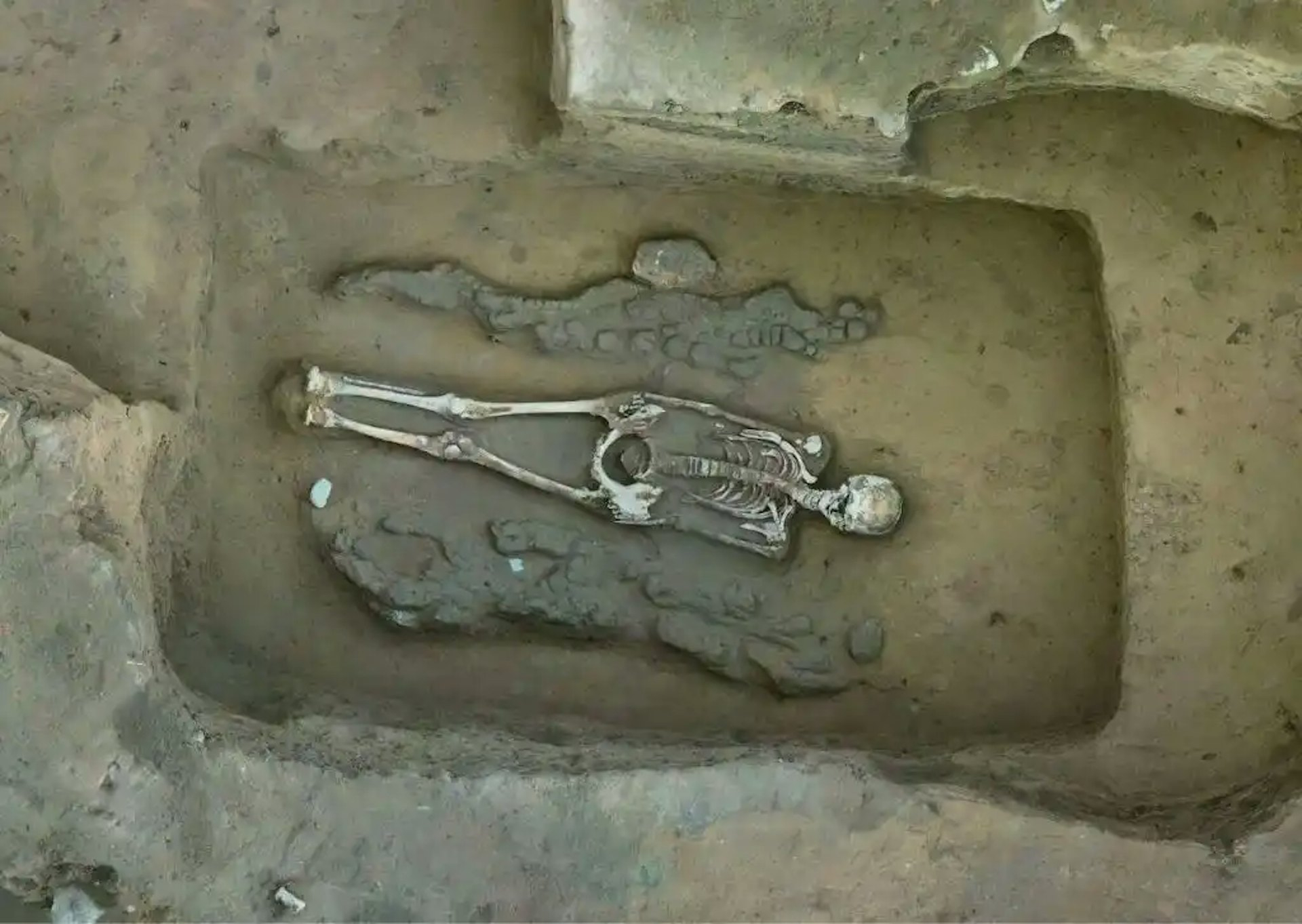
 The earliest known clearly identifiable figures of the dragon and phoenix combination in northern China have been discovered in a tomb at the Zhaizita Stone City site in Ordos City, Inner Mongolia. It dates to around 2300 B.C., the middle-to-late Longshan Culture period.
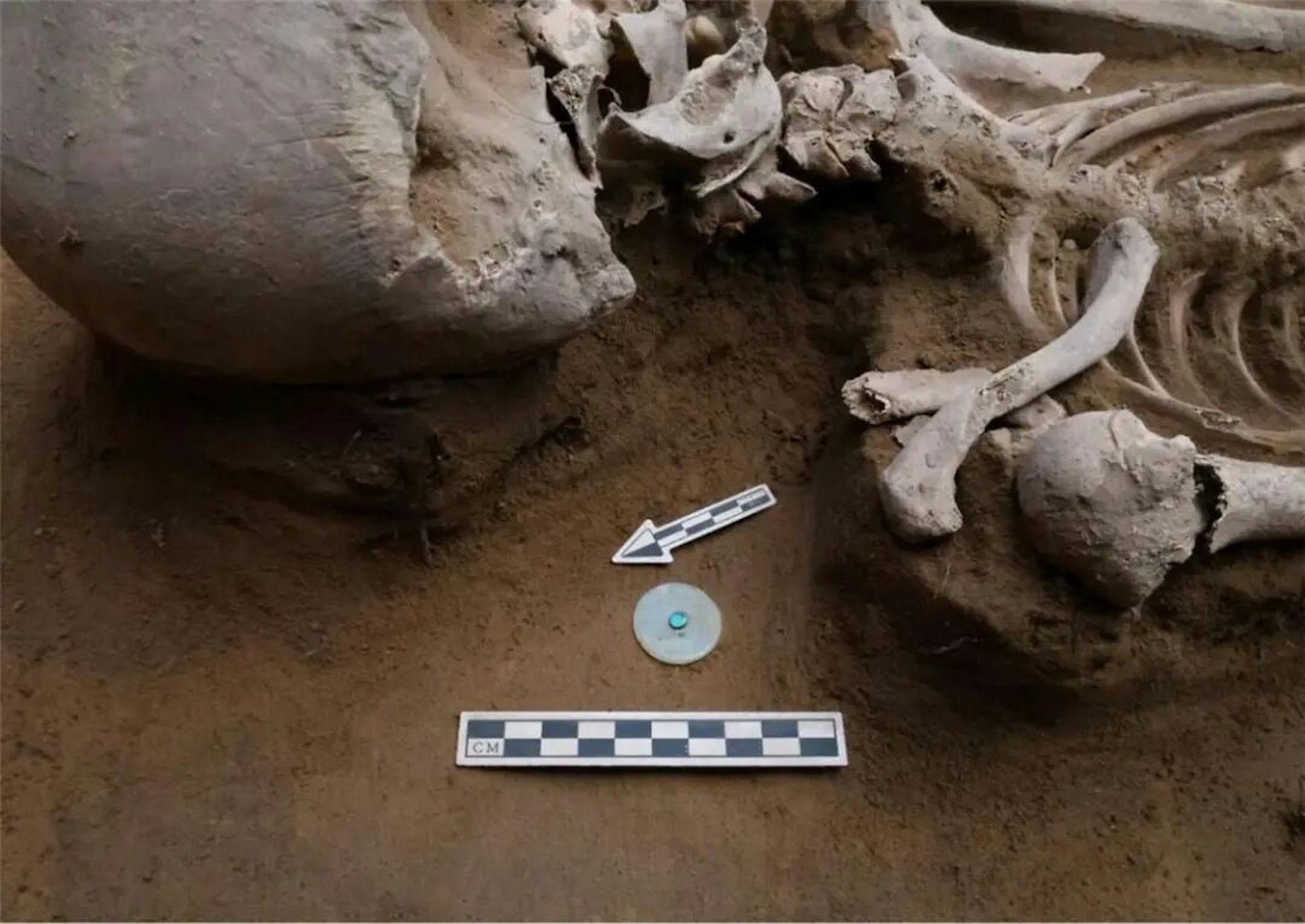
Tomb M38 is a rectangular pit and shaft tomb. The skeletal remains of the deceased were found in supine position head facing northeast, with legs extended and arms straight at his sides. A circular jade bi inlaid in the center with a turquoise stone was placed to the right of his neck. Large clay figurines almost the length of his full body were placed on each side of his body. The dragon figure is on the deceased’s right side, its head facing northeast like the tomb’s occupant. The phoenix is on his left, facing the opposite direction, captured in the moment of rising in flight.
 Stable isotope analysis of the deceased’s tooth enamel revealed that he consumed a diet based on millet, but with more animal protein than most people of the period would have had access to. This confirms that the person was of high status and had significant wealth during his life.
The Neolithic Longshan culture occupied the Yellow River valley of northern and central China between 3000 and 1900 B.C. It is notable for its advanced pottery making techniques, and the thin-walled black in intricate shapes they created on pottery wheels is so characteristic that it was also known as the Black Pottery Culture. Their skill in pottery in evident in the large scale and high quality of the dragon and phoenix figures.
Sun Jinsong said that the ‘dragon and phoenix’ clay figurines at the Zhaizita Stone City site are the earliest and most clearly modeled physical combination of dragon and phoenix discovered so far in northern China, pushing the appearance of figurative ‘dragon and phoenix’ back to the Longshan period. This provides valuable material for studying the spiritual beliefs and burial concepts of the ancestors of the Longshan period. In addition, this discovery shows that the Hetao region made a unique contribution to the creation of early spiritual culture in China, providing evidence for the pluralistic and unified structure of Chinese civilization.
“The phoenix is on his left” – Could it be that “his” body is actually that of a female?! – I am –so far– not quite sure (yet), if I recognize the dragon and the phoenix correctly.