
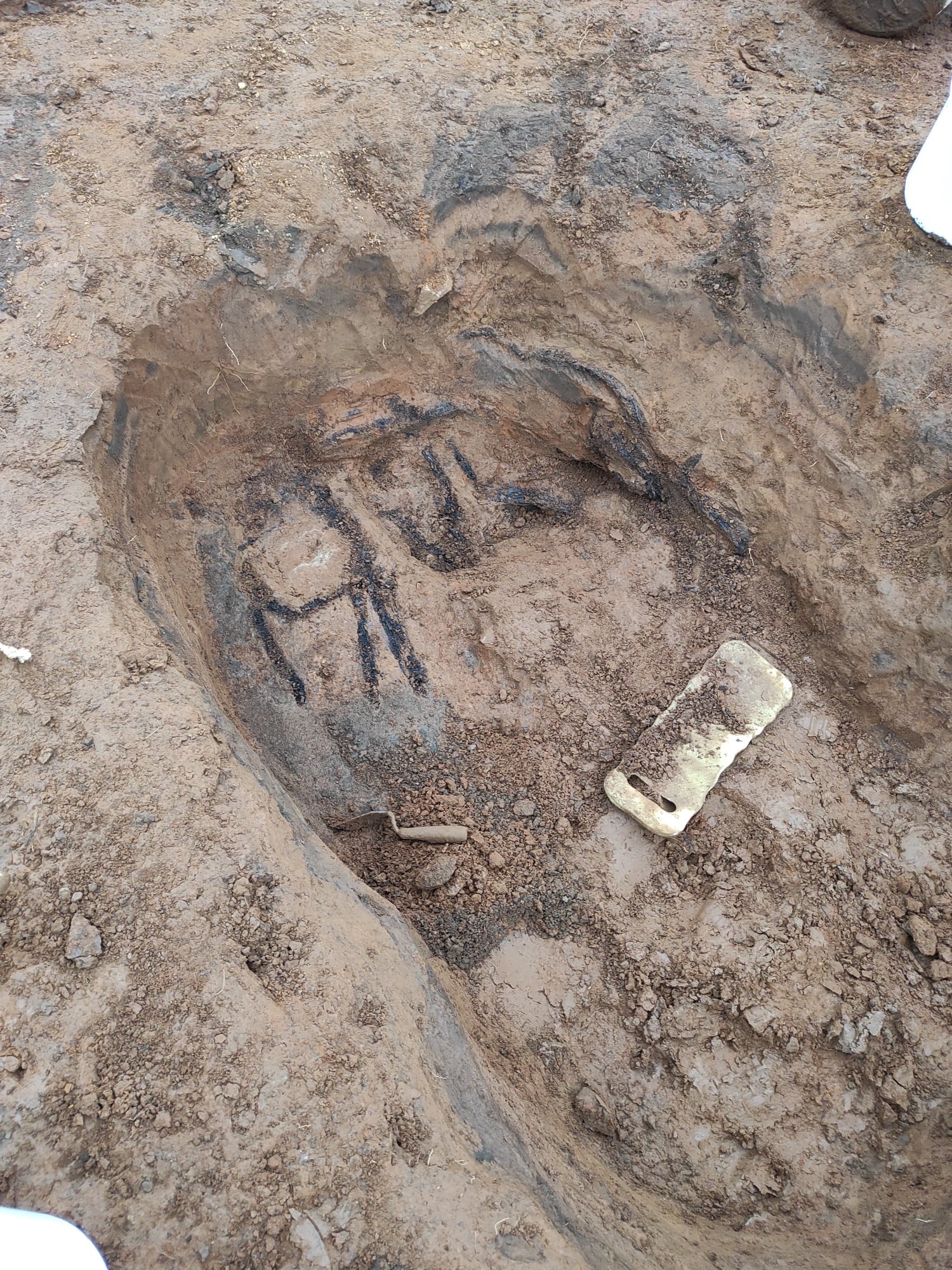
 Four graves dating to the settlement period (late 9th, early 10th century) have been discovered in Seyðisfjörður, eastern Iceland. The burials were richly furnished with grave goods indicating the deceased were of high social status.
Excavations this summer and fall unexpectedly revealed that the site, believed to contain nothing earlier than 18th century remains, in fact had archaeological materials dating to the early days of the Viking settlement of Iceland, hidden and preserved by a landslide that blanketed the area in 1150.
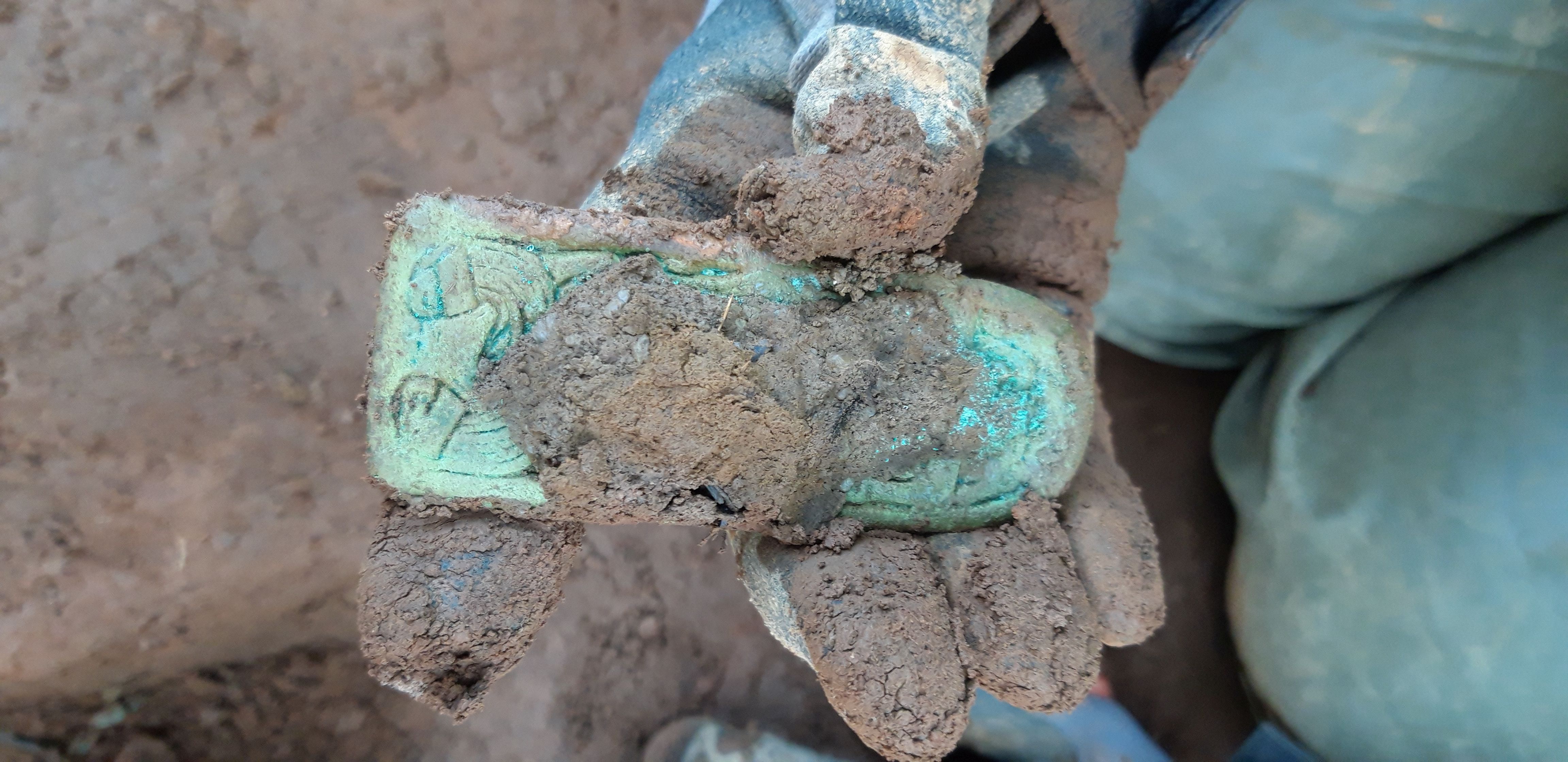 The first of the tombs found is a boat burial, the first boat grave found in the East Fjords and one of only 12 boat graves ever found in Iceland. Grave goods include a spear, a silver brooch, a silver ring, beads, a hnefatafl game piece and a Borre-style belt buckle.
Two of the four graves contained the remains of horses buried with the human, and one of the two held the skeletal remains of a dog too. The practice of burying someone with their horse was much more widespread 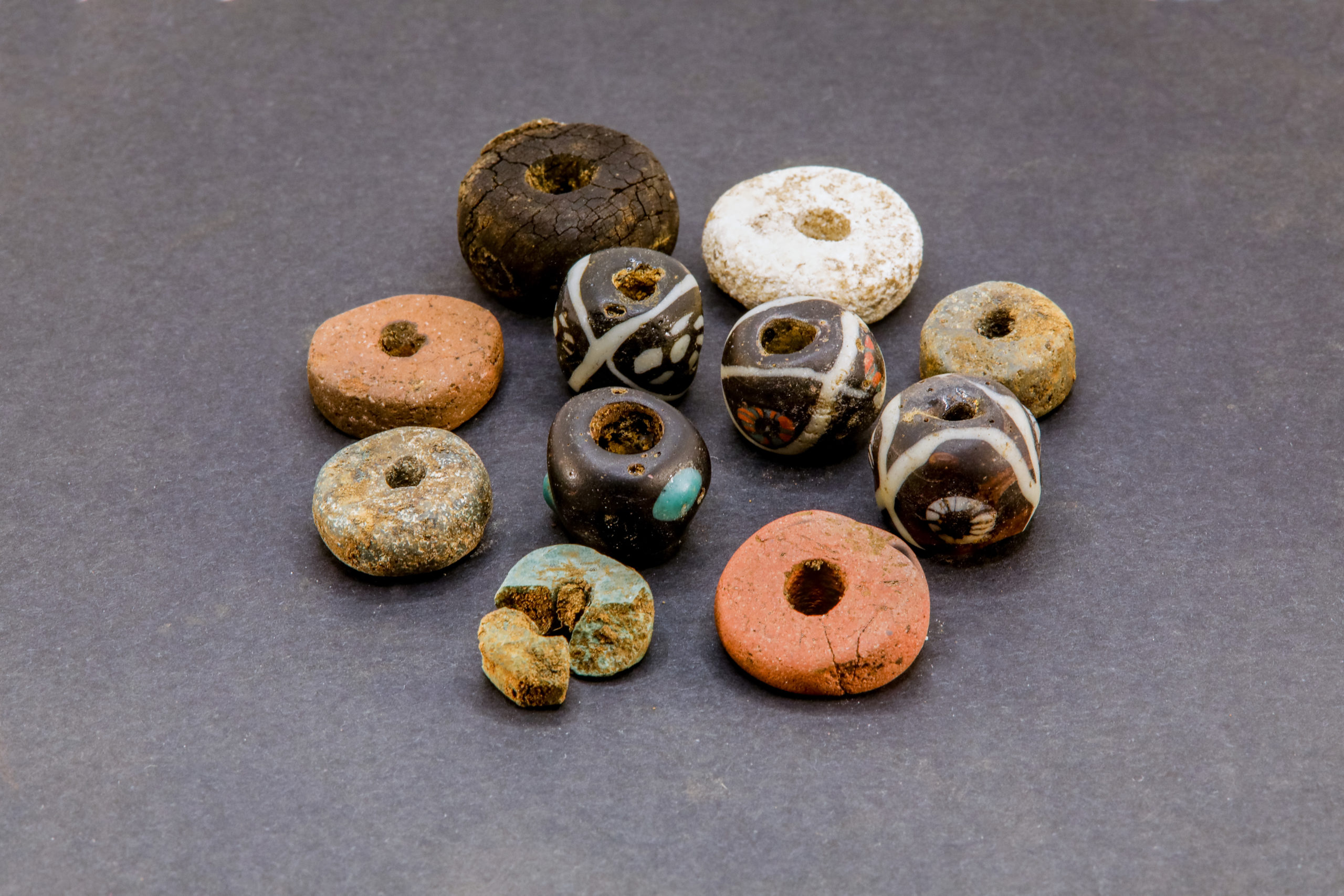 in Iceland than in Norway. The fourth grave belonged to a woman. She was buried with a pair of oval buckles and a necklace of 11 glass beads. Also found in her grave was a leather purse containing a Norwegian whetstone and flint.
The graves were found 110 yards or so from the Fjörður farm mound. According to the Landnámabók (Book of Settlements) saga, the chronicle of the Norse settlement of Iceland written in the 12th century, the first settler 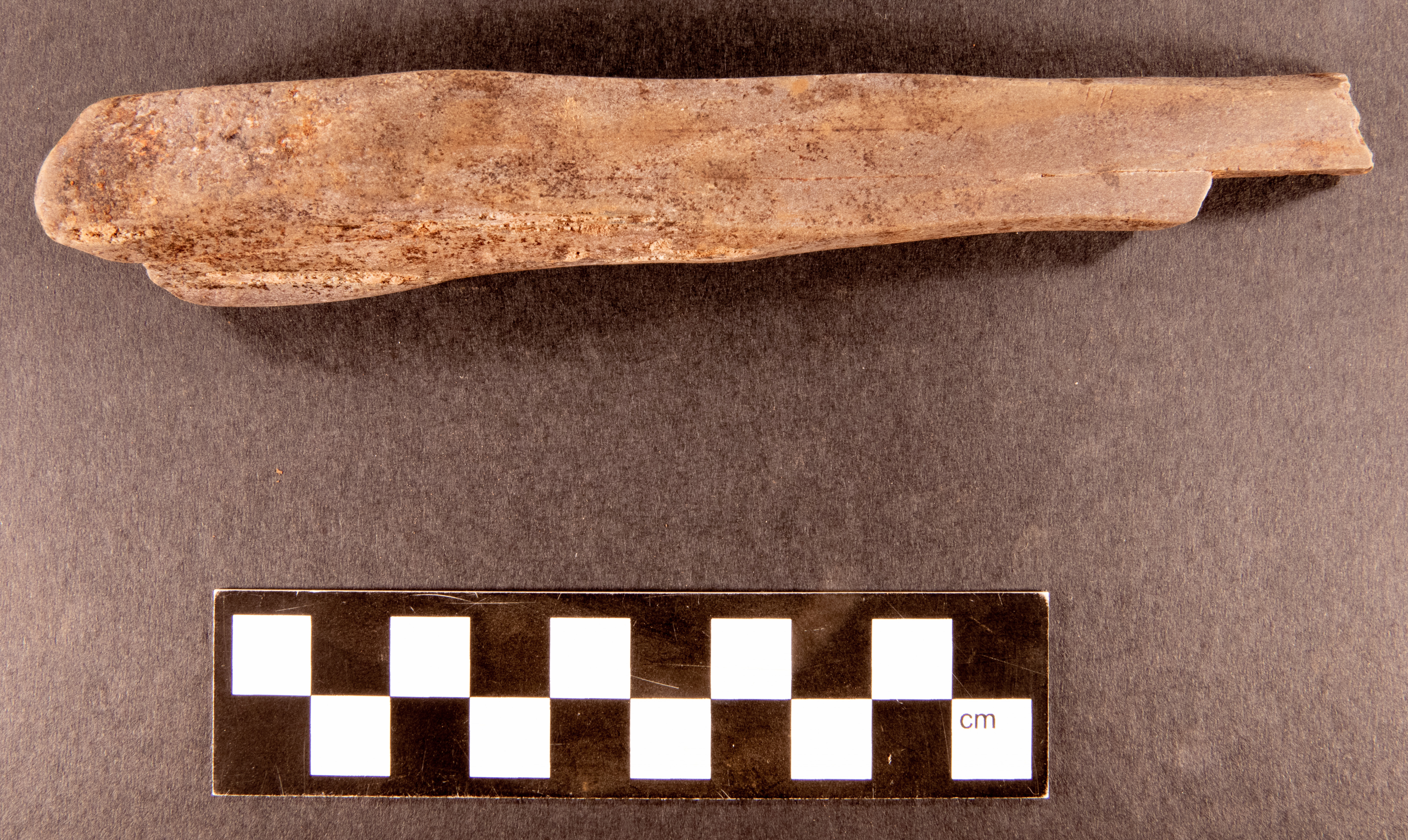 in Seyðisfjörður was one Bjólfur from Voss in Norway who established the Fjörður farm. While the Landnámabók was written three centuries after the events it describes, it also documents accurate and detailed historical data, including the names and descriptions of more than 3,000 people and 1,400 settlements. It is possible that the individuals buried in the four graves are listed in the Book of Settlements. They may even be related to Bjólfur. One of them could even conceivably be Bjólfur himself.
The silver brooch has been sent to the National Museum of Iceland for further analysis. The skeletal remains, human and animal, will also be studied in laboratory conditions. The graves and some of their contents have been scanned and 3D models created.
Here’s one of the burials with horse as well as human remains:
Here’s the one with both a horse and a dog:
This is one of the beads found in the woman’s tomb:
Вау очень интересно, спасибо
Really interesting, thanks
So fascinating. Thank you.
Hi Vandal, I personally do not speak nor properly understand very well what appears to be Russian to me, but I can read it partially.
Thankfully, you also wrote it in English, but still I wonder what the “Bay” stands for?
What I found, was in ‘Tartar’ the term “bay=rich, noble”, and if so, the more or less Vandal superlative of “Вау очень” 😉
hi my name is Gene Prowse , according to my true ancestry i share 157.85 cm of DNA with the woman found there , i am confused on how that is considering the date that she passed , that’s a very high amount , would really like to know more about her and that area , and if it really possible to share that amount given the time between then and now ?
I have a 153.87 cm from that pagan grave site, but mine is from one of the males. I asked chatGPT what it means and it was very detailed. It was interesting to me that regarding current ancestors I was only in the 55th percentile of users but it was my highest number in the cm, meaning as strong as it gets as the category for an ancient match. MyTrueAncestry categorized it as Danish Gaelic Viking Iceland 935 AD., basically the Norse Gael admixture which was early Icelandic peoples. My second high number cm is Norwegian from the Trondheim burial site on mother’s side. That showed only 76th percentile of top users. My Ancestry.com results match closely to the top 98th percentile in Scotland Bronze age and Bell Beaker Dorset England which would show current ancestors. This topic is quite complex. I went to the quantum deep dive ancient faces matches and found out my top 3 cm are all Scandinavian but has apparently been bred out over the years, resulting in what is seen on ancestry.com. There is a lot of Norse admix to current Scotland and England so that piece has to be figured in as well.
Hi Gene, I also have “Deep Dive” matches with several of these samples. MTA uses a different criteria for comparison than we would if you and I were to directly compare say kits we have loaded to Gedmatch, or the boundaries used by the major testing companies when they provide a list of a few thousand or so DNA cousins for us to browse. I believe MTA sets the limits at 60/3. Which is similar, if you use Gedmatch, to what you might see if you go looking around the Archaic matches and play around with those. You can also still directly compare yourself to some ancient kits, using 100/3, 50/3 and so on–whatever you like, you might match some at 200/3, 200/5, it all depends. Other things will factor in too, like the SNP density, pile up areas, and so on.
Those Deep Dives are a pretty good guess we have a relationship, but not a guarantee they are our direct ancestors. The sample matches section, think of it as more like the DNA signatures are similar, with a close genetic distance being more likely to have a connection. 2,9 and less is “close”, in general terms. And with MTA if you have noticed, those can be a moving target. I have noticed sometimes I am a 3. something and then the same sample is then a 4. That;s a bit odd lol. It;s still interesting, and all in good fun. I ended up here on this blog trying to find more information about any connection the samples might have with Bjólfur. It is cool to share DNA with them, regardless of the relationship. I’d love to be able to see if they’re actually on display!
Hope this helps if you ever return and read.