 The unique rock crystal jar decorated with gold filigree that was one of the treasures found in the Galloway Hoard has gone on display for the first time at the Kirkcudbright Galleries, less than 10 miles from where the hoard was discovered in 2014.
 The Galloway Hoard was buried around 900 A.D., and contains an unprecedented assemblage of precious artifacts and materials from Ireland, Anglo-Saxon England, Persia and even as far as Central Asia. The gold filigree-mounted rock crystal jar was of Anglo-Saxon manufacture, and the quality of materials and craftsmanship places among the greatest examples of Anglo-Saxon metal work. A Latin inscription on the base reading H Y G V A L D E P : F A C : I U S S (“Bishop Hyguald had me made”) identifies it as having come from a Northumbrian cathedral treasury, although no bishop named Hyguald has been found in the patchy surviving church records of the 9th century.
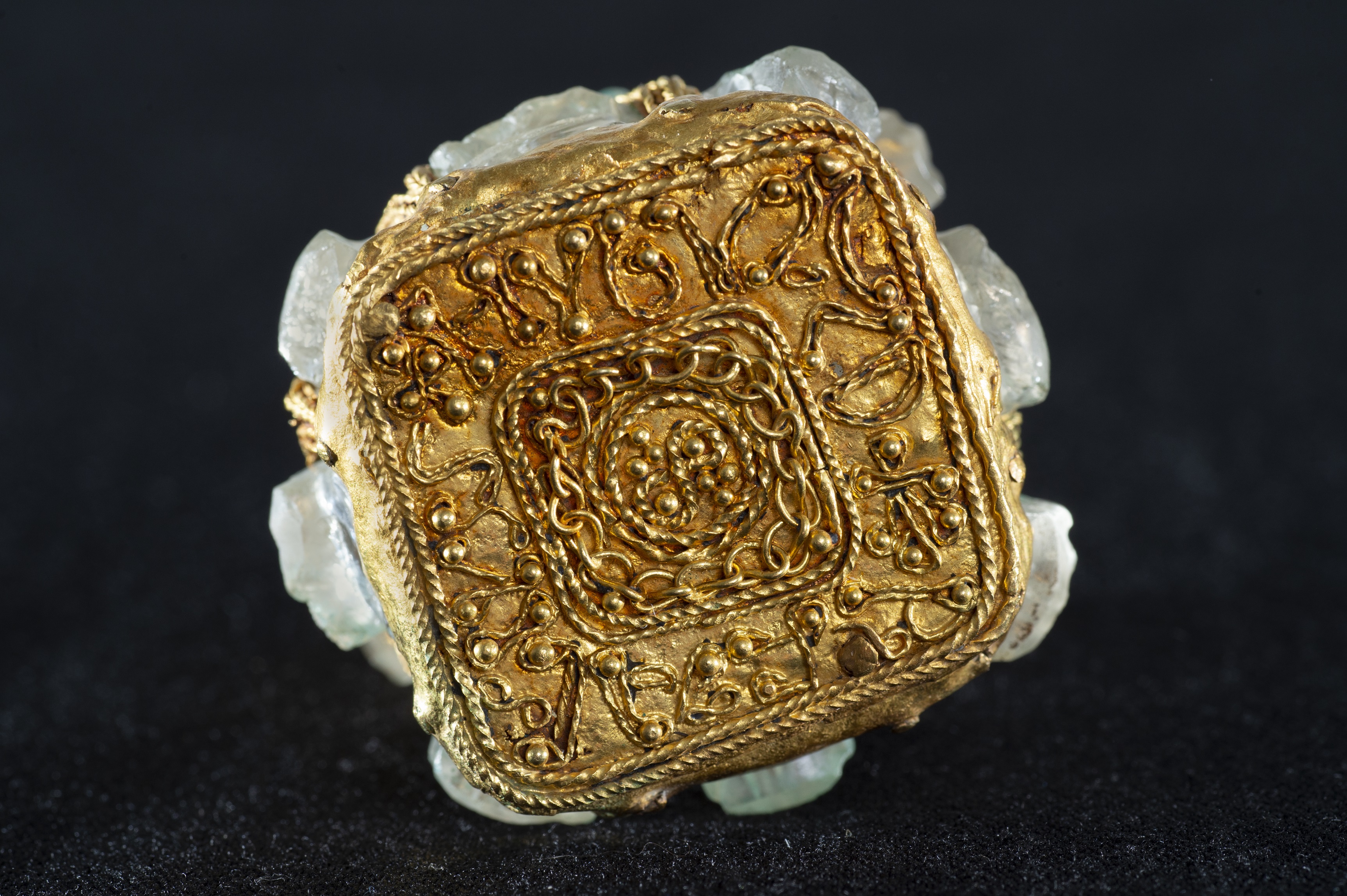 The rock crystal itself, however, long predates the gold mount. It was carved with lobes that when viewed upside down look like the acanthus leave layers of Corinthian column. The wear on the hard material and the great skill needed to carve it point to it having been made in the Roman Empire. It was the capital of miniature column — several of these objects are in the collection of the Vatican Museums — and bears a central drilled hole originally used to hold the column parts together.
It seems the carved crystal top, long separated from the rest of the column, was treasured as an heirloom for centuries. Hundreds of years later, it was flipped upside down and ornamented with gold in a unique filigree technique using spirals of twisted and plaited wire and granulation. The drilled hole was alighted with a gold spout. It was probably used to hold a small amount of liquid, a precious substance, perhaps a relic.
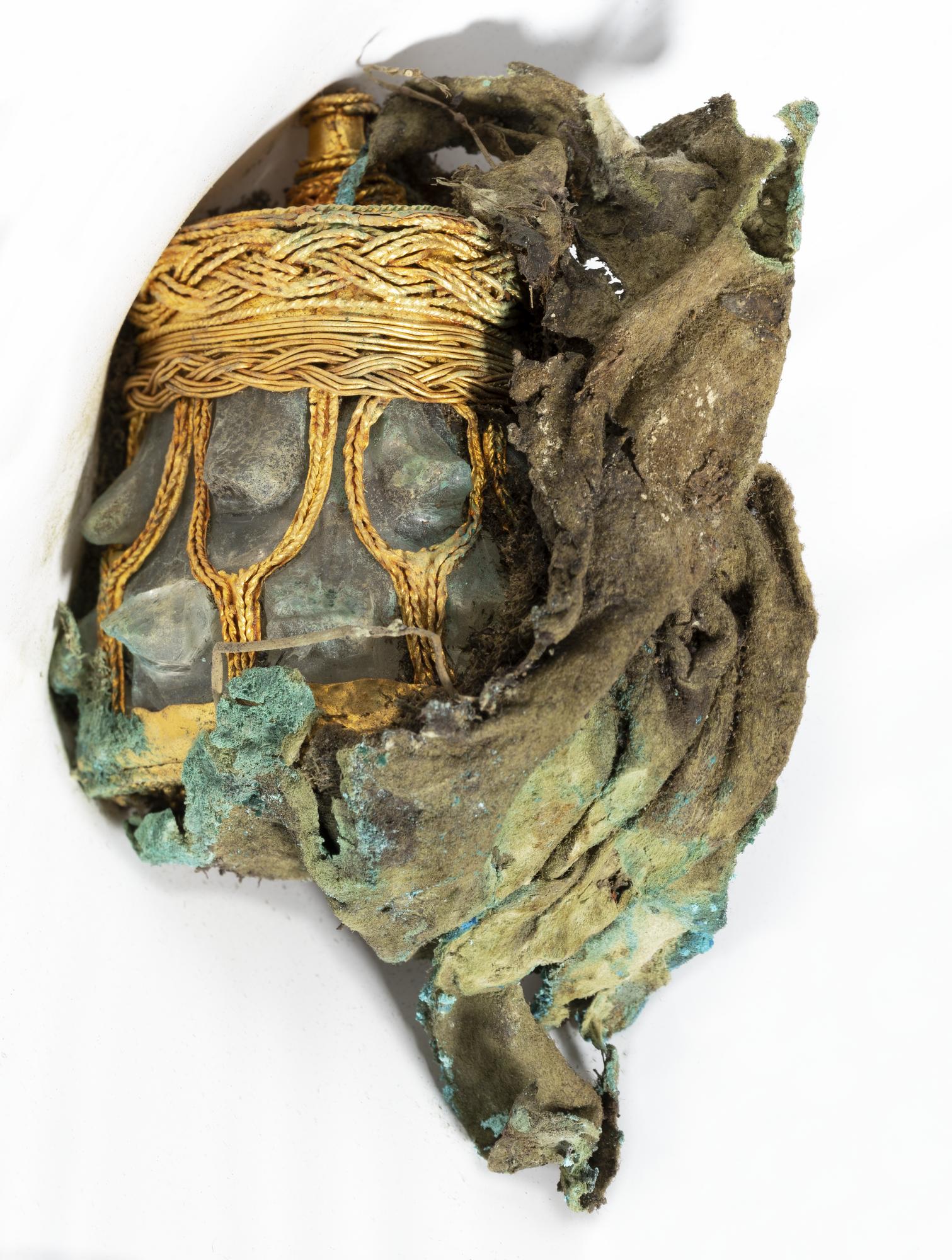 When it was placed in the fine silver pot with the other objects in the Galloway Hoard, the rock crystal jar was wrapped in linen, then placed inside a leather pouch lined with a layer of opulent samite (a decorated silk that originated in Asia or Byzantium).
Dr Martin Goldberg from National Museums Scotland said:
“The rock crystal jar is one of the highlight objects from the Galloway Hoard. From the beautiful rock crystal itself, originally carved in the form of a classical Corinthian column two thousand years ago, to the incredibly intricate gold decoration added hundreds of years later and including a clear inscription identifying its owner, this one object exemplifies the complex, connected and historic nature of the Galloway Hoard. The jar was the subject of international attention when we first revealed the inscription, and it’s great to be able to put it on display it for the first time in Kirkcudbright.”
I do so appreciate your comments! But this is all the more reason for deprecating the lack of careful proofreading before display. Please now remove the second and redundant “it”!
I accept the criticism of this comment. If I had thought about the writer I would not have made it.
There is another practical reason not to complain: unless the error is major/factual, they are never corrected (as far as I can tell). In fact, when I see such comments, I assume the person is a newbie to the blog. It is best to think of them as sporadic easter eggs placed for the discerning reader to wink at.
I’d very much prefer to have Livius’research and commentary with the occasional typographical error than not at all. She has been doing this nearly daily for many years without recompense for informing us, her readers and bringing us pleasure and knowledge. Cut her some slack! Pedantry is not a good look.
Completely agree. This is an interesting website with no advertising and not even requests for donations (although neither of which I would object to). Being persnickety or, as in this case, demanding about typos/grammar does not seem appropriate. I had to carefully reread the article to even notice the offending “it”.
The rock crystal jar was sublimely crafted. Was it largely decorative or did the owner have a specific use in mind?
For a bishop, a seemingly Roman (“decorative”) crystal may have been (“specifically”) reworked to a container for either ‘holy water’ or maybe just ink, … or …
…as indicated in the text, ‘to hold a small amount of liquid, a precious substance, perhaps a relic’: Hygvald ep[iscopus] fac[iendum] iuss[o] = Made to order (verb: iubeo) for Bishop Hygvald.