Archive for the ‘Ancient’ Category

US returns looted Moche gold monkey to Peru

Monday, December 12th, 2011

Moche gold monkey's head pendant, ca. 300 A.D.The New Mexico History Museum returned a gold pendant shaped like a monkey’s head from the pre-Columbian Moche culture (ca. 100-800 A.D.) to Peruvian embassy officials in a ceremony in Washington, D.C. on Thursday. The monkey is 1.75 inches high by 2.25 inches wide, with turquoise and shell eyes, a turquoise tongue, a lapis lazuli nose and a ball inside that makes the head rattle when you shake it. It’s a superb example of Moche workmanship, probably worn on a necklace by royalty or other august personages.

So superb, in fact, that Peruvian archaeologist Walter Alva, who along with his wife Susana Meneses discovered the spectacular Moche Lord of Sipán tomb in 1987, thought it looked a little too familiar when he saw it on display at the Art of Ancient America exhibit in the Palace of the Governors in Santa Fe in 1998. The Sipán tomb, which Alva had discovered intact, was looted shortly after its discovery by brothers Juan, Samuel, Emilio, and Ernil Bernal. They dragged dozens of sacks full of gold from the tomb to their house, buried the loot in their backyard and then sold it all off to eager collectors who, as usual, asked no questions.

The monkey was purchased by collector John Bourne in the late 80s along with a number of other Moche artifacts for $120,000. He donated it to the New Mexico History Museum in 1995. He also loaned two Moche ear spools and a gold rattle for the 1998 exhibit, although he retained ownership of those items. Bourne denied that the monkey’s head (or the other pieces) came from Sipán. He claimed instead that it came from La Mina, another Moche archaeological site in north Peru which was looted in 1988. This is no rebuttal to the charge that Bourne bought stolen goods, of course, since even if it did come from La Mina its theft and export were just as illegal as they would have been had the artifact come from the more famous Sipán site. As a legal maneuver, however, it was damned effective because establishing which site an artifact was stolen from is a basic requirement of making the case in a court of law.

The Peruvian government officially requested that the artifact be repatriated since it had been looted from the Sipán archaeological site and exported against Peruvian law. Alva went directly to the FBI, which opened an investigation in September of 1998. Citing the National Stolen Property Act, the FBI seized the monkey, ear spools and rattle, but since experts disagreed on whether they had been stolen from Sipán (as Alva and Peru alleged) or from La Mina (as Bourne claimed), in 2000 the U.S. Attorney General’s office in Albuquerque declined to prosecute. The pieces went back to the museum where they remained on display until 2008 and then the loaned objects were returned to Bourne.

That’s where things stood until this Spring. In May of this year, Peru wrote to Attorney General Eric Holder asking the Department of Justice to look into the situation. In October, the Board of Regents of the Museum of New Mexico voted to return the monkey head to Peru.

Pet peeve time. U.S. Attorney Charles M. Oberly III made the following statement about the return of the gold monkey:

“This repatriation is the result of the joint efforts of this office, the FBI Art Crime Team, the Department of Justice Office of International Affairs, the New Mexico Attorney General’s Office and the Museum of New Mexico. I commend all parties for their efforts in producing this positive outcome. In particular, I commend the Museum of New Mexico for its selfless and noble action in returning this invaluable artifact to Peru. Artifacts like this Moche monkey head represent the history not only of the source country, in this case Peru, but the history of all mankind. We hope that this repatriation will help repair at least some of the damage caused by the looting of Moche sites.”

What is with the legal authorities kissing the ass of museums and collectors who finally return the stolen goods they refused to cough up for decades? The Museum of New Mexico was not selfless and noble in returning this invaluable artifact they KNEW was stolen all along.

Share

Janitor finds forgotten coin hoard in German library

Sunday, December 11th, 2011

Tanja Höls was doing her janitorial duties in the fourth-floor archive of the State Library of Passau in Bavaria when curiosity drove her to look inside a wooden box she had seen many times but never opened. Within she discovered tray upon tray of coins. There were 172 coins in total, most of them silver, some bronze or brass, ranging in date from Roman antiquity up through the Napoleonic era. Nobody in the library had any idea they were there.

According to Markus Wennerhold, head of the library, the collection likely came into the library’s possession after the 1803 secularization of Germany. The victorious French armies of Napoleon brought constitutional governments based on Revolutionary humanist principles to what was then the highly fragmented and decentralized Holy Roman Empire. Holy Roman Emperors had been handing out vast estates and titles to religious authorities for centuries by then. Even though the Protestant Reformation had stripped some of that temporal power from ecclesiastical rulers, it wasn’t until the early 19th century that the governments of German states systematically secularized religious properties and possessions.

One of those religious properties was the Passau library. It was originally founded in 1612 as the library of the Jesuit College. When Pope Clement XIV suppressed the Jesuit order in 1773, the library passed into the hands of the Passau bishopric and was renamed the Episcopal Academic Library. When secularization hit Bavaria in 1803, the library became state property. Its collection was enormously inflated by the secularization of its neighbors’ holdings. Franciscan, Capuchin, Augustinian, Benedictine, Premonstratensian and Cistercian monasteries in Passau and environs had to give their entire libraries to the new public one.

The coins – silver, bronze and brass – were worth millions, [Wennerhold] said. “We looked for similar ones online, and found that some which were the same but in much worse condition had been sold for considerable sums. Then there were coins that we have that are not recorded elsewhere.”

He said the coins had simply been forgotten about. “No-one currently working at the museum knew they were there,” he said.

“They were hidden in 1803 during the secularisation in Germany, when all books and coins were taken from the monasteries and cloisters and put in state hands. The most valuable things were supposed to be taken to Munich, according to the archives, but someone here in Passau decided to keep some of them here and hid some treasures – including these coins.”

They might also have been hidden in the library by their owner rather than having been confiscated. A noble tax evader, perhaps, who wanted to stash them somewhere the government wouldn’t look.

Keep your eye on the library website because next week they have promised to post pictures of each individual coin. They won’t go on display right away, but next year is the library’s 400th anniversary so the coins will be part of a special celebratory exhibit.

As for Mr. Höls, she’s getting promoted to the curatorial department and Wennerhold et al are planning an appropriate reward of a pecuniary nature as well.

Share

Earliest human mattresses found in South Africa

Friday, December 9th, 2011

A team of archaeologists has discovered 40,000 years worth of mattresses stacked in South Africa’s Sibudu cave, 25 miles north of Durban. Our Stone Age ancestors made bedding from leaves, seeds and stems of local rushes and grasses on the floor of the cave starting approximately 77,000 years ago. For the next 44,000 years, nomadic Homo sapiens hunted and gathered in the area using Sibudu as their crash pad, compacting the plant material to create sleeping mats.

Researchers found at least 15 1-centimeter thick layers of plant matter embedded within a chunk of sediment 10 feet thick. They suspected the layers were human bedding, but since the oldest sleeping mats discovered up until now were only between 20,000 and 30,000 years old, archaeologists had to study the material under the microscope to see what exactly it was composed of and whether people brought the plants to the site intentionally.

Reporting online today in Science, Wadley and her colleagues describe the results of two sophisticated archaeological techniques: analysis of phytoliths, tiny fossil plant remains, which allows identification of plant species; and micromorphology, the high-resolution examination of archaeological remains.

The team found that the swaths, which dated from 77,000 to 58,000 years ago, were made from sedges, rushes, and grasses, plants that grow down by the Tongati River but are not found in the dry rock shelter. Thus the people at Sibudu must have gathered them deliberately and brought them to the cave. Under the microscope, blocks of the plant material showed signs of compression and repeated trampling. In the earliest layer, 77,000 years old, the team found the leaves of Cryptocarya woodii, also known as Cape laurel, or the “bastard camphor tree,” an aromatic plant whose leaves are used in traditional medicines even today. The leaves contain several chemical compounds that can kill insects, and the team suggests that early humans chose them to protect against malaria-carrying mosquitoes and other pests.

The layers also showed evidence of regular burning, starting 73,000 years ago. Archaeologists believe people burned the bedding to eliminate pests that had infested the plants, and/or to reduce the accumulated height of old, decayed mats so they could start again clean. This is the first example known of humans using fire for dwelling maintenance.

The inhabitants of the cave would not have lived there permanently, despite having made it so nice and cozy. They probably used the space for weeks at a time until the area was hunted out and the organic material started rotting or attracting vermin. Archaeologists found fragments of stone chips and burnt bone amidst the plant matter, so in addition to use the mats for sleeping, their creators also used them as a work surface for making tools and food.

Around 58,000 years ago, the bedding layers become more frequent, suggesting that the population in Sibudu was growing during this period. Archaeologists estimate that Homo sapiens migrated from Africa 50,000 years ago, perhaps in the wake of that very population boom.

Share

Hundreds of intact Bronze Age artifacts found in fens

Tuesday, December 6th, 2011

Archaeologists excavating the Cambridgeshire fens near Petersborough, southeast England, have discovered the largest single collection of Bronze Age artifacts ever found in Britain. The 3,000-year-old artifacts were kept in an extraordinary state of preservation by the layers of silt and peat in the Flag Fen Basin.

The discovery, still only in the early phases of excavation, provides a snapshot of Bronze Age life. Among the artifacts is a wooden bowl with a spoon sticking into the contents. Laboratory analysis of the substance in the bowl identifies it as delicious and nutritious nettle stew.

The most glamorous of the hundreds of artifacts discovered are six canoes carved out of oak trunks. Finding even one intact Bronze Age boat would be the discovery of a lifetime; six is an embarrassment of archaeological riches. Two of them are decorated and all six of them are in such great condition that you can see the wood grain. You can even see where their Bronze Age owners made repairs to the vessels.

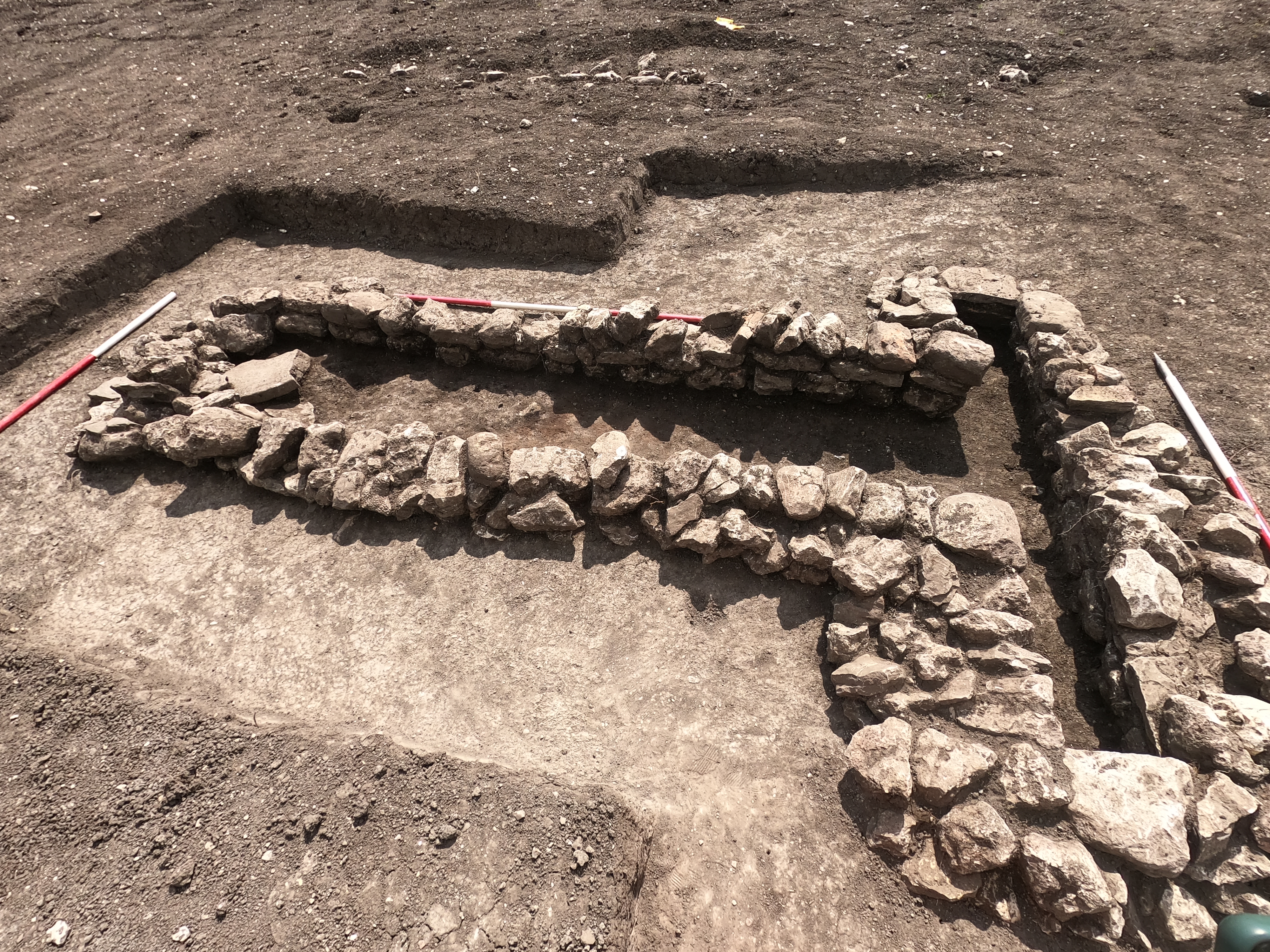
Along the 150-metre stretch of a bronze age river channel, they have found the best preserved example of prehistoric river life. There are weirs and fish traps in the form of big woven willow baskets, plus fragments of garments with ornamental hems made from fibrous bark and jewellery, including green and blue beads. Extensive finds of metalwork include bronze swords and spears, some apparently tossed into the river in perfect condition, possibly as votive offerings. One of the boats is 8.3 metres long. “It feels as if you could get the whole family – granny, grandad, a couple of goats and everything – in there,” said Knight. The smallest boat is just over four metres long.

The finds reveal how, with the rise in water levels in the bronze age, people adapted to a wetland environment, using rivers for transport, living off pike, perch, carp and eel. How far they could travel in the log boats is unclear. Although the boats were unlikely to have been used at sea, one of the bronze age swords is of a type normally found in northern Spain.

They were found buried over 13 feet (4 meters) below ground level, and were only discovered because the firm that hired the archaeologists to survey the area is a brick and concrete company that needs to dig deeply to access the Jurassic clay they use to make their bricks. No aerial photography or even ground-penetrating radar would have been able to detect artifacts so deep underground.

Only a fraction of the site has been excavated so far. Since the find is so rich, archaeologists expect the dig will continue for years. The artifacts will be removed from the site, studied and conserved with an eye to future museum display.

Edit: Yay pictures!

Share

15 infant dinosaurs found in a nest in Mongolia

Wednesday, November 30th, 2011

A nest of 15 baby Protoceratops andrewsi, sheep-sized herbivorous horned dinosaurs related to Triceratops, fossils has been discovered in Mongolia’s Gobi Desert. Mongolian paleontologist Pagmin Narmandakh found the 2.3-foot-wide nest, the first Protoceratops nest ever discovered. Nests of fossilized eggs thought to be Protoceratops were found in Mongolia in the 1920s by naturalist Roy Chapman Andrews, but when the eggs were opened they turned out to be Oviraptors (dinosaurs that fed on other dinosaurs’ eggs).

The babies are not newborns. They are 4 to 6 inches long and were probably about a year old when they met their sad fate about 75 million years ago.

“The evidence suggests they may have been overrun by migrating dunes during a sandstorm,” researcher David Fastovsky, a vertebrate paleontologist at the University of Rhode Island, told LiveScience.

The searing hot locale in the heart of the Gobi Desert where this nest was discovered, Tugrikin Shire, has proven rich in fossils in the past, including the “fighting dinosaurs,” an entombed Velociraptor and Protoceratops seemingly locked in mortal combat. The site was harsh back when these dinosaurs were alive, too — the sandstones they were buried in suggest the region was an erg, a windblown dune field a bit like parts of the modern Sahara. The dunes here might once have reached as tall as 80 feet (24 meters).

The relatively advanced age of the babies suggests that Protoceratops cared for their young. For them all to be still living together in the nest beyond the first few days they had to have an adult feeding and protecting them, especially considering how harsh the desert environment was even during the Late Cretaceous. Fastovsky notes that 15 is a large number of babies for one nest, which suggests that mortality may have been high so they hatched as many eggs as they could to increase the chances of a next generation surviving.

Also, since protoceratopsidae were early members of the ceratopsian group of dinosaurs, evidence of parental care in Protoceratops implies that this may have been a feature of the wider group as it continued to develop larger and more formidable neck-frilled, horn-beaked beasts like Triceratops.

Share

Ancient Egyptian leather chariot trappings found

Monday, November 28th, 2011

Nobody’s quite sure where they’re from or how they got there, but an almost complete set of leather chariot trappings from around the time of Tutankhamun has been found in a back room of the Cairo Museum. A few chariots have been found in royal tombs — Tutankhamun had six in pieces in his tomb — but leather rots easily and there are only a few fragments extant of ancient Egyptian chariot gear, none of it decorated. This set is so extensive, so elaborate and in such amazing condition that it’s already filling in blanks and correcting misunderstandings of how ancient chariots worked.

In 2008, Ancient Egyptian Leatherwork Project expert André Veldmeijer of Cairo’s Netherlands-Flemish Institute saw a grainy picture of some well-preserved chariot trappings in a book from the 1950s. The book said the trappings were in the Cairo Museum so Veldmeijer asked curator Ibrahim El Gawad about them. Gawad had never heard of them.

Entirely by coincidence, a few months later Gawad stumbled on drawers full of leather chariot fittings in a storage room. There were 60 large pieces and many small leather fragments. According to museum records, they were purchased from a Greek antiquities dealer named Georges Tano in 1932, but there is no information about where he got them.

Veldmejier says that El Gawad called him to the museum and showed him “layer upon layer” of leather. “It’s a gorgeous find,” he says. “What was in the picture, that’s not even half of what’s in the museum. It was astonishing.”

The trappings are 90–95% complete, according to Veldmeijer, and include the leather casing that would have covered the wooden chariot, as well as harnesses, gauntlets, and a bow case and quiver. Wear marks and details of the stitching are still visible, and the intricate red, green and white design — the only known example of its type — is still bright after more than three millennia.


It’s hard to believe they’re ancient, isn’t it? I’m pretty sure I saw that forearm gauntlet on Charleton Heston once. When you think that they languished forgotten in drawers for decades (at least), their condition is even more jaw-dropping.

Not that they don’t need some TLC. Veldmeijer and American University in Cairo Egyptologist Salima Ikram are co-directing the Egyptian Museum Chariot Project to conserve and study the trappings. The pieces that were folded so they’d fit in the drawers need to be painstakingly unfolded and repacked using proper conservatorial materials.

They’ve already found that the trappings all came from a single chariot and were therefore probably discovered together in a single tomb. The stitching and decoration on the leather point to a date between the late 18th Dynasty and the late 19th Dynasty, but further research is needed to narrow down the range.

Share

Maya 2012 apocalypse conspiracy blown wide open

Sunday, November 27th, 2011

Did you know that the whole thing about the Mayan calendar predicting the end of the world in 2012 was based on one broken and eroded tablet of glyphs? The idea is that in the Mayan Long Count calendar, our current era (the 13-Bak’tun cycle) ends on the 23rd of December 2012 and that this end date isn’t just the end of a historical era and the beginning of a new one, but rather the end of all eras. The sole reference to the 2012 apocalypse, however, is a highly nebulous line on a 1300-year-old stone tablet found in Monument 6 in the Tortuguero archaeological site in the southern state of Tabasco.

Mexico’s National Institute of Anthropology and History and Mayan experts in general have not been big fans of the Mayan apocalypse theory because they say it projects a Western obsession with eschatology onto Mayan culture. Nor have they found the various translations of that one line of hard to read glyphs particularly persuasive.

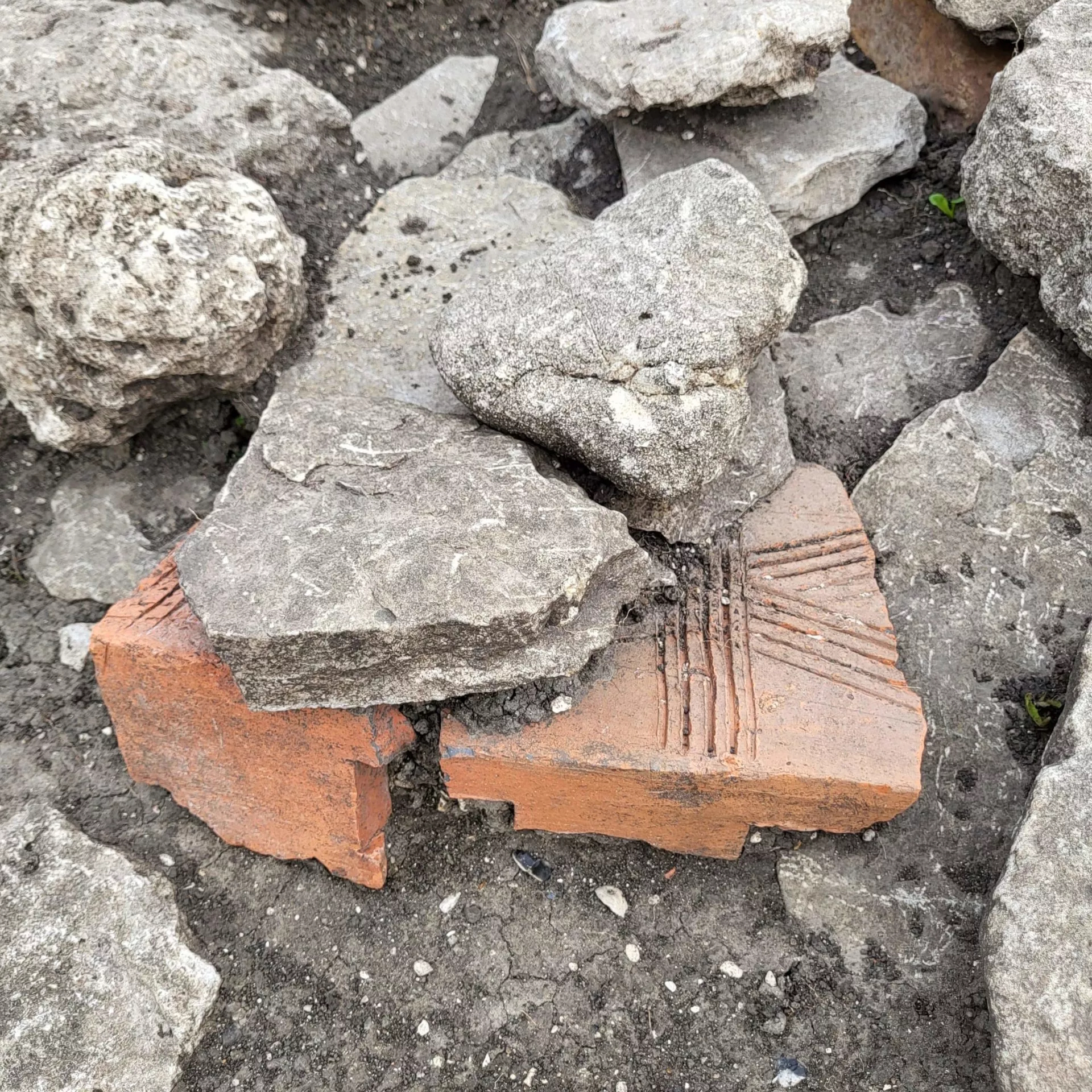
Or that’s what they said in public anyway. The Mexican government has been holding out on us, for the Tortuguero tablet is not the sole reference to 2012. There is a second one engraved on the face of one of the bricks in the nearby Comalcalco temple. (You can catch a glimpse of a Comalcalco brick in this news roundup of the story, but I’m not certain if it’s the One True Brick or just a representative.)

Arturo Mendez, a spokesman for the institute, said the fragment of inscription had been discovered years ago and has been subject to thorough study. It is not on display and is being kept in storage at the institute.

WHAT ARE THEY TRYING TO HIDE? Oh sure, a handful of scholars knew about this brick, but they’re obviously in on it.

[University of Texas at Austin Mayan epigraphy expert David] Stuart said the date inscribed on the brick “‘is a ‘Calendar Round,’ a combination of a day and month position that will repeat every 52 years.”

The brick date does coincide with the end of the 13th Baktun; Baktuns were roughly 394-year periods, and 13 was a significant, sacred number for the Mayas. The Mayan Long Count calendar begins in 3114 B.C., and the 13th Baktun ends around Dec. 21, 2012.
But the date on the brick could also correspond to similar dates in the past, Stuart said.

“There’s no reason it couldn’t be also a date in ancient times, describing some important historical event in the Classic period. In fact, the third glyph on the brick seems to read as the verb huli, ‘he/she/it arrives,’” Stuart wrote. “There’s no future tense marking (unlike the Tortuguero phrase), which in my mind points more to the Comalcalco date being more historical than prophetic.”

A likely story, Mr. “Stuart”, if that’s your real name.

In order to continue to pull the wool over out eyes until it’s too late, the National Institute of Anthropology and History will hold a round table of 60 Mayan experts next week at the Palenque archaeological site where they will “explain” the Mayan Long Count calendar’s vision of historical cycles. Doubtless those 60 experts will be paid with third class berths on the top secret giant arks being built in underground shipyards to save the privileged few from the extinction of our species.

Share

Reputed Roman fort turns out to be actual Roman fort

Saturday, November 26th, 2011

Local legend has long had it that the overbuilt and overgrown masonry structure known as “the Nunnery” perched over Longis beach on Alderney, a Channel Island just eight miles from the coast of France, was originally a Roman fort. Despite multiple archaeological explorations from the 19th century on, however, little evidence has been found to support the tradition. Roman stonework and tiles are visible high up on the ramparts, but they could have been repurposed during Medieval construction rather than original.

In fact, a 1930 excavation found Medieval material at deep layers and that, contrary to Roman architectural punctiliousness, the fortress was built directly on the sand. More recently, a 2002 excavation along the fallen east rampart (it collapsed from erosion sometime before the 18th century) showed Medieval midden piles at what archaeologists thought was the level of construction.

In 2008, the Alderney Society and Guernsey Museum collaborated on a project to pin down the origins of the Nunnery. With the permission of the landowner and tenants, Dr. Jason Monaghan, director of Guernsey Museums, organized a team of a dozen volunteers to spend the last week of August excavating the site. That first year they found a handful Roman objects — fragments of tile and pottery — deep down under the north wall.

Now, on the fourth consecutive year of these volunteer-staffed, week-long excavations, Monaghan and his team have found confirmation of the local legend: the remains of a Roman-era tower in the middle of the Nunnery. The team was specifically looking for one because the other 4th century Roman forts that dot northern England all have central towers, so the apparent absence of one here suggested later construction.

“The walls are 2.8m (9ft) thick, we don’t know how high it was, but it would have been a very big structure – it’s as thick as Hadrian’s Wall.”

The tower was found to be about 18 sq m. (58 sq ft). He said the team dug down to prove the outside walls were also Roman before doing the same for the gateway. [...]

Dr Monaghan said: “It’s in an extremely good state of preservation… it’s better preserved than all the other small Roman forts in Britain.

“It’s in a better state than what they call the Saxon shore forts off southern England, it’s in better nick than most of Hadrian’s Wall.

That’s one of the reasons that the legend of the Roman fort was doubted for long, because the putatively ancient part of the walls was so exceptionally high, passing 16 feet, while the remains of the forts in Yorkshire, for instance, are shin-high at best. The Roman stonework, set in characteristic herringbone patterns with double rows of tiles, was built on in later years, but you can clearly see the original crenellations that were filled in so the wall height could be raised.

The tower itself was destroyed, probably by the Nazis (I hate those guys) when they built a bunker in the middle of the ancient structure during their occupation of the Channel Islands. They were just one in a long line of people who remade the Nunnery to suit their needs over the centuries. It was a barracks in the Middle Ages, then the governor’s residence, then a farm, even British military housing after the Germans were gone.

One of the things that makes the site so interesting to archaeologists is how many periods of use are still evident. There are only a handful of Roman structures in the Channel Islands and all of them have been laid waste by time. This one shows all of its ages.

Share

Humans went deep sea fishing 42,000 years ago

Friday, November 25th, 2011

Archaeologists from the Australian National University excavated the Jerimalai on the southeast Asian island of East Timor have found direct evidence of humans fishing deep-sea species 42,000 years ago. Inside the shallow cave the team discovered over 38,000 fish bones from 2,843 individual fish dating back 42,000 years and half of those fish were fast-swimming deep-sea species like tuna and sharks.

Humans have been feasting on shore-based seafood like mussels for at least 165,000, but the earliest sites where deep sea fishing has been confirmed before this has been are only 12,000 years old. The Jerimalai cave also produced another first: a fish hook made of a mollusk shell that is 23,000 years old. That is the earliest confirmed date for a fish hook and the earliest evidence of line fishing.

The new evidence “certainly suggests that people had advanced maritime skills” by 42,000 years ago [Susan] O’Connor [, archaeologist at the Australian National University and the excavation leader] says, at least “in terms of fishing technology.” The finds indicate that this mastery of the sea “must have been one of the things that allowed the initial colonization” of East Timor and other Southeast Asian islands, such as Papua New Guinea and Indonesia. But O’Connor cautions that there is still no direct evidence about the maritime skills of the first people who colonized Australia, leaving open the possibility that they drifted there with the tides.

We don’t know how they might have fished tuna and sharks. The mussel shell hook would not have been used for deep sea fishing and thus far no remains have been found to answer the question. If the people who braved the oceans to populate Australia and East Timor during this period had oceanworthy ships rather than drifting there on rafts, certainly they could have mastered devising a net or dragline and hook combination that worked in the deep East Timor coastal wasters.

There are some objections to the interpretation of the data. One anthropologist noted that the tuna found in the cave are only between 20 and 30 inches long and are thus juvenile specimens who might have been caught wandering too close to shore. Since the water off the coast of East Timor gets deep very quickly, it’s easier to find deep sea fish near land. O’Connor rebuts that even young tuna are fast swimmers and can’t be speared or hooked from the beach in the thousands.

She intends to keep excavating the cave, moving deeper down into earlier eras. Here’s hoping she finds a boat.

Share

Ashmolean opens six new Egyptian galleries

Wednesday, November 23rd, 2011

Oxford University’s Ashmolean Museum will put its collection of 40,000 ancient Egyptian and Nubian artifacts back on display in six refurbished galleries starting this Saturday, November 26. The collection includes a large number of human mummies and objects that have been part of the museum’s collection since the 17th century. Over half of the mummies and coffins have been in storage for decades and will go on display for the first time in the new galleries.

The Ashmolean is home to some of the finest Egyptian and Nubian collections in the country, with Predynastic and Protodynastic material which ranks amongst the most significant in the world. With new lighting, display cases and interpretation, the project completes the Ashmolean’s Ancient World Floor, comprising galleries that span the world’s great ancient civilisations – from Egypt and Nubia, Prehistoric Europe, the Ancient Near East, Classical Greece and Rome, to India, China and Japan. [...]

Professor Andrew Hamilton, Vice-Chancellor of the University of Oxford, said, “These remarkable collections are among the most important outside Egypt and one of the Ashmolean’s most popular attractions. With an exciting series of new galleries, the redevelopment transforms opportunities for using the collections for teaching and research at all levels, and the way they are enjoyed, cared for and integrated within the wider Museum.”

Each gallery is dedicated to a chronological period of ancient Egyptian and Nubian history. The first one is Egypt at its Origins, covering Egypt’s history from the Paleolithic era to the Early Dynastic period (ca. 3000 B.C.), includes some of the oldest stone sculptures in the world and the colossal limestone statues of the fertility god Min. Next is Dynastic Egypt and Nubia (2686 B.C. to 1540 B.C.) whose centerpiece is the Shrine of Taharqa, part of the temple of Amun at Kawa, in what is now Sudan, and the only complete free-standing pharaonic building in Britain. Life after Death in Ancient Egypt focuses on the tools and methods the Egyptians used to mummify and secure eternal life. The Amarna Revolution singles out the reign of King Amenhotep IV and the unique religion and art produced under him. Egypt in the Age of Empires depicts daily life in ancient Egypt using the documents found engraved on limestone chips at Deir-el-Medina, the village where construction workers building royal tombs lived during the New Kingdom (ca. 1000 B.C.). The last gallery is Egypt meets Greece and Rome which displays artifacts from Ptolemy’s accession to the throne of Egypt after the death of Alexander.

The original Egyptian rooms were apparently dark and pokey. The new galleries are bright, open and airy to facilitate visitor traffic flow and show off this extraordinary collection to its best advantage. That they’ve successfully built new interior spaces, moved 40,000 objects to and fro, including colossal statues and huge display cases in only 12 months while the rest of the museum was open is astonishing. It took them two months just to move artifacts into the new rooms.

Share