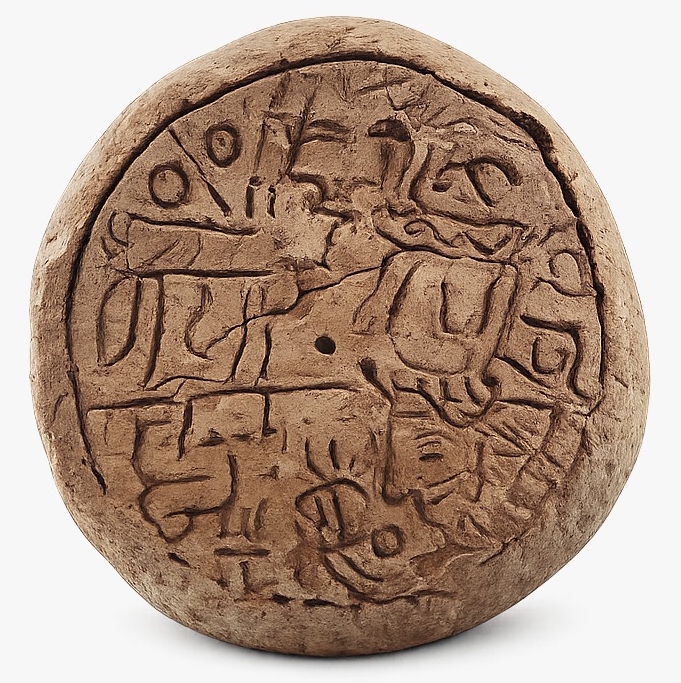
Kushan royal seal found in Tajikistan

A rare royal seal of the Kushan Empire has been discovered at the Sayyod historical site in southern Tajikistan. Carved with a Bactrian inscription and symbols of royalty, it is approximately 2,000 years old. The small clay seal is of outsized archaeological significance because of the information it contains which will shed new light on the Kushan period in Tajikistan.

The seal is made of fired clay and is in exceptional condition. It is made of two components: a seal handle perforated so it could be worn on a cord and the circular body of the seal. It is two inches high, a sliver wider than that in circumference. The motifs engraved on the seal are mirror images, a feature typical of official seals so that the seal impression would look right. It includes geometric symbols, a bust of a king wearing a crenellated crown, mountain goats, and emblems of royal authority as well as those of local rulers under the Kushan Empire.

The Bactrian inscription may prove especially valuable. Bactrian, an Iranian language written using a modified Greek alphabet, became an important language of administration under Kushan rule, making inscriptions on official objects particularly useful for reconstructing political institutions and personal titles.

If the inscription can be securely read, it may reveal a name, title or institutional connection and help determine whether the seal belonged to a royal official, a local ruler or another figure operating within the Kushan political system.

The combination of royal imagery and symbols apparently associated with local authority is equally intriguing. Rather than simply documenting imperial power, the seal may ultimately provide evidence for the relationship between Kushan rulers and regional elites in what is now southern Tajikistan.
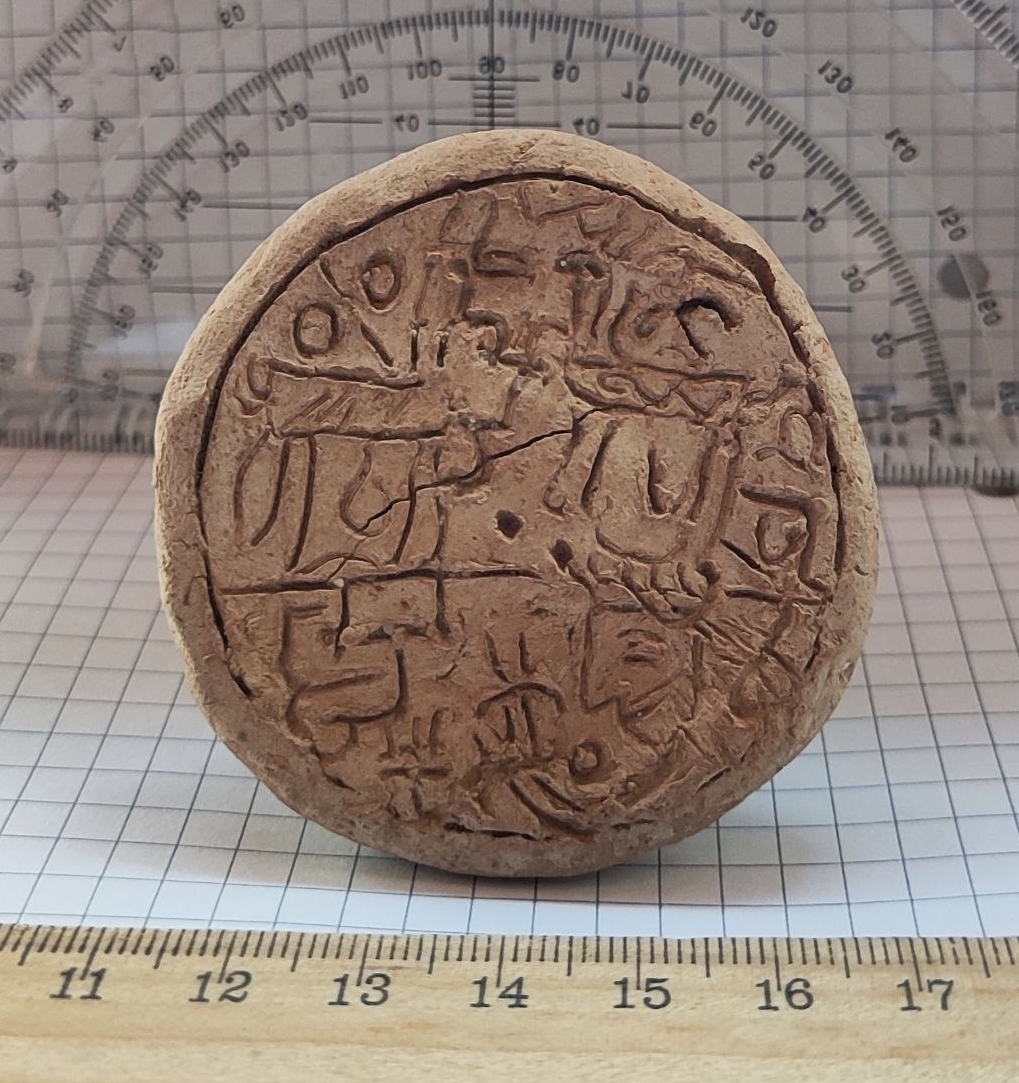
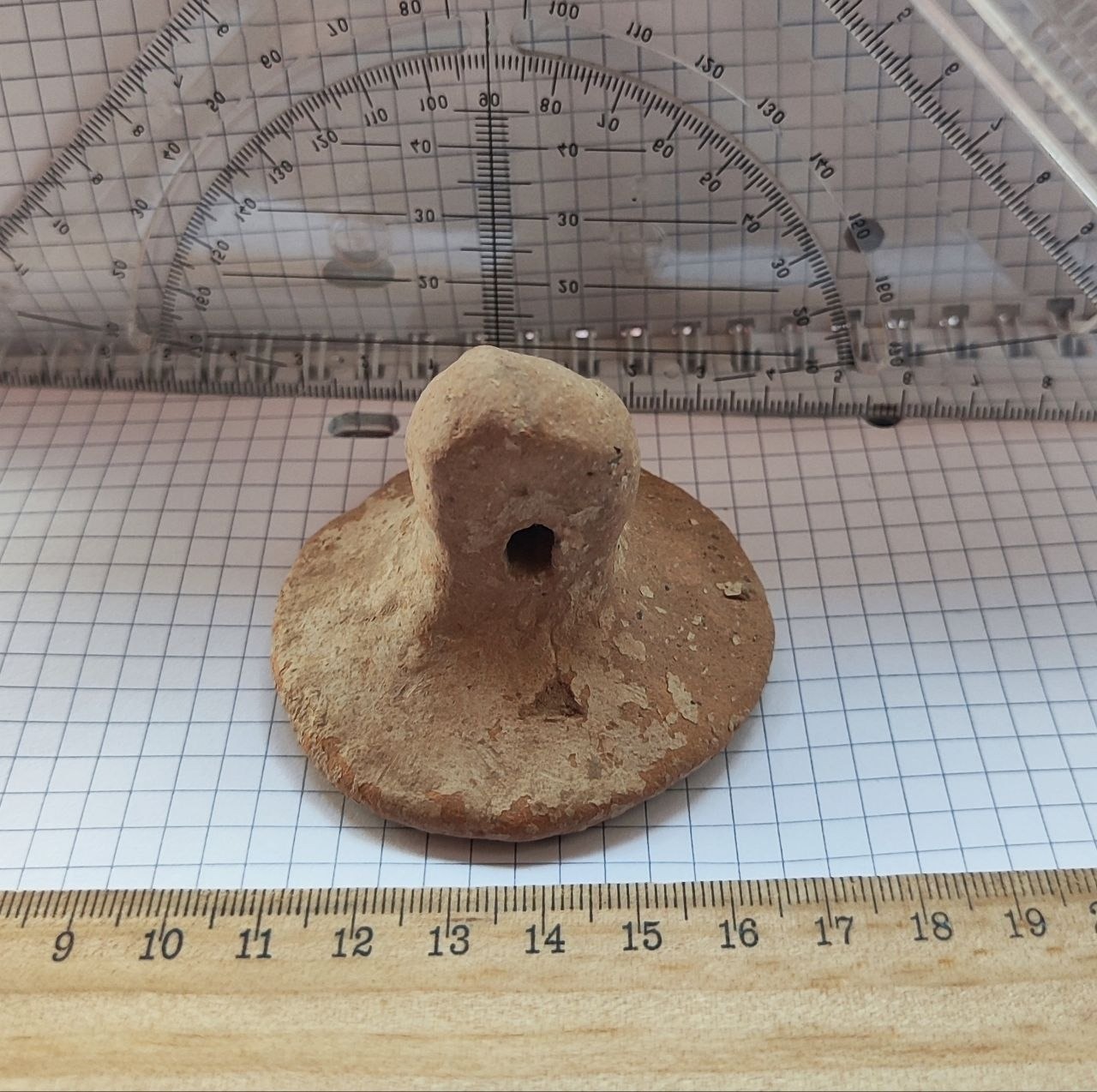
The seal is currently being studied by numismatics and epigraphic experts at the National Museum of Tajikistan to translate the inscription and answer the questions about who it belonged to, what kinds of documents it was used to authenticate and any additional information it may contain about Kushan administration in Central Asia.

Update: men in Roman mass grave under Vienna soccer field took many shots to the groin

A new analysis of the skeletal remains recovered from the unprecedented mass grave discovered under a Vienna soccer field in October 2024 has confirmed they died in a violent mass fatality event, and that they took many projectiles to the groin before they died.

When the mass grave was first unearthed, archaeologists thought it was be related to the near-by medieval and early modern cemetery, perhaps a plague pit or the victims of one of the Ottoman sieges of Vienna. Roman remains had never been found in the Hasenleitengasse area of the city, but as the excavation progressed, the sheer density of remains — at least 128 individuals crammed into a 16.5 by 15-foot pit — made it completely different from any other known mass graves. Radiocarbon dating of the remains and few objects found in the grave date it to the late 1st/early 2nd century A.D.

Analysis of the remains has found that all of the 129 individuals were young adult males between the ages of 18 and 35. At least 48 of them suffered a violent trauma injuries (sharp force, blunt force, projectile penetration), 85% of them inflicted at the time of death (perimortem). They were interred under time pressure, resulting in a disorganized grave with individuals entwined with each other in multiple orientations.

From the injury evidence, researchers determined the deceased were likely soldiers who died in one violent clash. However, there is no other evidence, either in historical literature or on the archaeological record, of a battle having taken place in this area at that time.

Bioarchaeologist Sheridan Strang and the research team of the archaeology firm Novetus discovered that the sharp trauma injuries were distributed all over the bodies, while blunt trauma was mostly on the skulls. The projectile trauma, on the other hand, was concentrated in deceased’s groins.

The most likely scenario for these pelvic injuries is an attacker on the ground using a throwing lance and targeting a gap in an enemy’s armor as he rode horseback.

“We have one individual where the lance head was still inside the pelvis when we excavated him,” Strang told Live Science. “The people who caused these injuries were aiming for these sensitive areas,” she said.

The Hasenleitengasse mass grave is an important site for understanding projectile weapon use, Patrick Randolph-Quinney, a biological anthropologist at Uppsala University in Sweden who was not involved in the research, told Live Science. The fact that projectile trauma was focused on the groin and lower limbs “tells us about a possible lack of armor and protection in those areas — but also that the attackers knew how to incapacitate based on soft-tissue anatomy,” he said.

To find out more about whether the soldiers were Roman or Germanic tribesmen from the local Marcomanni people or somebody else entirely, the team performed DNA analysis of 25 of the skeletons. The results confirmed that the deceased were male and determined a surprising diversity of origins in the small sample. Some came from Italy, other from mainland Europe and three were from the eastern Mediterranean and the Levant.

“These individuals may have been Roman military personnel,” Strang said. “But they might not all be Romans. There’s a chance that it is a commingled grave, with Romans and another Germanic tribe.”

Research on the skeletal remains is ongoing. Next on the agenda is stable isotope analysis to narrow down where they came from, plus investigating their overall health, what they ate and whether they suffered from any diseases.

Carausius denarius found in railway excavation

Archaeological investigations along the route of new railway construction have uncovered Roman artifacts, including a rare silver denarius minted by the self-styled Emperor Carausius (ca. 250-293 A.D.) The coin dates to 287 A.D. and bears the laureate, draped bust of Carausius facing right encircled by the inscription IMP CARAVSIVS P F AVG (“Emperor Carausius, Pious and Blessed Augustus”).

Carausius was not an Emperor of Rome. He was a Roman citizen of the Manapii people in Belgium and an officer in the Roman navy. He was the commander of the Roman fleet Classis Britannica based in the English Channel when he got in trouble for taking confiscated treasure from captured pirates and concealing its existence from Rome. Emperor Maximian condemned him to death, but before he could be executed, Carausius revolted against Rome and declared himself Emperor of Britain and northern Gaul. He ruled the Britannic Empire as an independent state from 286 to 293 A.D. His coins were the first Roman coins struck in London.

In 293, the western Caesar Constantius Chlorus retook some of the territories in Gaul. Carausius’ treasurer Allectus assassinated him and appointed himself emperor, but when Constantius launched a full invasion to reclaim Britain in 296 A.D., Allectus died in the battle and the Britannic Empire was no more.

The East West Rail (EWR) service will run between Oxford and Cambridge, but before construction begins, archaeologists will excavate 6,000 trial trenches 164 feet long, before any permit will be granted. What they find in the test trenches will determine the Environmental Impact Assessment and the ultimate design of the railway. The program is expected to take two years.

Update: shackled men in mass grave were native Athenians

A new study of the remains of men discovered with iron shackles on their wrist in a mass grave in Athens, Greece, in 2016 has revealed that they were Athenian locals, not invaders or immigrants.

The mass grave was one of three, dubbed the “Esplanada,” that were found in an excavation of the Phaleron necropolis, in use from the 8th to the 5th century B.C. Pottery found inside the grave dates it to between 675 and 650 B.C. The bodies of 79 adult men, all young and healthy, all killed at the same time by the same method, so a deliberate execution rather than a battle, were discovered arms above their heads shackled at the wrists. They had been laid out in three orderly rows and buried with respect.

In the decade since the discovery, there has been much debate on who these men may have been and why they were executed. One possibility was that they were the noble youths who joined the failed coup of Cylon of Athens in 632 B.C., but the radiocarbon dates don’t quite fit. Another possibility was a mass execution of criminals at the dawn of state-enforced judicial power in Athens.

Researchers from Arizona State University’s Center for Bioarchaeological Research recently sought to answer some of the questions using strontium isotope analysis.

Strontium is absorbed into teeth from local food and water during childhood, leaving a chemical signature tied to where a person grew up. By comparing that signature to known local values, researchers can tell whether someone spent their early years near where they were later buried.

The team tested samples from 66 of the men in the Esplanada grave, along with 97 other individuals buried elsewhere at Phaleron. The results showed that nearly all of them, about 97 percent of the men in the mass grave, had local origins.

That figure closely matched the broader Phaleron population, where about 96 percent of those tested were also local.

These results confirm that the individuals interred in the Esplanada were killed by their neighbors, and that they had no significant differences in geographic background. The homogeneity of the results throughout the necropolis support the argument that Attica in the Archaic period was still insular with limited migration, even though the wider Aegean area was seeing increasing interaction and population movement.

5th c. B.C. grave with wrestler coins found in Aspendos

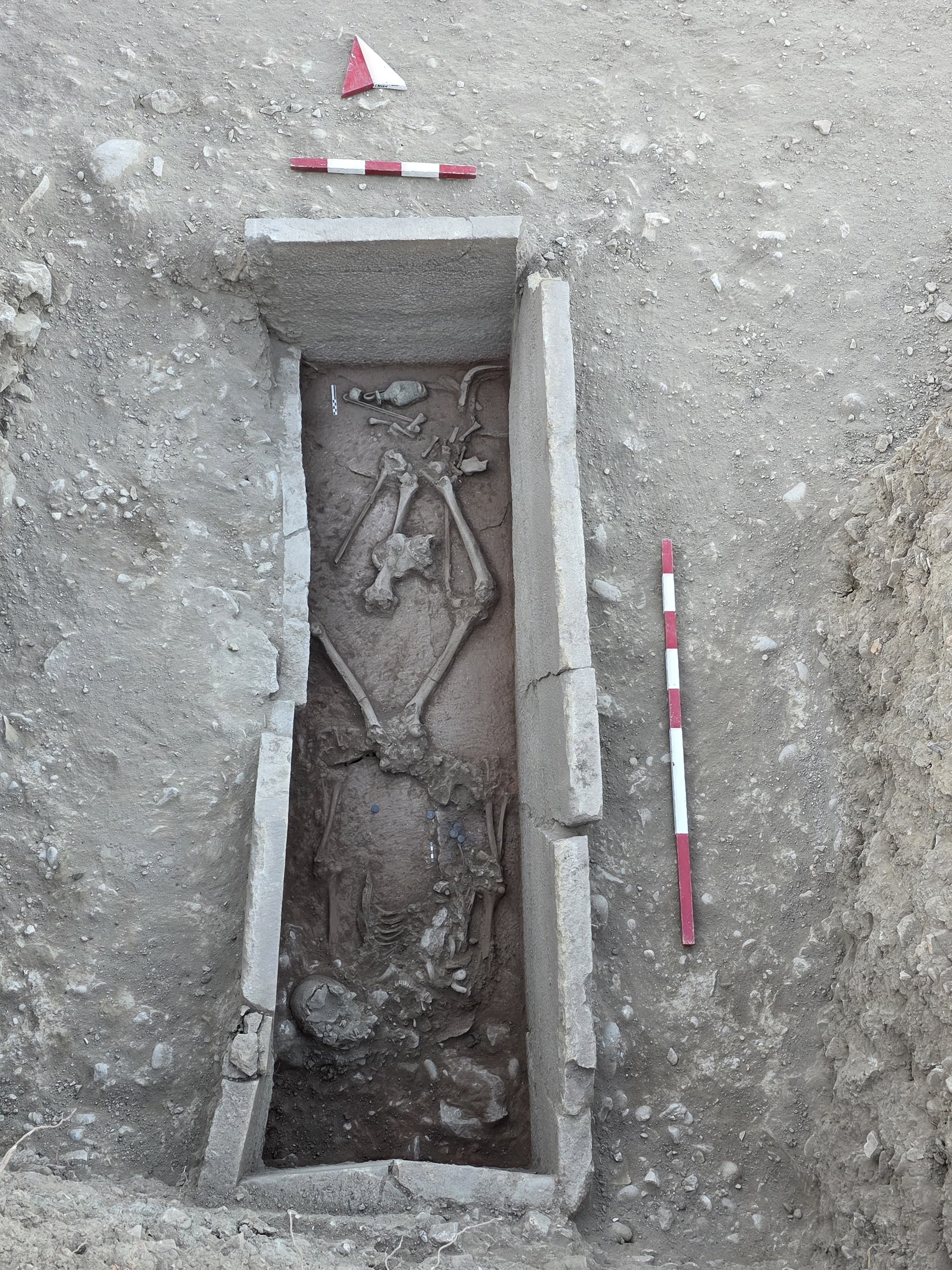
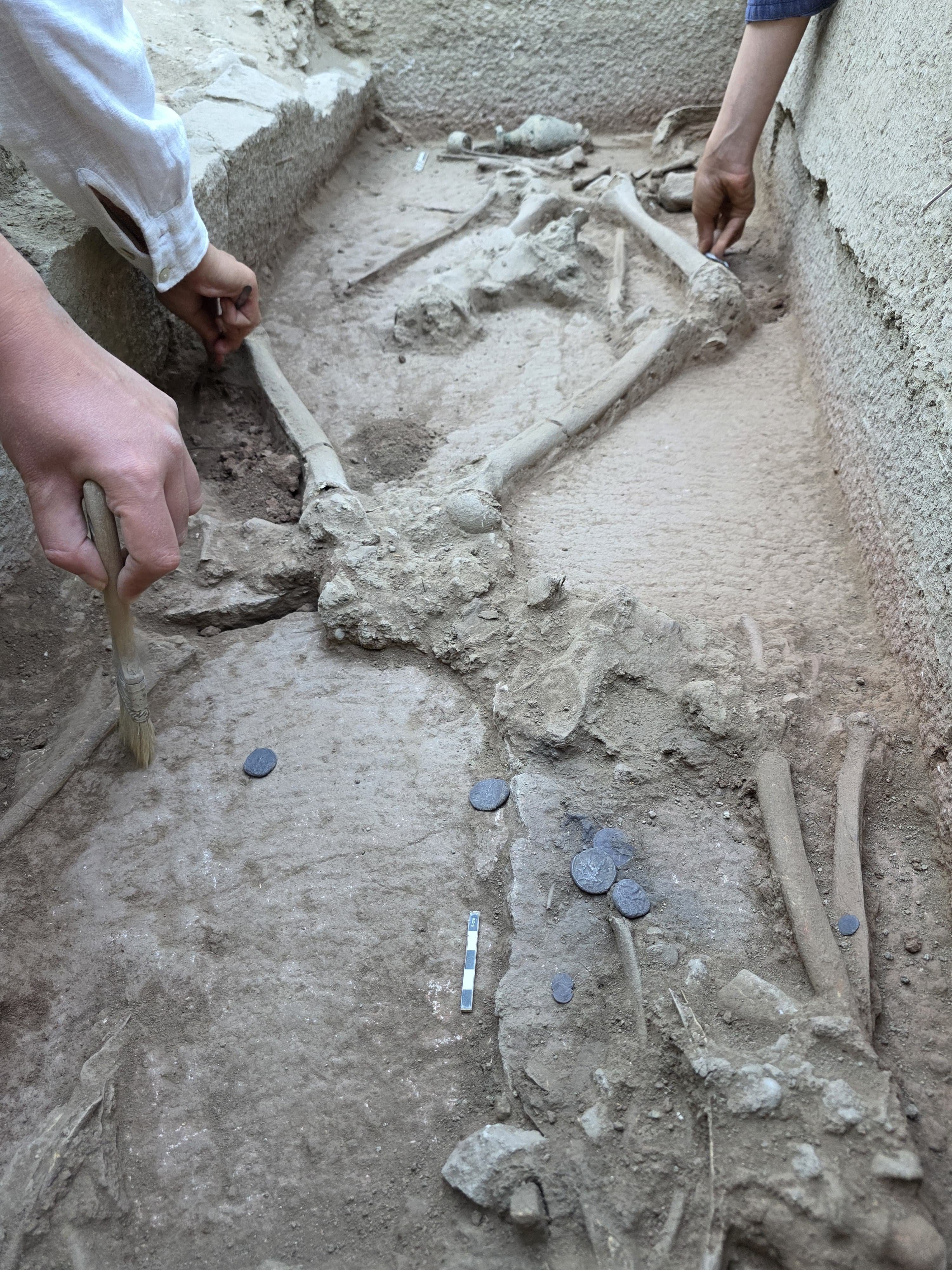
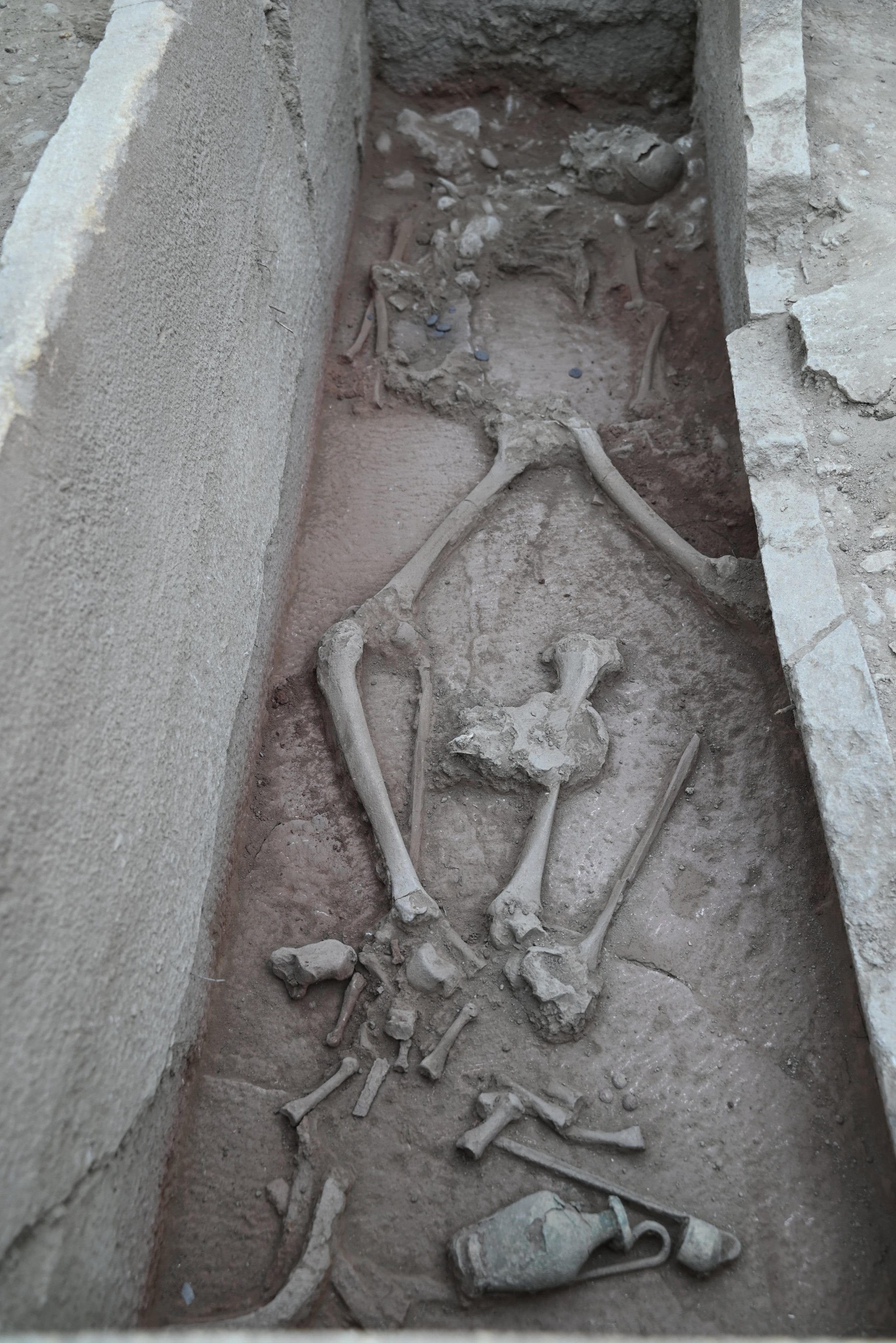
An excavation in the ancient city of Aspendos, Turkey, has uncovered a cist tomb in the Eastern Necropolis dating to between the last quarter of the 5th century B.C. and the 4th century B.C. Grave goods buried inside the tomb include silver staters that depict pairs of wrestlers.

The necropolis was discovered on a street that goes up the hill from the eastern defensive walls of the city towards the 2nd century Roman theater, one of the best preserved ancient theaters in the former Roman Empire. The tomb, constructed by erected flat, smooth stone slabs to form a sarcophagus-like enclosure, contained the skeletal remains of one adult, pottery and the silver coins.

Turkey’s Minister of Culture is promoting the hypothesis that the occupant was involved in sports and may even have been a wrestler himself Aspendos was famous for, but the presence of the coins is not sufficient evidence of a professional sportsman. They were minted from the 5th century B.C. through the first half of the 3rd century B.C. and display wrestlers in 16 different fight positions. The staters attest to the cultural significance of wrestling in Aspendos and were in wide use.

“There will need to be much more analysis before a positive identification of the body as a wrestler can be determined,” Sarah E. Bond, a historian at the University of Iowa who was not involved in the discovery, told Live Science. For example, signs of a broken and healed nose could indicate the person was an athlete.

“Coins alone cannot indicate this was a Classical era Greek wrestler,” Bond said, because “these coins were numerous and used as payment by the entire populace, not by wrestlers alone.”