
 The remains of a Continental Army soldier who died at the Battle of Camden in South Carolina on August 16, 1780, have been identified through DNA analysis. The soldier was John Pumphrey of Anne Arundel County, Maryland, who was at most 18 years old when he died. He was matched to DNA from living relatives submitted to a genealogy database.
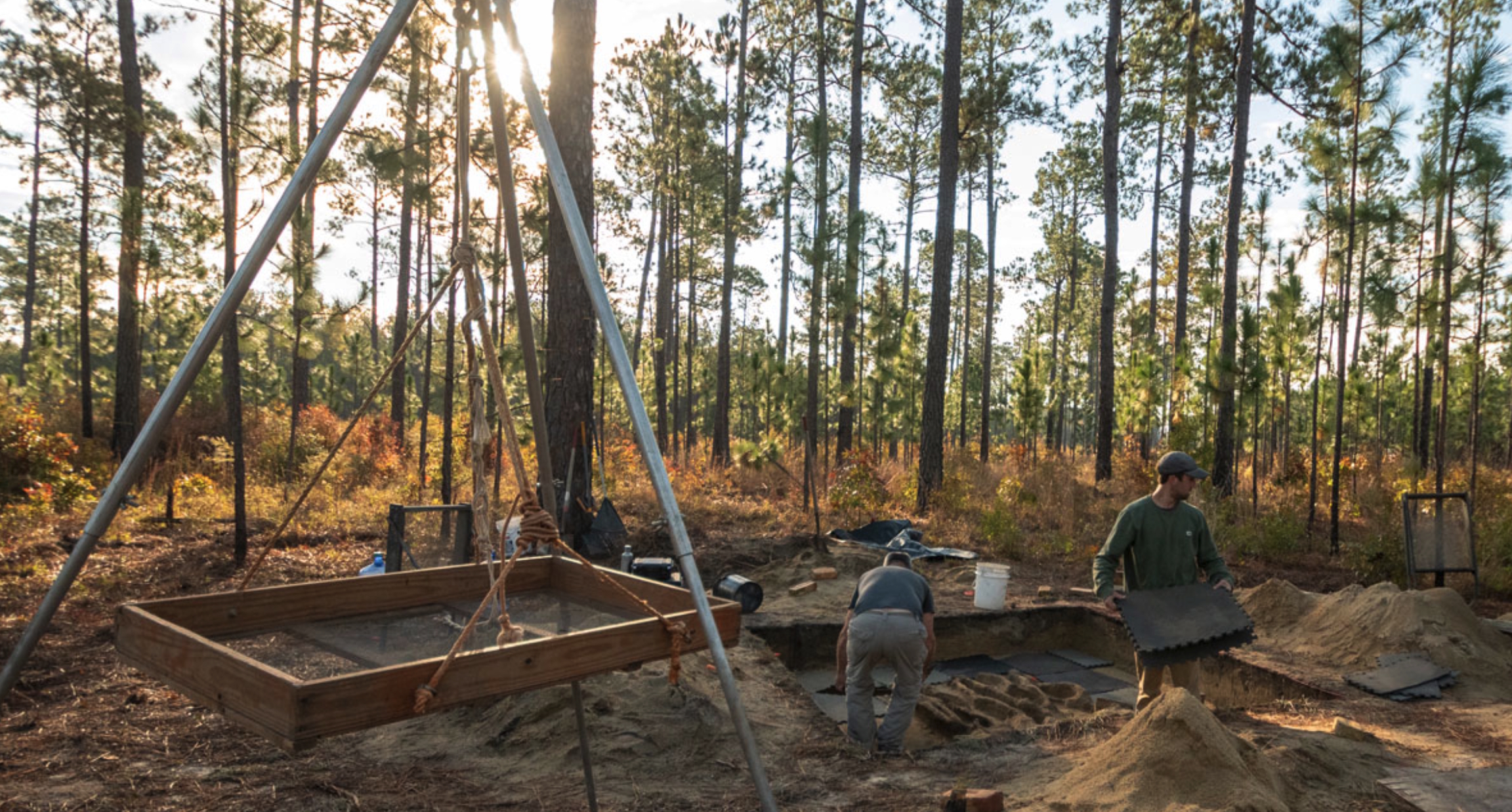
The Battle of Camden was the deadliest battle in the War of Independence with 900 American soldiers killed or wounded and 1,000 taken prisoner. Today the battlefield is a historic site as well as a cemetery, as most of the killed in action were buried where they fell. The remains of 14 soldiers who died in the battle were discovered at the historic Camden Battlefield and Longleaf Pine Preserve in 2020. They were fully excavated by a team from the University of South Carolina’s South Carolina Institute of Archaeology and Anthropology (SCIAA) in 2022.
They had been buried with modest personal effects in the shallow graves 12-14 inches deep. Battlefield graves were typically dug by prisoners of war, and in the heat of a South Carolina August, the bodies needed to be underground as quickly as possible. The 14 individuals were found in seven graves, the largest of the graves containing the remains of five people.
 The skeletal remains were removed, many of them in soil blocks to protect the bones and any traces of associated materials. The skeletons were then examined by archaeologists and forensic pathologists from the County Coroner’s office. They were X-rayed, their teeth examined and DNA extracted before being returned to Camden where, in April 2023, they were laid to rest with full military honors in custom-made pine coffins sealed with hand-forged nails in a solemn ceremony at the Old Presbyterian Cemetery.
The research team were able to identify the ages of most of the soldiers. They were young, half of them under 35 years old and two of them teenagers between 14 and 16 years old. There was one British soldier and he was from Scotland, a Highlander of the 71st Regiment of Foot. One was Native American, and probably fought with the British. The rest were Continental soldiers from Maryland of Delaware.
Pumphrey is the first to be identified using forensic analysis of genetic material extracted from a small piece of bone. His genetic genealogy profile was matched to relatives who uploaded their DNA to public databases that allow forensic matching. Based on the growth plates in his knees, biological anthropologists estimate that Pumphrey was just 13 to 15 years old when he enlisted in Maryland’s 7th Regiment in Baltimore in 1777. He would have been one of the youngest members of George Washington’s Maryland Line and likely joined up in pursuit of a better life.
“Our soldier was orphaned at age 10, so it makes sense he would have journeyed to Baltimore to enlist in part for guaranteed clothes and food,” says Allison Peacock, genetic genealogist and president of FHD Forensics. Her company performed the identification research and organized a reunion in Maryland where Pumphrey’s genetic relatives commemorated his life and service this June.

FHD Forensics, the company that did the genetic genealogy matching, arranged a family reunion with the relatives of John Pumphrey in Maryland last month. Researchers hope to identify more of the soldiers who died at Camden using this approach in the future.
More or less by accident, I am currently close to the Kalb family. Back then, Johann Kalb must have been a quite remarkable character:
Starting off as a peasant’s kid –their smallholding still exists– he got promoted during the the Seven Years’ War in the German Regiments of the French Army and even knighted to ‘Baron de Kalb’, until in 1768 the French sent him on a mission to North America. Also, they all seem to have been Freemasons, even the British. Later in 1777, he returned to North America and brought the Marquis de Lafayette.
In the said Battle of Camden in 1780, Kalb was unfortunately killed. Besides, on the Revolutionary War, there was recently a highly praised 9(!)-piece documentary here in Germany, but so far I have not seen it.
Anyhow, …Happy “4th of July”, Y’all! 🥁️
This discovery is a reminder of the sacrifices made to achieve American independence.
…on a side note, it probably could safely be doubted that Pumphrey and the others in 1780 gave their lives, just in order to let the incumbent commander-in-chief subdue himself –and moreover the Nation– to the tribulations of a particularly foreign mobster and fascist dictator.