Remains of 10th c. baptismal font of Ottonian rulers found

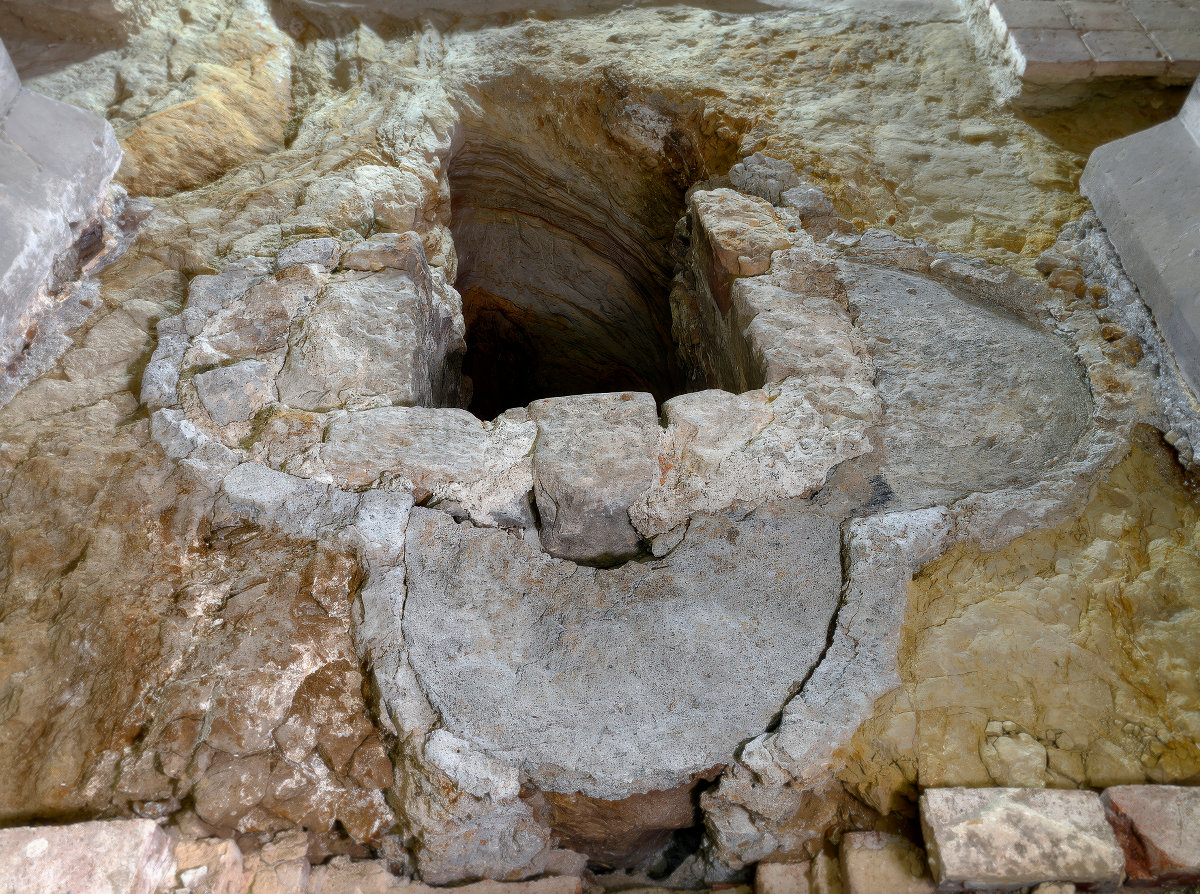
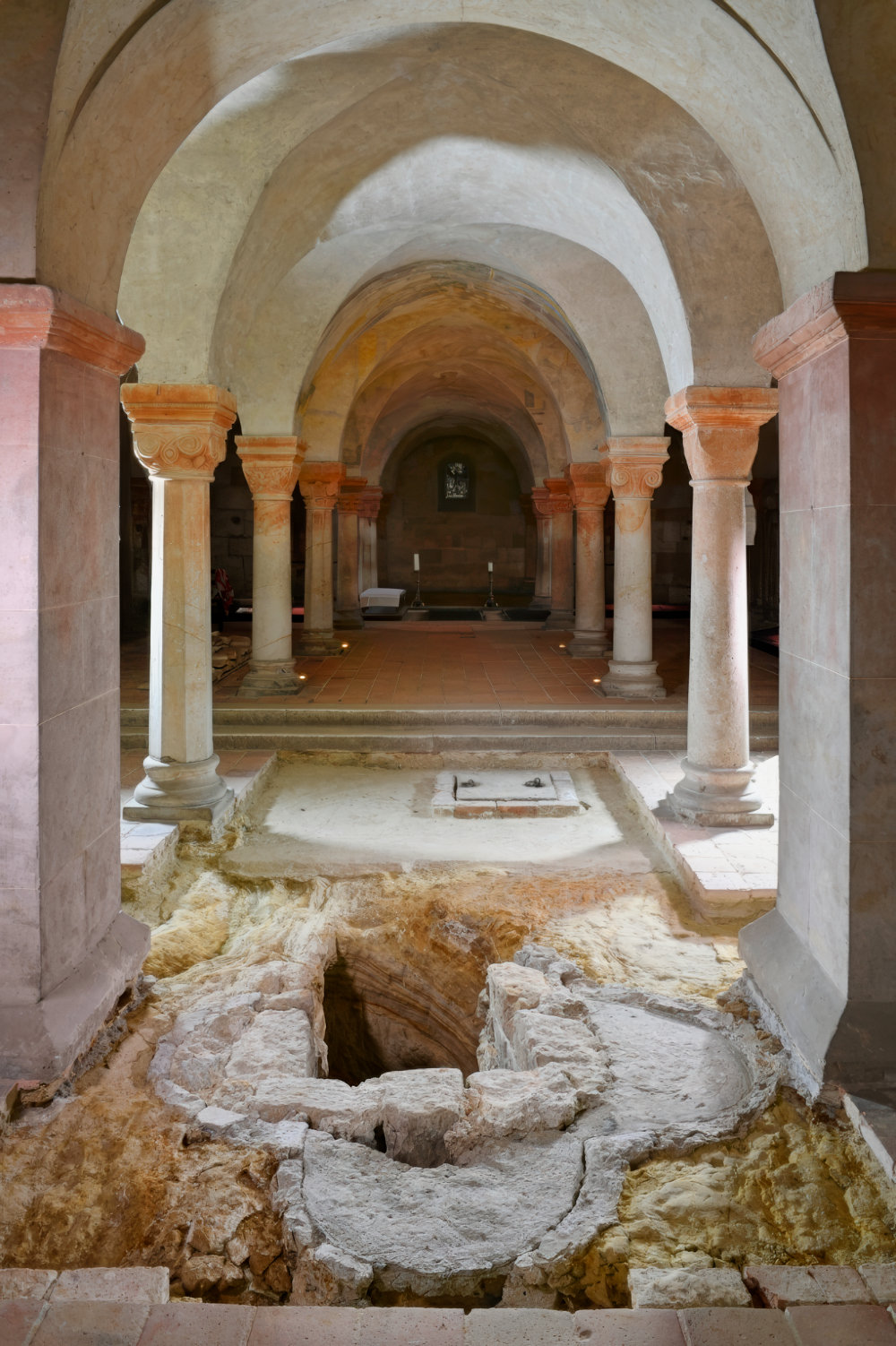
Archaeologists have discovered the remains of a quatrefoil-shaped baptismal font from the 10th century in the collegiate church of St. Servatii in Quedlinburg, Saxony-Anhalt, Germany. It is the oldest quatrefoil baptismal font north of the Alps, and was likely used in the baptism of Ottonian dynasty rulers and family members.

The base of the font emerged in an excavation of the crypt of the church where members of the Ottonian dynasty, kings of Germany and Holy Roman Emperors (919-1024), were buried. Parts of the crypt predate the current collegiate church which was built in the 11th-12th century, and archaeologists with the State Office for Monument Preservation and Archeology of Saxony-Anhalt (LDA) have been exploring the 10th century crypt to research, document, stabilize and preserve the structures underground built in the earliest period of development of the church.

The quatrefoil shape was cut into the sandstone in the center of the room. Its walls are lined with plaster, fragments of an earlier floor used as bedding for the font.

The room in which the baptismal font originally stood must have been the lay room of a sacred building. It is ruled out that there was a palatium (prestigious residential building) on ​​site at this time. The baptismal font belonged to a church and also dates from the oldest decades of the Stiftsberg’s medieval history in the Ottonian period, about which little is known so far.

Although the places and dates of death of members of the ruling families are mentioned more frequently in contemporary written sources, information on baptism has actually not survived. This means that the present archaeological find is also an extremely rare structural evidence of the sacrament of baptism, which is important in Christianity and promises the hope of salvation. According to the Roman-Germanic pontifical in the 10th century, unlike today, baptism took place once a year, on Holy Saturday, as a collective baptism of infants or small children by immersion. The candidates for baptism were immersed in the water in the shape of a cross, in the present case in the direction of the quatrefoils, with their heads facing first to the east, then to the north and finally to the south. The baptismal formula “I baptize you in the name of God the Father, the Son and the Holy Spirit” was spoken. The ceremony was carried out by candlelight and incense and was accompanied by liturgical songs and litanies. A few days later, on the Saturday before White Sunday (the first Sunday after Easter), the baptismal garment was finally removed again and the water was drained from the pool.

It is conceivable that Duke Henry I of Bavaria (born around 922, died in 955), who attempted to kill his brother, King Otto the Great, in an attack in Quedlinburg at Easter in 941, was baptized at the uncovered location. Mathilde (born 955, died 999), the daughter of Emperor Otto the Great and Empress Adelheid and the first abbess of Quedlinburg Abbey, as well as Adelheid I (born 977; died 1044 in Quedlinburg), the next abbess and daughter of the imperial couple, could also be here Otto II and the Byzantine Theophanu received the first and fundamental sacrament at this point.
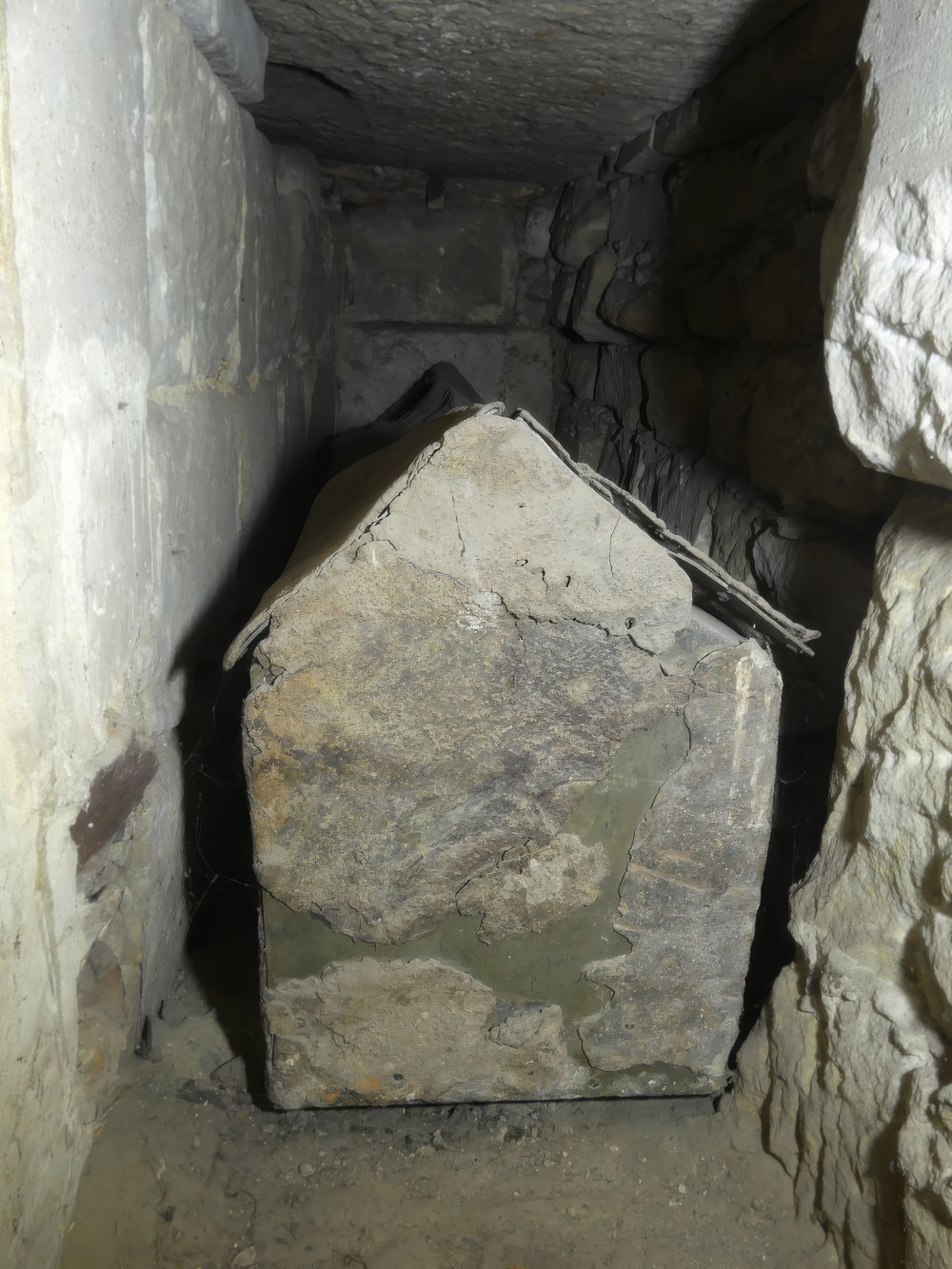
Mathilde, born in 955 and died in 999, not only was baptized in the crypt, but was buried there too. Her lead coffin with a gabled roof is in the crypt next to the coffins of her grandparents, including her grandmother and namesake who founded the abbey.
Rare medieval belt loop found in Poland

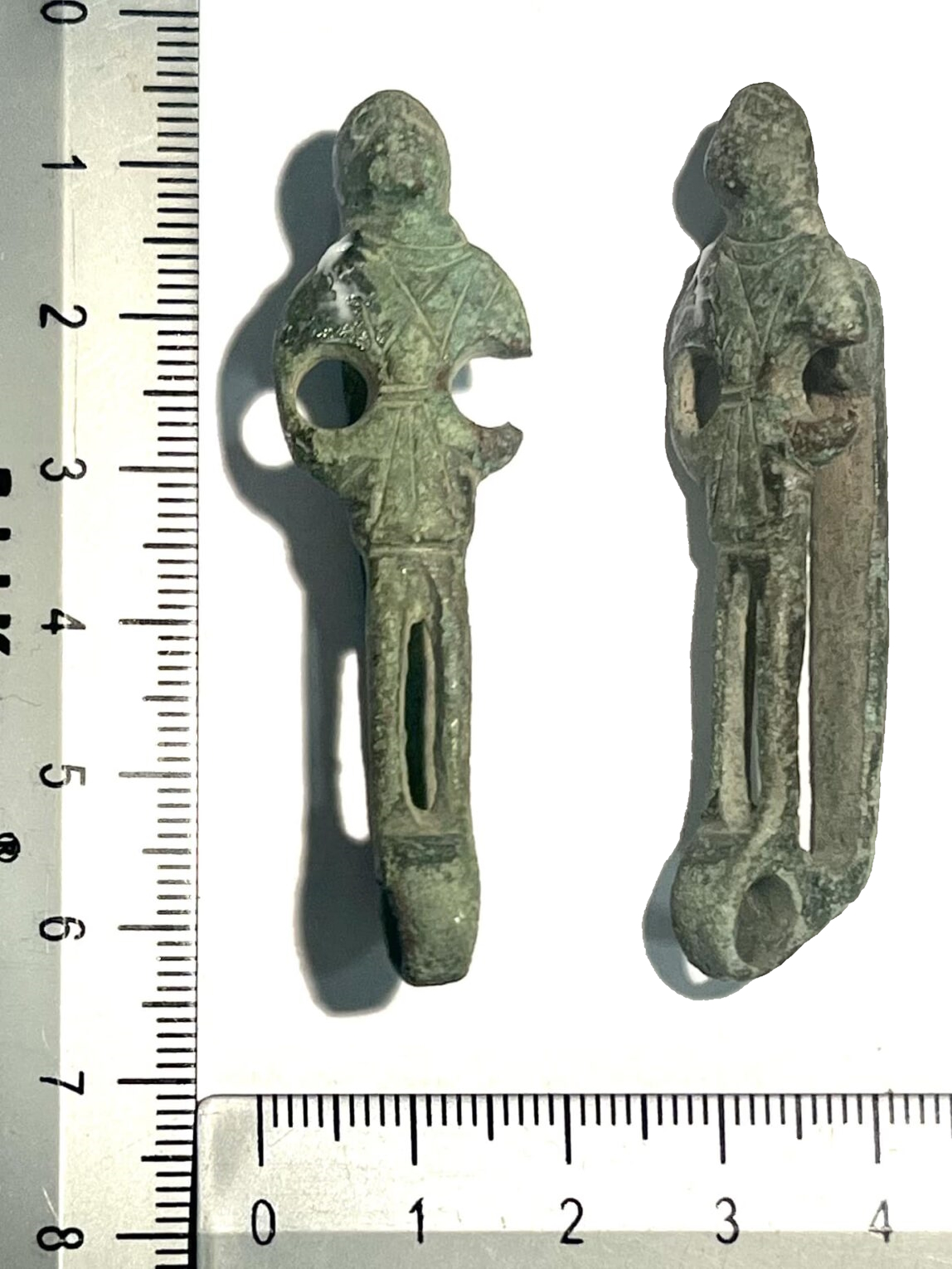
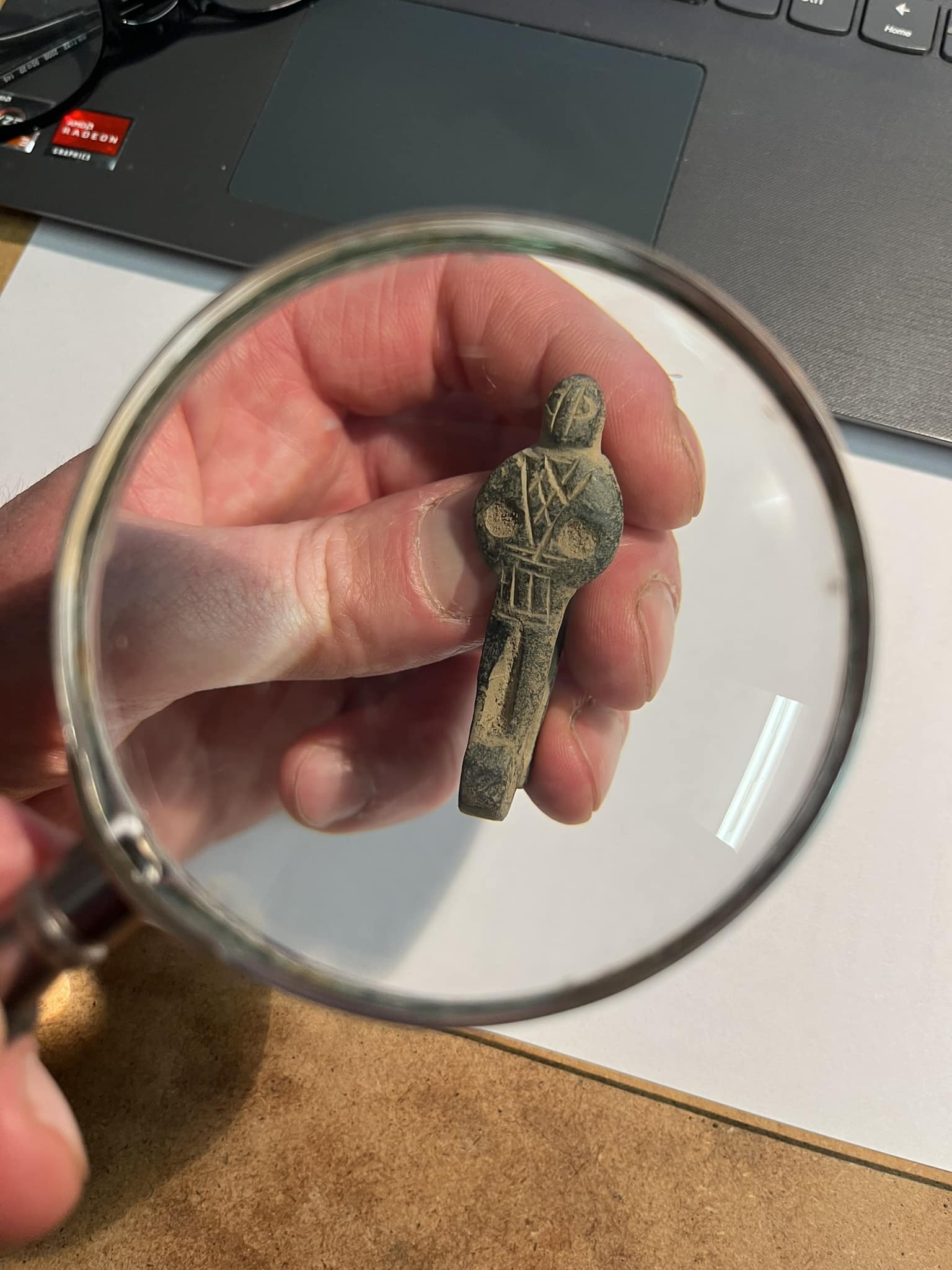
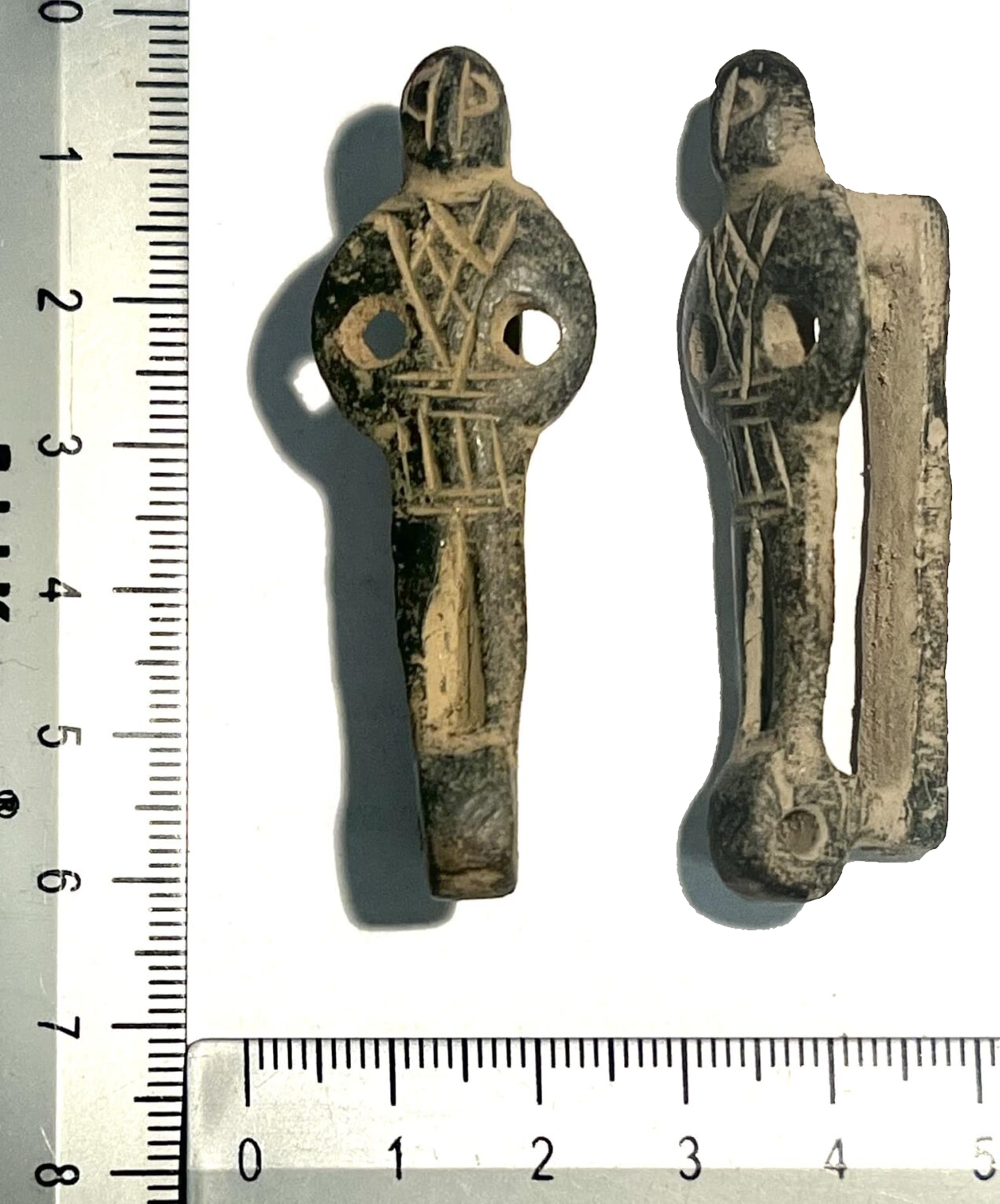
A rare medieval belt loop used to hang keys or a purse has been discovered near Kamień Pomorski in northwestern Poland. It is one of only about 15 of this type of belt loop known, and the only one of them found in Poland. It was discovered by metal detectorist Damian Tomczyk scanning the area with the approval of local heritage authorities.

The bronze figure is 2.2 inches high and depicts an anthropomorphic figure with hands on hips forming circular divots on the side of the torso. Diagonal, horizontal and vertical cuts on the surface of the chest and waist convey the draping of a tunic typical of the Late Gothic period. A triangular cutout separates the two legs that appear to be clad in hose. The figure stands on a rounded shape with a hole where keys or an alms purse or pouch would have hung. A belt would be threaded through an open rectangular mount on the back.

This type of belt loop was produced in southern Germany, created by Bavarian craftsmen probably in Nuremberg which was a center of bronze work since the 14th century. Indeed, of the surviving examples, 12 of them were found in Germany, most of them in Bavaria.

The finder has donated the artifact to the Kamień Land History Museum which has two late medieval bronze belt loops in its collection, one of them with the similar cross-hatched garment and arm holes. This newly-discovered example is larger and in better condition.

FBI repatriates 22 artifacts looted from Okinawa in WWII

The FBI has returned 22 objects and artworks looted during the Battle of Okinawa after they were discovered in a Massachusetts attic. The artifacts were found by a family when they were going through their father’s personal effects after his death. They figured the painted scrolls, pottery, metal figurines and a hand-drawn map of Okinawa were Asian pieces that might be antiques, so they did some online research and found the painted scrolls listed in the FBI’s National Stolen Art File. The family reached out to the FBI and reported the artifacts as potentially looted cultural property and the FBI Boston Field Office initiated an investigation in January of 2023.

They confirmed that the painted scrolls, map, pottery and metal objects were from the Ryukyu Kingdom, a tributary state of China (1429-1875) and vassal state of Japan (1609-1879) that ruled Okinawa until it was formally annexed by the Empire of Japan in 1879. The painted scrolls depict Ryukyu monarchs and date to the 18th and 19th centuries.

The scrolls were very fragile and had to be unrolled by expert conservators to determine if they were the lost scrolls.

The FBI transported the artifacts from Massachusetts to Smithsonian Institution’s National Museum of Asian Art in Washington, D.C., where the scrolls were unfurled for the first time in many years, revealing portraits of Okinawan royalty in vivid reds, golds, and blue accents.

The FBI compared the scrolls to old black and white photographs taken in the 1940s before they were stolen and identified them as the lost Okinawan paintings. An unsigned, type-written letter found with the collection said they were collected in Okinawa in the last days of World War II. The deceased father was a Word War II veteran, but he never served in the Pacific theater.

[FBI Special Agent Geoffrey] Kelly explained that these artifacts were especially important because they depict Okinawan royalty—and serve as pieces of cultural identity. “A nation’s cultural identity is really summed up in the artifacts and the history,” said Kelly. “This is what makes a culture. And without it, you’re taking away their history. And the surest way to eliminate a culture is to eliminate their past. And so, it’s really important for us as stewards of artifacts and cultural patrimony to make every effort that we can to see that these go back to the civilizations and the cultures in the countries where they belong.”

The National Museum of Asian Art assisted the FBI in ensuring that the artifacts were properly packaged for transport. Colonel Scott DeJesse and U.S. Army Civil Affairs & Psychological Operations Command (Airborne) 38 G Monuments Men and Women led the effort to secure and transport the artifacts to Okinawa Prefecture, Japan. The Naval Criminal Investigative Service provided additional support, and FBI legal attaché office in Tokyo was responsible for the handover of the artifacts in Japan. On March 15, 2024, the official handover took place, and Denny Tamaki, the Governor of Okinawa Prefecture, announced the return of the artifacts.

1,000-year-old bone skate found in Czech Republic

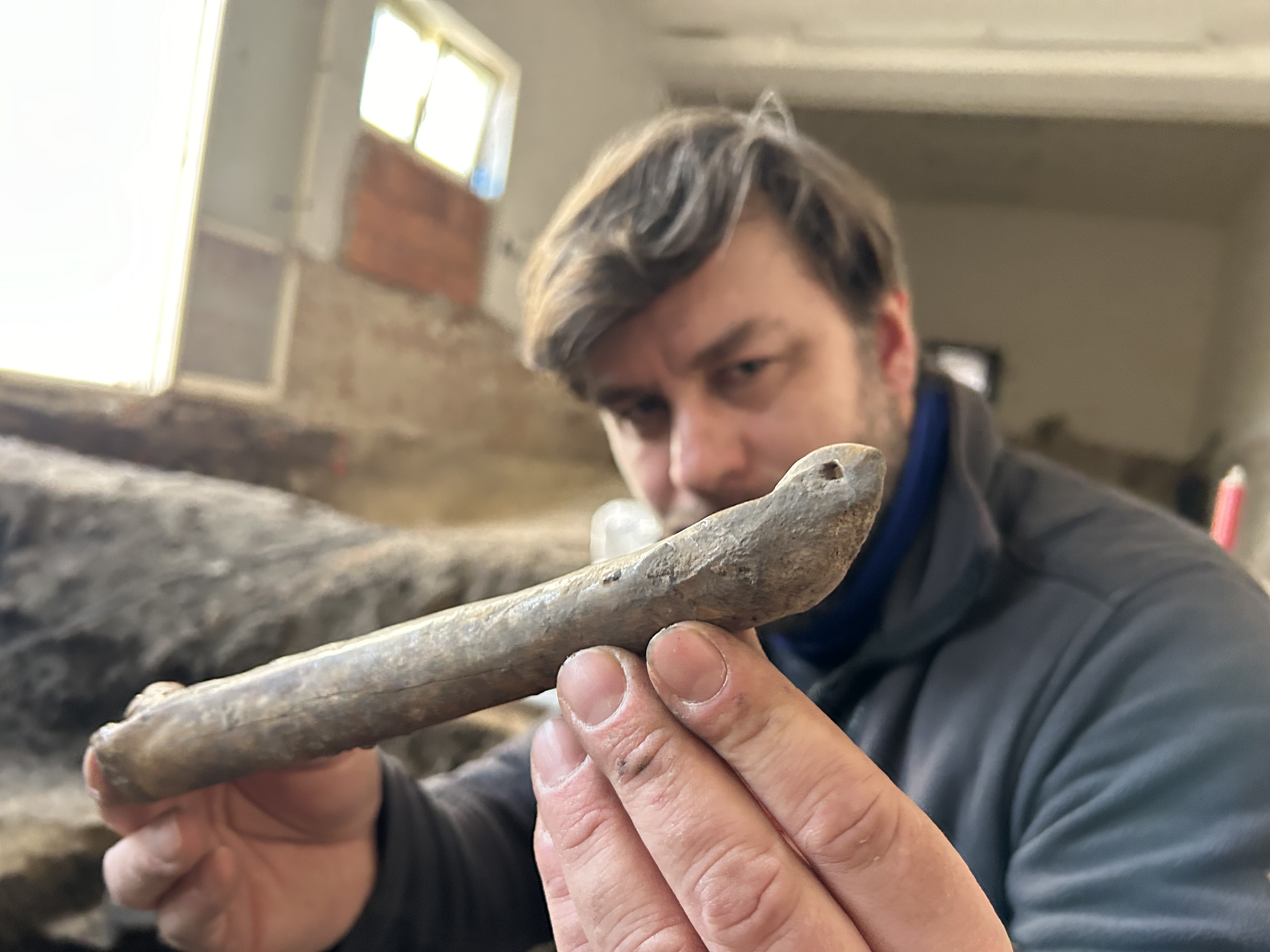
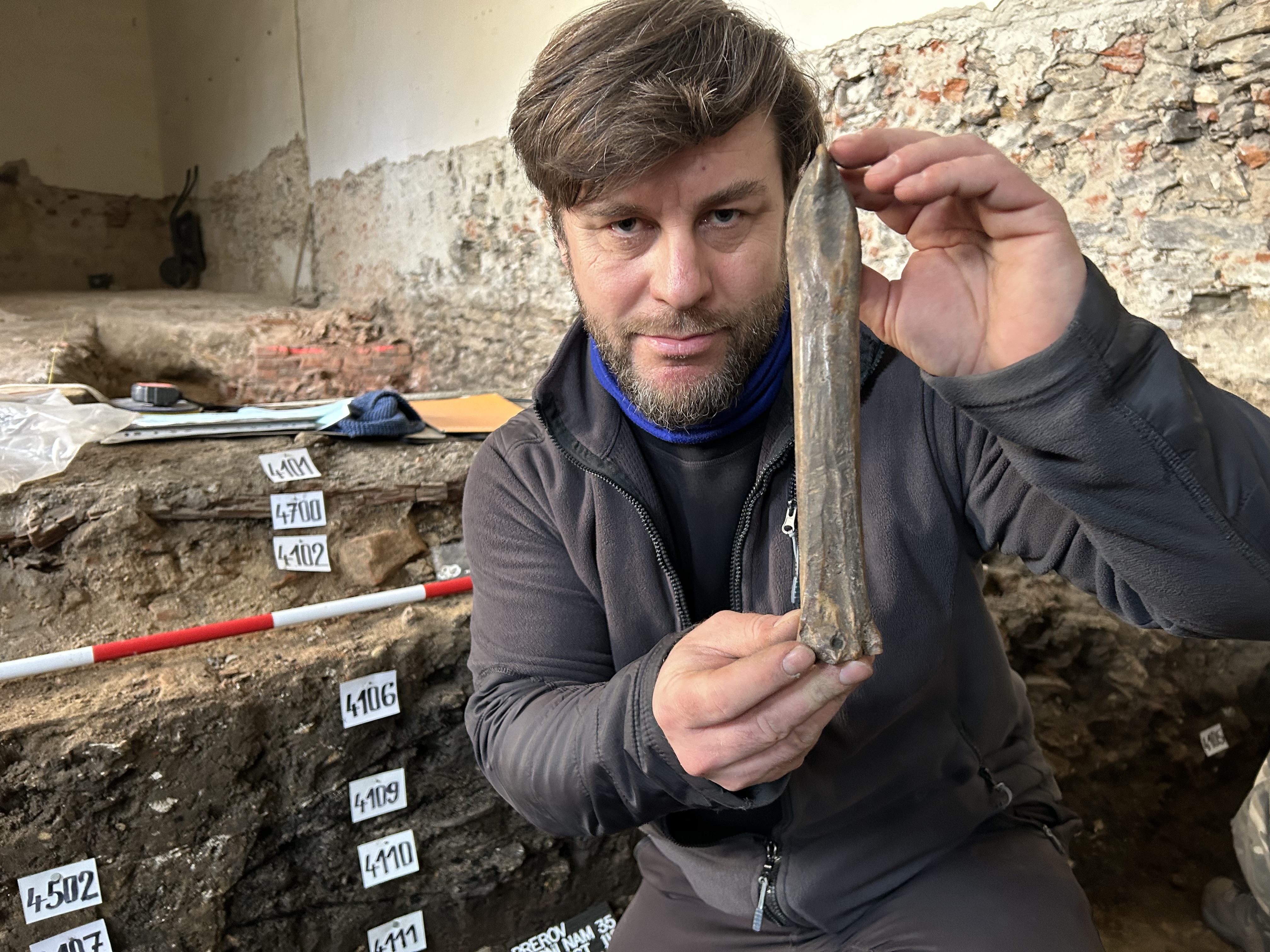
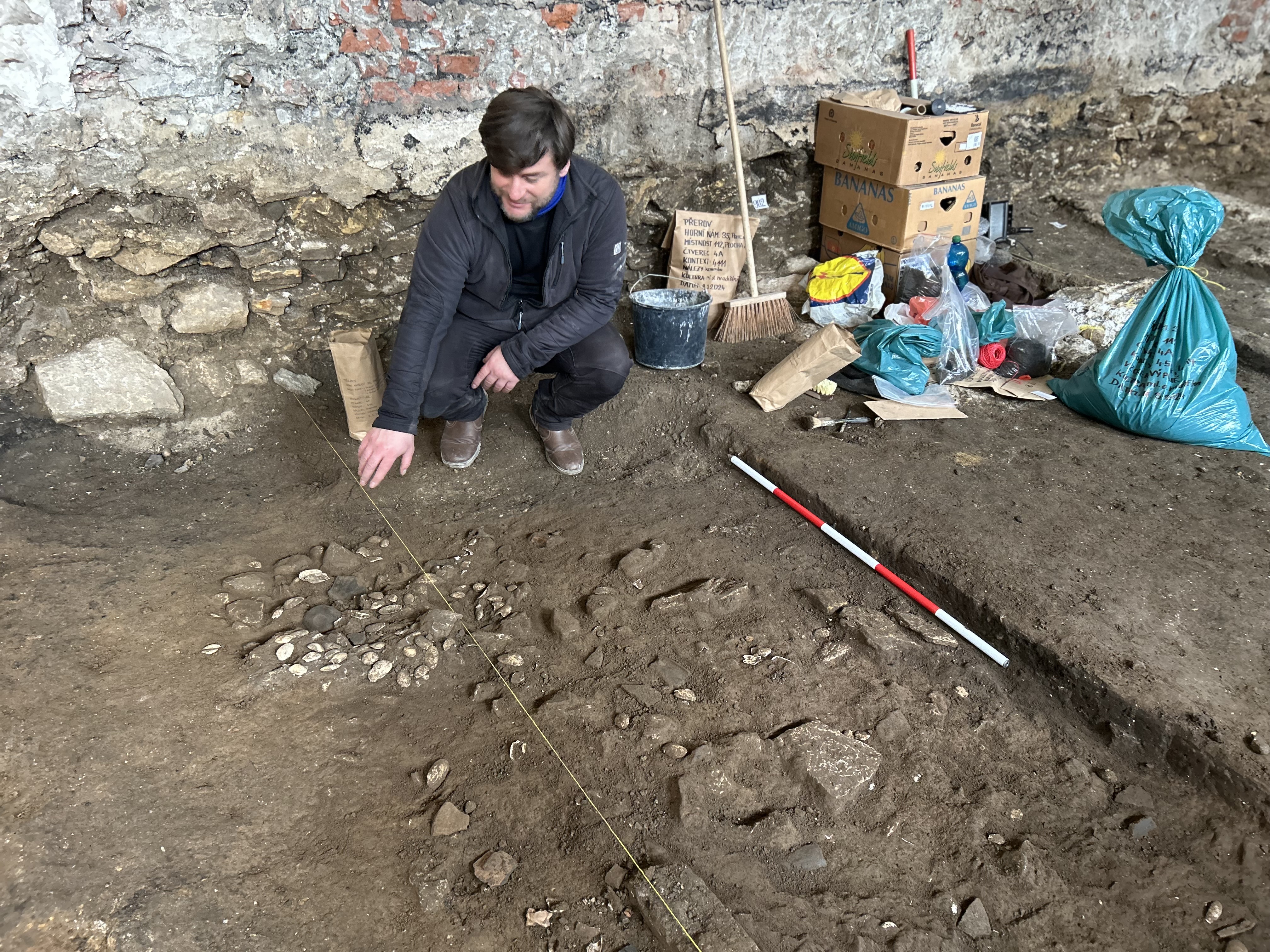
Archaeologists have discovered a 1,000-year-old bone skate in the basement of a house in the central Moravian city of Přerov, Czech Republic. The skate was made of animal bone, likely the metacarpal (shin bone) of a horse. Fragments of pottery found around the blade date it to the 10th or 11th century.

Archaeologists from the Comenius Museum made the discovery during a rescue excavation in the Upper Square of the city. At the time when the skate was made, the Upper Square area was on a hill overlooking the left bank of the Bečva River. There wasn’t a city of Přerov yet, but rather an agglomeration of small settlements dotting the branches of the Bečva. The Upper Square was first a fortified square and then a fortress built by Polish King Boleslav the Brave after his conquest of Moravia in 1003.

Archaeologist Zdeněk Schenk:

“The object has a specific shape. On one side, it is curved into a tip which has a hole drilled in it and there is another hole at the back. They were used to thread a strap through, which was used to attach the skate to a shoe or to a wooden sledge.”

The hole was pierced through the end of the lower end of the metacarpal that connected to the phalanx bone (ie, the toe). The surface of the bone is still polished after a thousand years, suggesting it saw significant use. It is small so was worn by someone with petite feet, perhaps a woman or child. It could also have been mounted under a transport sled instead of a shoe.

“Rather than skating, they would shuffle along the frozen surface with the help of a stick or two. They would also attach the blades to sledges to carry a load of goods across the frozen water.”

Similar ice skates made from animal bones have been found in other parts of central and northwestern Europe. They typically date to around the same time — 10th or 11th century. Far older examples dating back 3,500 years have been found in China.

The bone skate will go on display at the Comenius Museum in Přerov Castle.

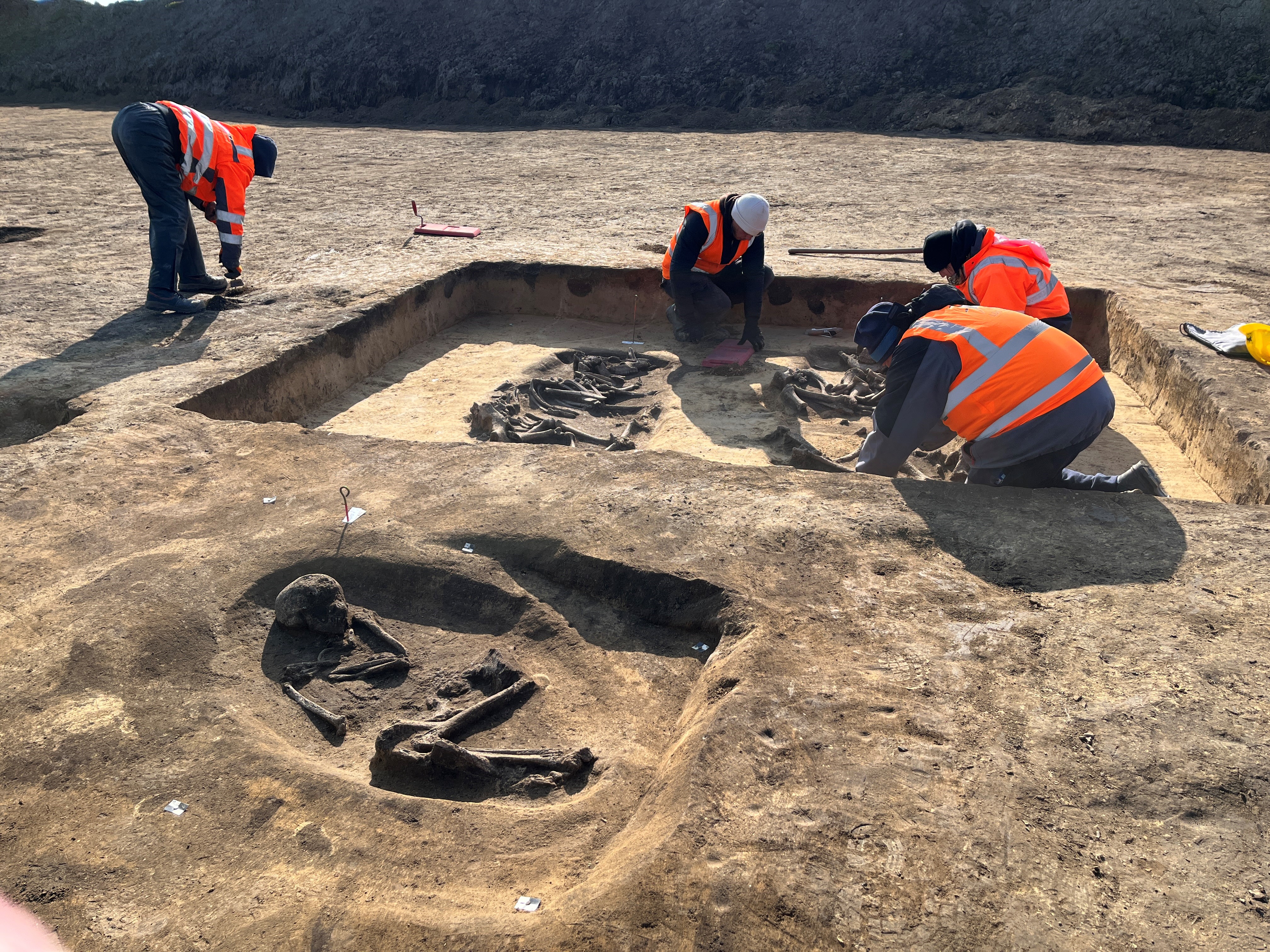
Neolithic burial mounds found in Magdeburg, Germany

A series of Neolithic burial mounds from different periods have been discovered at Magdeburg in the eastern German state Saxony-Anhalt. The site is being excavated by the State Office for Heritage Management and Archaeology Saxony-Anhalt (LDA) before construction of two new Intel semiconductor plants. Excavations began in 2023 and are scheduled to end in April.

The 300 hectare large industrial park also partially includes a small hill, known as Eulenberg. Although not particularly high, it divides the otherwise relatively low-relief Börde landscape, whose fertile loess and black earth soils were an important factor for settlement already during the early Neolithic period. The area currently examined turned out to be a highly complex, long-used burial and ritual landscape.

The mounds were built by people of the Baalberg Culture (4100–3600 B.C.) approximately 6,000 years ago. They are about 200 meters (656 feet) away from each other and each contain wooden burial chambers with the remains of several people. The burial chambers are 65 feet and 98 feet long. Today the mounds are heavily eroded, but when they were first built and for many millennia afterwards, they would have dominated the landscape.

The mounds were still a sacred site 1,000 years later. The passageway between them was used by people of the Globular Amphora Culture (3300–2800 B.C.) as a funerary procession route. The skeletal remains of young cattle were found buried in pairs along this path. They were offerings of the community’s most valuable belongings to the gods.

Another thousand years later, the site was modified with a palisade ditch following the course of the corridor between the mounds but including the larger of the two mounds. About 600 meters (1968 feet) away a group of smaller burial mounds were built by people of the Corded Ware Culture (ca. 2800-2050 B.C.). So this one small site had ritual significance to different peoples for more than 2,000 years.