Lewis Carroll vs. the Biscuit tin

Biscuit tins became a thing in Britain after 1860 when the first time the Refreshment Houses Act and the Treaty of Commerce allowed printed paper labels to be affixed to food and beverages. Once colorful, eye-catching labels could be added to food packaging, new processes were developed to make it easier. In 1877, offset lithography was patented that made printing directly onto tin containers of various shapes possible.

Decorative tinware took off, reaching its pinnacle of intricate, creative design before World War I. Lewis Carrol got on the biscuit tin trade in 1891 when manufacturers Barringer, Wallis and Manners contacted him with the idea of making an Alice in Wonderland-themed tin. It would be printed with polychrome scenes based on the illustrations by John Tenniel for Carroll’s Through the Looking Glass and What Alice found there, the sequel to Alice’s Adventures in Wonderland published in 1871. The original illustrations were printed in black and white, so the idea of a vividly colored version decorating a cookie tin seemed a can’t-miss idea to appeal to children and their parents who had grown up with the books.

Barringer, Wallis and Manners created a tin with a rectangular base , straight sides and rounded corners. The sides and outside of the lid were printed with the labelled illustrations : The Red King Asleep, The Battle Between the Red and White Knights, Alice the White King and the Messenger, Alice and the Fawn, Alice and the Red Queen, Tweedledee & Tweedledum, Humpty Dumpty Offering his Hand to All and The White Knight Sliding Down the Poker.

Tenniel had illustrated Alice’s Adventures in Wonderland and found Carroll a micromanaging tyrant, so much so that he refused Carroll’s first request that he illustrate the sequel, and only agreed after he received assurances that he could work at his own pace. Barringer, Wallis and Manners soon found themselves on the business end of Carroll’s control freakery and whiplash-inducing changeability.

The initial offer was Carroll would receive 50 gift tins. He declined on the grounds that it was too many and he’d look like a sellout. Then he changed his mind and wrote them that actually 50 wasn’t enough and he needed 100 to give away to his friends and family, including Alice Liddell, model for Alice in the books. Then he got mad that they included a note that the tin was compliment of “Charles Dodgson,” exposing his real name to the factory workers. Then he got mad that the tin came with a W.R. Jacob & Co label on the inside of the lid. They were the makers of the biscuits so naturally they added a label to that effect, but Carroll’s preferred cookies were Huntley and Palmers so he was offended.

Then he did something so deranged, the poor tin makers must have wanted to choke him. He insisted that the rest of the tins should be sent to his recipients WITHOUT ANY BISCUITS INSIDE. Yes, he was sending gift biscuit tins to friends and family, many of them children, so they would open the lid with all the enthusiasm a kid can muster for cookies, only to find they’d been sent an empty container.

Today the Alice biscuit tins are prized collector’s items, found in museums including the V&A, the Guildford Museum and the Museum of Oxford. One came up for auction on the 17th with a pre-sale estimate of £600 – £900. It sold for £2900 even though there’s small but noticeable areas of damage to the lithography. The story of Lewis Carroll vs. the biscuit tin has made them all the more desirable.
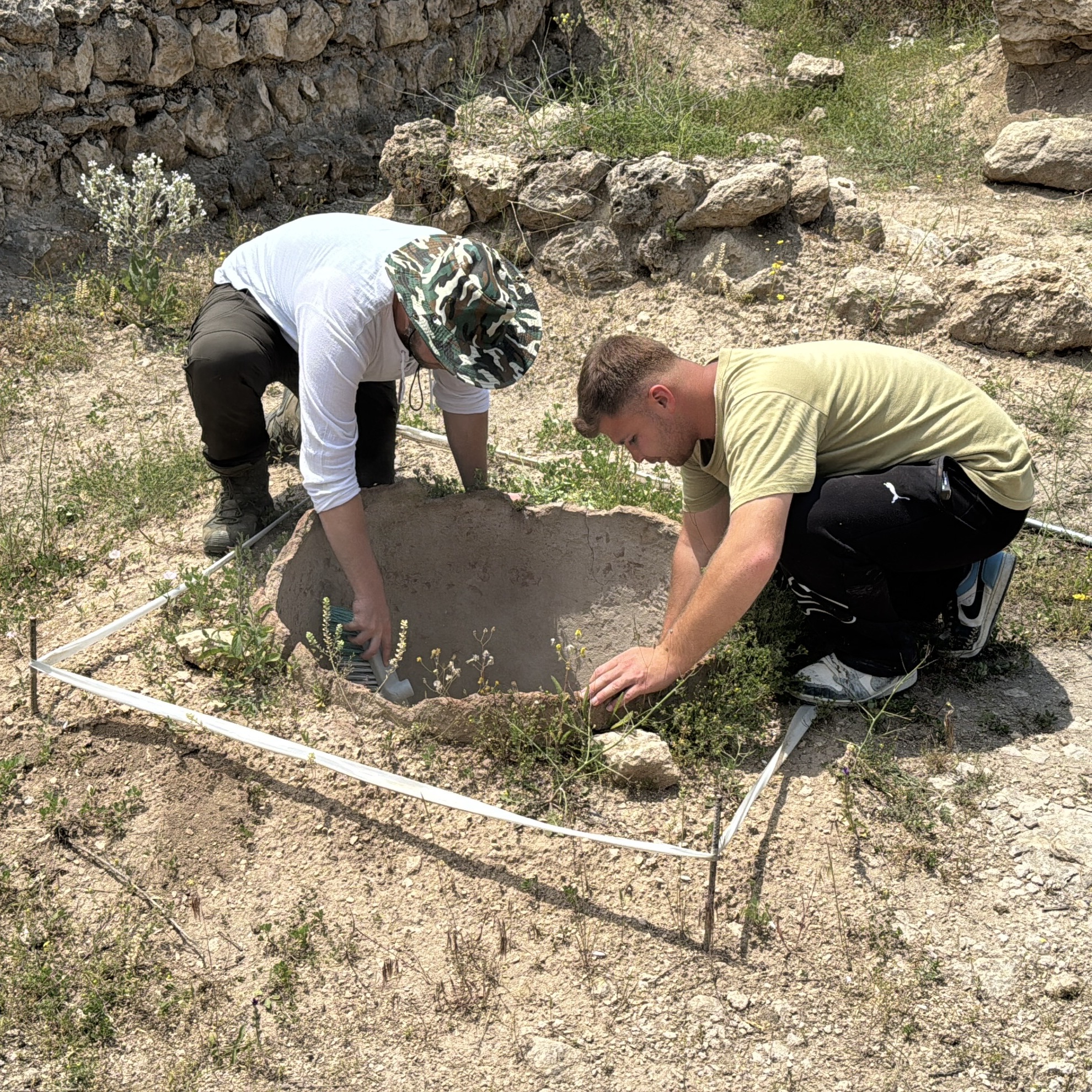
3rd c. pithos burial found at Hadrianopolis

A pithos burial has been discovered in the ancient city of Hadrianopolis, modern-day Eskipazar in northern Turkey’s Black Sea region. It is the first example of this type of burial found in region. A coin found inside the large storage jar was minted during the reign of Roman emperor Probus (r. 276-282 A.D.), which dates the burial to the 3rd century.

Used to store large volumes of foods (grain, olives, spices, nuts, fruits) both for transport on ships or in permanent arrays on land, pithoi were so big they could also comfortably accommodate bodies and grave goods in burials. In the Hadrianopolis pithos burial, archaeologists found skeletal human remains, the coin, seven smaller pottery vessels, an oil lamp, a knife and two bone hairpins. The hairpins suggest the deceased may have been a woman.

[Professor Ersin Celikbas, head of the Archaeology Department at Karabuk University’s Faculty of Humanities and Social Sciences], said the find marks the first time a pithos tomb has been documented in Hadrianopolis and its surroundings in relation to funerary culture, making it important for understanding burial traditions in the area.

Celikbas also noted that the pottery found in the tomb included examples of Pontic Sigillata, a type of fired clay vessel associated with the Black Sea region. He said this pottery type has been found in almost all excavation areas at Hadrianopolis.

Hadrianopolis was founded by the Hittites in around 1300 B.C., but it was renamed after the Roman emperor Hadrian in the 2nd century. It was located on an important trade route between the Black Sea coast, the Aegean coast and central Anatolia.

2,700-year-old Bronze Age sword found in Poland

A Bronze Age sword has been found by a metal detectorist in the woods near Gdańsk, Poland. It is in excellent condition, covered in green patina. Archaeologists with the Provincial Office for the Protection of Monuments (PUOZ) dated the sword to 900-700 B.C., the late Bronze Age in Europe.

Licensed metal detectorist Marcin Wiśniewski notified the PUOZ on Monday as soon as he realized he’d found an archaeological artifact. He protected it from the rain and obscured it from view to keep it safe from any less scrupulous forest visitors. This allowed regional archaeologists to excavate the find site immediately using professional methodology.

Archaeologists later excavated the area using standard field methods. They carefully recorded the sword’s exact position before lifting it from the ground. No other artifacts were found nearby, though researchers say the weapon’s original placement still holds valuable information. The upright position suggests the sword was deliberately deposited rather than accidentally lost.

The sword measures about 60 centimeters in length and belongs to the tang-hilted type. Its narrow metal tang once held a grip made from wood, bone, or antler, materials that have long since decayed. A green patina covers the bronze blade, helping preserve decorative grooves, engraved arcs, and short crosswise lines. These features match swords produced during the fourth and fifth periods of the Bronze Age, though conservation work will confirm its exact type.

A sword of this length and high quality of decoration would have been prohibitively expensive when it was made. It had the equivalent value as a herd of cattle. Now PUOZ is determining which museum will be the proud recipient of the sword. Once its future home has been determined, it will be conserved to reveal its full decoration.

17th c. lead ingots found at offshore wind farm site

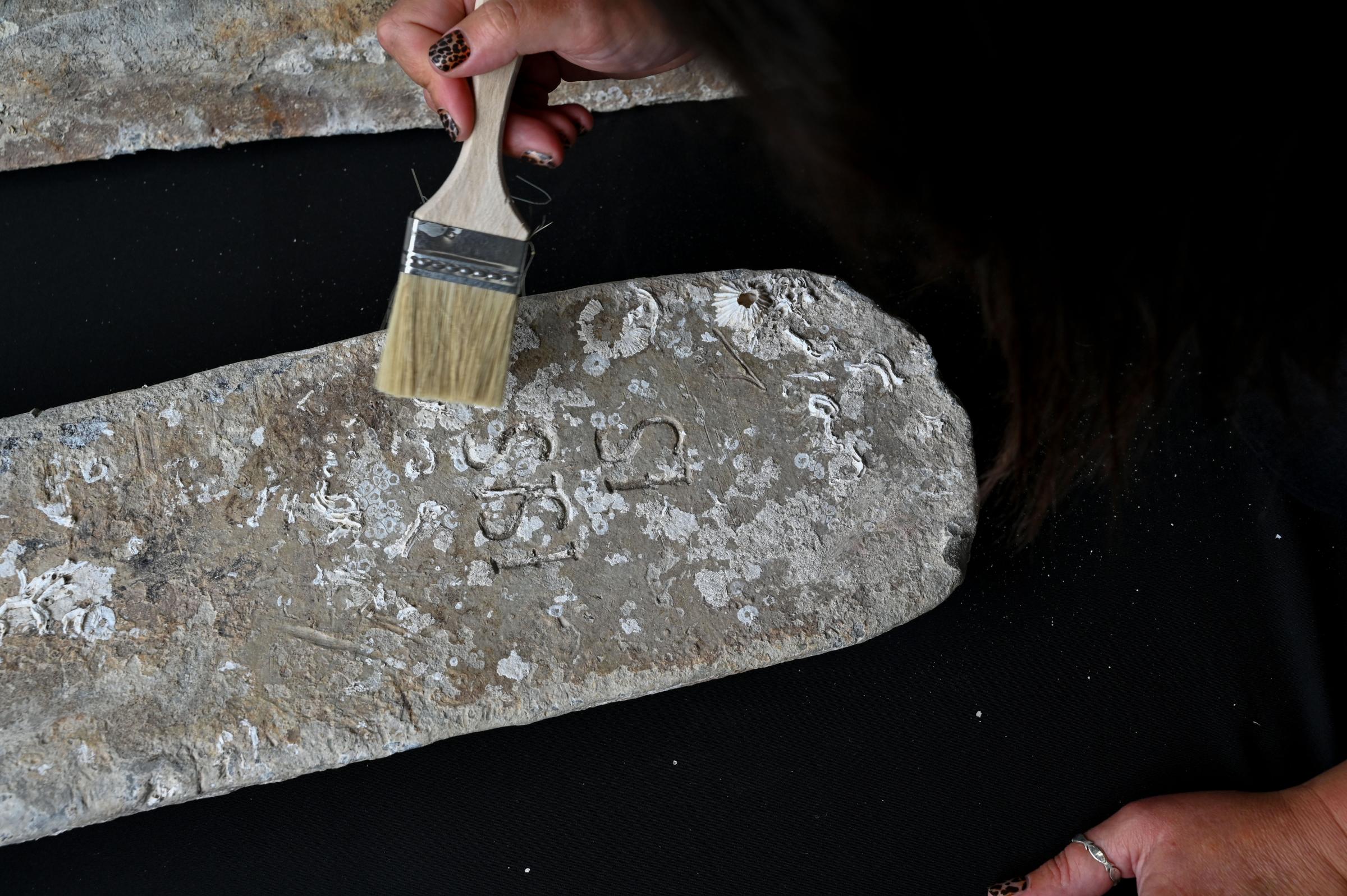
A group of three large lead ingots from a 17th century shipwreck have been discovered at the site of an offshore wind farm 75 miles off the Norfolk coast. The ingots weigh about 155 lbs apiece and were likely exports from Darbyshire mines destined for mainland Europe.

The ingots were discovered at the site of Hornsea 3 in the North Sea which when completed will be the largest offshore wind farm in the world. The seabed of the entire site is being extensively investigated before construction begins. Investigators gather detailed information from soil composition, to environmental data to marine life surveys in order to identify sensitive areas and potential hazards.

Marine investigators discovered the ingots at a depth of 130 feet while scanning the bed for unexploded ordnance. Instead of bombs, they found three lead ingots stacked in their original position on the ship. The wreck itself was gone, with only a few surviving timbers visible under the ingots.

Each ingot is stamped with a different mark – ‘IS’, ‘EB’ and ‘H’ – similar to ingots found on the 1664 wreck of the Dutch East Indiaman Kennemerland off the Shetland Islands. The Hornsea 3 vessel might also have been from the Netherlands.

At the time England produced vast quantities of lead, in particular from Derbyshire and Peak District mines, with much of it shipped across the North Sea from Hull and London to Amsterdam and Rotterdam. The wreck found at Hornsea 3 lies directly on the Hull-Netherlands route.

Lead has been mined in Derbyshire since the Roman period. The Peak District mines were the primary lead producers in Europe during the Middle Ages. By the 17th century, the mining and selling lead was Britain’s second most important trade (wool was number one). It was used in every building from roof to window to pipes, and the raw ore formed into ingots for the export market.

The Hornsea 3 ingots will be housed at the Peak District Mining Museum in Matlock, Derbyshire, which is dedicated to the region’s millennia-old mining history.

Amber pendant with microcarved portrait of Queen Elizabeth I

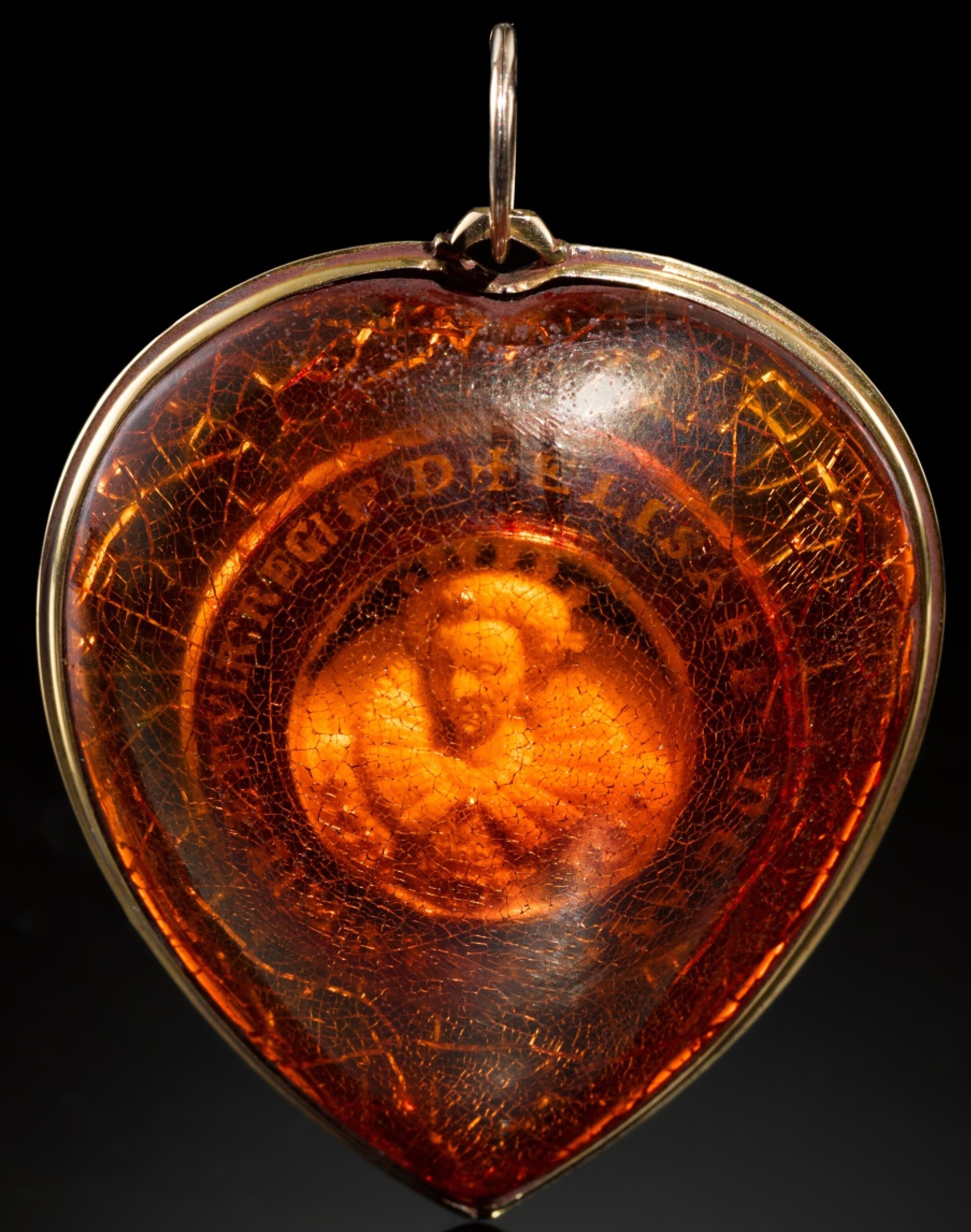
An extremely rare amber pendant with an embedded portrait cameo of Queen Elizabeth I will be going under the hammer at Sotheby’s on July 1st. It dates to around 1600, the very end of Elizabeth’s reign. What makes the heart-shaped Baltic amber pendant so rare is the microcarved portrait of Elizabeth encased inside it. The level of detail is so exceptional it makes the pendant one of the most sophisticated amber objects in existence today.

It’s not possible to determine the material the portrait was carved out of, but based on other highly-prized amber objects from the period, it was probably made out of white amber or a compound with a high proportion of tin. A concave hollow was cut from behind into the amber heart and the portrait embedded under it. The curved surface served to magnify the image.

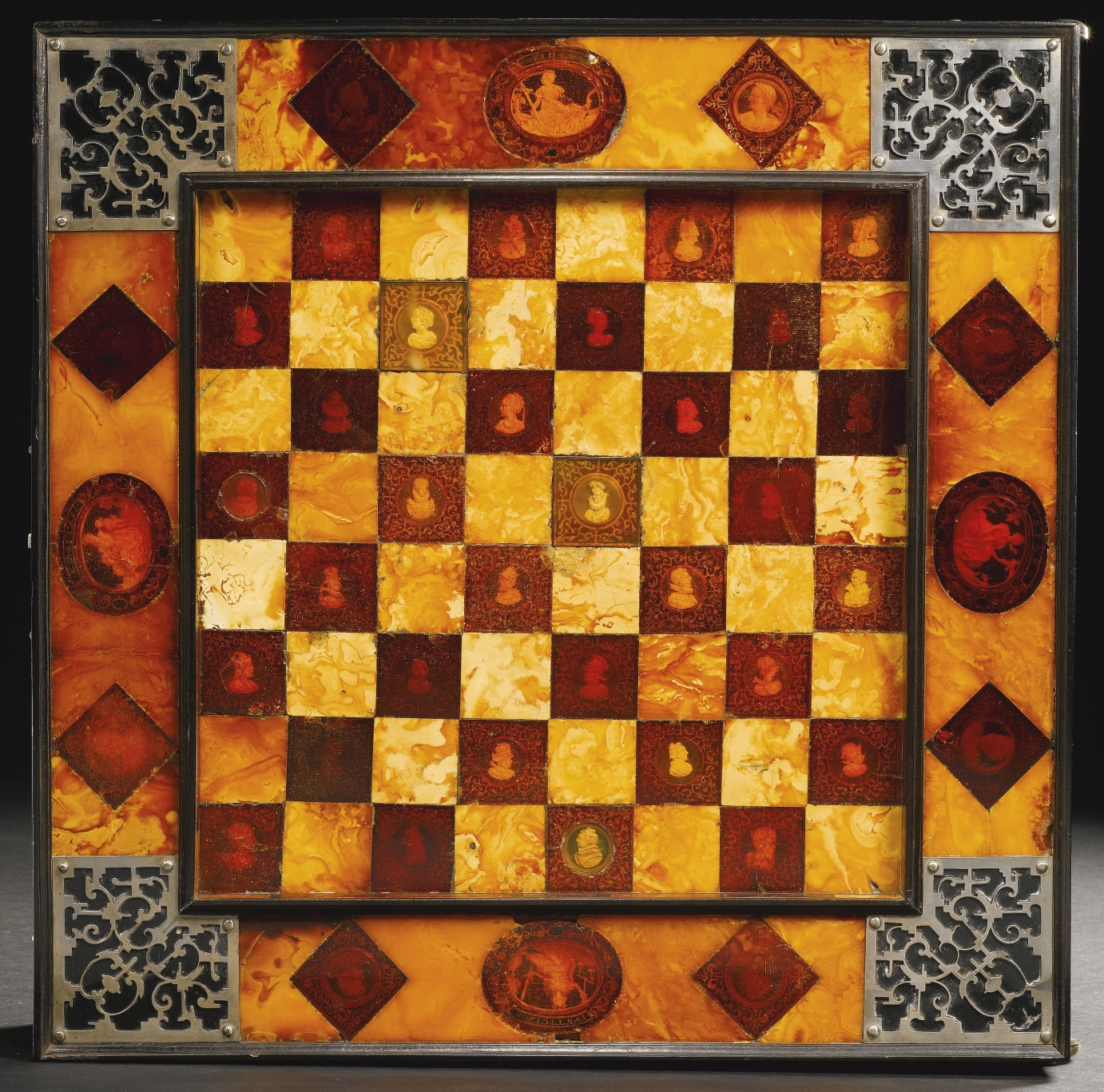
The painstaking technique is typical of the work of the finest amber jewelry makers in the town of Königsberg on the Baltic coast in the late 16th century. It is therefore attributed to Hans Klingenberg or Georg Schreiber, goldsmiths and amber carvers at the court of Albert Frederick, Duke of Prussia, in Königsberg between 1593 and 1648. The marked similarities with the incredibly gorgeous amber chessboard King Charles I brought to the scaffold on the day of his execution makes Georg Schreiber the leading candidate.

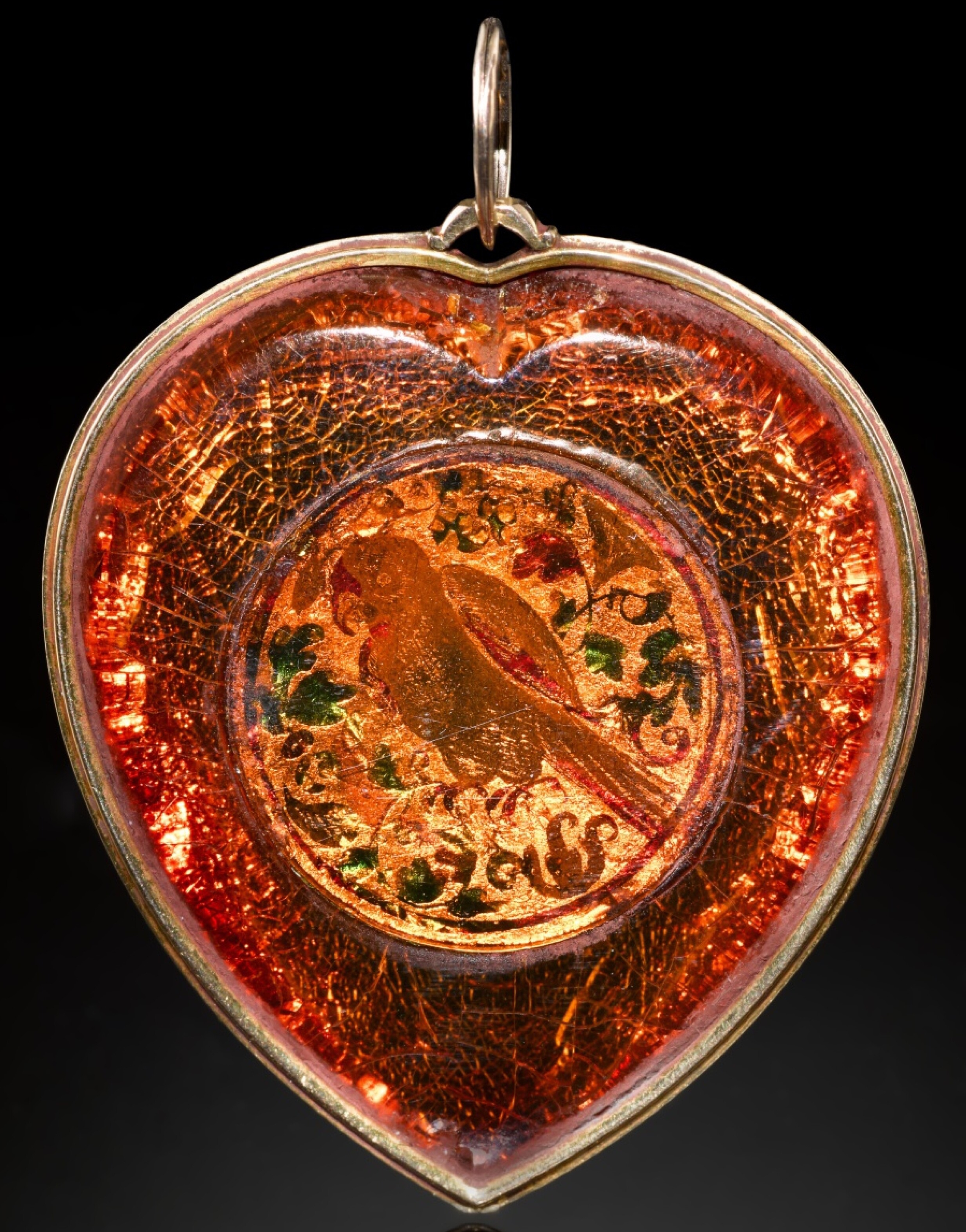
Carved after a 1592 engraving by Crispijn de Passe the Elder, the portrait is surrounded by an inscription that reads: ELISABET · D · G · ANG: FRAN: HIB: ET: VIR: REGI: F: D + [ELIZABETH THANKS BE TO GOD QUEEN OF ENGLAND, FRANCE, IRELAND AND VIRGINIA DEFENDER OF THE FAITH]. The same inscription frames Crispijn de Passe’s engraving. The reverse of the pendant has a cameo of a parrot or popinjay

The jewel also holds strong symbolic significance. At the time, encasing a portrait in amber was seen as a way of preserving its memory. The figure of Elizabeth I, enveloped in the golden radiance of the material, thus appears eternally preserved, as if to safeguard the memory of the Elizabethan era. On the reverse side is a depiction of a parrot, a symbol traditionally associated with the Virgin Mary and purity—a clear reference to the image of the “Virgin Queen” that Elizabeth promoted throughout her reign.

Its documented provenance goes back to the 19th century when it was acquired by the Scottish politician John Malcolm, 1st Baron Malcolm of Poltalloch, who amassed one of the most important art collections in Britain. His Old Master drawings, including works by luminaries including Michelangelo, Raphael, Rembrandt, Rubens and Canaletto, was so important the British Parliament gave the British Museum a grant to acquire it.

The pendant was in the Malcolm family by descent until last year when it was sold to a private collector who is now selling it at auction. The pre-sale estimate is £100,000-150,000 ($132,000-198,000).