
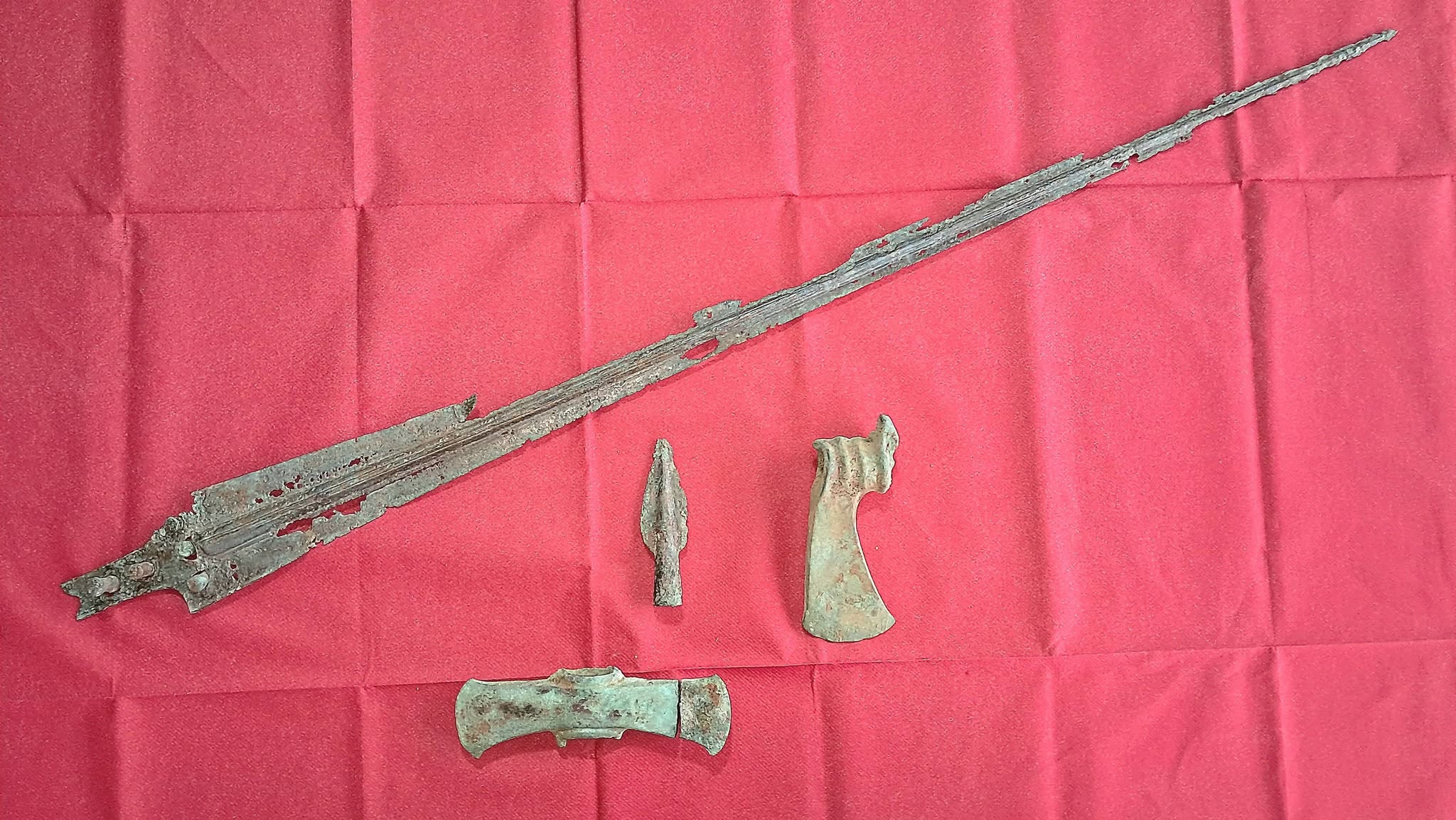
 An intriguing combination of a Mycenaean-type bronze rapier sword, two battle axes and a spear have been found on the shores of Lake Dojran in North Macedonia. The findings are evidence that the prehistoric pile-dwelling settlement of Mrdaja did not solely subsist on fishing and foraging, but also had advanced metalworkers and wide-ranging commercial and cultural relationships from the Aegean Sea to the Carpathian mountains.
This season’s excavation unearthed the remains of three prehistoric dwellings built on platforms over the shore of the lake and connected by wooden footbridges. Archaeologists identified one of the dwellings as the home of the settlement’s metallurgist. A wide array of objects found in and around this structure are connected to metallurgic activities: molds for casting doubled-edges bronze axes, tools and weapons.
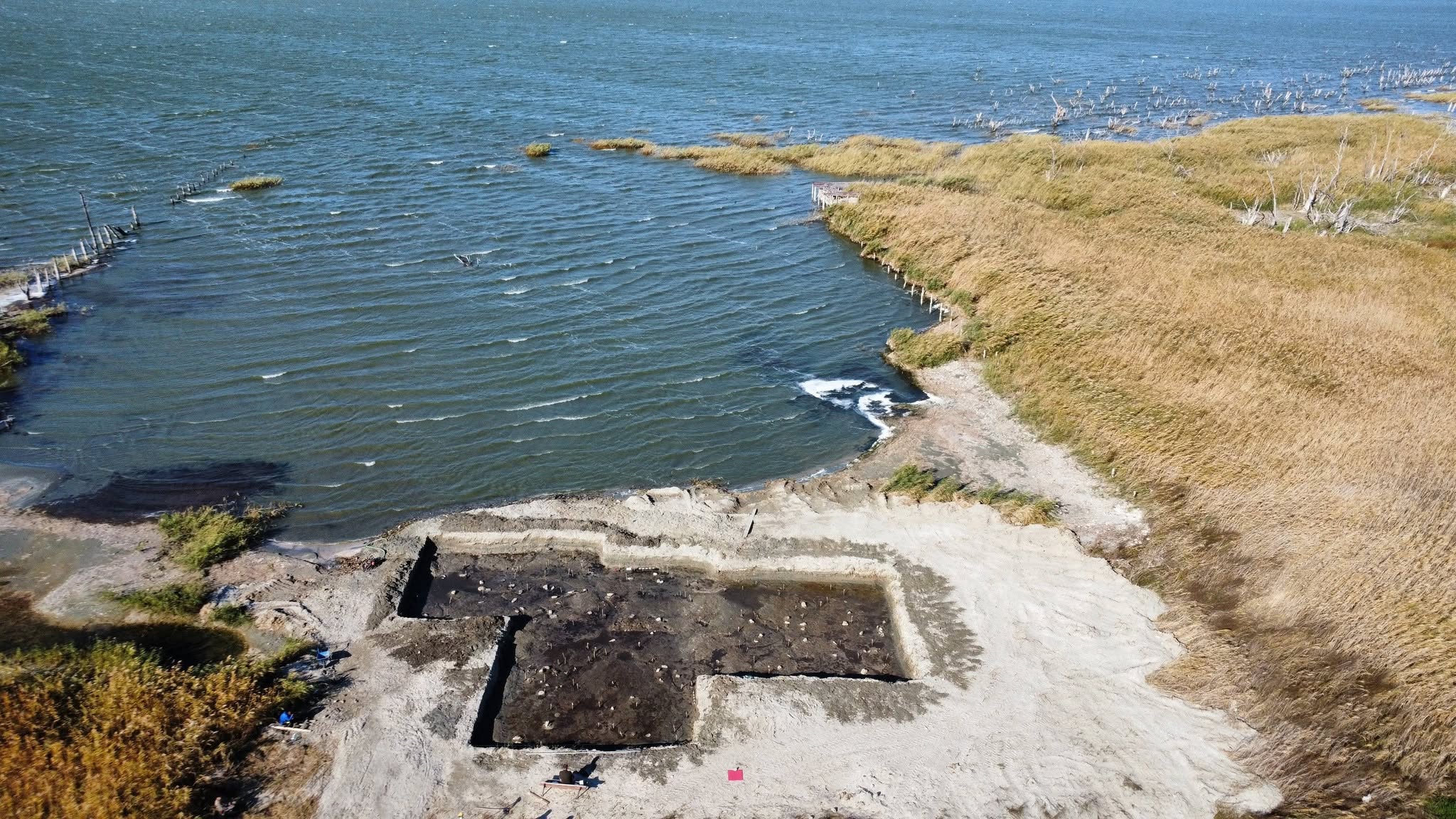 His importance in the community was emphasized by the unusual architecture of his home. The façade was decorated with raised circular structures edged with concentric rings. Above them was a frieze decorated with a spiral motif. Traces of cinnabar found suggest the façade may have been colored red.
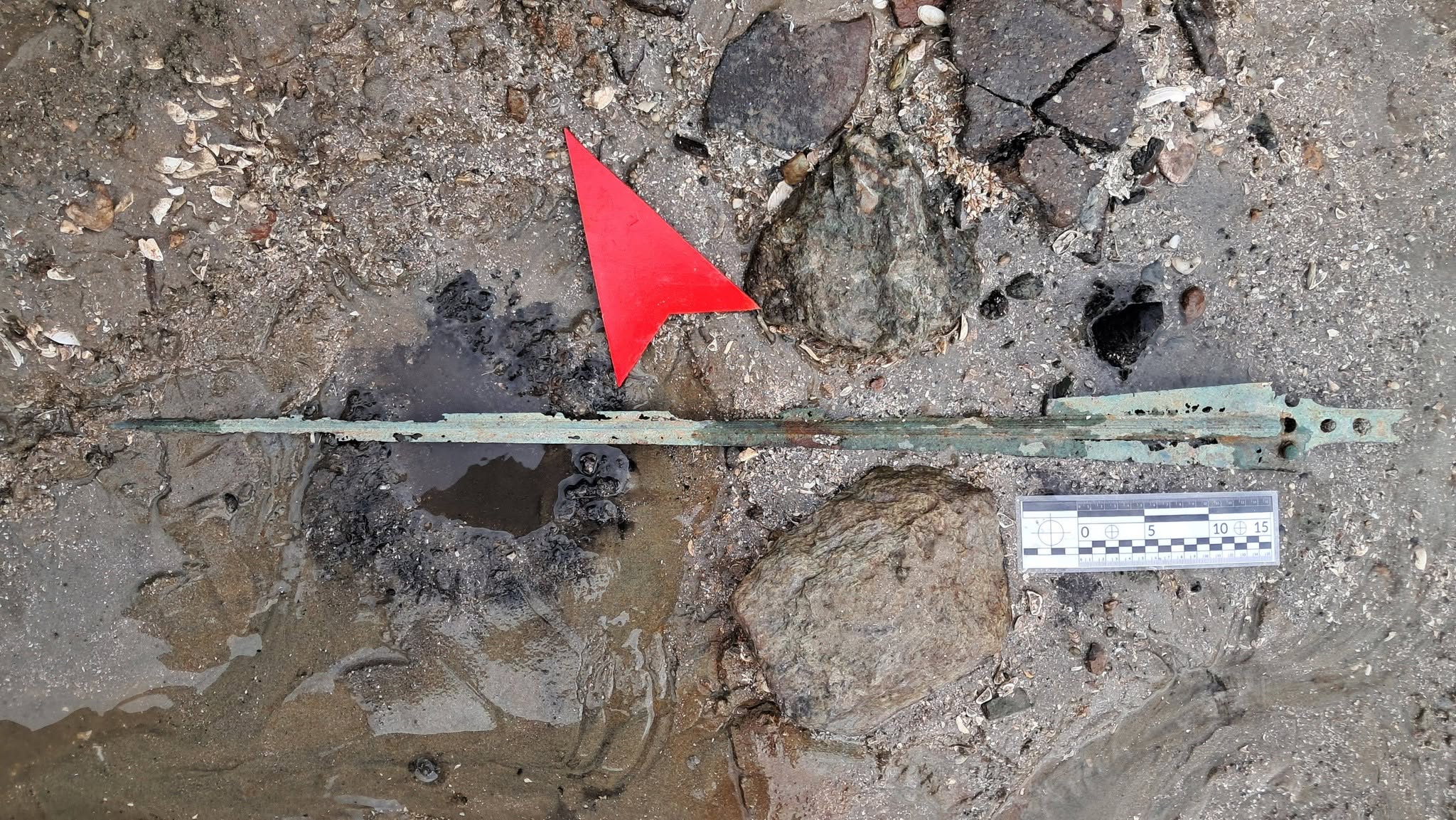 An unusually large number and type variety of weapons found distributed near the metallurgist’s house suggest there may have been an armed conflict in the settlement in the middle of the 2nd millennium B.C. These include the Mycenaean rapier sword, a socketed bronze battle axe decorated with two external ribs of a style made in the Carpathian region, a double-sided bronze axe of the Kilindir type from central Macedonia, and a bronze leaf-shaped spearhead.
The typological characteristics of these objects indicate extensive cultural and technological contacts of the Mrdaja community. Of particular note is the presence of weapons with analogies in different geographical areas, which opens the possibility of complex networks of exchange, communication and cultural influences. At the same time, their concentration in the vicinity of the metallurgical object represents an important archaeological context for the study of conflicts and social relations in the prehistoric community.
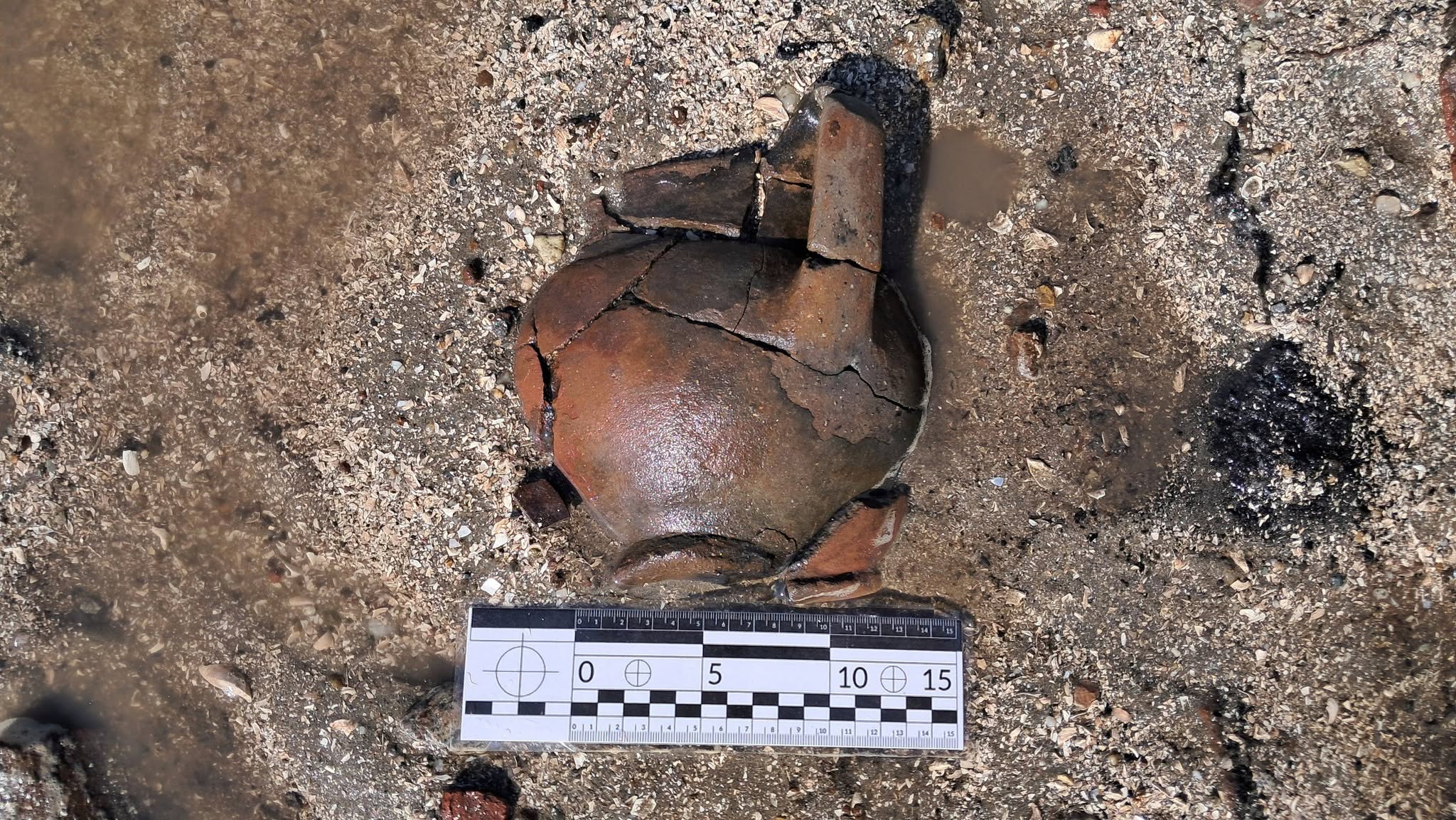
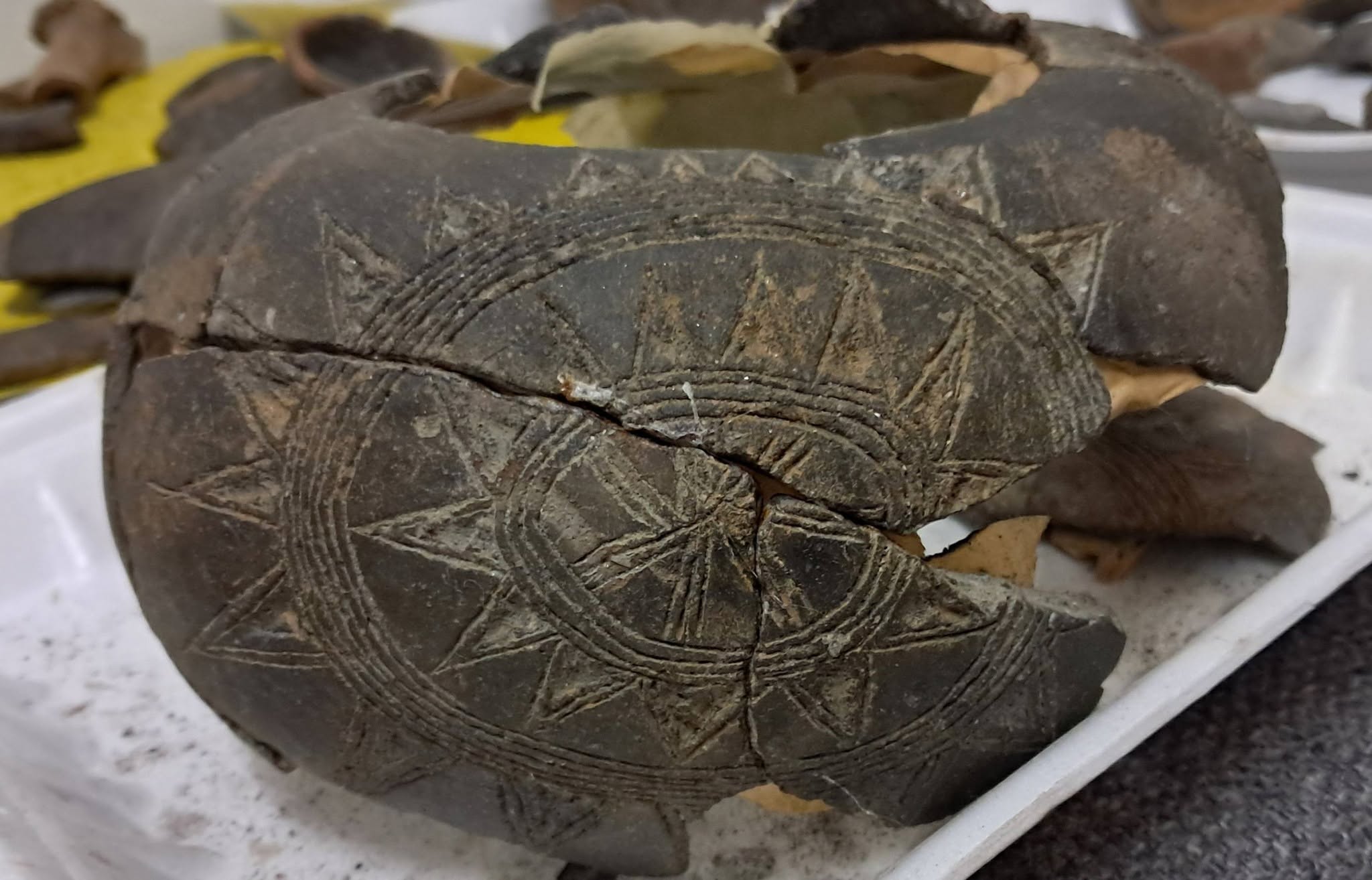 The excavation has also uncovered ceramic vessels engraved with solar symbols. This motif was widespread on Mrdaja’s pottery, and likely held religious significance.
The archaeological material is extremely diverse. Other notable finds include an amulet made of a sea snail, rings of coiled bronze wire, ceramic spindle whorls – objects that probably served as fishing weights, as well as small ball and bell-shaped lead weights.
All these findings contribute to the reconstruction of everyday life, economic activities, craft production and the symbolic world of the population.