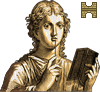
 A larger than life-sized statue of Agrippina the Elder, niece of Emperor Augustus. discovered at the ancient city of Veleia in Emilia Romagna, northern Italy centuries ago, has been restored and is back on display with 11 members of her family at the Archaeological Museum of Parma.
Conservators from the Complesso Monumentale della Pilotta in Parma had to clean the surface of years of grime and carefully remove thick layers of wax and varnish used in previous interventions. The layers had oxidized, darkening the statue and obscuring the details of the fine sculpture. The restoration illuminated Agrippina’s face, and archaeologists were able to see for the first time that the head was made of a block of pure white marble, unlike the rest of the statue which was made from veined marble.
 The statue was one of a group of 12 portraits of members of the Julio-Claudian dynasty placed on a long podium next to a wall in the basilica of Veleia. They were discovered when the site was excavated by order of Duke Philip of Bourbon starting in 1760. The statues were one of the earliest discoveries in the initial Bourbonic excavation of Veleia. They underscore the city’s close ties to the imperial family, doubtless tightened by its patron, Lucius Calpurnius Piso who had been Julius Caesar’s brother-in-law. Piso’s portrait is one of the 12 Julio-Claudian sculptures and he is believed to have commissioned the group.
 The statues were created in three stages. The first group made during the reign of Tiberius included the portraits of Augustus, his wife Livia, her son and his heir Tiberius and Tiberius’ brother Drusus the Elder and nephew Drusus the Younger. The statue of Piso was also in this first group. The second consisted of a portrait of Caligula, his sister Drusilla and mother Agrippina the Elder. After Caligula’s assassination and damnatio memoriae, the head of his portrait would be replaced with a portrait of Claudius, a substitution seen frequently in imperial statuary. That head of Claudius was created in the third phase, along with the portrait of Agrippina the Younger, Claudius’ wife, and her son Nero, then still a child.


I’m confused. Julius Caesar had a father-in-law named Lucius Calpurnius Piso, not a brother-in-law, but he died in 43BC. These statues were begun in Tiberius’ reign. How could Piso have commissioned 1st-centuryAD statues when he died in 43BC?
You are correct that Caesars father in law was named Lucius Calpurnius Piso. The Piso from this statuary group is likely his son, who was also named Lucius Calpurnius Piso (Caesonius). Since he was half-brother to Calpurnia (Caesars wife) that made him his brother in law as well. This Lucius Calpurnius Piso had close connections with Augustus and Tiberius, so it would be likely that the statue refers to him.
Agrppina played herself an active role in the fights in Germany. In 9AD, three legions were lost, while in 15AD, four legions were at stake ..and survived, mainly due to the enemy’s lacking discipline, and due to Agrippina (cf. ‘Pontes Longi’).
On a side note: The ‘Kalkriese’ site must be the one from 9AD, as the very last coin is from 9AD and the buried humans remains had for quite some time not been buried, exactly as described in the sources.
—-
Tacitus’ Annals 1.69, regarding 15AD (note that the Plinius that he mentions is Pliny the Elder, who died in 79AD on his mission to Mt. Vesuvius):
“Meanwhile a rumor had spread that our army was cut off, and that a furious German host was marching on Gaul. And had not Agrippina prevented the bridge over the Rhine from being destroyed, some in their cowardice would have dared that base act. A woman of heroic spirit, she assumed during those days the duties of a general, and distributed clothes or medicine among the soldiers, as they were destitute or wounded. According to Caius Plinius, the historian of the German wars, she stood at the extremity of the bridge, and bestowed praise and thanks on the returning (four) legions …”