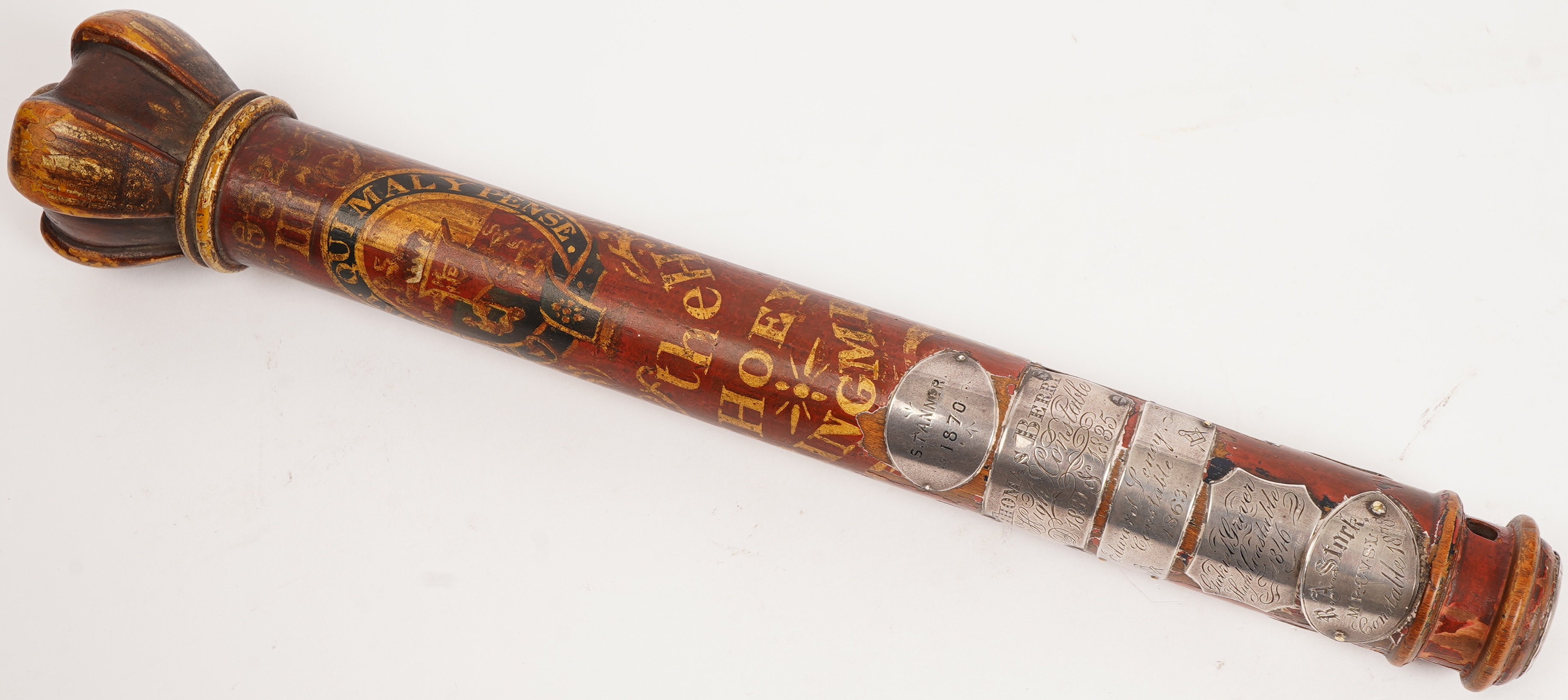
 A turned wooden painted tipstave, a ceremonial truncheon created for the High Constable of the Hundred of Ringmer in Sussex in 1832, has sold at auction for £16,000 ($21,500),16 times the pre-sale estimate, at Gorringe’s in Lewes. It is one of the highest prices ever paid for a tipstave.
The High Constable was the most important official of the Anglo-Saxon county division known as a hundred court. High Constables were charged with maintaining order and managing administrative affairs of the parish. Turned, carved and elaborately painted truncheons were emblems of their authority, used in ceremonies.
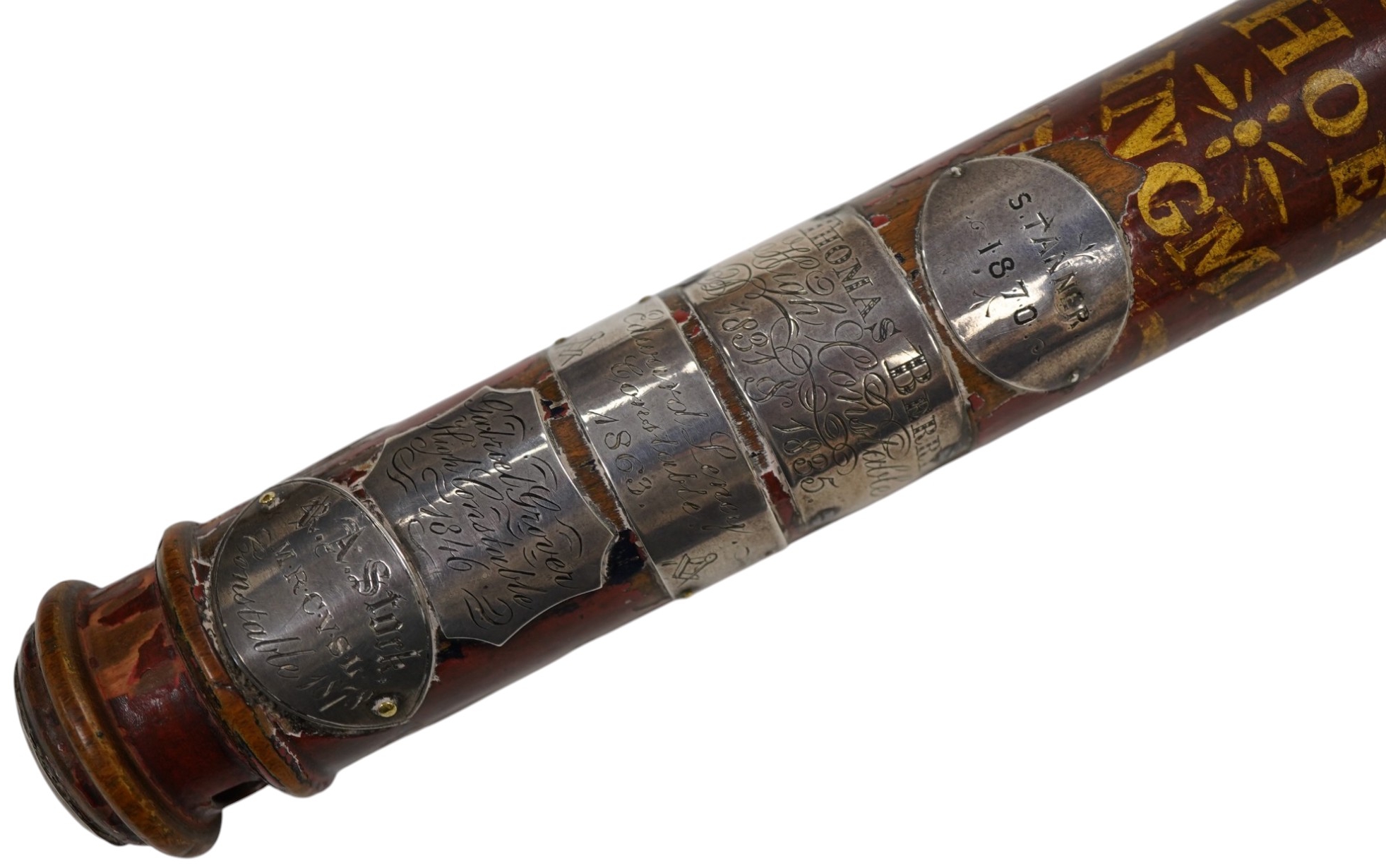
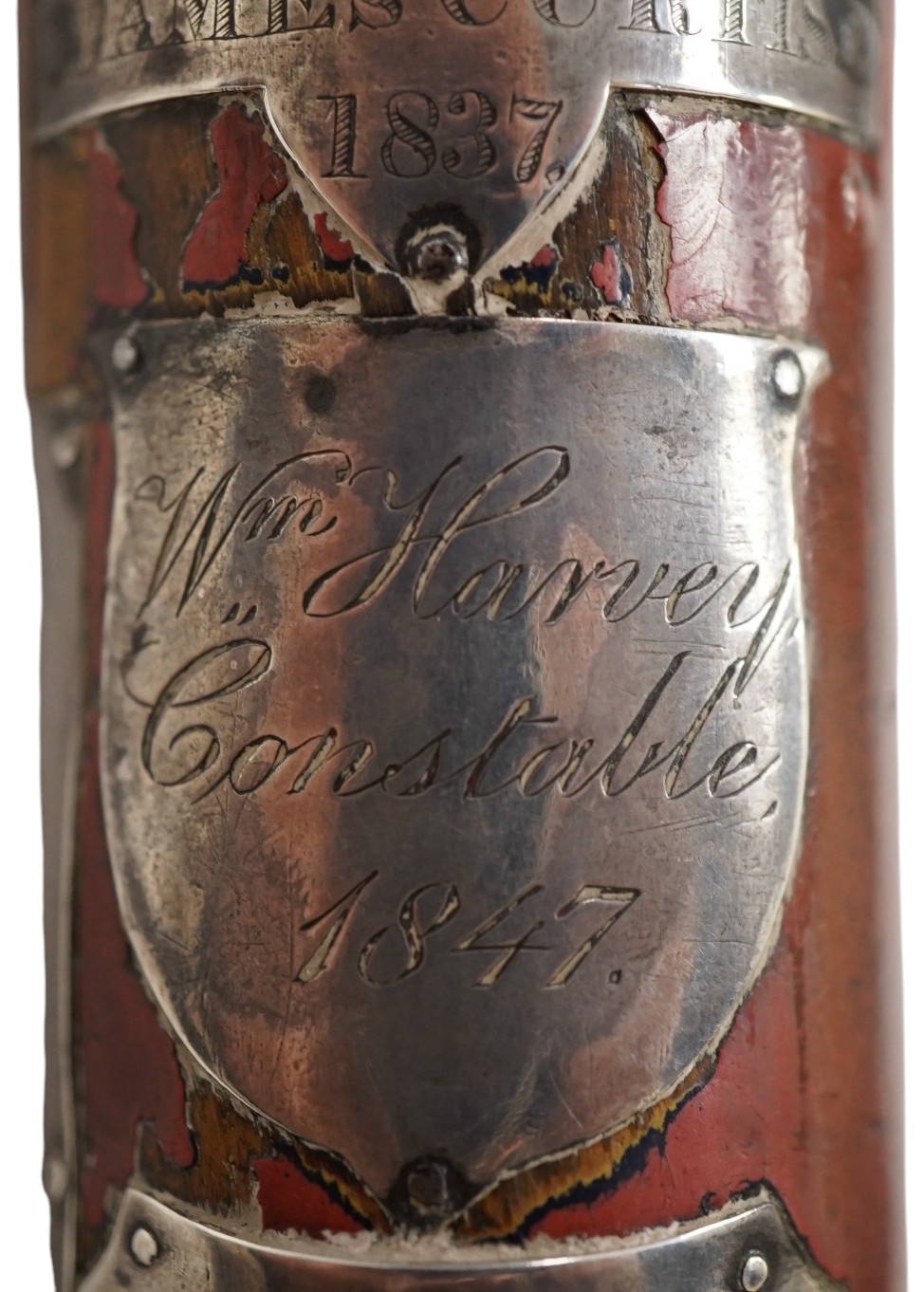
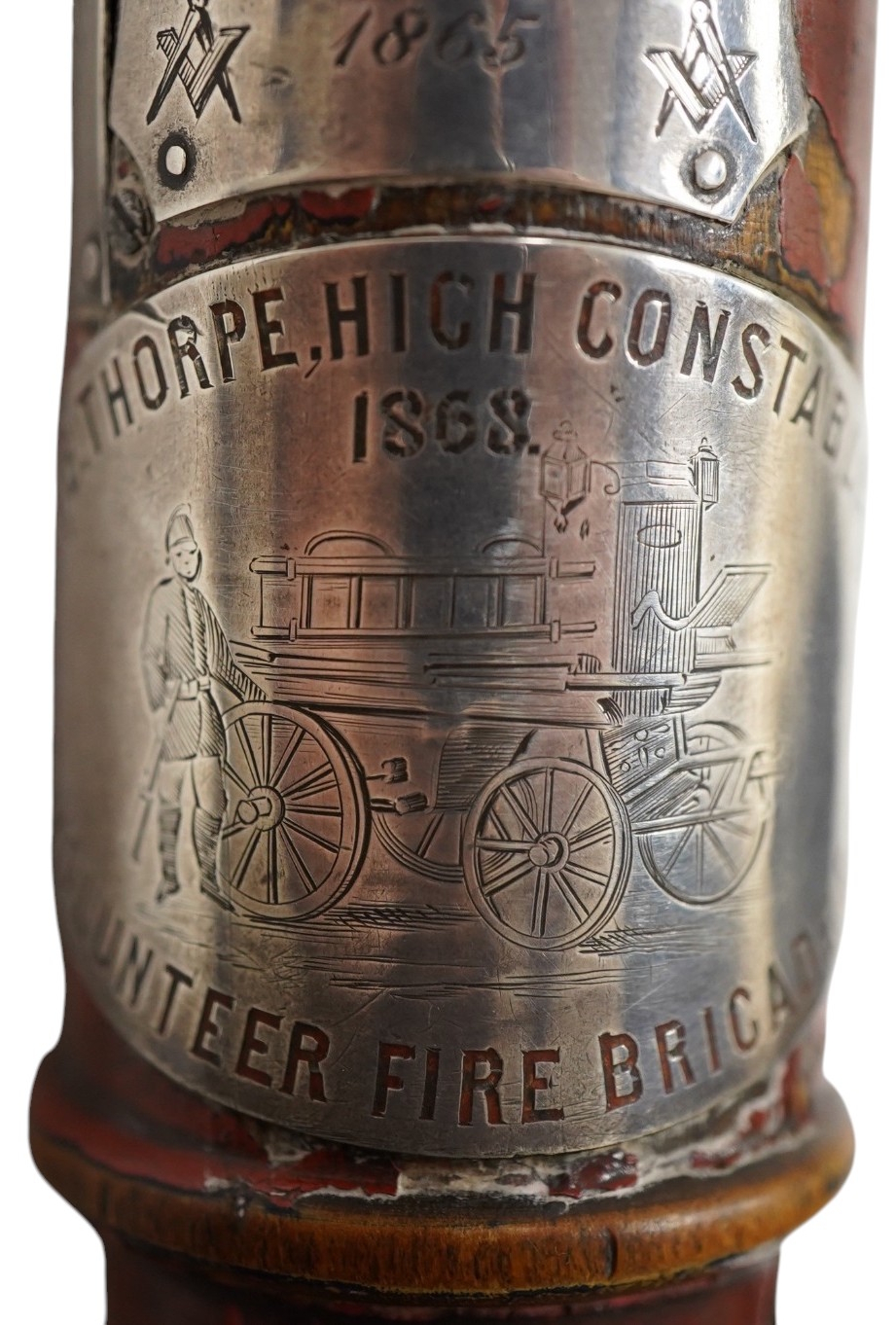 This tipstave was made during the reign of William IV and is inscribed with the name of the first High Constable who wielded it: G Hoey. The names of another 15 other locals of influence who held the positions of constable and high constable are included on silver labels. The largest and most decorative of these is engraved “B Thorpe High Constable 1868 – Cliffe Volunteer Fire Brigade Estd 1864.” It features an engraving of a fireman with his fire engine.
 The last one, engraved for Thomas Reader White, headmaster of the Lewes Grammar School, is dated to 1879. That was the last gasp of the High Constable of the hundred courts. The County Courts Act, passed in 1867, had eliminated their judicial powers. The Local Government Act of 1894 ended the position altogether.
The name of greatest local import was John Harvey, whose High Constable plaque is engraved with the date 1838. Harvey was the founder of Harvey’s Brewery, the oldest independent brewery in Sussex. In 1838, he built a brewhouse and hung out his shingle for the first time as Harvey & Sons. It was the brewery that bought this lot at auction.
Miles Jenner, joint managing director of Harvey’s Brewery, said: “The hammer price reflects how unique this item is. It relates to an historic area of the town, the parish of Cliffe, that had an independent system of local government until 1881. It was the commercial heart of the community and the names on the tipstaff are those of local tradesmen.
The fact that these include the founder of Harvey’s Brewery, John Harvey, and his son William bears witness to their prominence at that time. We felt it was essential that it should remain within the parish and are delighted to have secured it.”