Funding secured for Basilica of Vitruvius

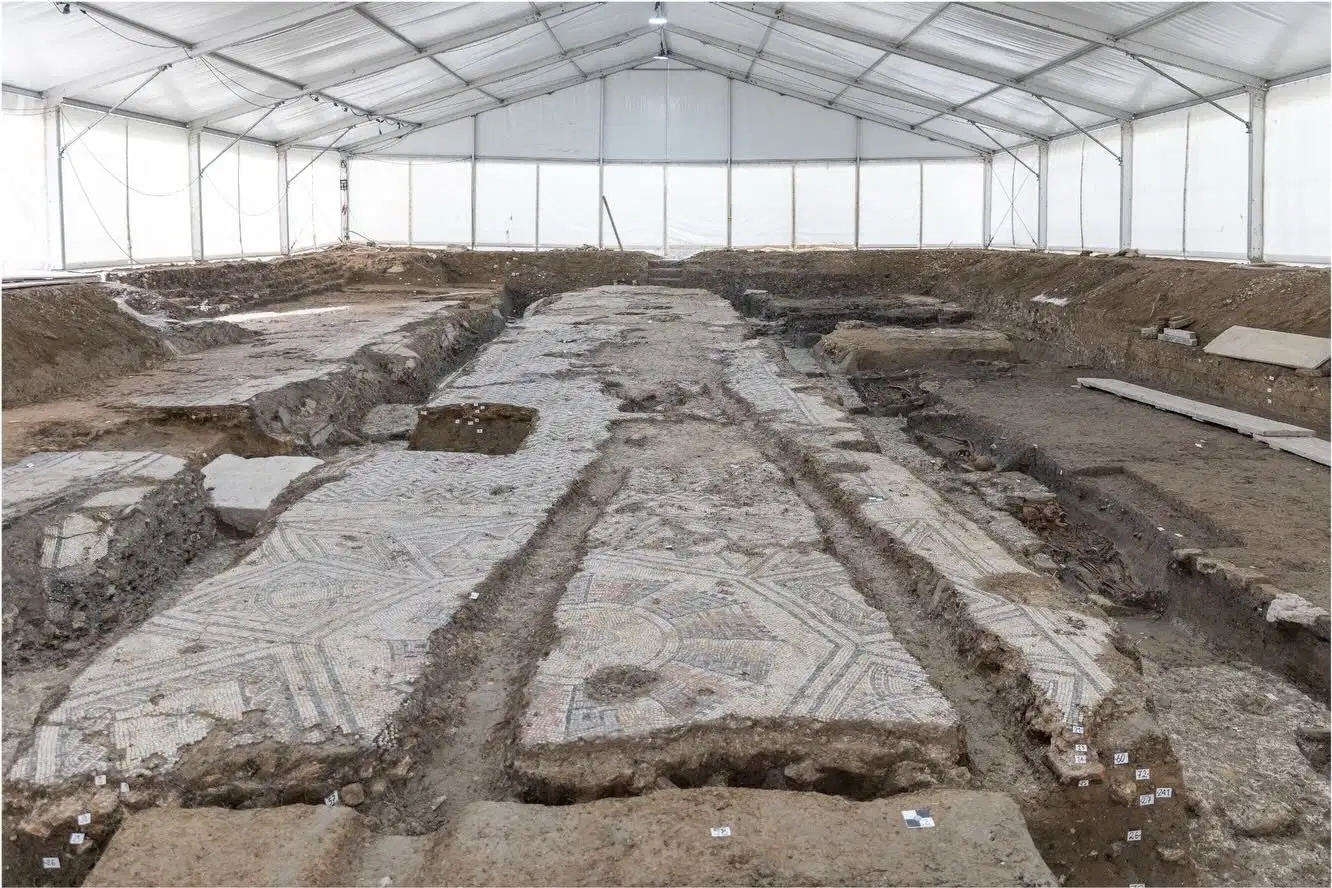
The first phase of excavations of the Basilica of Vitruvius in Fano has ended for now, but the municipality of Fano and the Le Marche region have secured 400,000 euros in funding with another 350,000 from the Superintendence of Archaeology to continue the investigation and protection of the site.

Meanwhile, the findings from this momentous first dig have already given archaeologists a clearer picture of the structure of the building, both original construction in the 1st century B.C. and later alterations during the imperial period and Late Antiquity until its destruction in the 6th century by the Ostrogoth King of Italy Vitiges. Ceramic artifacts from the 11th and 12th century were recovered at the site, indicating it was used for other purposes even

Among the most significant discoveries is the uncovering of the base of the sixth column on the Darderi side, although it is partially damaged by later interventions. “Work also continued on exposing the Roman floor and a new section of wall along the Via Montevecchio side, elements that allow for an increasingly precise understanding of the floor plan of the Vitruvian monument,” added [Superintendency archaeologist Cristiano Casci Ceccacci]. “In the central area of the basilica, excavation work has been completed, bringing to light the remains of an apse-shaped wall. This is a particularly significant finding that opens up new interpretive perspectives on the possible locationof the aedes Augusti, the temple dedicated to imperial worship.”

The excavations have also provided deeper insight into the building’s various phases of existence and the transformations that have progressively altered its appearance throughout history. “The basilica underwent major renovations as early as the 2nd century A.D., aimed at enhancing its original layout, as evidenced by the discovery of marble from the Peloponnese. The excavations have also confirmed that the building was constructed on top of pre-existing structures, the nature of which is still under study. What has come to light now allows us to reconstruct with greater certainty not only the monument but also the overall urban context of the Roman city,” he concluded.

Early Christian church found under fish market

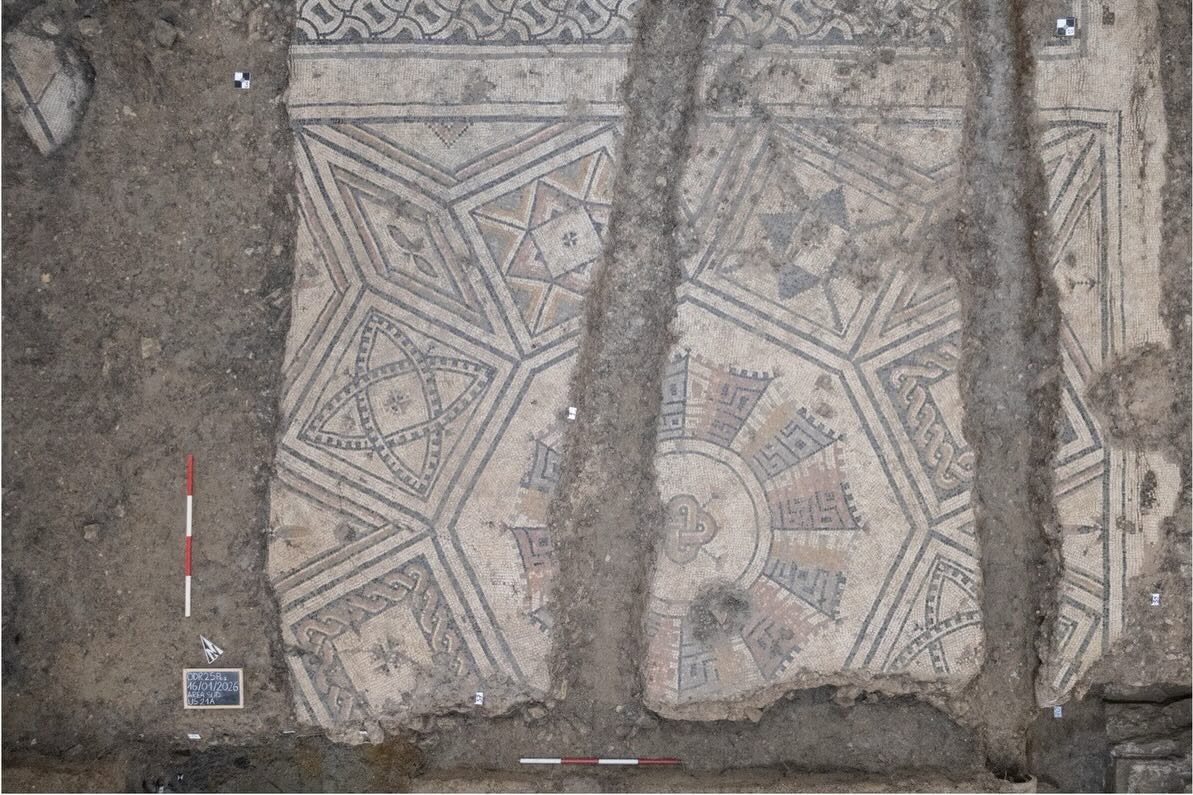
Polychrome mosaic floors of an early Christian basilica have been discovered in the excavation of the former fish market of Oderzo, an ancient town in Italy’s northeastern Veneto region. The layout of the building and the motifs of the mosaics date it to the late 4th or early 5th century, making it the city’s first known Christian place of worship.

Originally a 10th century B.C. pile dwelling settlement of the ancient Veneti, Opitergium came to prominence under Rome with the construction of the Via Postumia road (completed 148 B.C.) linking Genoa on the west coast of northern Italy to Aquilea on the east coast, and thus the Mediterranean to the Adriatic seas. The city, whose Venetic population was already Romanized by this time, was granted “municipium” status and the rights of a Roman city that came with it.

Roman Opitergium prospered from its location at a major crossroads, and by the 2nd century it had a population of 50,000 and was one of the most important cities in the region. At the dawn of the 5th century, it was faced with debilitating attacks by Visigoths, followed by Huns and Ostrogoths. When the Byzantine Empire reconquered northern Italy in the middle of the 6th century, Opitergium’s fortunes were restored as an administrative and religious center until it was destroyed by Lombards in 667 A.D.

The excavation of the former fish market began in November 2025 in anticipation of a new planned residential development. The site was outside the city walls of ancient Opitergium, but archaeological remains including mosaics, tombs and a Byzantine fort, had been found in the area before, so the Superintendency of Padua ordered a thorough excavation.

Test trenches soon revealed fragments of mosaic pavement, and the broader excavation uncovered an area of approximately 325 square feet with extensive polychrome floors, the foundations of massive perimeter walls and external buttresses. The foundations were made of bricks and mortar but were supported the same way the Veneti had supported their modest dwellings a thousand years earlier: with wooden piles driven deep into the alluvial soil.

The building was rectangular and divided into three east-west naves. The floors are mostly preserved on the southern and central nave, although remnants of the northern one survive as well. The polychrome mosaics have intricate geometric and vegetal designs, including octagons with guilloche borders, overlapping circles adorned with acanthus leaves, ivy, pelta and lozenges with crosses in the middle.

The most complex panel features a large central octagon with a Solomon’s knot in the middle surrounded by a velarium (awning) motif. The polygon’s exterior sides then become the sides of large squares with double frames. Double-framed lozenges bridge the space between the squares.

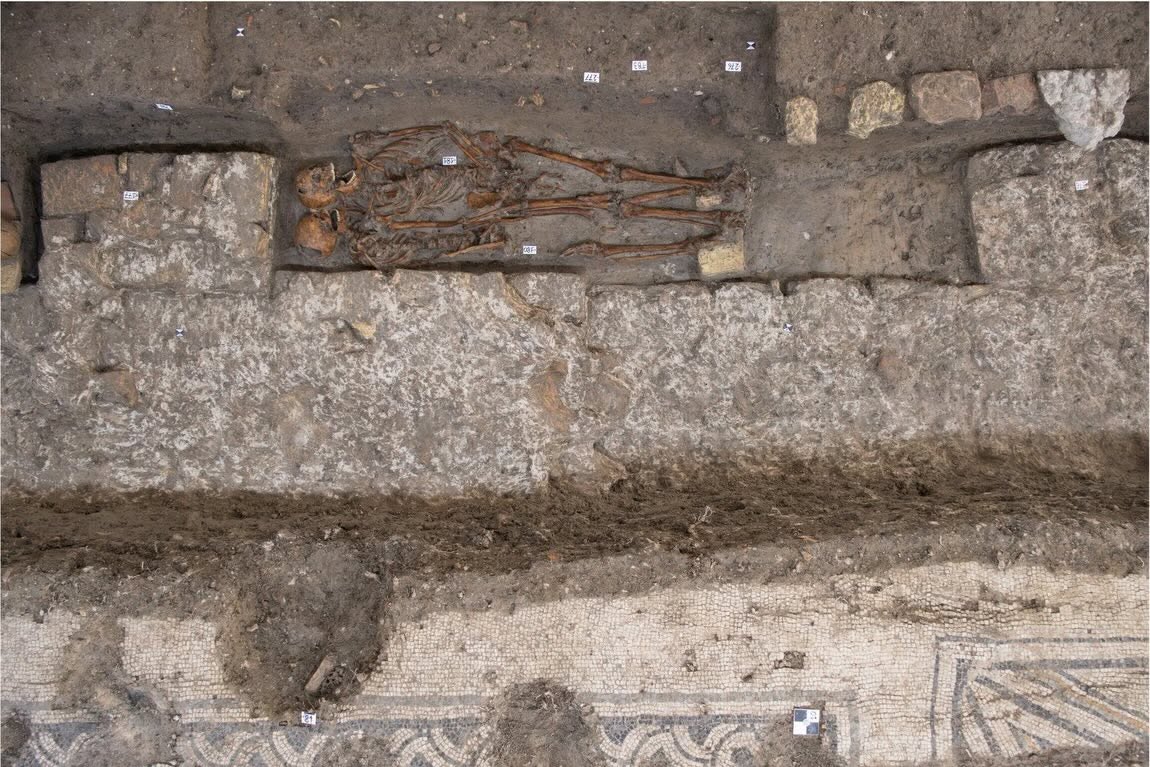
The excavation also uncovered four inhumation burials right outside the southern perimeter of the church between the buttresses. Unusually, three of the four are two-person burials. None of them have grave goods.

The human remains and the wood piles will be radiocarbon dated to date the church more precisely. The site itself will be preserved and new architectural solutions are being explored now that will allow the mosaics and remains of the church to be accessible to the public. The new residential complex will still be built, but it will now include a dedicated space for heritage tourism.

6th c. B.C. Picene princely and noblewoman burials found

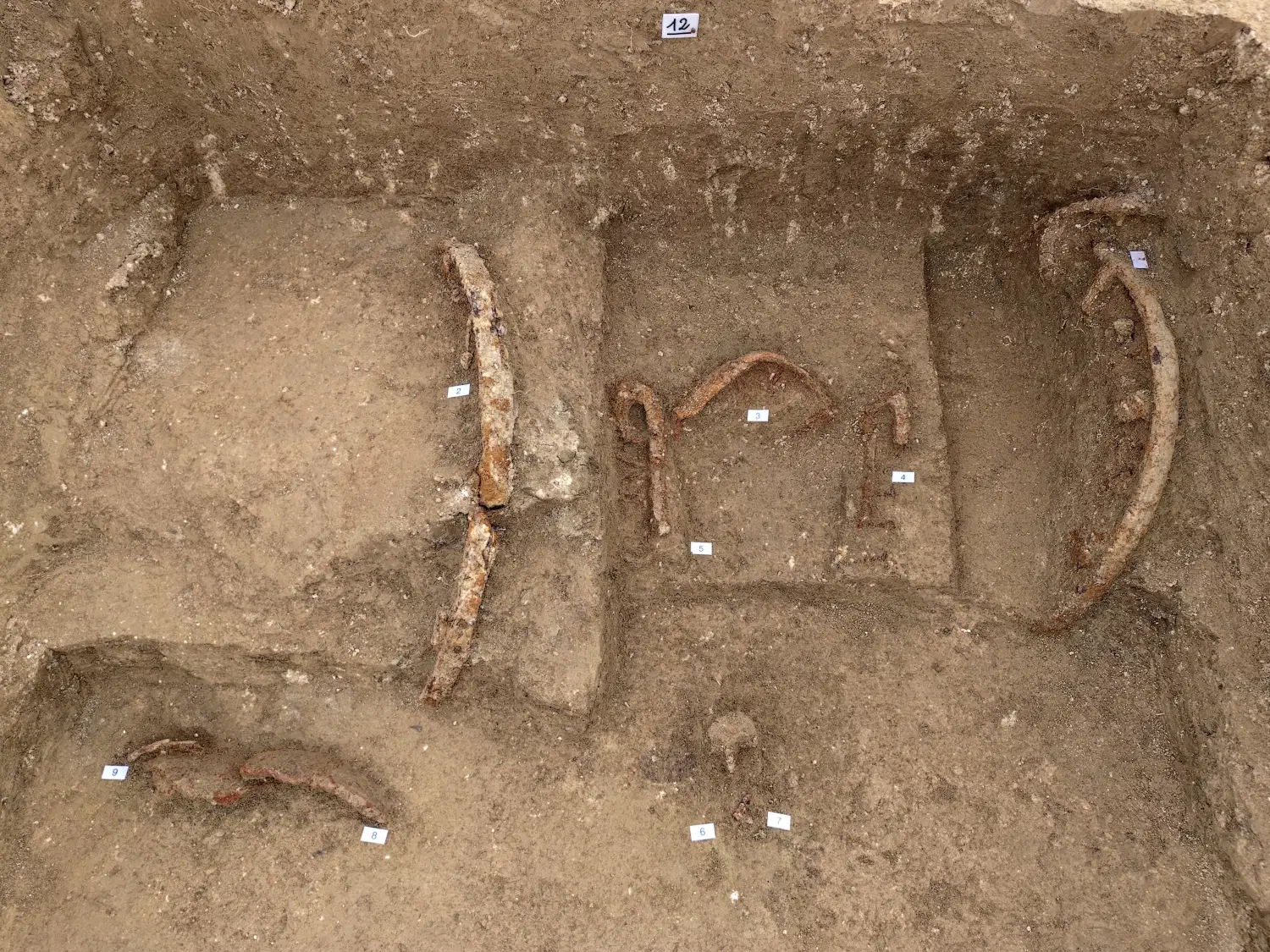
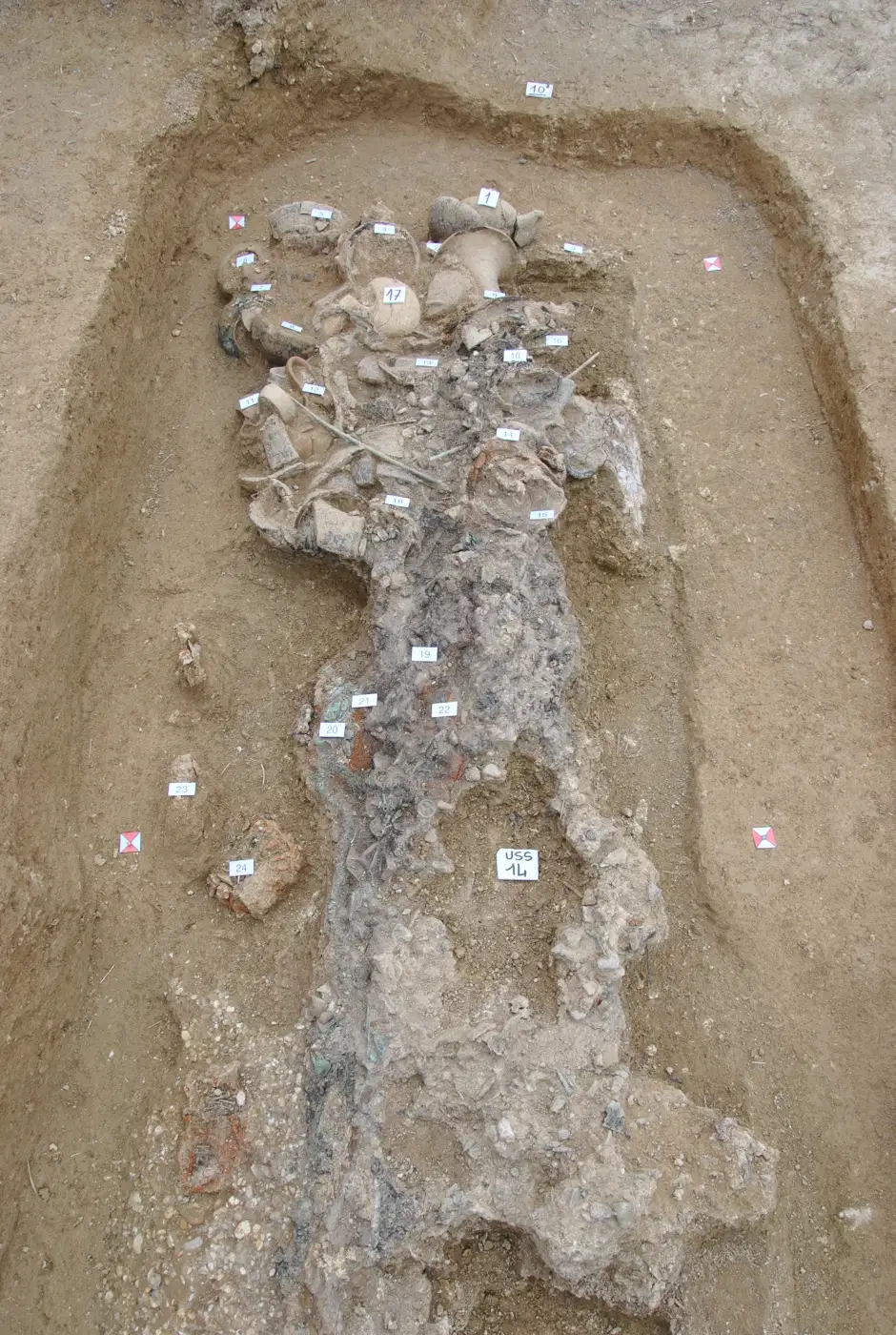
An excavation in Sirolo, a town in the province of Ancona in central Italy’s Le Marche region, has uncovered a princely chariot burial of the Picene people dating to the 6th century B.C. The burial is the center of a monumental circle and contains the remains of a currus, a two-wheeled chariot symbolic of the deceased’s aristocratic rank. Grave goods include a helmet, axe and other weapons.

The chariot burial is part of a large Picene funerary complex from the 6th century B.C. The necropolis is organized around the monumental circle and was reserved for Picene nobles and aristocrats.

Among the most surprising elements is the structure of the monument itself. Unlike other large funerary circles in the Piceno region, which are generally bounded by an annular ditch, the Sirolo complex was enclosed by a circular palisade, identified thanks to a regular sequence of post holes containing small ritual deposits with selected ceramic fragments. This is a solution previously unrecorded in this region.

Also of particular interest are several large bronze vessels discovered in the chariot tomb. Still sealed with ceramic lids, they contained organic material, animal remains, and ceramic fragments that may represent evidence of the funeral banquet held during the burial or food offerings intended for the deceased.

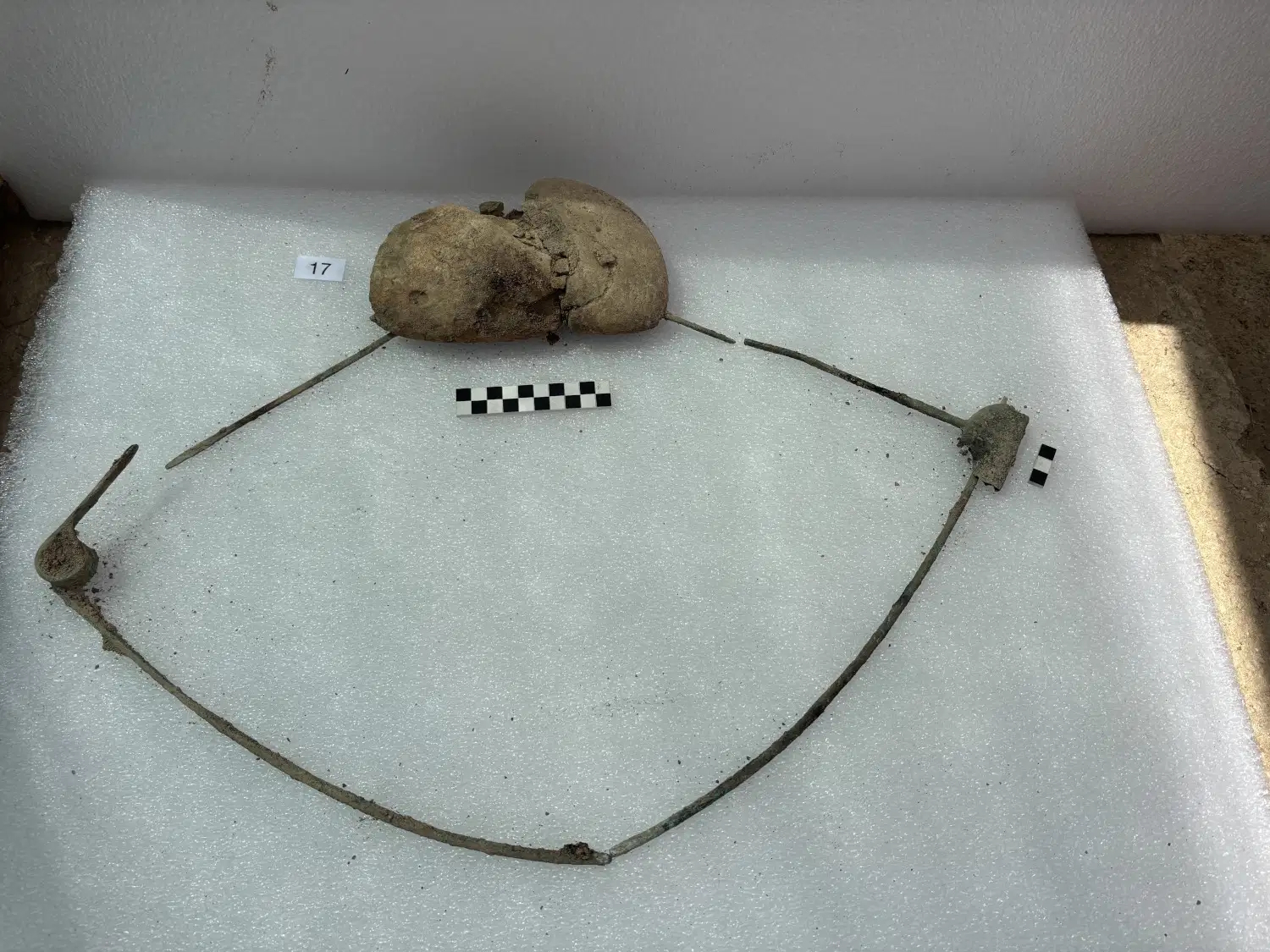
A second grave found next to the chariot burial, this one of a woman, is notable for its exceptional state of preservation. Remains of organic materials including textiles and shoes were uncovered. The clothing and shroud she was buried in were secured with a number of fibulae which have all survived, and one particularly large fibula with an amber stone in the middle found behind the deceased’s head which may have been part of a headdress or used in an intricate hairstyle. Archaeologists hope this burial will shed new light on the role of Picene women in the aristocracy.

“This discovery,” emphasized archaeologist Stefano Finocchi, the excavation’s scientific director, “finally allows us to reconstruct the original context of the warrior’s tomb discovered in 2020 and to place it within a larger funerary complex organized around a princely burial with a chariot. For the first time, we can observe not a single tomb, but an entire aristocratic group, with hierarchical and symbolic relationships that open up new perspectives on the structure of the elites who led the great Picene center that developed in the area of present-day Conero. The monumentality of the complex, the quality of the grave goods, and certain artifacts still under study outline the profile of ruling groups embedded in a dense network of relationships that connected the central Adriatic to the major centers of central Italy.”

3rd c. pithos burial found at Hadrianopolis

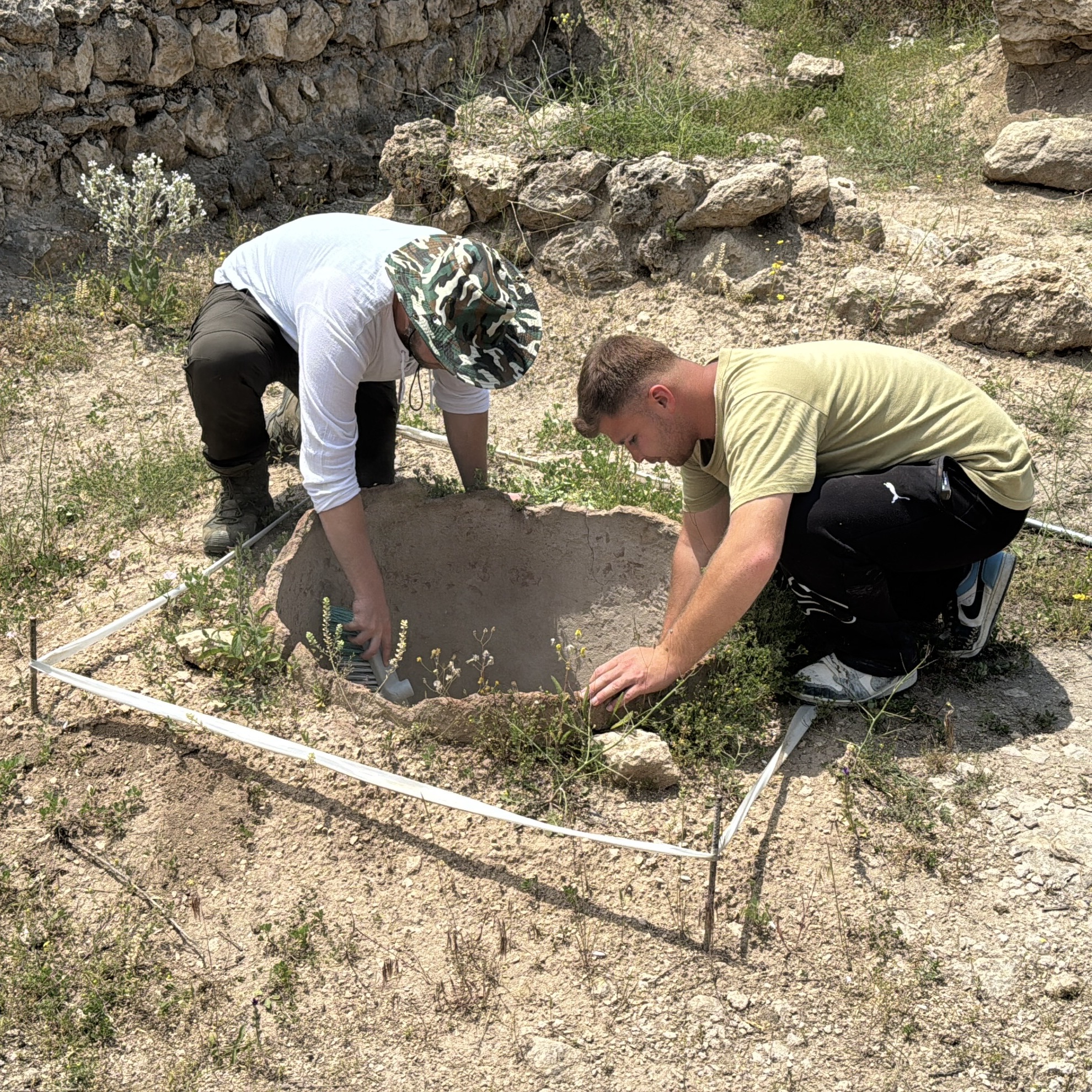
A pithos burial has been discovered in the ancient city of Hadrianopolis, modern-day Eskipazar in northern Turkey’s Black Sea region. It is the first example of this type of burial found in region. A coin found inside the large storage jar was minted during the reign of Roman emperor Probus (r. 276-282 A.D.), which dates the burial to the 3rd century.

Used to store large volumes of foods (grain, olives, spices, nuts, fruits) both for transport on ships or in permanent arrays on land, pithoi were so big they could also comfortably accommodate bodies and grave goods in burials. In the Hadrianopolis pithos burial, archaeologists found skeletal human remains, the coin, seven smaller pottery vessels, an oil lamp, a knife and two bone hairpins. The hairpins suggest the deceased may have been a woman.

[Professor Ersin Celikbas, head of the Archaeology Department at Karabuk University’s Faculty of Humanities and Social Sciences], said the find marks the first time a pithos tomb has been documented in Hadrianopolis and its surroundings in relation to funerary culture, making it important for understanding burial traditions in the area.

Celikbas also noted that the pottery found in the tomb included examples of Pontic Sigillata, a type of fired clay vessel associated with the Black Sea region. He said this pottery type has been found in almost all excavation areas at Hadrianopolis.

Hadrianopolis was founded by the Hittites in around 1300 B.C., but it was renamed after the Roman emperor Hadrian in the 2nd century. It was located on an important trade route between the Black Sea coast, the Aegean coast and central Anatolia.

2,700-year-old Bronze Age sword found in Poland

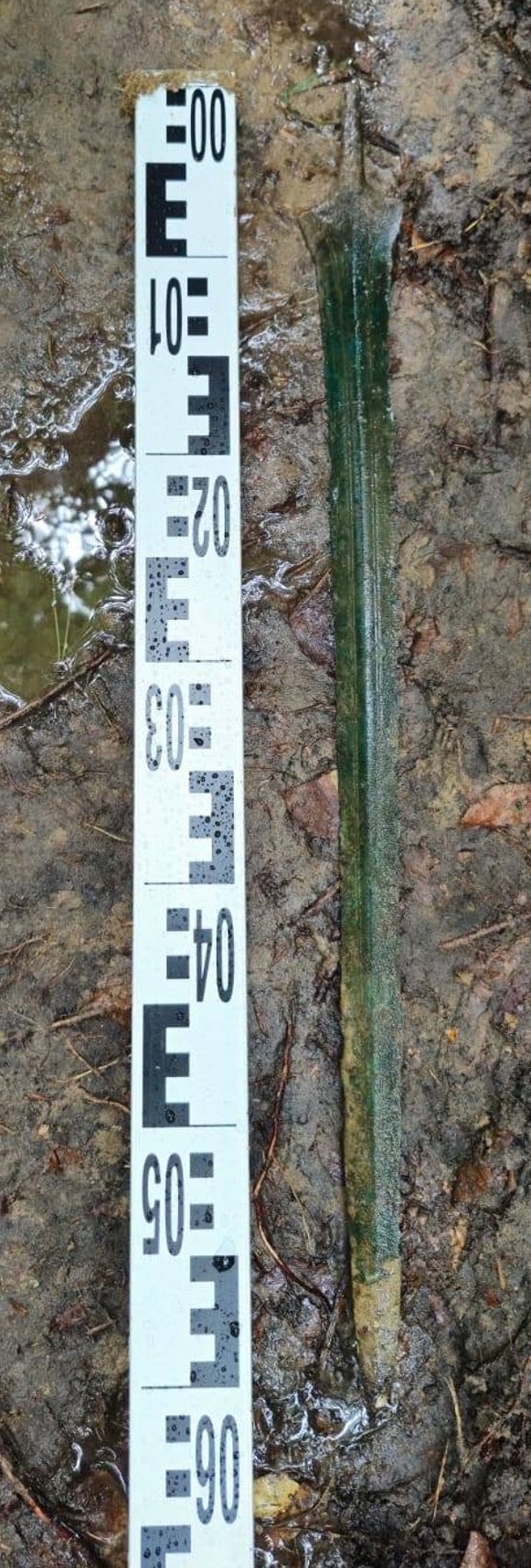
A Bronze Age sword has been found by a metal detectorist in the woods near Gdańsk, Poland. It is in excellent condition, covered in green patina. Archaeologists with the Provincial Office for the Protection of Monuments (PUOZ) dated the sword to 900-700 B.C., the late Bronze Age in Europe.

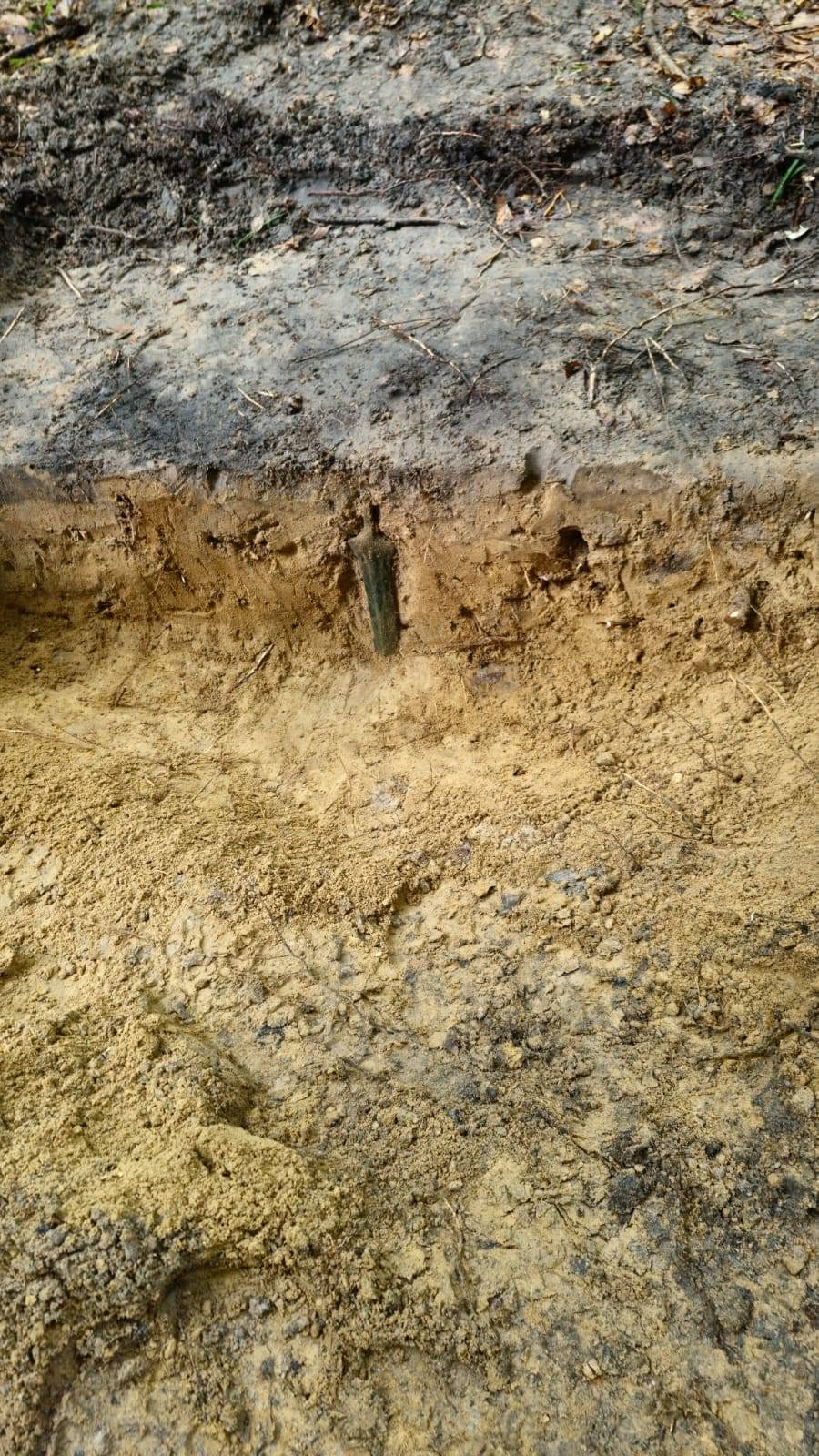
Licensed metal detectorist Marcin Wiśniewski notified the PUOZ on Monday as soon as he realized he’d found an archaeological artifact. He protected it from the rain and obscured it from view to keep it safe from any less scrupulous forest visitors. This allowed regional archaeologists to excavate the find site immediately using professional methodology.

Archaeologists later excavated the area using standard field methods. They carefully recorded the sword’s exact position before lifting it from the ground. No other artifacts were found nearby, though researchers say the weapon’s original placement still holds valuable information. The upright position suggests the sword was deliberately deposited rather than accidentally lost.

The sword measures about 60 centimeters in length and belongs to the tang-hilted type. Its narrow metal tang once held a grip made from wood, bone, or antler, materials that have long since decayed. A green patina covers the bronze blade, helping preserve decorative grooves, engraved arcs, and short crosswise lines. These features match swords produced during the fourth and fifth periods of the Bronze Age, though conservation work will confirm its exact type.

A sword of this length and high quality of decoration would have been prohibitively expensive when it was made. It had the equivalent value as a herd of cattle. Now PUOZ is determining which museum will be the proud recipient of the sword. Once its future home has been determined, it will be conserved to reveal its full decoration.