
Germany’s largest coin hoard from the reign of the emperor Hadrian has been discovered near Wesseling, on the Rhine river just south of Cologne.
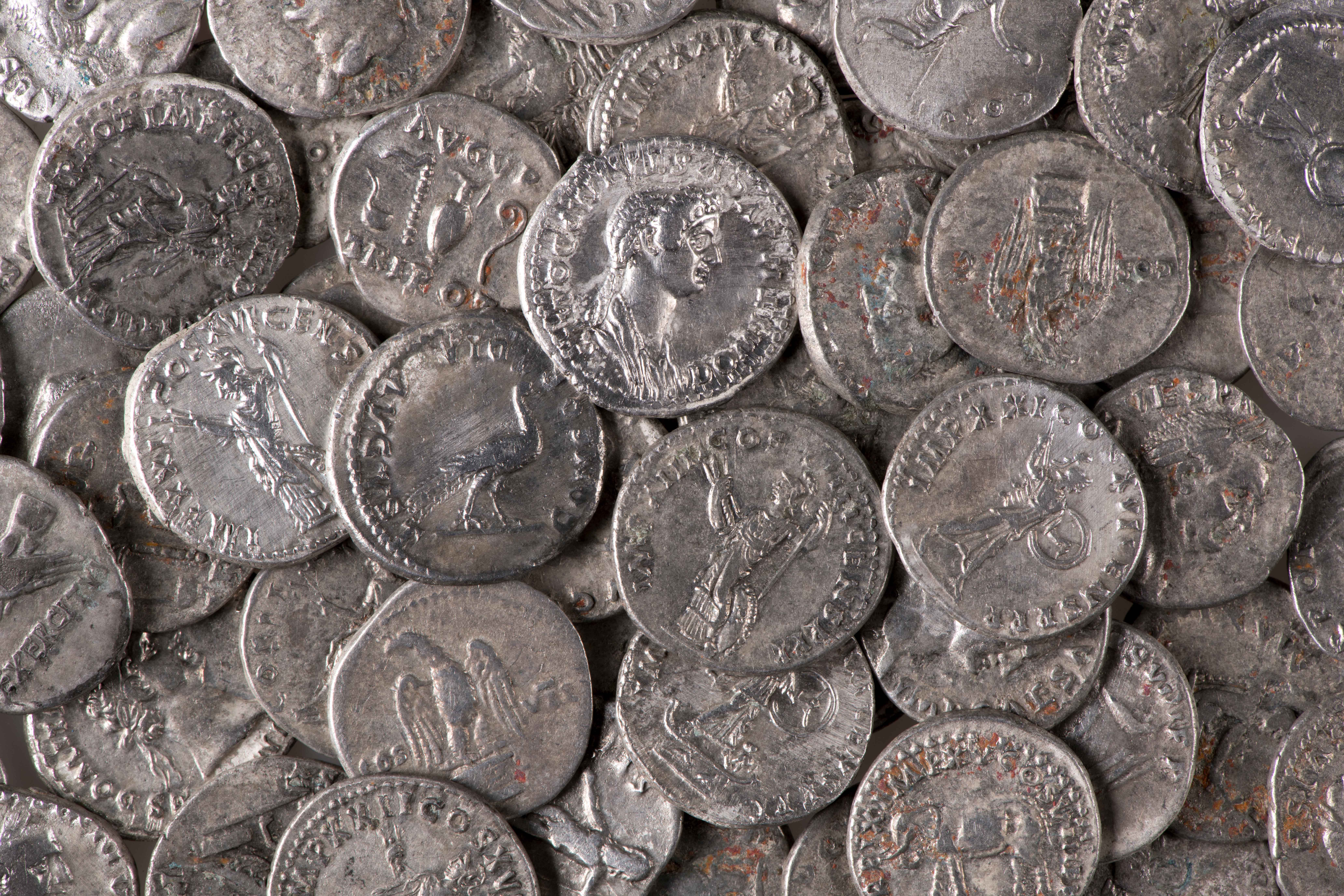 The first silver denarii were discovered by metal detectorist Oliver Riedl. After recovering 15 coins, Riedl realized there was something much bigger underground when his machine kept beeping. He stopped what he was doing and notified the Rhineland Regional Association’s Office for Archaeological Heritage Management (LVR-ABR).
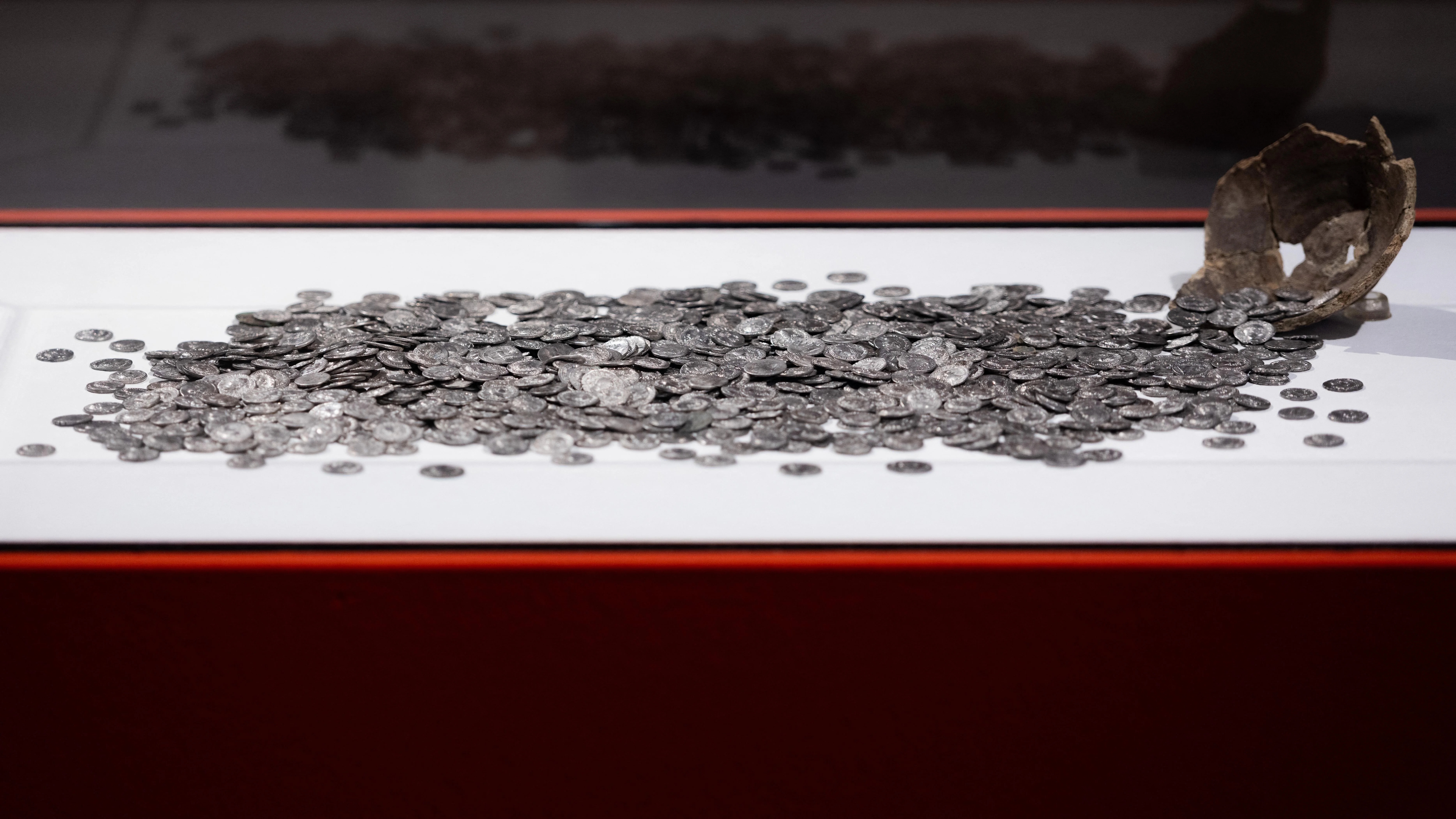
Archaeologists from the Nideggen branch of the LVR-ABR were immediately dispatched to excavate the find site. The team unearthed more than 900 additional denarii, for a total of 934 coins weighing 3.1 kilos (6.8 lbs) of silver. In terms of buying power, that’s more than three times the yearly pay of a Roman legionary. Since half of their salary was deducted to pay for their food and equipment, however, a legionary would have had to save every denarius for six years to amass a hoard of this size.
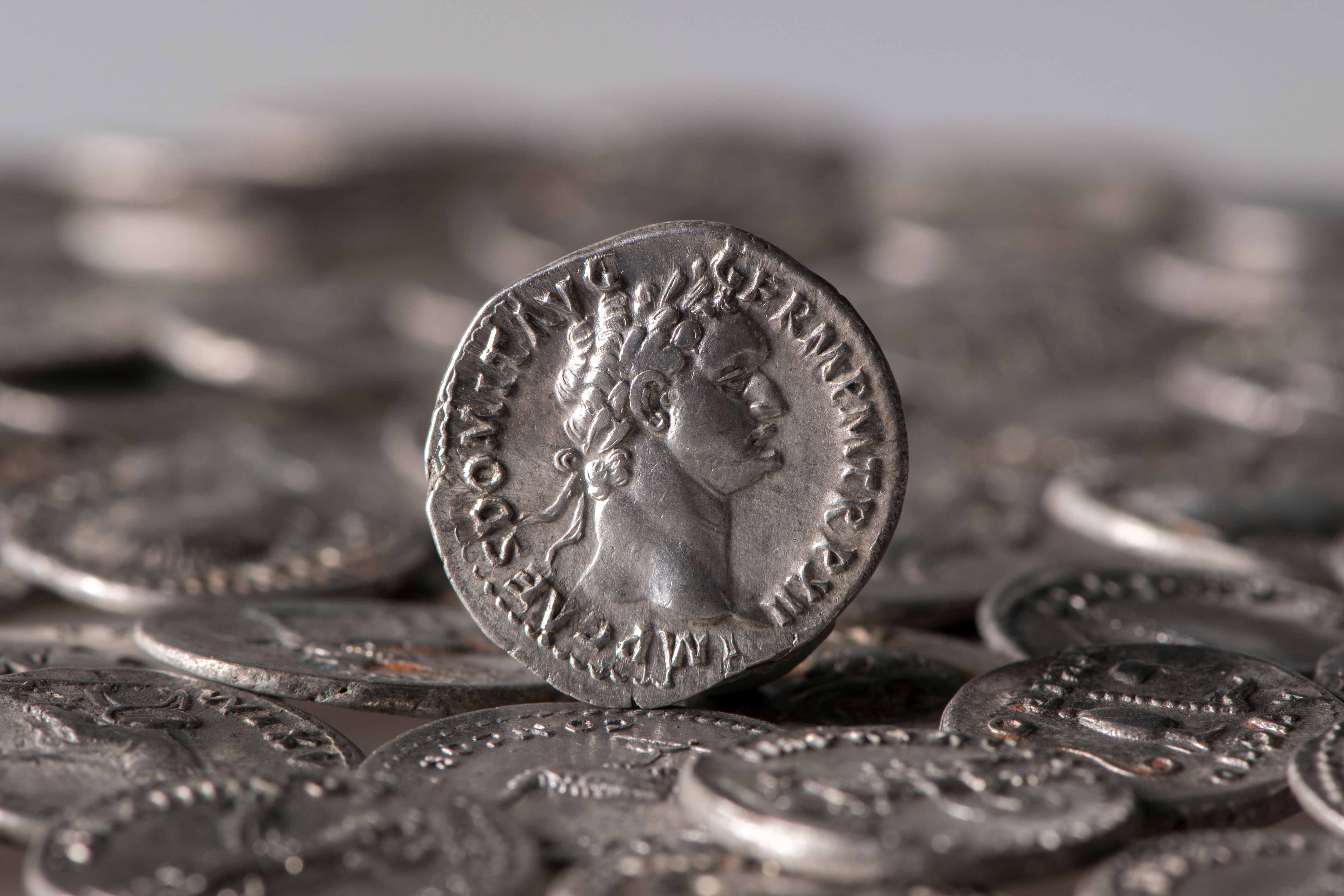 The most recent coin in the hoard was minted in 124/125 A.D., which marks the likely date of its burial as during the reign of Emperor Hadrian (117–138 A.D.). Almost all of the coins pre-date his reign, however. They were minted during the Flavian dynasty (69-96 A.D.), so archaeologists believe the hoard was largely collected around 100 A.D. and then buried two or three decades later with that one contemporary coin.
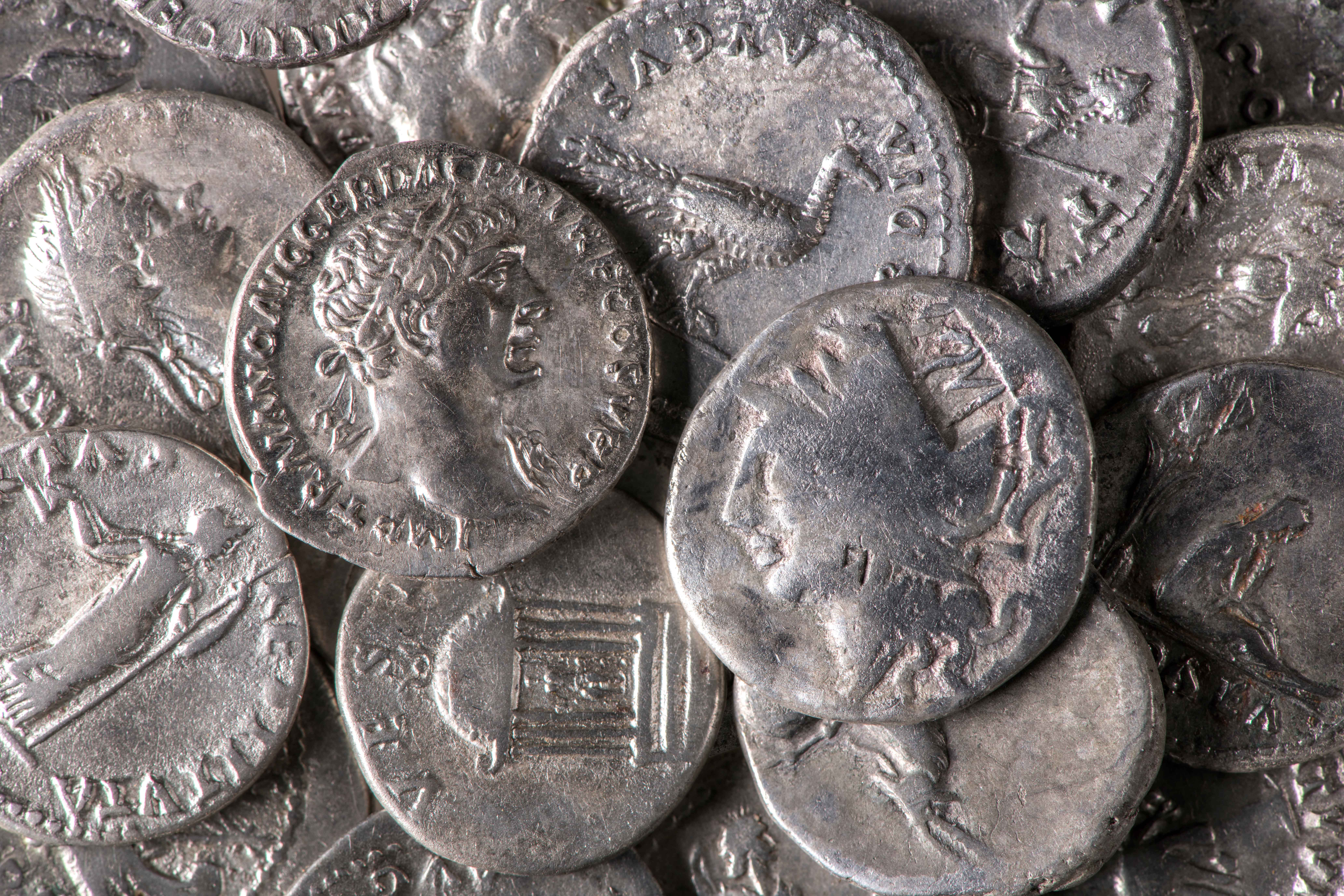 The oldest coin in the hoard was minted by the Roman Republic in 148 B.C., so it was almost 300 years old when it was buried. Even the oldest and most heavily worn coins were still valid when they went underground. One bears a countermark confirming that it retained the value of a silver denarius despite its many decades in circulation.
During the excavations, a concentration of numerous coins quickly became apparent. To better examine the find, it was recovered as a block and transported to the restoration workshop of the LVR State Museum in Bonn. There, the block of earth containing the coins was first X-rayed. This allowed valuable insights to be gained before the coins were unearthed. Fragments of a ceramic pot and remnants of straw were also found. “The coins were probably originally buried in a pot lined with straw,” says Rahel Otte. However, years of agricultural activity destroyed the container, and the coins were scattered in the soil. “But we were able to find and recover all the coins during our investigations.”
The hoard has now gone on display at the LVR State Museum in Bonn where it is being presented to the 300 archaeologists from all over Germany who are currently in town for the annual conference of the West and South German Association for Archaeological Research.
Roman borders (‘limines’) in Germany were the rivers Rhine (with e.g. ‘Colonia Agrippina’/ Cologne) and the Danube (with e.g. the Aurelian ‘Castra Regina’/ Regensburg), plus the river Main and the ‘Upper Germanic-Rhaetian Limes’, a 550km land section in between.
Servicemen were traditionally rewarded with ‘villae rusticae’ and farmland nearby, but the times were apparently not exactly quiet. Roughly a century before the coins were buried, the Rhenish ‘Batavian revolt’ had to be crushed using a full third of Roman military power.
Batavians, however, were successfully integrated and deployed to northern Britain (cf. Vindolanda tablet 628, they ran out of beer, “cervisiam non habunt!”). Around 175AD the Marcomannic Wars kicked in. At the Danube, castrae were destroyed and farmers scalped!
At Wesseling was a similar ‘villa rustica’, and the owner of which likely owned those coins, while near Regensburg, there as a similar hoard found, the ‘coin hoard of Kumpfmühl’ (the fortification nearby destroyed by 175AD): 25 gold coins, 610 silver denarii, and jewelry.