1000-year-old sarcophagus found in Odense

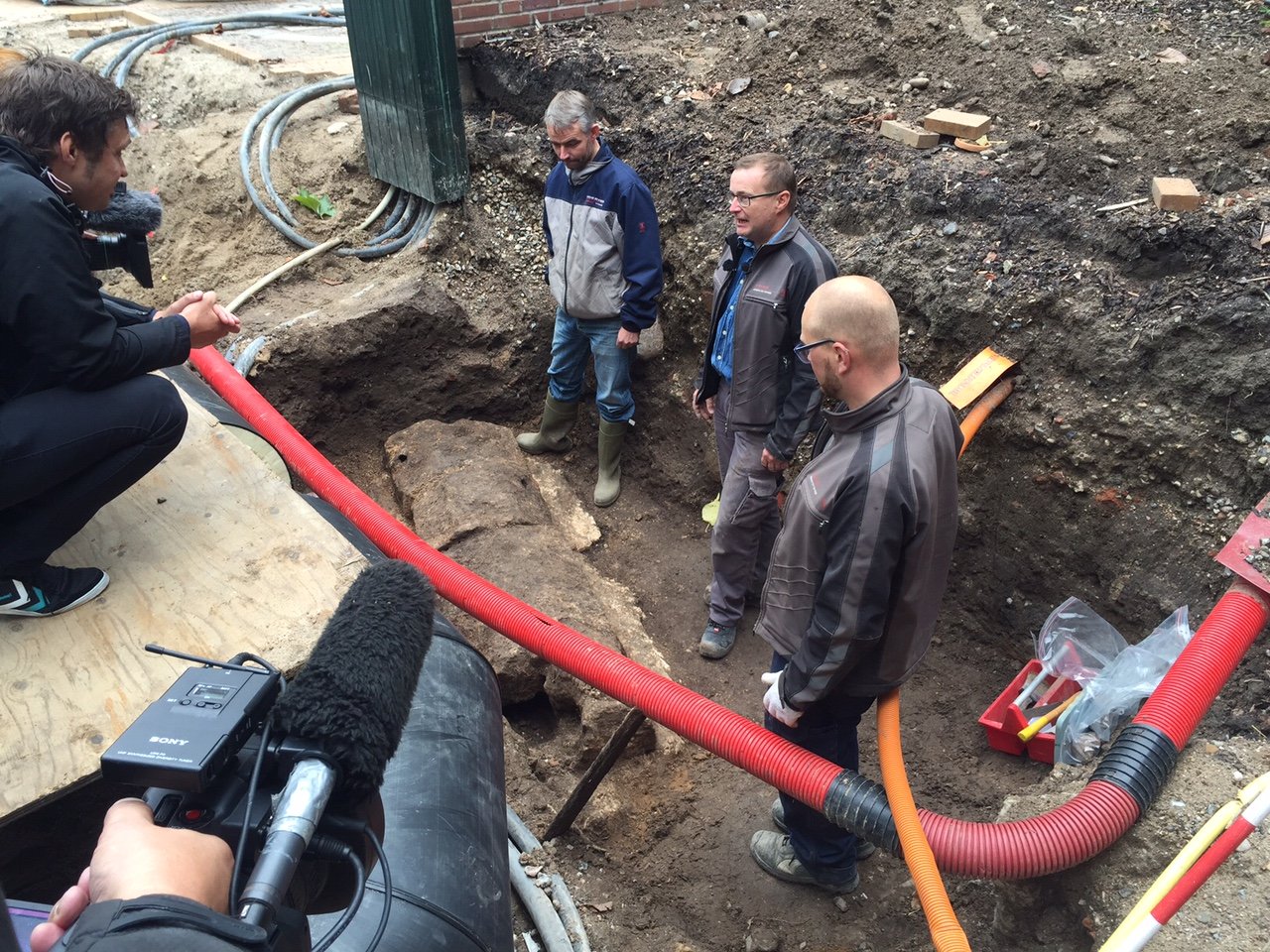
Odense, Denmark, land of wonderous barrels of poop, has produced another treasure from deep within its bowels: an 11th century stone sarcophagus. The coffin was found on the site of the small timber church of St. Alban’s Priory where King Canute IV of Denmark, later canonized a saint, was assassinated by rebels in 1086. A light rail project was slated to cut through the area known to be the site of the historically important church, so archaeologists from the Odense City Museums surveyed it first. They were hoping to find out more about the church at the time of the murder of King Canute. Instead they found a sarcophagus on Wednesday, September 16th.

Cameras were present to capture the opening of the sarcophagus.

[youtube=https://youtu.be/9ti44iINIbM&w=430]

When they removed the heavy four-part limestone lid, archaeologists found an articulated skeleton, although only the leg bones were immediately visible because the upper body was covered in earth that had filled the top half of the sarcophagus through a large hole in the lid. The remains were excavated in situ and found to be the skeleton of a man about 30 years old of exceptional height. He was 187 centimeters tall, or just a hair short of six feet and two inches. The man was buried with a miniature eucharist set, a plate for the host and a chalice for the wine, near his hip.

The presence of communion gear suggests the man was a cleric, and the expense of a heavy limestone sarcophagus indicates he held an important ecclesiastical position. He was also buried just in front of the altar, the most honored placement in the church. Museum archaeologists believe the most likely candidate is Eilbert, Bishop of Odense from around 1048 to 1072. If it does prove to be Eilbert in that sarcophagus, it will be the oldest bishop’s grave discovered in northern Europe.
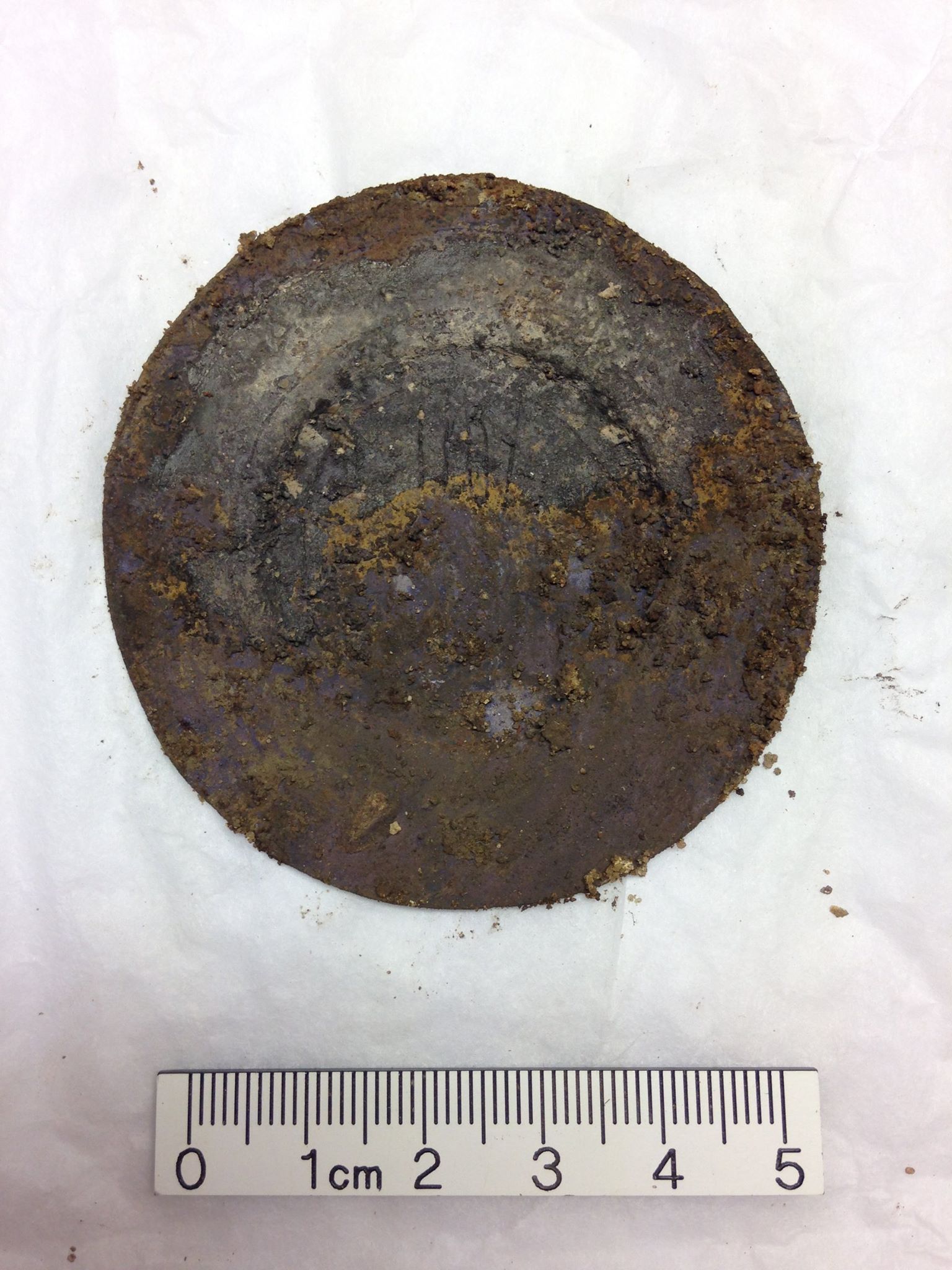
The skeletal remains and artifacts have been moved to the University of Southern Denmark for study. An X-ray of the disk revealed an inscription: “the Lord’s right (hand) has created strength amen.” It is likely a reference to Psalms 118:16, “The right hand of the LORD is exalted: the right hand of the LORD doeth valiantly.” It doesn’t help identify the deceased, but it confirms the disk is a communion plate.

We know the remains are not those of Canute even though he was buried there for a brief time. Canute’s ambition to invade England and wrest the throne from the ailing William the Conqueror (as Canute the Great’s great-grandnephew, Canute IV actually had a halfway decent claim to the throne, unlike William who was a) illegitimate, and b) only Edward the Confessor’s first cousin once removed) and his attempts to centralize power resulted in heavy tax and tithe increases. Peasants and noble in Jutland joined forces and rebelled against Canute’s taxes, chasing him to Odense where he and his brother Benedict took sanctuary in the church. The rebels broke in and ganged up on Benedict, slashing him to death. Canute, standing unarmed and unresisting in front of the altar, was struck with a spear or a sword (chroniclers differ on the point) and was struck on the head with a stone thrown through the window.
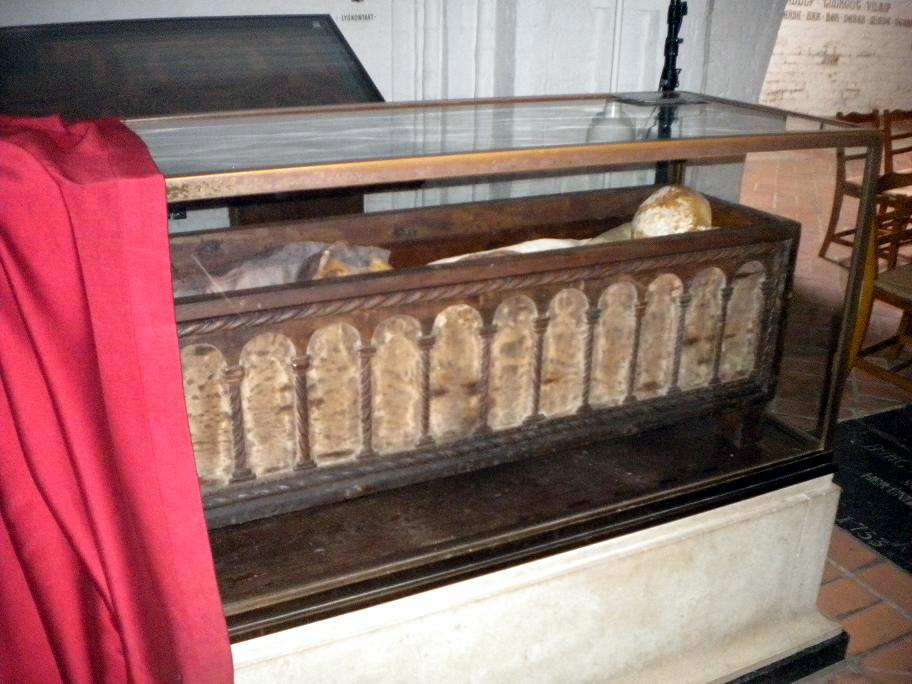
He and his brother were buried in the church where they fell. Miraculous occurrences at the church and years of famine that were seen as divine punishment for the martyrdom of Canute followed and a cult quickly grew up around him. In 1101, just 15 years after Canute’s death, Pope Paschal II canonized him. Canute was the first Danish saint and became patron saint of Denmark. A new stone church was built to accommodate the saint’s relics even before they were official saint’s relics. Canute and Benedict’s bones were moved to St. Canute’s Cathedral just over a decade after his death.

Further analysis of the St. Alban’s bones will hopefully answer some questions, like the cause of death and his country of origin. Bishop Eilbert was from Bremen which is about 260 miles south of Odense. I don’t know if stable isotope analysis can differentiate between northern Germany and Denmark. Researchers will also attempt to extract DNA which will give us information about his appearance and heritage.
Olmec relief looted 45 years ago found in France

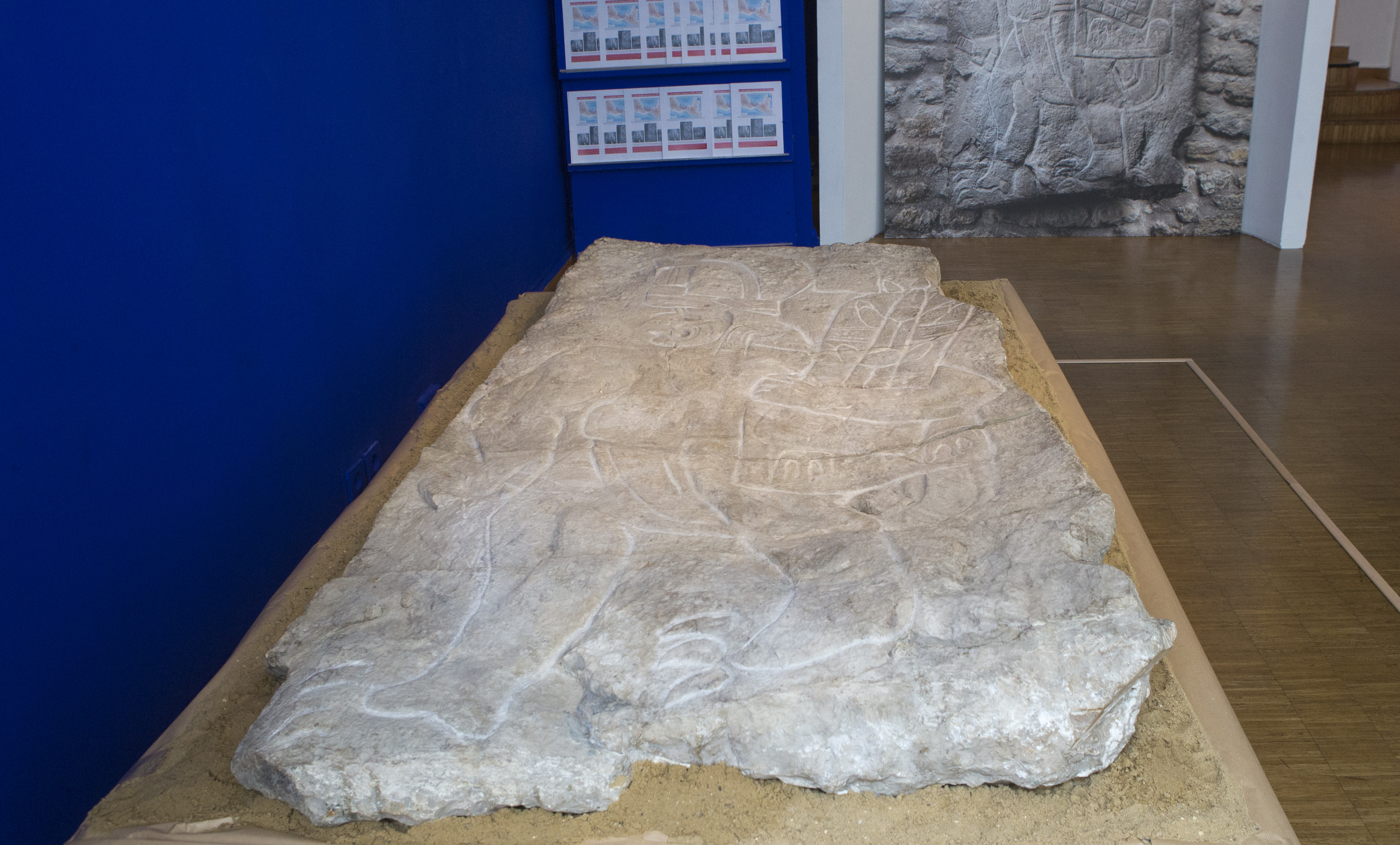
An Olmec relief chiselled off a rock face in the southern Mexican state of Chiapas in the early 70s has surfaced in France and was officially returned to Mexico in a ceremony at the Mexican Embassy in Paris.

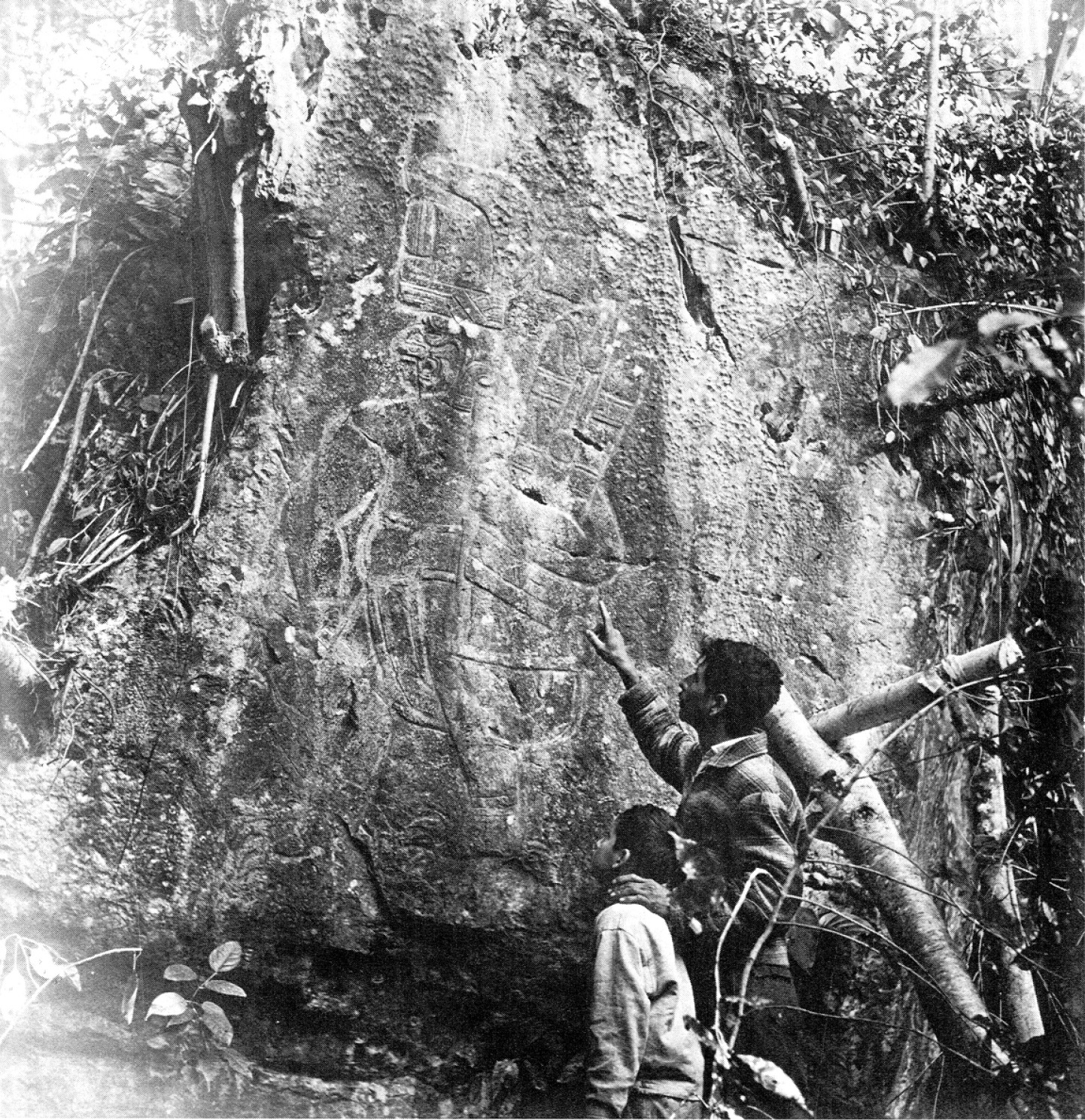
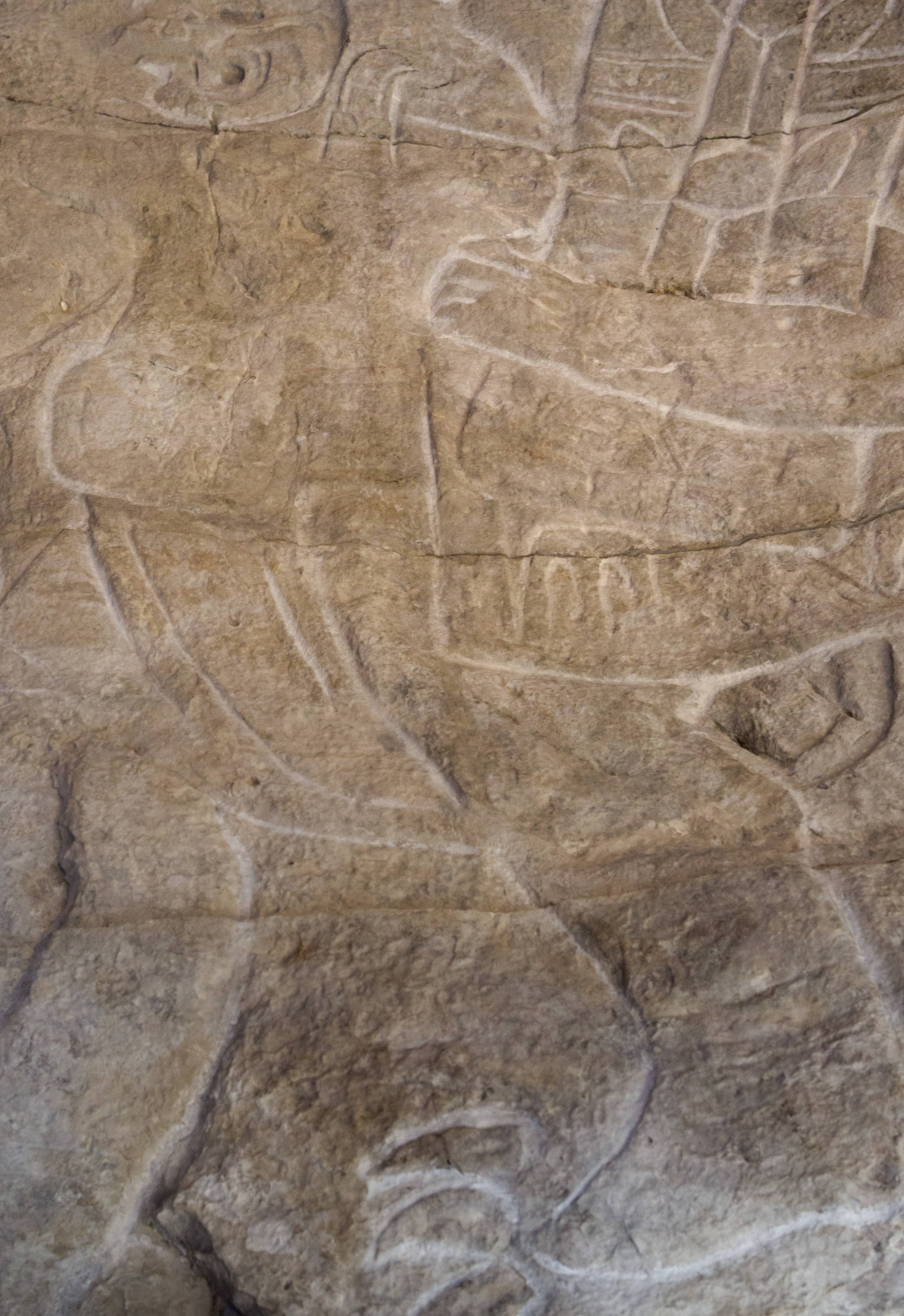
The relief was discovered at the archaeological site of Xoc and dates to between 1,150 and 900 B.C. It’s 220 centimeters (7’2″) high, 115 cm (3’9″) wide and about 30 cm (one foot) deep. It depicts a man in profile, except for the chest an arms which face front. He has some characteristic Olmec features — thick legs, no neck, small feet, a very high headdress with a crossed band decoration — and some that are very rarely seen in Olmec art, like the round earplug with a curved tassel hanging from it and the sharp talons on his feet. He is clad in breechcloth tied by a large square element. He carries a baton or a knife in his right hand and a bundle in the crook of his right arm that is likely maize.

It was first discovered in the 1920s, but its remote location and the sparsity of information kept people from exploring it any detail. A few archaeologists saw it, like B. Traven, author of The Treasure of the Sierra Madre which 20 years later would become an iconic Oscar-winning movie by John Houston starring Humphrey Bogart, who photographed it in the 20s. Thirty years later the relief was photographed by Wolfgang Cordan, a German-born poet, fighter in the Dutch resistance against Nazi occupation and anthropologist who roamed the ancient sites of Chiapas in the 1950s and together with William Brito Sansores devised the (now largely discredited) Mérida System of deciphering Maya hieroglyphics. Cordan published the picture in a 1964 book about his Mexican travels, but was deliberately vague on its location.

Because very few traces of an Olmec presence have been found in the hot, humid jungles of the eastern highlands of Chiapas and all of the previous finds were small, portable artifacts, the relief was of great archaeological significance. In 1968 Susanna Ekholm-Miller of the New World Archaeological Foundation undertook to locate the relief in Cordan’s picture. She found a reference in a 1957 survey narrowing down the Xoc site to somewhere between the towns of La Martinica and El Porvenir. She took a puddle jumper to the El Porvenir landing strip and quickly discovered that the locals knew about the site and the relief. An hour-and-a-half horseback ride later, she was standing in front of the rock carving.

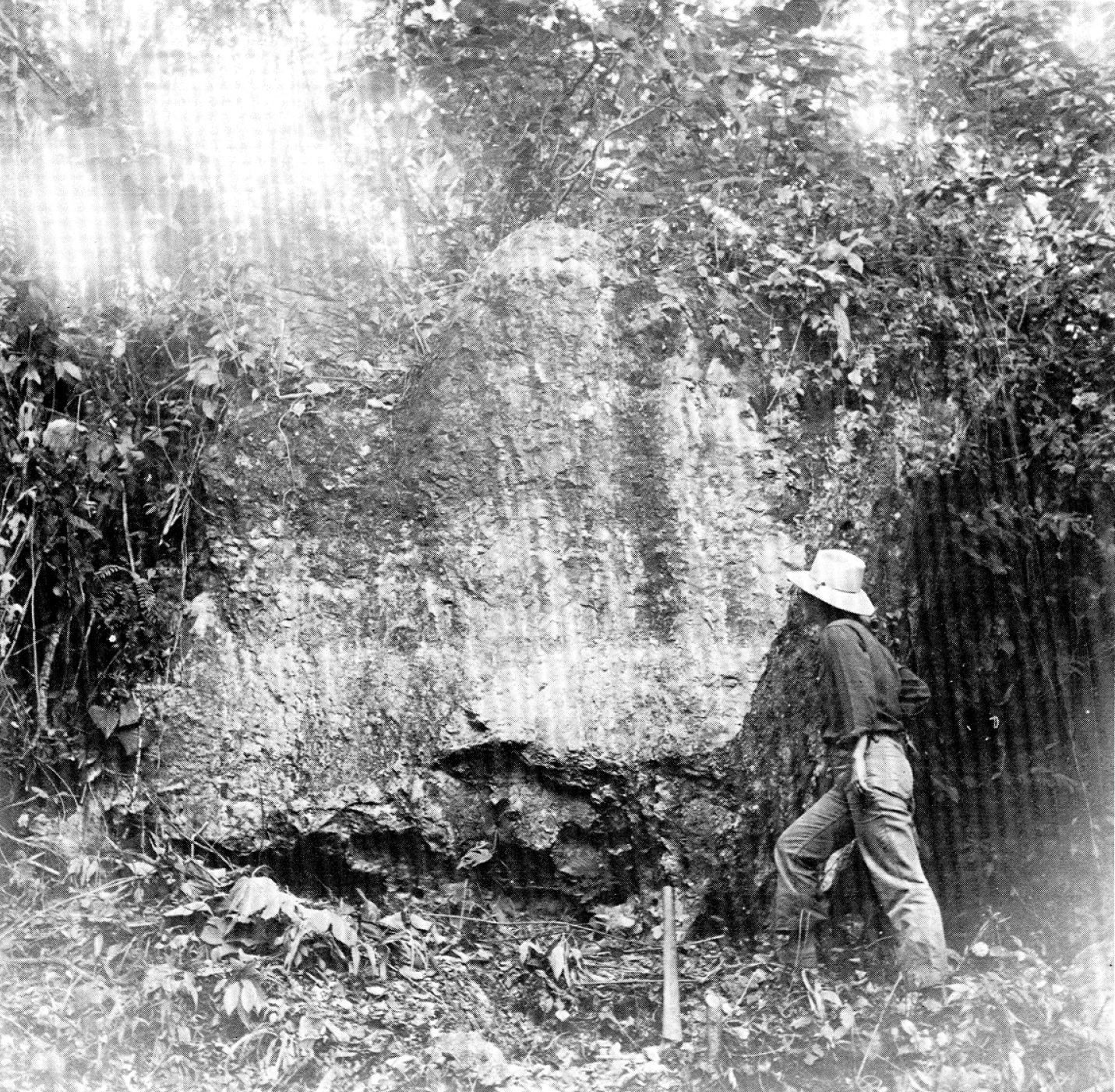
Ekholm-Miller’s expedition was a brief one. Her field director approved a two-day trip, so she had less than two days to clean, photograph and map the site before flying back out. In July of 1972, she got approval for a second, longer trip with a larger team. The elements conspired to make it a much harder and longer slog this time giving them only a day and a half to work on the site. When they arrived, they found to their horror that the relief had been looted.

From her 1973 paper on the find, The Olmec Rock Carving at Xoc, Chiapas, Mexico:

[I]t is impossible to describe the shock and anger we felt when we approached the nearby rock face where previously Eduardo Martinez and I had viewed the magnificent Olmec figure. The carving was no longer there. It had been brutally and completely removed. Apparently it was chiselled off the rock face, probably piece by piece. At least a 30 cm-thick layer of the surface had been removed; a huge pile of fragments of the stone lay at its base, though we could find none that bore any definite carving. We assume that the carved surface is on its way to the antiquities market, undoubtedly in many pieces, as the rock had fissures in it besides being of a limestone which fractures easily.

In the hope that the unique and priceless artifact might someday be found again, Ekholm-Miller published all her photographs of the relief. They were used to make copies for scholars to study. Though her paper was widely disseminated and the lost relief was very famous among pre-Columbian experts, neither hide nor hair of it was seen or even heard of in the past 45 years.

Now that the relief has been recovered, we know that it was cut into four pieces for transportation. When it arrived in France is unknown, but it was soon after the theft. The previous “owners” inherited it and had no idea what it was or where it came from. They contacted pre-Columbian art expert Jacques Blazy and Drouot auctioneer Jean-Claude Binoche to have it appraised. Even stashed in a dark basement, cut into four pieces and filthy, the relief was immediately recognized by the experts, thanks to Ekholm-Miller’s work. They told the family that the piece could not be legally sold.

Blazy and Binoche took the relief to a conservator to have it cleaned and then had it authenticated by preeminent archaeologist Dominique Michelet. One the authenticity of the piece was confirmed, they contacted the Mexican Embassy and arranged for the formal repatriation ceremony.

Medieval bones found under 1950’s Westminster Abbey lavoratory

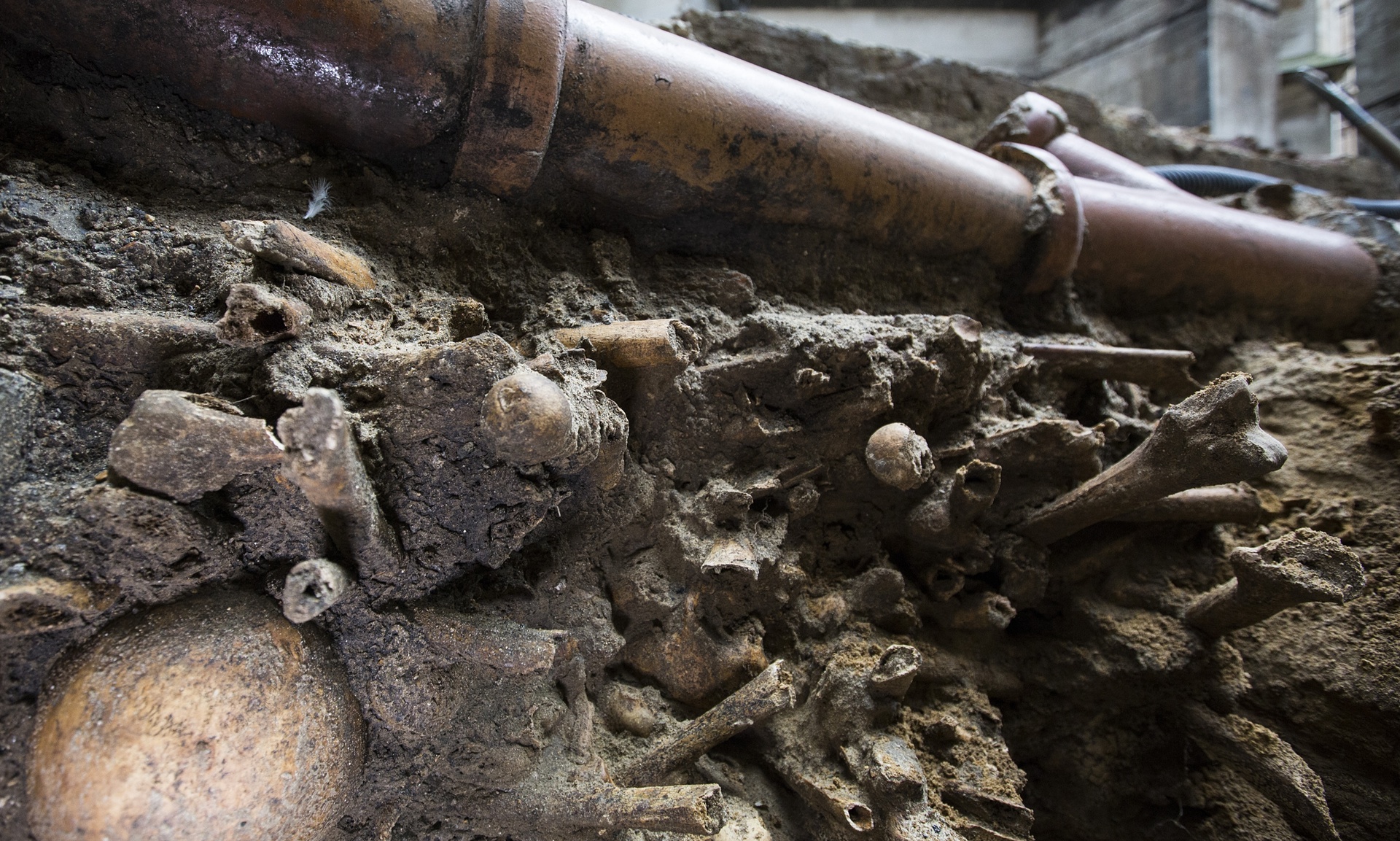
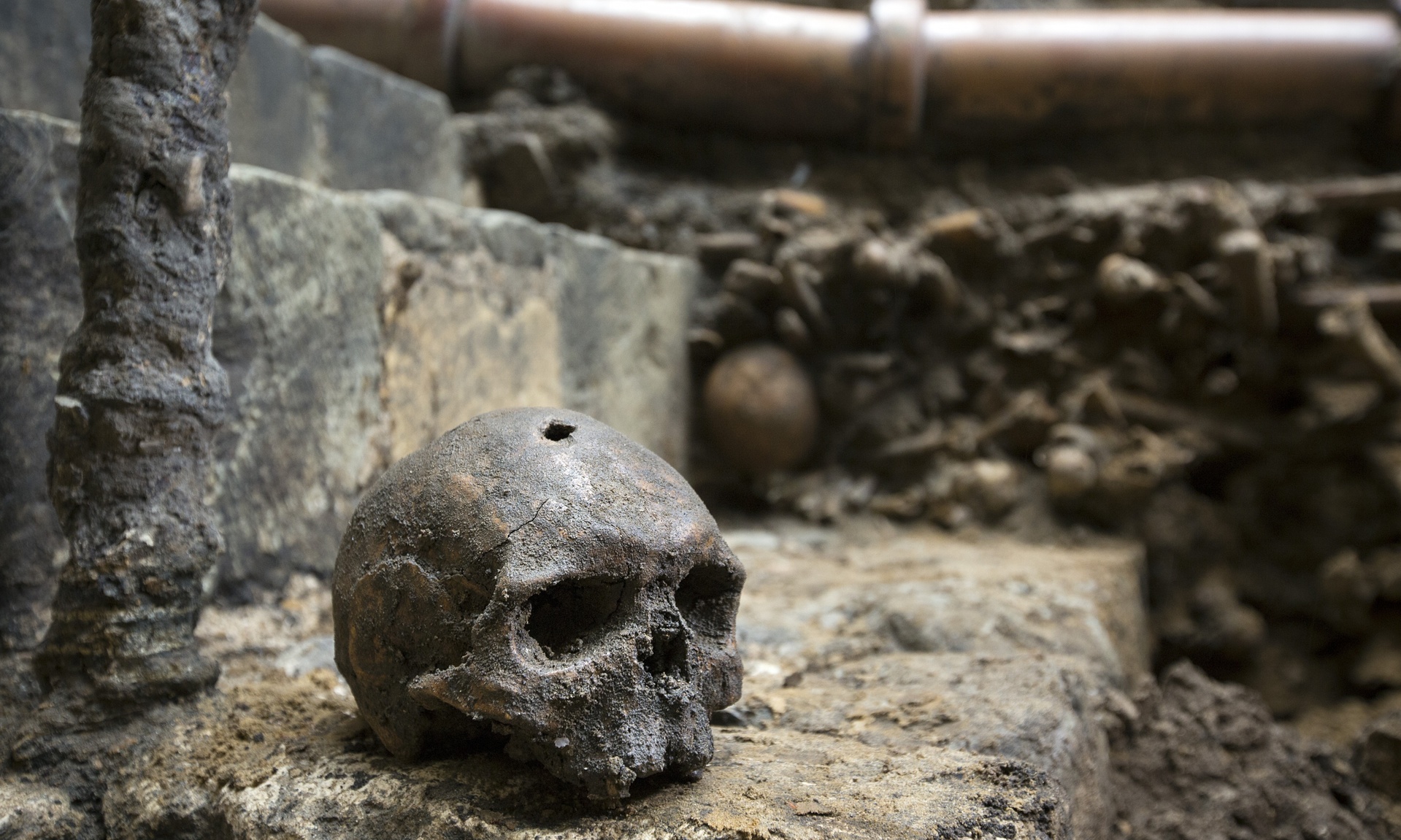
Demolition of a 1950s block of bathrooms outside Westminster Abbey’s Poet’s Corner has revealed scores of human skeletal remains dating to the 11th and early 12th century. The lavatory block is being removed to make way for the Abbey’s first new tower in almost 300 years, a subtle addition nestled behind the buttresses of the chapter house that will provide new and improved access to the Abbey’s attic (triforium) museum. Underneath Victorian drainage pipes, archaeologists found bones from at least 50 people, many of them disarticulated and stacked like cord wood, others in graves lined with chalk slabs in Anglo-Saxon/early Norman style, plus the remains of a three-year-old child buried in a wooden coffin and one adult man buried in an expensive coffin of Northamptonshire Barnack stone.

The child is too young to have been pledged to the monastery or to have worked there, and the fact that he or she was buried in a wooden coffin indicates a high social status. The bones aren’t preserved enough to determine sex by visual examination. The adult man is missing his skull. His stone coffin was moved to its current location by work crews under Sir George Gilbert Scott, the Gothic Revivalist architect and Surveyor to the Fabric at Westminster Abbey who restored the 13th century chapter house in the 1860s. Scott had the coffin moved because it would have blocked a new window in the chapter house and had it built into a brick wall. The coffin bears the tell-tale signs of interference from this period. A corner of the lid is broken, likely the result of workers lifting it to have a look inside. The skull was probably removed at that time.

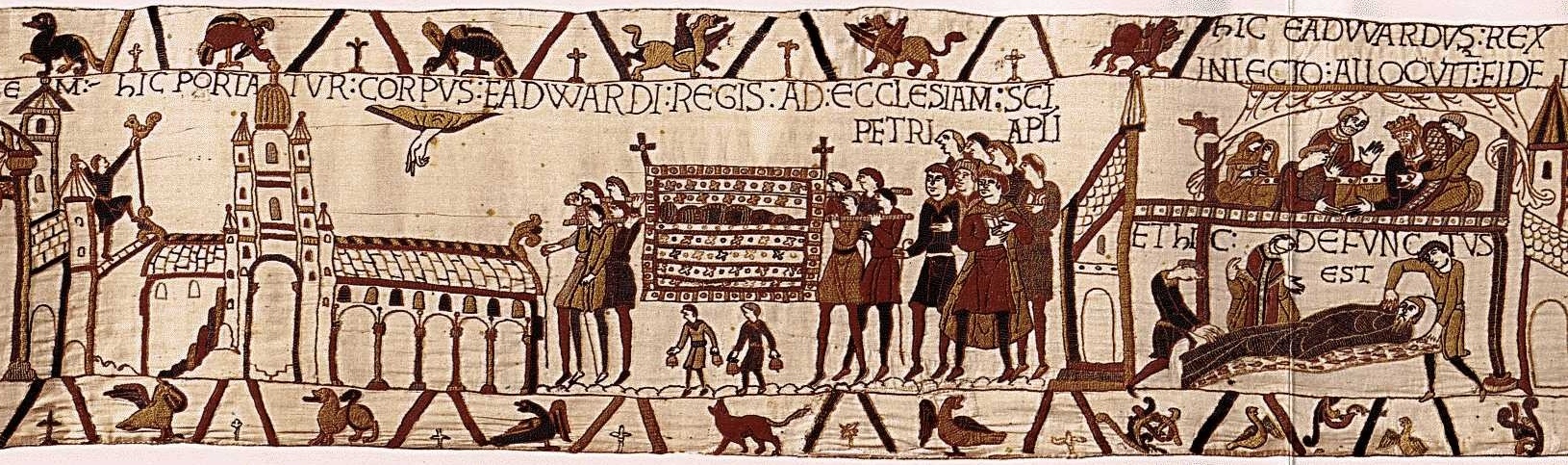
The original Romanesque church that would become Westminster Abbey was built by saint and king Edward the Confessor as part of an expansion of the Benedictine monastery on the site. He dedicated it to Saint Peter the Apostle but it was known as the “west minster” in contrast to St. Paul’s Cathedral which was London’s minster to the east. St. Peter’s was completed in 1065 only days before Edward’s death. He was buried in front of the high altar.

It was King Henry III, a highly devout man who took Edward the Confessor as his patron saint, who decided to replace Edward’s church with a new one in the glamorous Gothic style pioneered by Abbot Suger in the Church of Saint-Denis in the mid-12th century. Henry envisioned the soaring new church as a more majestic shrine for Edward’s bones and those of England’s kings and queens. The Romanesque church was demolished in 1245 and construction began. Saint Edward’s remains were translated to the new shrine on October 13th, 1269. By the time Henry died in 1272, the apse and radiating chapels of the eastern end, the north and south transepts and choirs were completed.

The stacking of the bones was the work of Henry III’s construction team.

Paw Jorgensen, who supervised the excavation by specialist firm Pre-Construct Archaeology, said they had originally been buried in a small burial ground just outside the south transept walls. The highest status individuals, the kings, queens and most senior clergy, would have been buried within the church itself, but the newly found remains were close enough to indicate they probably were those of senior clergy. When Henry demolished Edward the Confessor’s church and began his own massive construction project, the land was dug up, and they were all reburied in a layer under the surface of what was the 13th-century masons’ yard, littered with chips of the stone used to build a platform to take the enormous weight of the new building.

Some of the skulls have small square holes in them which were likely caused by Henry’s workers wielding pickaxes with less than pious care. Even with holes the stacked bones are in quite good condition, much better condition than the chalk-lined graves which have been damaged by leaks in the Victorian drainage pipes. Archaeologists hope laboratory analysis of the bones will pinpoint who they were, their profession, age, diet, health and where they were raised.

Jorgensen says the lavatory block is “built as solidly as a nuclear bunker” making it “a nightmare to demolish.” As the tedious process continues, archaeologists expect to find more bones. As it is, the 50 or so already discovered bring the total number of people known to have been buried in Westminster Abbey to an impressive 3,350. Once the remains have been studied, they will be reburied in the grounds on the church.

Getty and Armenian Church reach agreement over stolen Bible pages

Five years ago, the Western Prelacy of the Armenian Apostolic Church of America filed a $105 million lawsuit against the J. Paul Getty Museum alleging that the museum was wrongfully in possession of seven pages ripped out of the 13th century Bible that belongs to the Church. Now the parties have come to an agreement: the Getty acknowledges that the Armenian Apostolic Church owns the pages; the Church donates the pages to the Getty. This way nothing has to actually move or change hands, but the Getty, which in its initial response to the suit insisted that it had “legal ownership” of the pages and that the lawsuit was “groundless and should be dismissed,” has to admit the Armenian Apostolic Church is the true owner.

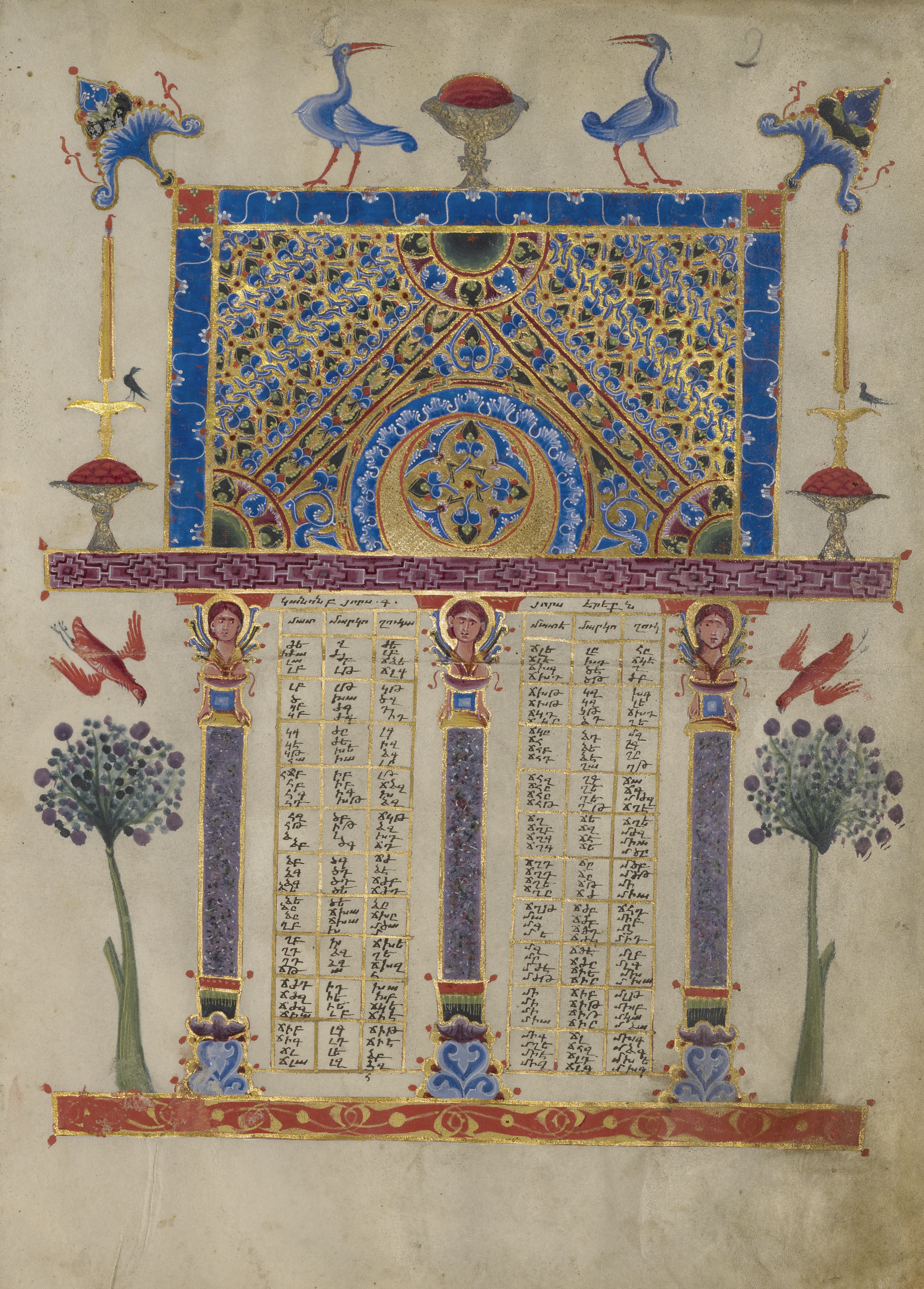
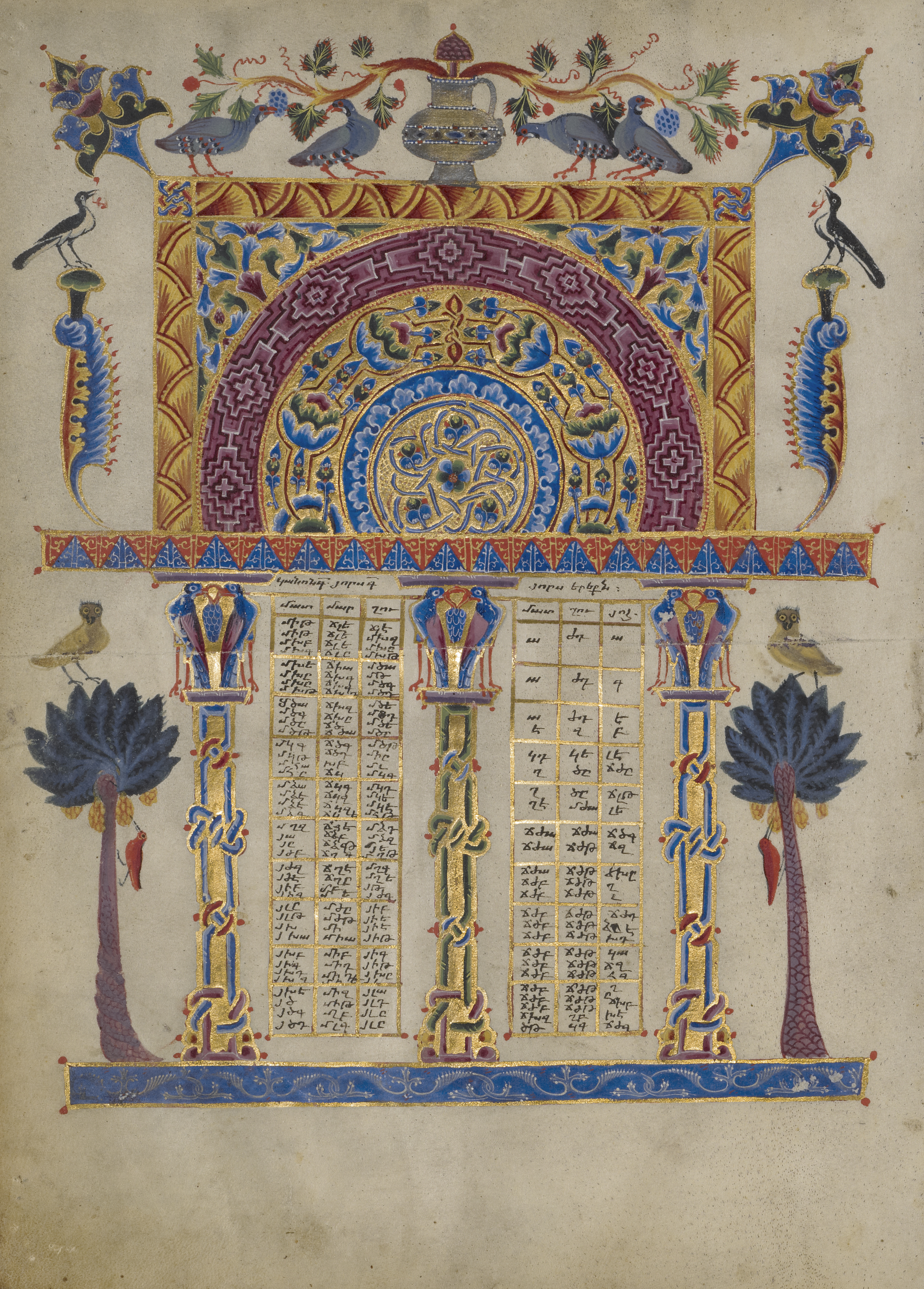
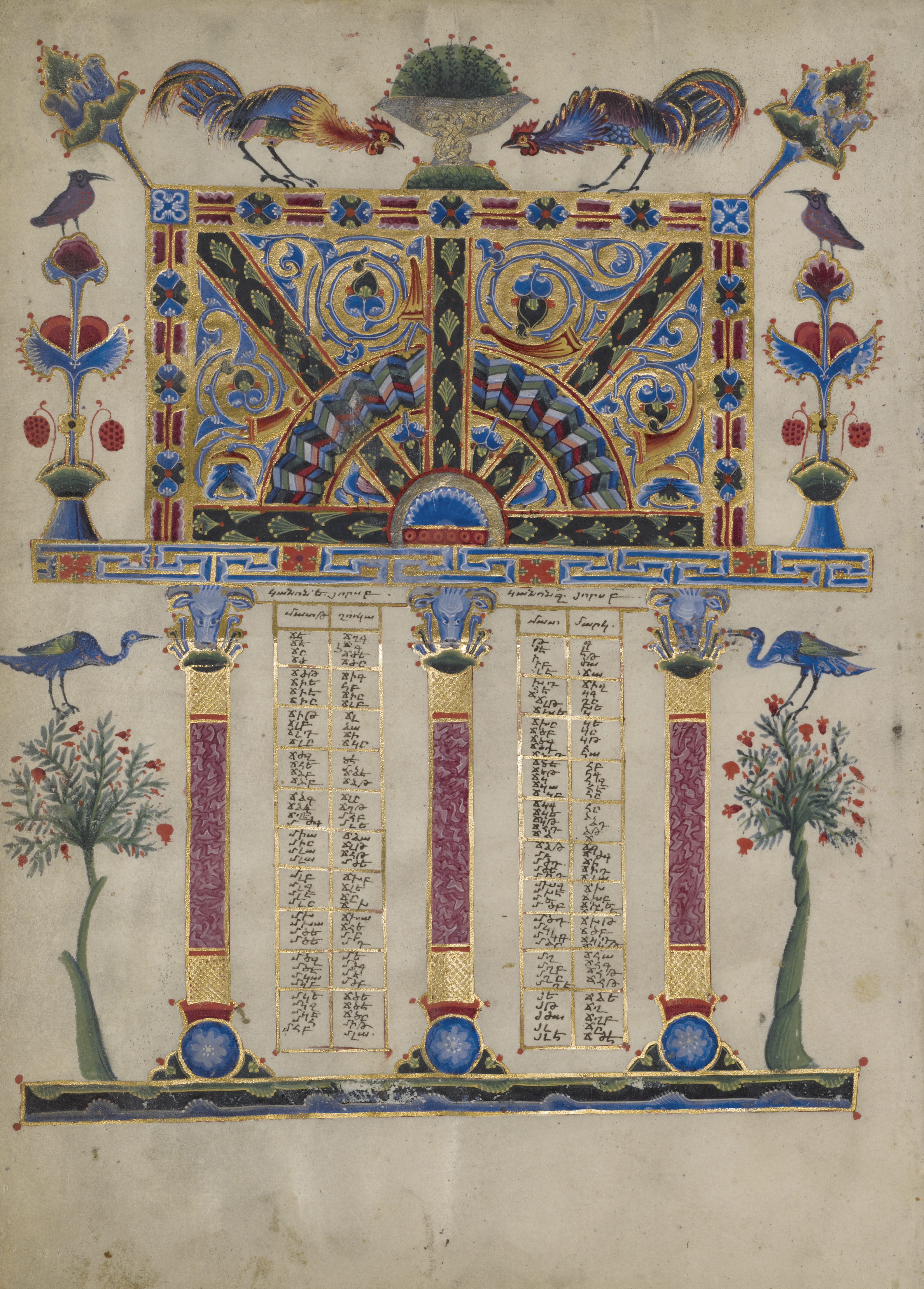
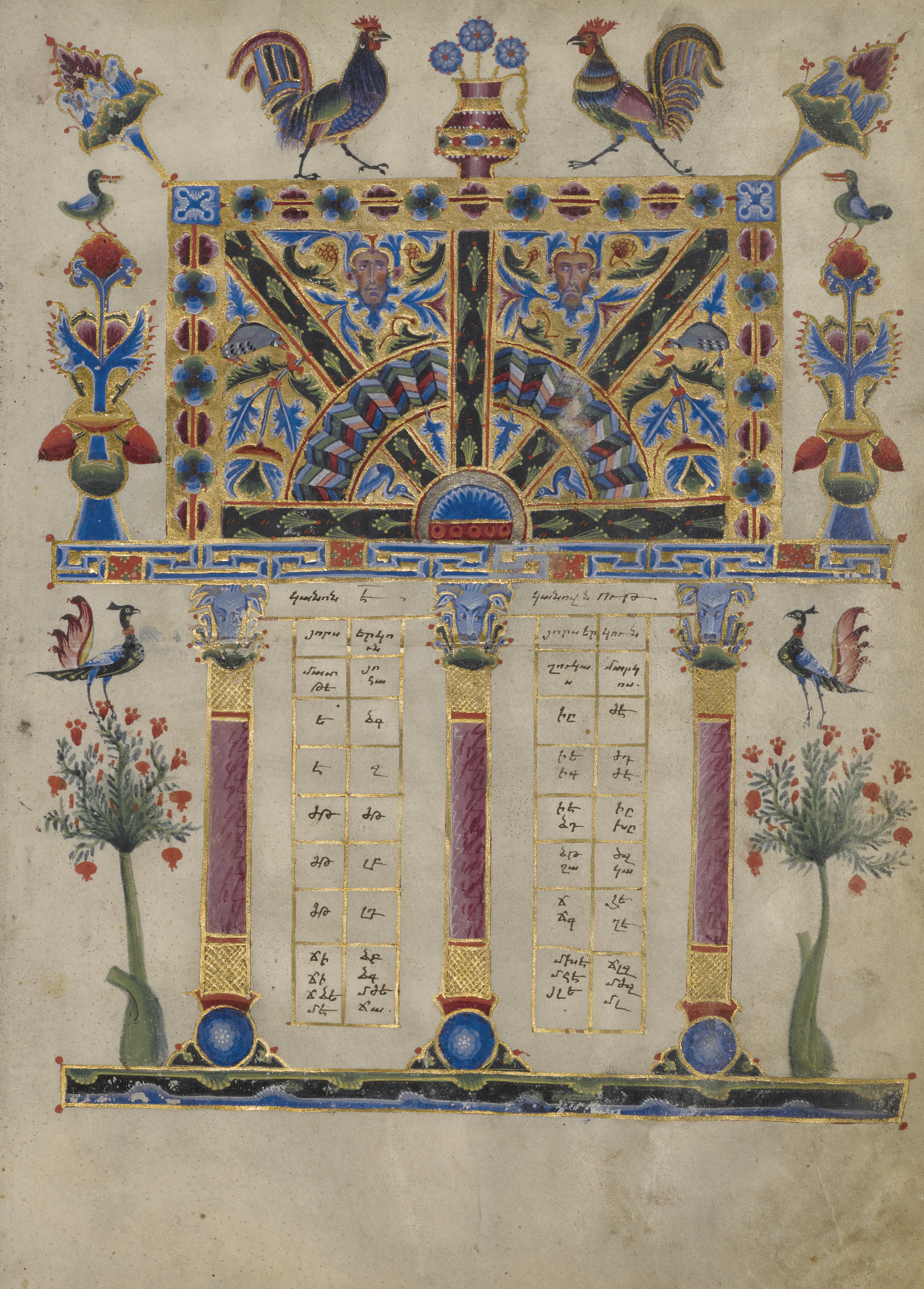
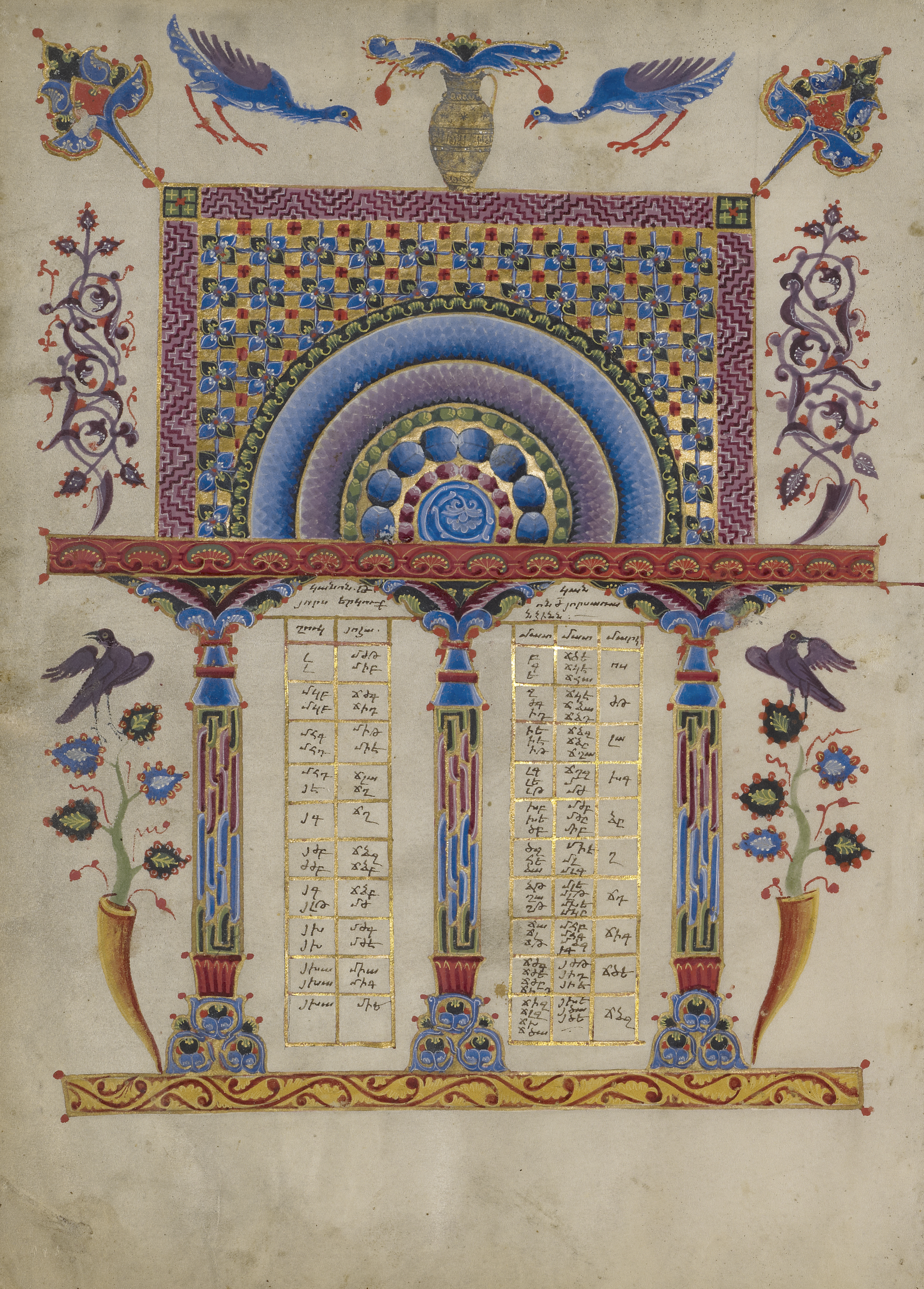
The Zeyt’un Gospels were commissioned in 1256 by the Catholikos, the leader of the Armenian Church, Constantine I. This Bible is the first signed works of T’oros Roslin, scribe and the greatest Armenian illuminator of the Middle Ages. The pages (there are actually eight of them; the Church didn’t know about the last one when it filed) are canon tables, concordances listing passages in the Gospels that describe the same event. The text is therefore sparse, just chapter and verse references.

In the Middle Ages, canon tables were often depicted in an architectural setting, the columns of numbers placed between drawings of literal columns. What makes these pages exceptional is the illumination by T’oros Roslin who decorated each page in a riot of brilliant colors and gold paint. The tables are divided by columns and topped with intricately detailed geometric panels. Birds, vines, trees, vases line the borders and stand proudly atop the header panels. No two pages are the same.

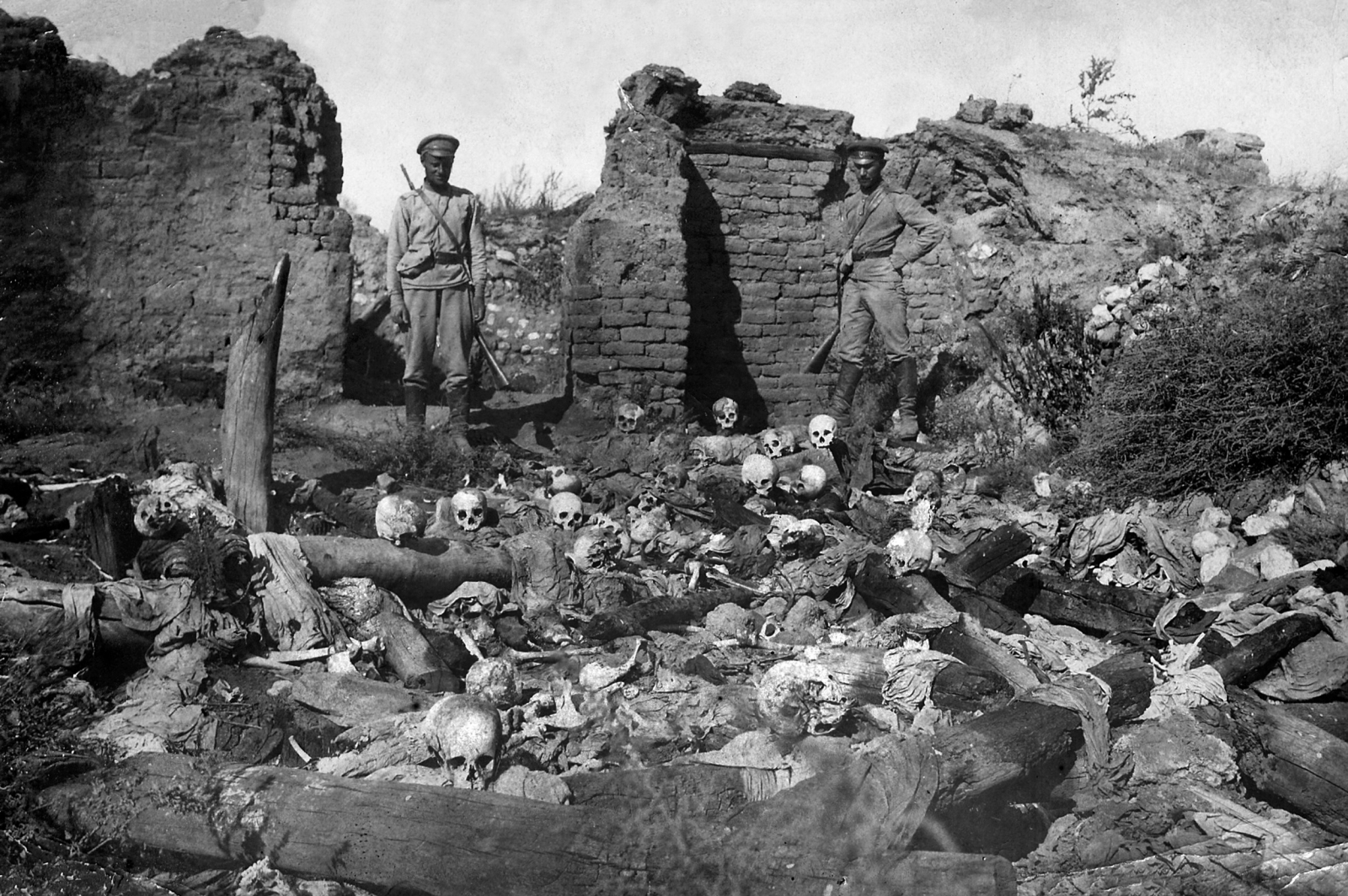
This Bible, in addition to being an irreplaceable Armenian national treasure, is held to be sacred and miraculous. The Zeyt’un Gospels were venerated as having protective powers which is why in 1915 when the Ottoman government began massacring Armenians, the book was carried through every street of Zeyt’un in an attempt to ensure the entire city would be under its divine protection.

Later that year, church officials gave the Bible to a member of the Armenian royal Sourenian family. The Sourenians had connections in the upper echelons of the Ottoman government, so the hope was they wouldn’t be killed or deported and could keep the Gospels safe. They lasted a year before they were deported to Marash in 1916, but they did receive special treatment that allowed them to survive transportation instead of starving to death like so many of their compatriots.

The Sourenian pater familias loaned the Bible to his friend Dr. H. Der Ghazarian for what was supposed to be a few days. At the perfectly wrong time, the Sourenians were unexpectedly deported and lost track of the Zeyt’un Gospels. It seems the book remained in Marash for the duration of World War I. It surfaced there in 1928 but various obstacles kept it out of the Church’s hands until 1948 when the Armenian Patriarch of Istanbul took possession of it and gave it to the Mesrop Mashtots Institute of Ancient Manuscripts in Yerevan, Armenia, for safekeeping and display. The Bible remains there to this day.

The missing pages were spotted in 1948 when the Bible returned from Aleppo after it was authenticated by the same Dr. Ghazarian who had it for a while during the war. Although the Church investigated, it was never able to discover who stole the pages and when. At some point the pages ended up in an anonymous private collection in Watertown, Massachusetts. They were seen in public for the first time since the Genocide when the collector loaned the pages to the Morgan Library for a 1994 exhibition. After that exhibition, the Getty acquired the pages. Thirteen years later, Armenian attorney Vartkes Yeghiayan who has often represented victims of the Armenian Genocide discovered the pages were at the Getty and alerted the Church. The Getty refused all requests to repatriate the unquestionably stolen pages and the lawsuit ensued.

It seems to me the Church is conceding a great deal for the sake of a statement of historical ownership. There really is no question that the pages were stolen, so why shouldn’t they be reunited with the rest of the Bible?

The following statement from Getty director Timothy Potts irks me:

“That the pages were saved from destruction and conserved in a museum all these years means that these irreplaceable representations of Armenia’s rich artistic heritage have been and will be preserved for future generations.”

The removal of the pages was the destruction. They weren’t “saved.” They were ripped out and sold on the black market, bought by unscrupulous collectors and the Getty. The Bible itself survived a genocide and two world wars and has been conserved in a museum for 67 years. The Getty having taken care of blatantly stolen pages for a decade hardly makes it the heritage-preserving hero of the piece.

The plaintiffs’ attorneys seem happy, at any rate.

“This is a momentous occasion for the Armenian people, coming at a historic time, on the 100th anniversary of the Armenian Genocide. I want to thank the Getty for joining in a solution that recognizes the historical suffering of the Armenian people and that will also allow this Armenian treasure to remain in the museum which has cared for it and made it available to the Armenian and larger community in Los Angeles. We are pleased that both sides arrived at an amicable solution,” said Lee Crawford Boyd, the Brownstein Hyatt Farber Schreck shareholder representing the Western Prelacy of the Armenian Apostolic Church of America. “The sacred Canon Tables are now being recognized as having belonged to the Armenian Church. Together with the Church and the Armenian people, we are thrilled with this outcome.”

No word on whether this on-paper ownership switcheroo was accompanied by some kind of financial settlement.

To learn more about the Armenian Genocide, including primary sources, maps, eye-witness statements, a timeline of events and a collection of horrifying photographs, please visit the website of the Armenian Genocide Museum-Institute.

Intact 4th c. B.C. Samnite tomb found in Pompeii

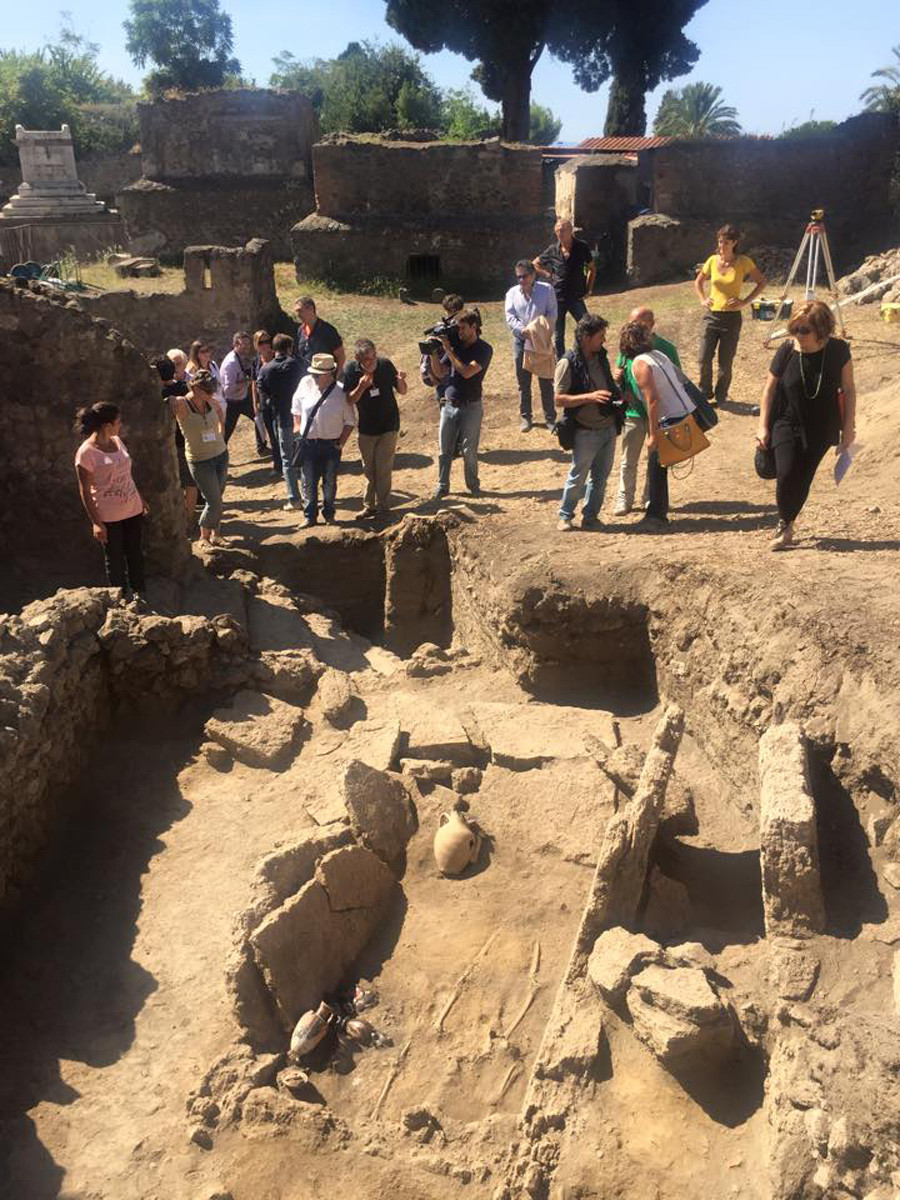
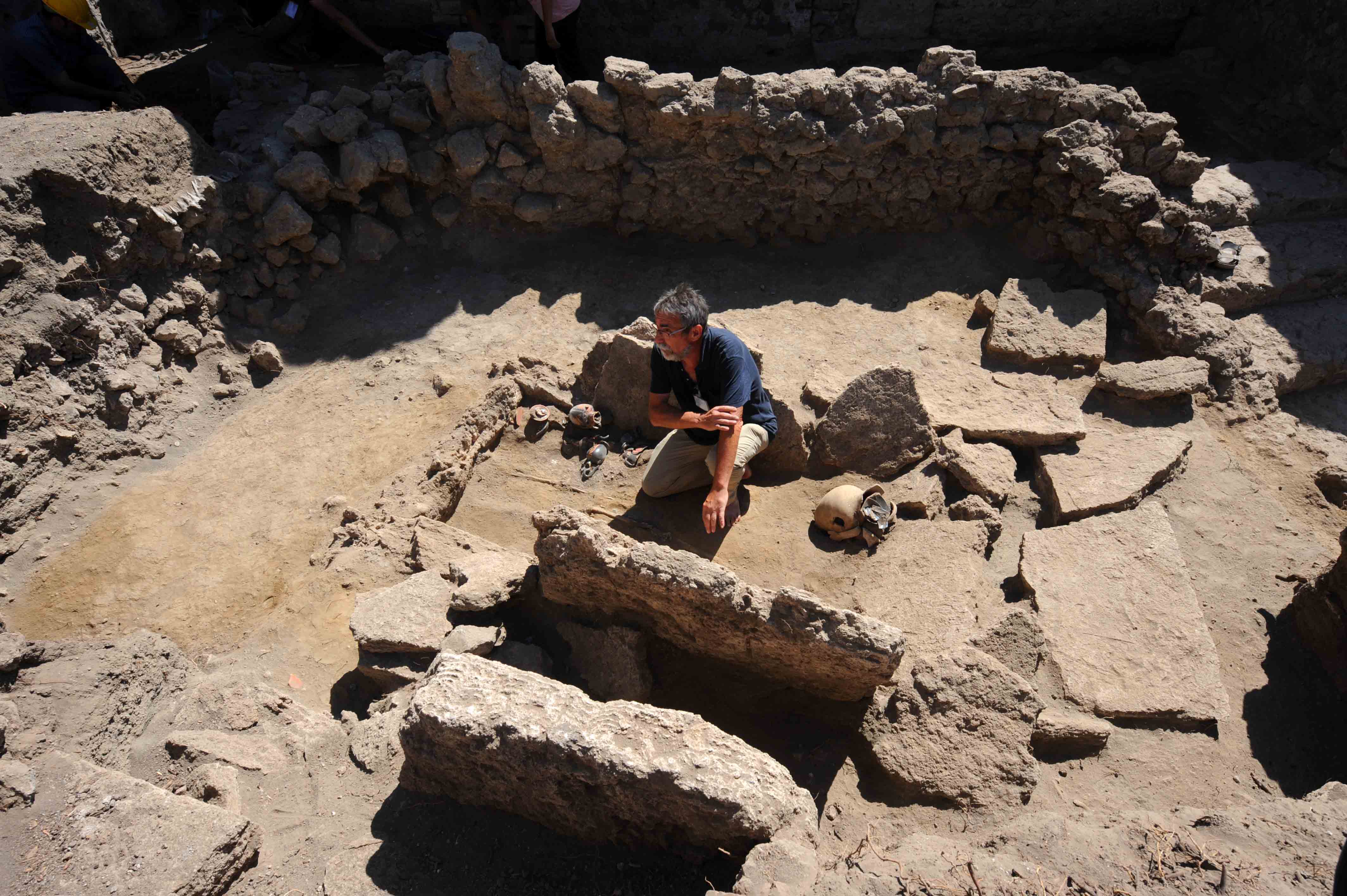
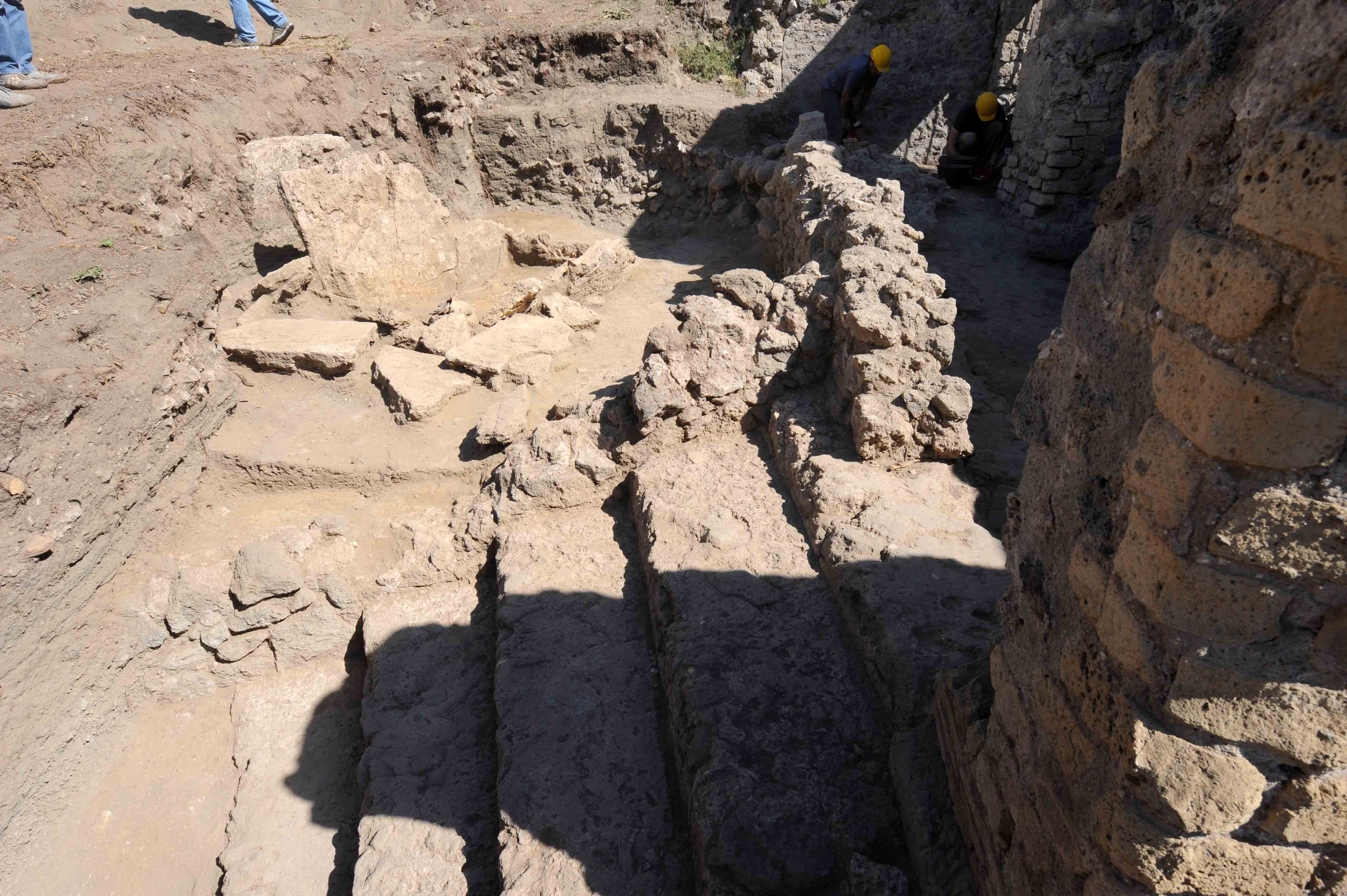
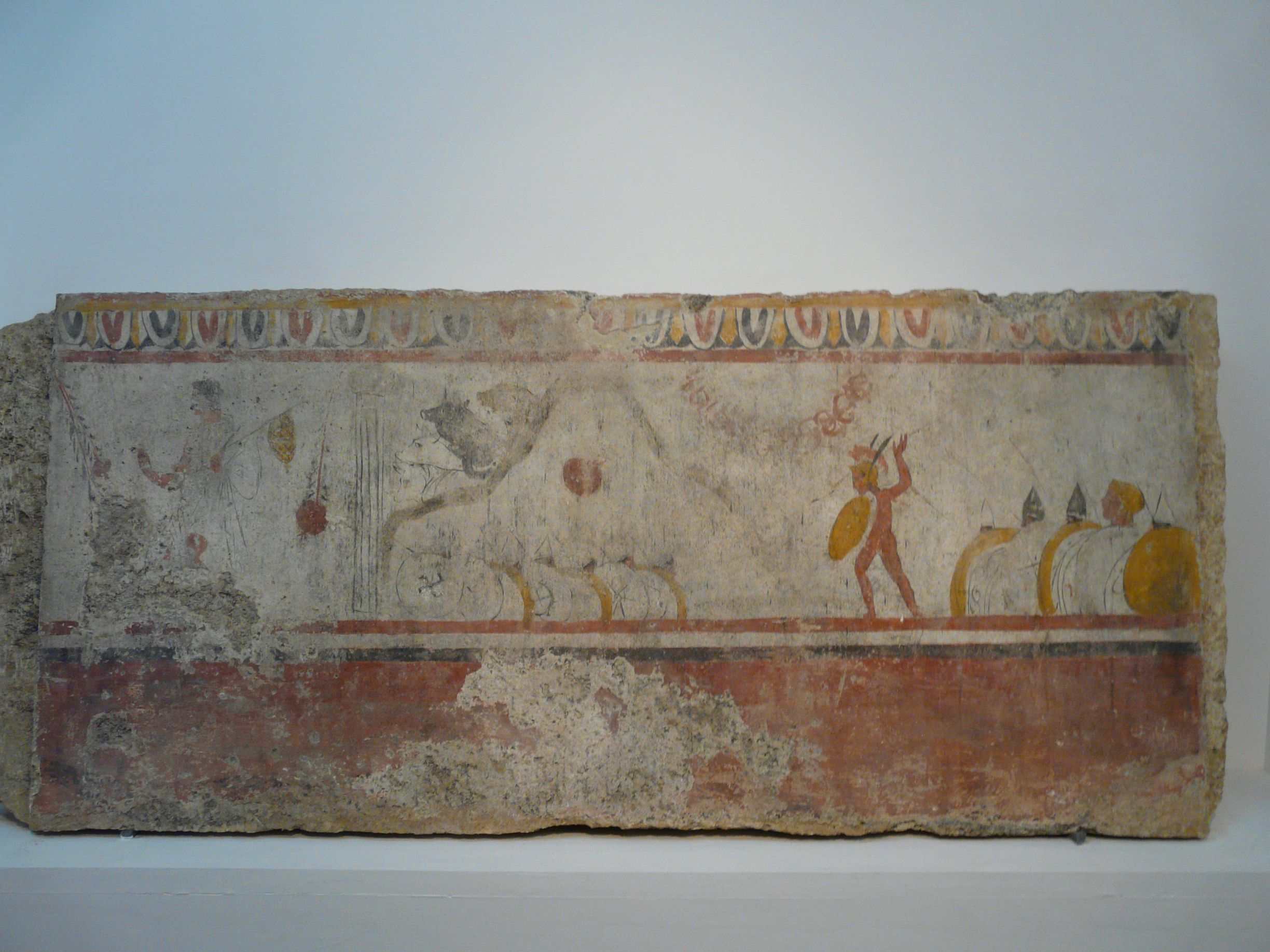
A 4th century B.C. Samnite tomb has been found in the necropolis of Porta Ercolano, a burial ground just outside Pompeii’s northwest gate a few steps from the famous Villa of the Mysteries (see the top left corner on this map). The necropolis was in use from the 1st century B.C. until the city’s destruction on August 24th, 79 A.D. for cremation burials and tombs in keeping with Roman customs at the time, but earlier inhumation burials have been found there as well. They’ve been heavily damaged by construction of the Roman city, Vesuvius, looters, rough excavations and Allied bombing in World War II. That makes this find exceptionally rare because the tomb was discovered intact with an articulated skeleton and all of its grave goods.

The archaeological team from the Jean Bérard Center of Naples wasn’t even looking for graves, even you might think it was considering it was excavating a necropolis. In fact the Porta Ercolano area was what we today would call mixed use with shops, villas and tombs side by side. Archaeologists were exploring the site of a pottery production complex they’ve been excavating for the past four years as part of a research project focusing on artisanship and the economy of Pompeii.

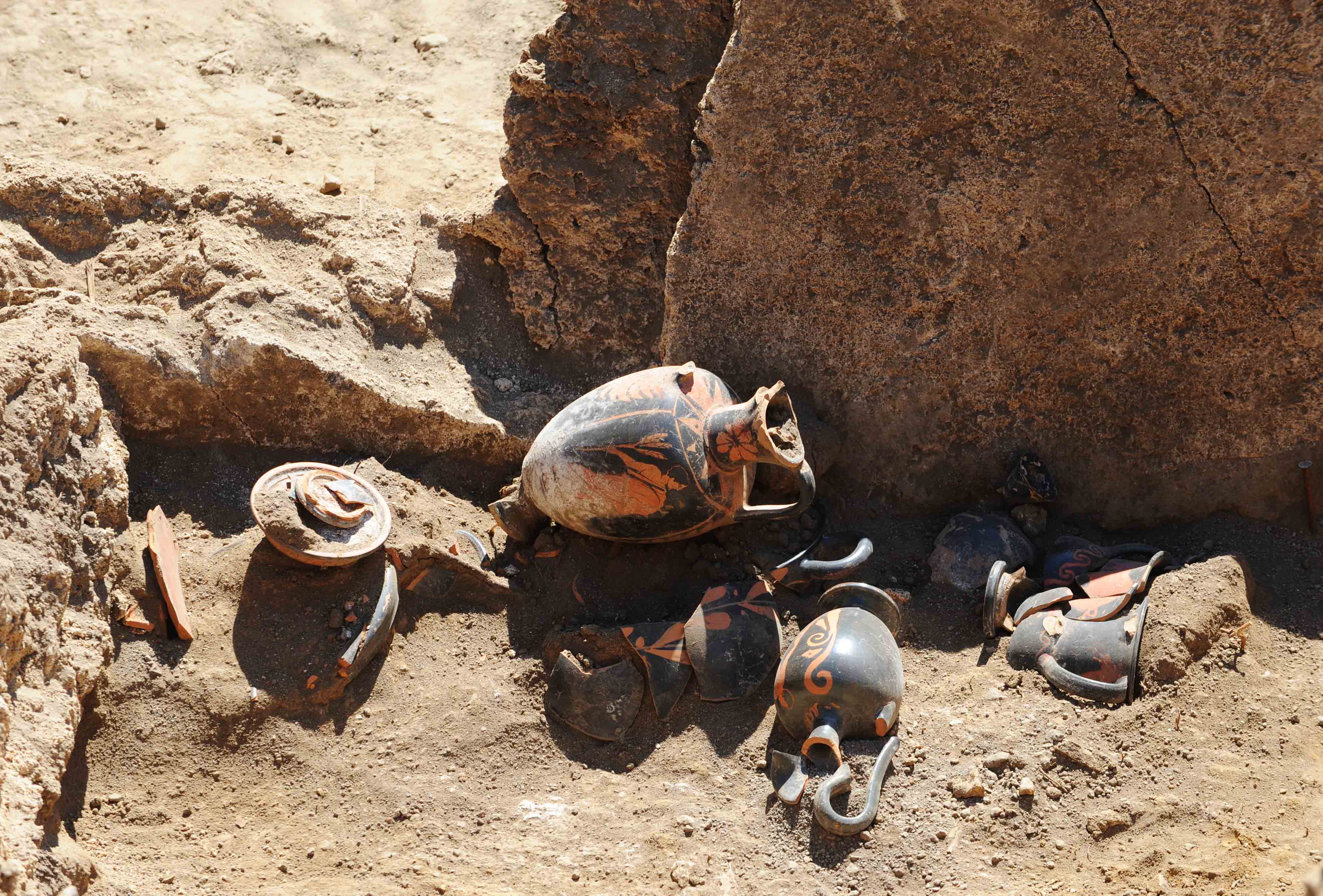
While digging in area that had no surface construction, they unearthed the cyst grave of an adult woman about 35-40 years old with extensive grave goods. She was buried with about 10 vases and urns that date to the middle of the 4th century B.C. The skeletal remains haven’t been radiocarbon dated yet, so the style of the vases is what dates the tomb. The burial type is known in other Samnite centers like Paestum, but has only been recorded in Pompeii from 19th century excavations which leave a lot to be desired, to put it mildly. Finding an intact grave, left completely alone and undamaged by thieves or construction or the bomb that exploded feet away in 1943 leaving burn marks on the stone slabs of the cyst, gives archaeologists the opportunity to study Samnite Pompeii in heretofore impossible depth with all the advantages of modern technology.

“It is an exceptional find for Pompeii because it throws light on the pre-Roman city about which we know so very little,” said Massimo Osanna, the archaeological superintendent of Pompeii. […]

The woman was buried with a series of clay jars, or amphora, which come from other regions of Italy revealing the extent of trade between the Samnites at Pompeii and other areas across the Italian peninsula. The contents of the jars will be analyzed in the weeks to come – but are thought to contain cosmetics, wine and food.

“The burial objects will show us much about the role of women in Samnite society and can provide us with a useful social insight,” Osanna told reporters.

The extraordinary events of its demise and preservation have ensured that Pompeii is thought of exclusively as a Roman city, but in fact only fell under Roman control when it was conquered by the dictator Sulla in 89 B.C. Pompeii was founded around the 7th century B.C. by the Oscans, a central Italic tribe. In the 6th century it was conquered by the Etruscans and in the 5th century by the Samnites. Rome’s influence over Pompeii came at the turn the 3th century B.C. after the Third Samnite War (298-290 B.C.) when the city was forced to accept status as a socium, an associate, of the Roman Republic. The status afforded them political autonomy — it could retain its ancient Oscan language and govern itself — but compelled military alliance.

For two centuries they took it, but when a series of Roman military defeats caused wholesale slaughter of Italian troops and when my namesake, the tribune Marcus Livius Drusus, was assassinated for his efforts in securing Roman citizenship for all of the Italian allied peoples, the Italian socii revolted against Rome in 91 B.C. and Pompeii joined its Italian cousins in the rebellion. Two years later Sulla besieged the city and in 80 B.C. he seeded it with his veterans and made it an official Roman colony.

The tomb dates to the decades just before the Second Samnite War and the humiliating Roman defeat at the Battle of the Caudine Forks (321 B.C.), which was so humiliating there wasn’t even a battle. The Samnites tricked the Roman commanders, co-consuls Titus Veturius Calvinus and Spurius Postumius Albinus, into deploying their army to the relief of the city of Lucera which 10 shepherds had told them was under siege by the forces of Samnite general Gaius Pontius. The shepherds were actually Pontius’ men and Lucera was not besieged by anyone. The Romans took a short cut through the Caudine Forks, a mountain pass that could only be accessed by two very narrow gorges. The Samnites cut off the entrance to the second gorge and when the Romans turned around, they found the Samnites had blocked the first gorge too. With unclimbable mountain cliffs on either side, the Roman army was well and truly screwed and everyone knew it.

To get anyone out alive, Calvinus and Albinus had to surrender unconditionally and the entire army was forced to pass “under the yoke,” (each man had to bow and walk under an ox yoke), the ultimate degradation for ancient soldiers. The consuls then signed a peace treaty that basically gave the Samnites everything they wanted and returned to Rome utterly humiliated. They had to hand in their symbols of office and resign. They even offered their persons to the Samnites to do whatever they wanted with, but Gaius Pontius refused because he thought it was a stratagem to get him to violate the terms of the treaty and render it null and void. Which it probably was.

Excavations are ongoing and archaeologists hope to find other Samnite-era graves around the newly discovered one. Where there’s one tomb, there are often more, but the odds of finding another grave miraculously unharmed by the Allied bomb that fell on this very spot are slim.