
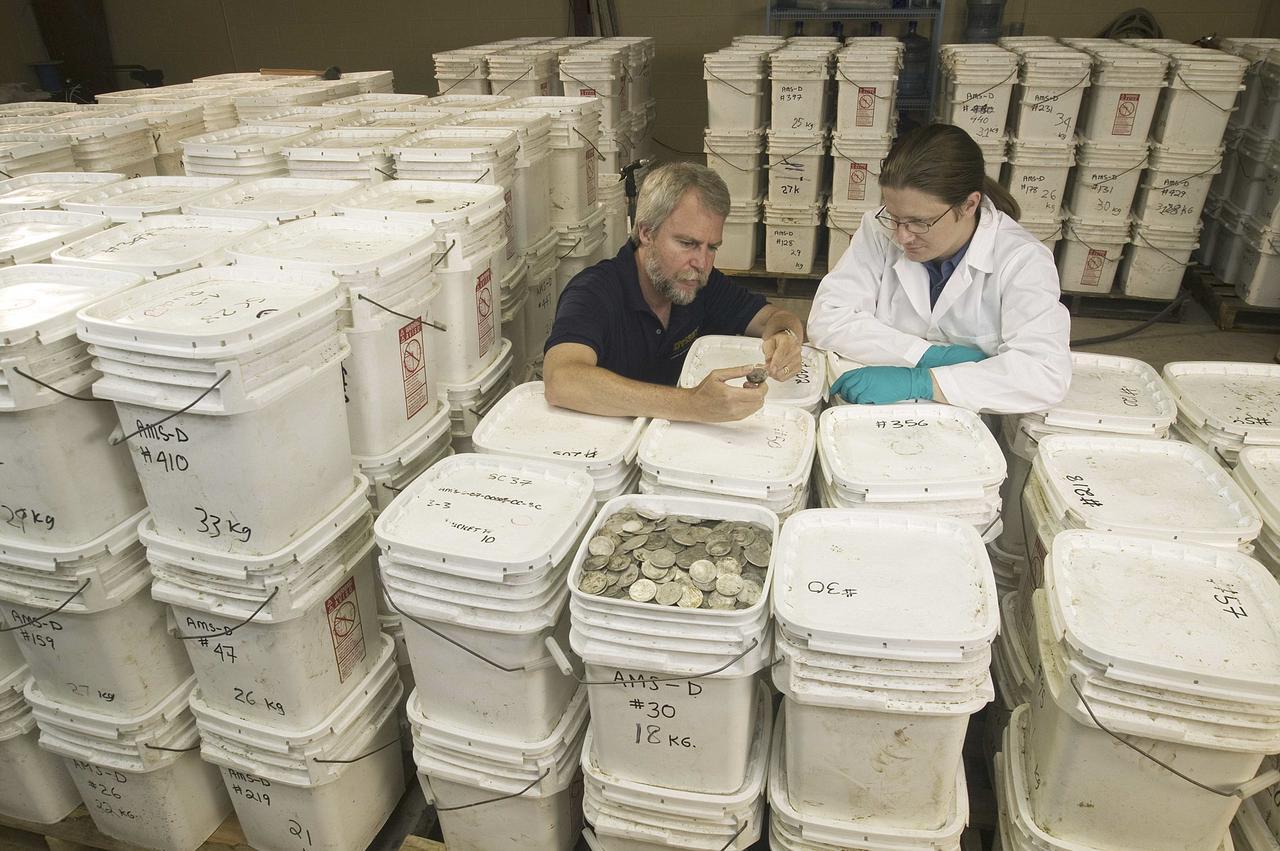
 In May of 2007, Odyssey Marine Exploration, a privately owned marine treasure-hunting company, discovered a Spanish shipwreck somewhere on the Atlantic seabed. Odyssey refused to divulge the exact location or the name of the ship. They ultimately recovered 17 tons of silver coins, plus almost 100,000 gold coins and a number of other artifacts from the wreck, which they code-named “Black Swan.” The site must have been near Spain because Odyssey secretly landed the $500 million treasure on Gibraltar, chartered a flight and flew the loot back to its headquarters in Tampa, Florida.
Spain was displeased, to put it mildly. Odyssey claimed the find was made in international waters in full compliance with the United Nations’ Law of the Seas, but since they refused to reveal the wreck site and pleaded ignorance about the name of the ship, Spanish authorities got suspicious. They filed suit against Odyssey Marine in a federal courthouse in Tampa, demanding that the company reveal everything it knows about the wreck so Spain could claim ownership, and they got a Spanish court order to seize Odyssey ships around Gibraltar and search them for historical artifacts.
The case has been winding its way through the legal system ever since then. In 2009, a Florida judge declared that the “Black Swan” was the Nuestra Señora de las Mercedes, a Spanish frigate sunk by the British off the coast of Cape St. Mary, Portugal in 1804, that Odyssey had specifically set out to find the Mercedes and had succeeded, and that Spain was the rightful owner of the recovered treasure. Odyssey’s claims of ignorance did not impress.
The judge argued that the coins, all dated prior to 1804, matched the Mercedes’ haul of mainly silver coins minted in Lima – part of a haul being brought back to finance Spain’s European wars. He also said cannon found there matched those on board the Mercedes.
“The debris field’s location, coins, cannons, and artefacts persuasively match the Mercedes’s historical record,” the judge said.
“That Odyssey, which set out to discover the Mercedes, found this mix strewn about in an area a few football fields square where the vessel met its explosive ending makes the conclusion even more compelling.”
Judge Pizzo also ruled that Peru, which had filed a suit of its own in 2008 claiming the treasure because the coins were made from Peruvian gold and silver, did not have a valid claim because there was no nation of Peru in 1804.
Odyssey appealed the ruling. Now a federal circuit court judge has upheld Judge Pizzo’s decision, giving Odyssey Marine 10 days to return the loot to Spain. Odyssey will doubtless appeal to a higher court next, so this story isn’t over yet, but they’ll run out of courts soon enough.
 Don’t worry about Odyssey, though. They just made a sweet deal with the British government and the Maritime Heritage Foundation to recover the wreck of the HMS Victory which an Odyssey team discovered in 2008. This is the predecessor of Admiral Nelson’s famed vessel; it went down in a storm in 1744 carrying four tons of gold.
The terms of the agreement ensure that all of Odyssey’s costs will be reimbursed and they will in addition receive a percentage of the market value of any recovered artifacts. If the Maritime Heritage Foundation chooses, they will get paid in artifacts rather than cash, but Odyssey prefers cash.
Odyssey will receive the equivalent of 80% of the fair value of artifacts which were primarily used in trade or commerce or were private property and bear no direct connection to the construction, navigation, defense or crew of the ship, such as coins or other cargo. Odyssey will receive the equivalent of 50% of the fair value of all other objects typically associated with the construction, crewing and sailing of ships including, but not limited to, the ship’s hull, fittings, fasteners, construction elements, clothing, organic remains, foodstuffs, cooking utensils, pottery, weapons, ammunition, ground tackle and navigational equipment. For any private property including coins or other cargo administered through the Receiver of Wreck, the Foundation has agreed that Odyssey shall receive 80% of the value.
So yeah, they’re doing okay.
A lot of questions come to mind, beginning with why underwater archeology is being left to piratical profit-making organizations, unlike (or at least, somewhat unlike) archeology on dry land (admitting that national rights and prerogatives are more difficult to determine and enforce in the briny deep). Regarding the HMS Victoria deal, do I have this right? All of Odyssey’s costs will be reimbursed and in addition, they will receive the lion’s share of the profits–for a no-risk, prepaid venture? Does Odyssey begin racking up those eighty percents immediately or are the reimbursed expenses deducted from the recovered treasure? In any case, with four tons of gold to be had, might not Odyssey have signed on the dotted line with less inducement? I would certainly like to know more about the people who are representing the British Government!
No risk??!? Surely you jest… 😆
If all their expenses are reimbursed, then it seems to be any corporate risks they run — like damage or lost equipment — are covered. There is certainly some personal risk involved in the recovery, but that is a risk they choose to run no matter what job they’re doing for whom. If the Victory was in a legal grey area like the Mercedes, I suspect they still would have taken that risk to recover four tons of gold even without a government ensuring that they have zero chance of financial loss.
This entire affair isn’t about international waters or not it’s about commercial versus government/sovereign owned ships and is falling under the “Foreign Sovereign Immunities Act” in US- which is a law that returned other artworks to the Austrians due to Nazi -> US looting, for example.
“National rights and prerogatives” are not difficult at all to determine in the briny deep. It depends on WHERE the wreck is, when it happened, who is here now who could claim it, and what the wreck consists of. In this case: Spanish military vessel in Portuguese waters (comity) carrying something VALUABLE that the nation which existed then and still exists now (sort of) wants back. If it was a commercial vessel, the merchants company could claim it (if it exists).
The passage of time makes ownership claims far trickier. As I understand, the question of whether Spain showed consistent interest in reclaiming their property from the time of the shipwreck until its discovery was a major issue in the legal case. Odyssey’s position was that the wreck was abandoned by Spain, and obviously it was since they never did a thing to recover it or even find it over the centuries. What got Odyssey in trouble was their disingenuous claim about not knowing what ship it is and who it had belonged to.
What a rip off since the majority of that treasure belonged to private citizens not the Spanish govt. So how did Spain claim something that wasn’t theirs? Sounds like a favor from the USA . They should of kept quiet but they were sure they would of won the case based on past cases. Something smells fishy here.
By the way Spain claims many coins are still missing based on the records kept. So it seems Odessy did keep something after all. I’m glad they did. Spain should now give back that treasure to the rightful owners.
South America? Where it was stolen from in the first place.
Judge Pizzo also ruled that Peru, which had filed a suit of its own in 2008 claiming the treasure because the coins were made from Peruvian gold and silver, did not have a valid claim because there was no nation of Peru in 1804.
Just because Peru wasn’t registered as a nation with the modern world of that time doesn’t mean it doesn’t exist or doesn’t have rights. Does a man who is not a citizen of a country not have the right to go to the police if he robbed and seek justice? And the coins were stamped with Lima on it so if the country of Peru can’t claim it then the city of Lima surely can. There the judge can not say the city of Lima didn’t exist because the coins are stamped from Lima. And Lima did exist. So Peru go thru that legal road and you could win.
Yay!! Finally!! That will definitely put the state of ohio back on the map!!
I think spain has a right to it since it’s their ship. It has been proven. No one should touch other countries property even if they didn’t go looking for it.
For example I could bury money in my backyard, it doesn’t mean my neighbor can go dig it out. I elected that spot to put my money in it. ok.
Peru was at that time part of the Spanish Empire. So all that gold and silver was property of Spanish Crown and so it is. Lima was a city part of Spanish Empire the same way Bilbao o Madrid were Spanish cities. I think southamericans must start fixing their own countries rather that continuous crying and whining about what happened more than 200 years ago.
The Pillaging & Massacres of South America by Spain.. dismissed in one casually Colonial arrogant comment.
Why on earth would anyone admit to finding anything when greedy countrys and people including archaeologists try and grab something they have shown no interest in for hundreds of years and will not put funds into searching anyway? Archaeologists scream that everyone except themselves should not be allowed to search for wrecks,so is there any wonder that artifacts are being lost to people that risk there lives and spend there own money on marine salvage when they know that if they divulge what they have found it will most likely be confiscated by these greedy individuals.
😆 And the marine salvage companies are not greedy, in your opinion? They have some elevated higher motive, do they?
IT BELONGS IN A MUSEUM
Spain had long forgotten its past or it would be searching all its coastline and territorial limits. Given that the ship was in Portugal waters adds to the legal intrigue. Honestly Odyssey had huge financial cost and Spain should have shared the discovery 50-50 with Odyssey. This case will result in marine explorers not claiming anything any longer! Since Greece, Turkey, Egypt have lost many rare valuable treasures to thieves, shouldn’t the courts finally order countries to return those treasures?
So cool :skull: :yes: 😀
Does your site have a contact page? I’m having problems locating it but, I’d like to
shoot you an email. I’ve got some creative ideas for your blog you might be interested in hearing. Either way, great website and I look forward to seeing it develop over time.
I believe that the treasure should of stayed with the Odyssey Corporation. If someone drops money on the street or in a trash can and you find it the loot then belongs to you. This has happened with lottery tickets many times. The Spanish I think had no interest in the treasure for they never even looked for it even though they had records of the ship wreck and what was on board. They also acted like cowards confronting research vessels with military ships. On the other hand though I take pleasure in knowing that Spain as a country is a shit hole and their navy has a proud tradition of being sunk. In reality if you look at the Spanish navy as a whole a 60’s era Russian or American navy could sink and destroy their whole modern navy. In many terms they are cowards and worthless as a civilization. They probably don’t even have the technology to salvage gold coins from the shallow end of a swimming pool.
How ugly. Do you feel the same about Britain? They were unable to recover a far more recent treasure and contracted Odyssey to do it for them at ludicrously generous terms, in my opinion.
Shut up man some spanish waiter must have slept with your wife on a holidays, thats why you so pissed off with spain
Greg Stemm, the co-founder and current CEO of Odyssey Marine Exploration, and John C. Morris, the co-founder of Odyssey Marine Exploration, were both sued by the Securities and Exchange Commission.
It appears that Neptune Minerals is insolvent. Oceanica is extremely unlikely to get an environmental permit. Oceanica’s cofounding shareholder, DNA Ltd, Inc, is tied to a Panamanian entity whose principal members are connected to a number of alleged financial crimes – why did Odyssey Marine Exploration structure it this way?
Isn’t it weird that Odyssey Marine Exploration has been unable to address any of the serious questions posed by concerned shareholders? It’s concerning that John Morris, the founder of Odyssey Marine, is currently being sued by members of Seagrass Recovery. Odyssey Marine Exploration and Neptune Minerals have been tied to brokerage firms with many FINRA sanctions, this is very alarming – would you invest in this company? Buyer beware.
Odyssey Marine Exploration has disappointed 100% of the time on its estimated project recoveries, can you trust anything they say? Why does Odyssey Marine Exploration have opaque and unexplained offshore subsidiaries in the Bahamas and Panama? These are completely unnecessary for Odyssey’s operations.
Based on its current cash reserves and negative cash flow Odyssey Marine Exploration could very well go bankrupt in 2014. Odyssey Marine Exploration was held in contempt of court after it lost the Blackswan case. World-class phosphate mining companies have previously evaluated and passed on the Oceanica asset – Odyssey is the only company interested in this uneconomic asset.
Didn’t Odyssey’s chairman Brad Baker get exposed for signing on both sides of a deal? Why does Odyssey Marine Exploration use an auditor that has been sanctioned multiple times by the Public Company Accounting Oversight Board? Based on accurate historical records, there was never any secret army gold aboard the SS Central America.
It’s alarming that Odyssey Marine Exploration started as a shell purchased by Timothy Brasel, who was later cited by an SEC civil action for stock manipulation. It’s shocking that the predecessor of Odyssey Marine Exploration, Seahawk, went bankrupt – but it’s even more shocking that every other reverse merger treasure hunting company (six in total!) have also gone bankrupt.
It’s alarming that Odyssey Marine Exploration has lost nearly $200,000,000 of shareholder capital while insiders have personally made millions – how much longer can this continue?
Isn’t it ironic that Odyssey Marine Exploration has posted enormous financial losses but CEO Greg Stemm makes enough money to afford five houses for himself and his family? That doesn’t seem fair at all. Why does Odyssey host closed conference calls in which only their investment bankers get to ask questions? Why won’t Odyssey answer questions from other shareholders? Are they hiding something?
http://www.omextruth.com
I need to know about the crew rings one of the crew members gave me the ring
Spain squadered the stolen gold on what it did best, Murder and conquest.How the Crimanal Spainish could claim gold that obviously was stolen,Shows what a disgusting Race the Spainish still are.As for the Crooks involved in this Sad story including the Crooked Judge Hell is waiting.
There is no inducement to underwater archeology.
The only people who are not thieves in this entire scenario are the Peruvian natives…probable the Incas. The Spanish came into this region probably sometime in the 14th century and claimed the land for Spain. Thief #1. They forced the natives to mine and process their valuable treasures and the Spaniards began killing them. This process went on for hundreds of years. Spain used this process to fill their treasury each year for “government” needs. Their ships carried millions of dollars via the ” Spanish Main” annually. Lima, Peru was one of 3 locations where they raped the land of its minerals and used forced labor for mining and processing. The last people on earth that have a right to the treasure is the Spanish.
The Spanish then took some of their stolen gold, silver and jewelry and financed ship building. One such ship, the Mercedes, got destroyed in a battle with a British Ship. End of treasure, with no significant effort by thief #1 to reclaim it. So it sits a few hundred more years, until thief # 2 does the research and salvages much of the treasure. They know, as all sunken treasure salvors know, the government wants its cut, the Spanish wants its cut, and every investor wants their legitimate cut. They set up an effort to protect themselves (probably illegal) with offshore corporations and other entities to muddy the waters. Personally, if it were not for thief #3, our government, I think it is the property of Odyssey Marine. The other thieves involved are the collection of attorney’s who probably enriched themselves with 50% of the find in USD. One only has to take a look at Mel Fisher’s nightmare with the Atocha to know how many hands stretch out to take their supposed due.
Our government is a theif with no honor and no rules. They make the rules as needed to be a more legal theif.
Shame on everyone but the native Peruvian’s.
Yes, but what if you move out of the house and after like 15 years someone digs it out. Who does it belong to then???
Let’s see the coins we’re found in international waters. It should belong to the finders, period. The thought to give Spain back the coins were that were stolen from South America to begin with is a joke.