Mozart autograph manuscript returns to Salzburg

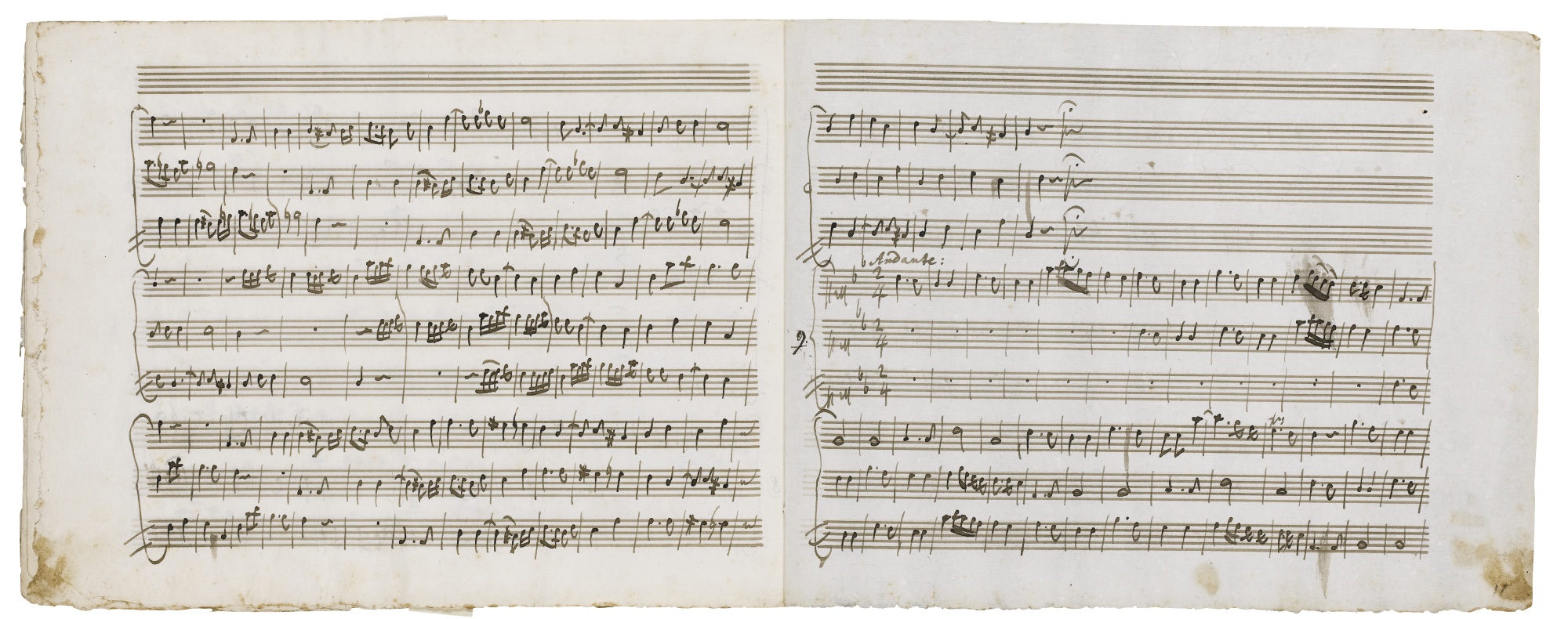
A rare autograph manuscript of a piece of music transcribed by Wolfgang Mozart in around 1773 when he was 17 years old has been acquired by the Salzburg Mozarteum Foundation and is now on display at the Salzburg Festival. A transcription of Stabat Mater a 3 voci in canone (Stabat Mater with three voices in canon) by Marchese Eugenio di Ligniville, musical director of the royal court of Tuscany, the manuscript is 12 pages long and is in the hand of Wolfgang Mozart with annotations by his father Leopold. It has been in private collections since the 1920s. The Foundation was able to buy the manuscript for £167,000 ($256,796) when it came up for auction at Sotheby’s London in May thanks to a generous gift from an anonymous donor.
Time for a little digression through the labyrinth of European political history. Remember Anna Maria de’ Medici, Electress Palatine, who saved Florence’s artistic patrimony after the last Medici grand duke died leaving the grand duchy in the hands of the future Holy Roman Emperor Francis I? The Medici had ruled Florence off and on since the 15th century, but after the troops of Holy Roman Emperor Charles V sacked Rome in 1527, the Medici’s enemies took advantage of the chaos to overthrow the family and reinstall a Republic with rotating leadership. When Pope Clement VII, born Giulio di Giuliano de’ Medici, made peace with Charles V in 1539, Charles agreed to reclaim Florence for the pope’s family. It took 11 months of siege to do it, but in 1530 Florence fell. Tuscany became a fiefdom of the Holy Roman Emperor and the pope’s illegitimate nephew Alessandro Medici was installed as its ruler. Charles made it official by stipulating that from then on, Tuscany would be ruled in perpetuity by the male heirs of the Medici family.
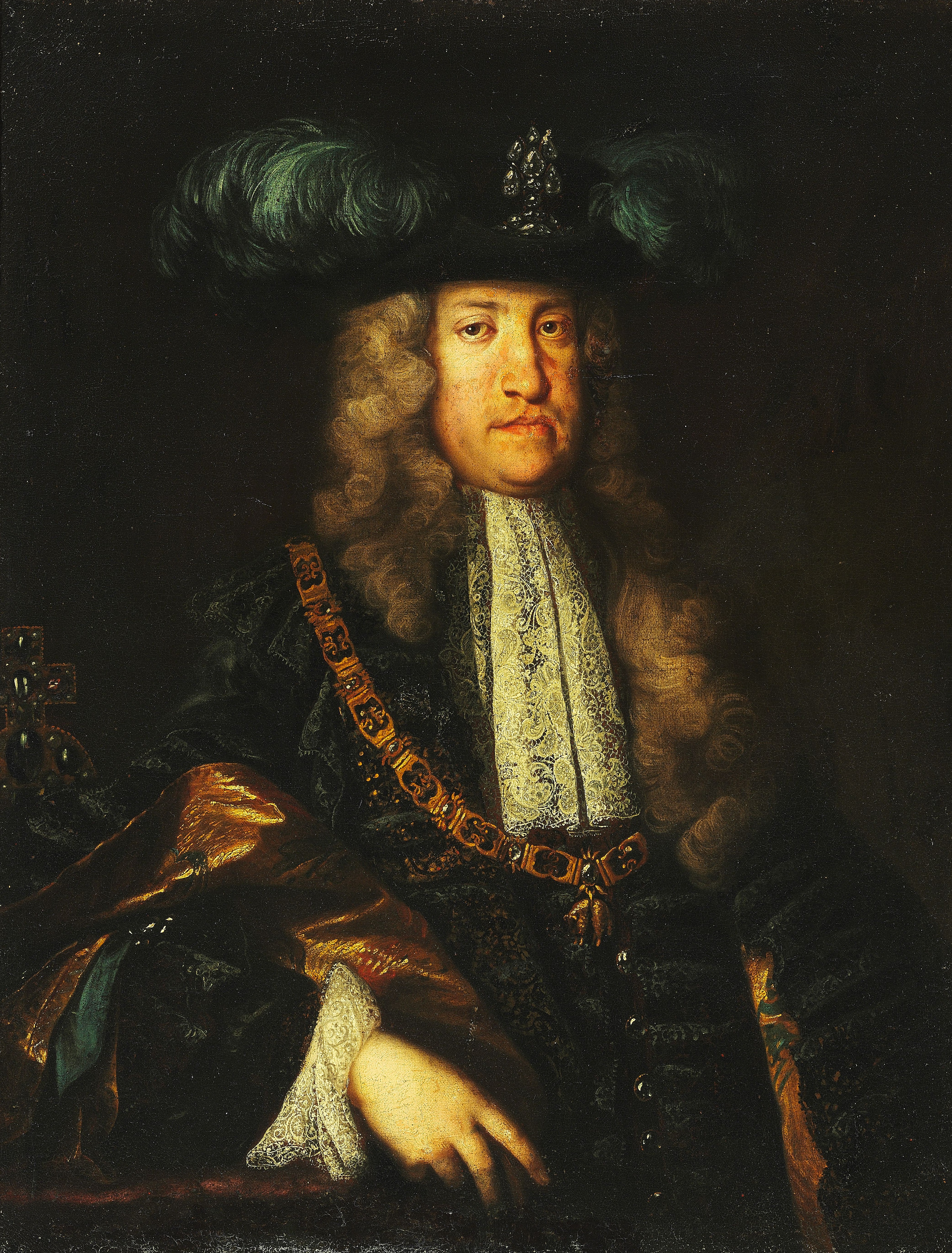
So, when Gian Gastone, Anna Maria’s brother and the last male direct descendant of the main family branch, died, a more distant relative had to be installed. There were several strong candidates — the Medici married and bred very well and very copiously — but Holy Roman Emperor Charles VI wasn’t a principled genealogist seeking the closest male heir. He had other priorities, placating the deposed King of Poland Stanisław Leszczyński, father of the Queen of France, being one of them. Getting his daughter and heir Maria Theresa married to someone he liked who could support her in the inevitable succession war after Charles’ death was an even bigger one. Tuscany was the stone with which he hit both those birds.

Francis, Duke of Lorraine, scion of an ancient noble French house and second cousin to the Holy Roman Emperor, could claim descendance from Catherine de’ Medici, at various times queen consort, queen mother and regent of France, through her daughter Claude of Valois. Relying on the female line, his claim to the throne of Tuscany was one of the weaker ones. It was strengthened immeasurably by the fact that Charles wanted Francis to marry his daughter.
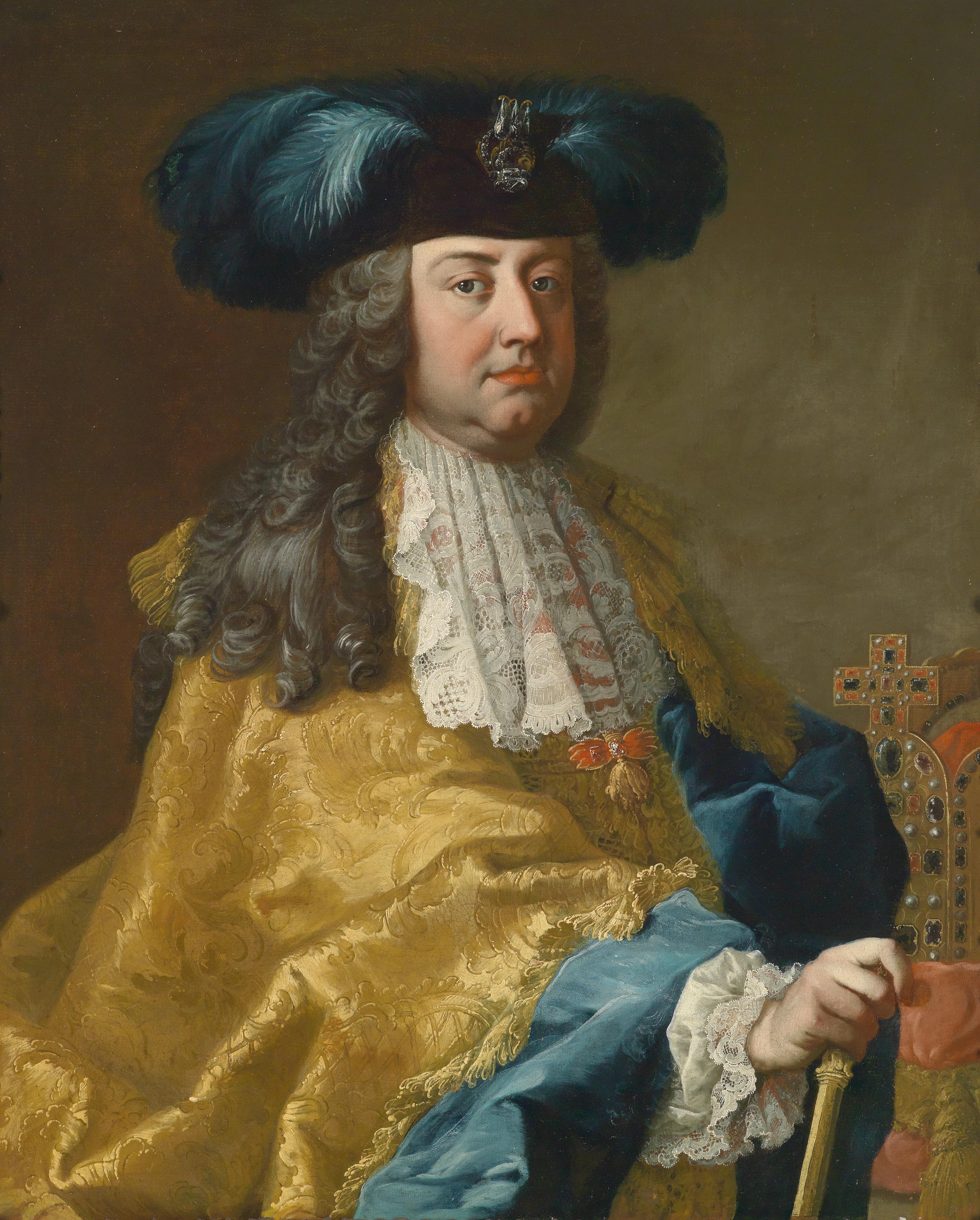
In order to marry Maria Theresa, Francis would have to give up the Duchy of Lorraine, something he was extremely reluctant to do. His family was vociferously opposed to him giving up his birthright, not even for an empire. In the treaty negotiations after the War of the Polish Succession, France would only agree to support Charles’ Pragmatic Sanction of 1713 (the edict that allowed women to inherit Hapsburg lands and titles) if the fiance’ of the woman in question gave the Duchy of Lorraine to Stanisław Leszczyński for his lifetime, after which it would become property of the French crown. To sweeten the deal, Charles VI offered Francis the Grand Duchy of Tuscany in exchange for his lost Lorraine. He took it.

Grand Duke Francesco only alighted in Florence once for three months in 1739. The rest of the time the grand duchy was ruled by his viceroy Marc de Beauvau, Prince of Craon, who was married to Anne Marguerite de Lignéville. After Francis’ death in 1765, his son Peter Leopold became grand duke of Tuscany. Eugenio di Ligniville, a relative of the former viceroy’s wife and one of many nobles from Lorraine who moved to Tuscany after Gian Gastone’s death in 1737, became director of music to the court of Tuscany in 1768. Ligniville was not a professional musician. He had served as the grand duchy’s postmaster general until retiring in 1767. He was an accomplished composer and music theorist nonetheless with an international reputation as a master of counterpoint.
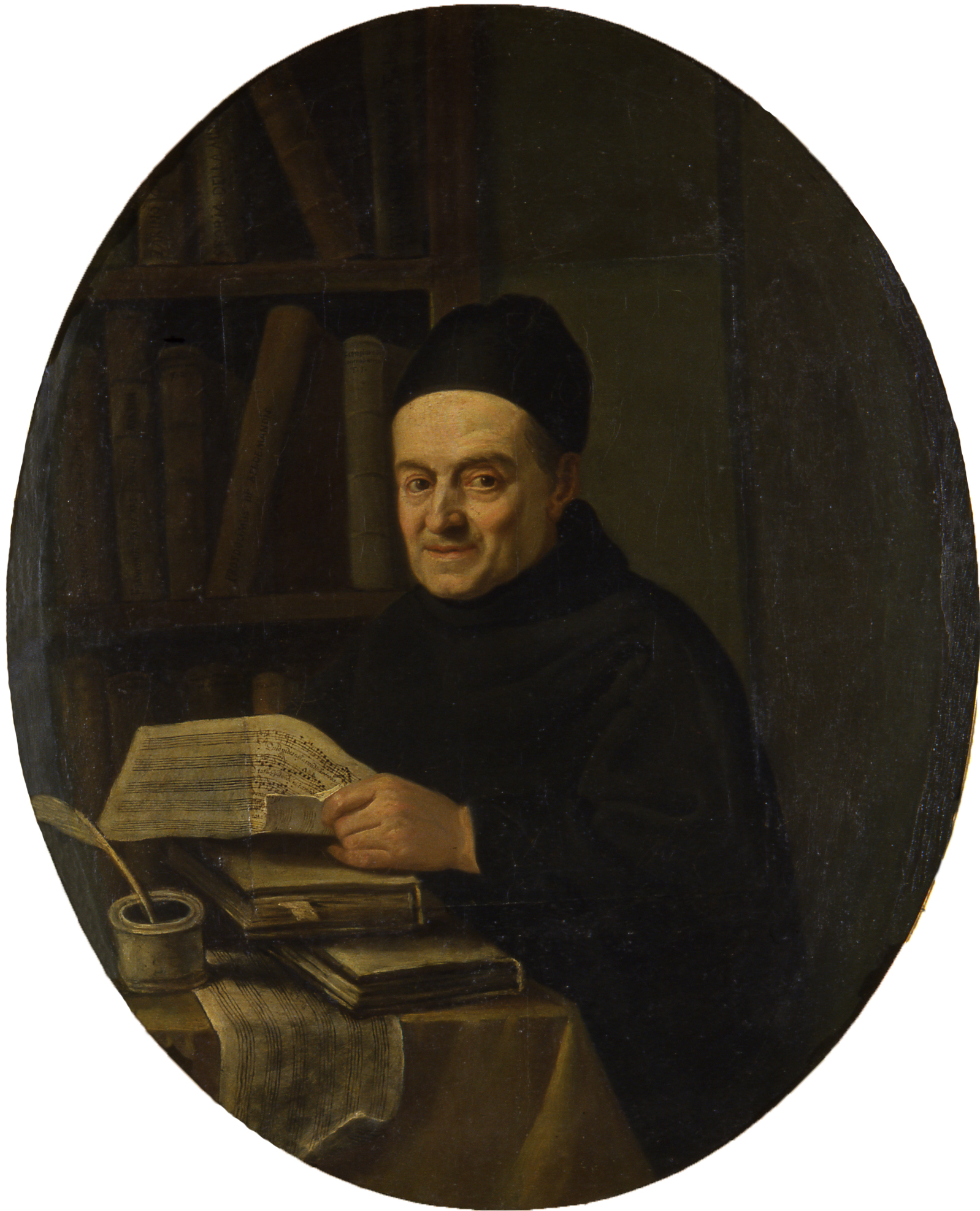
The Stabat Mater a 3 voci in canone was first published in 1767 and was acclaimed as the pinnacle of art of counterpoint by Franciscan friar and leading composer of the period Padre Giovanni Battista Martini. Martini wrote a letter to Ligniville in March of 1767 complimenting on his canon. He wrote that he considered counterpoint to be the hardest and most essential exercise for any musician truly seeking to improve their abilities and understanding of composition, and lamented its falling out of favor in the education of musicians of their century.

In his role as music director, Ligniville arranged for Leopold and the 14-year-old Wolfgang Mozart to visit the Tuscan court in April of 1770. Father and son were received by the Grand Duke at Palazzo Pitti on April 1st. The next day the grand duke sent his carriage to transport them to his summer villa of Poggio Imperiale where Wolfgang performed. The performance was stellar, according to the Wolfgang’s father Leopold, and their ample reward from the Grand Duke of 333.6.8 Lire or 25 gold zecchini supports the contention. From a letter he wrote to his wife in Salzburg:

“Everything went off as usual and the amazement was all the greater as Marchese Ligniville, the director of music, who is the finest expert in counterpoint in the whole of Italy, placed the most difficult fugues before Wolfgang and gave him the most difficult themes, which he played off and worked out as easily as one eats a piece of bread. Nardini, that excellent violinist, accompanied him.”
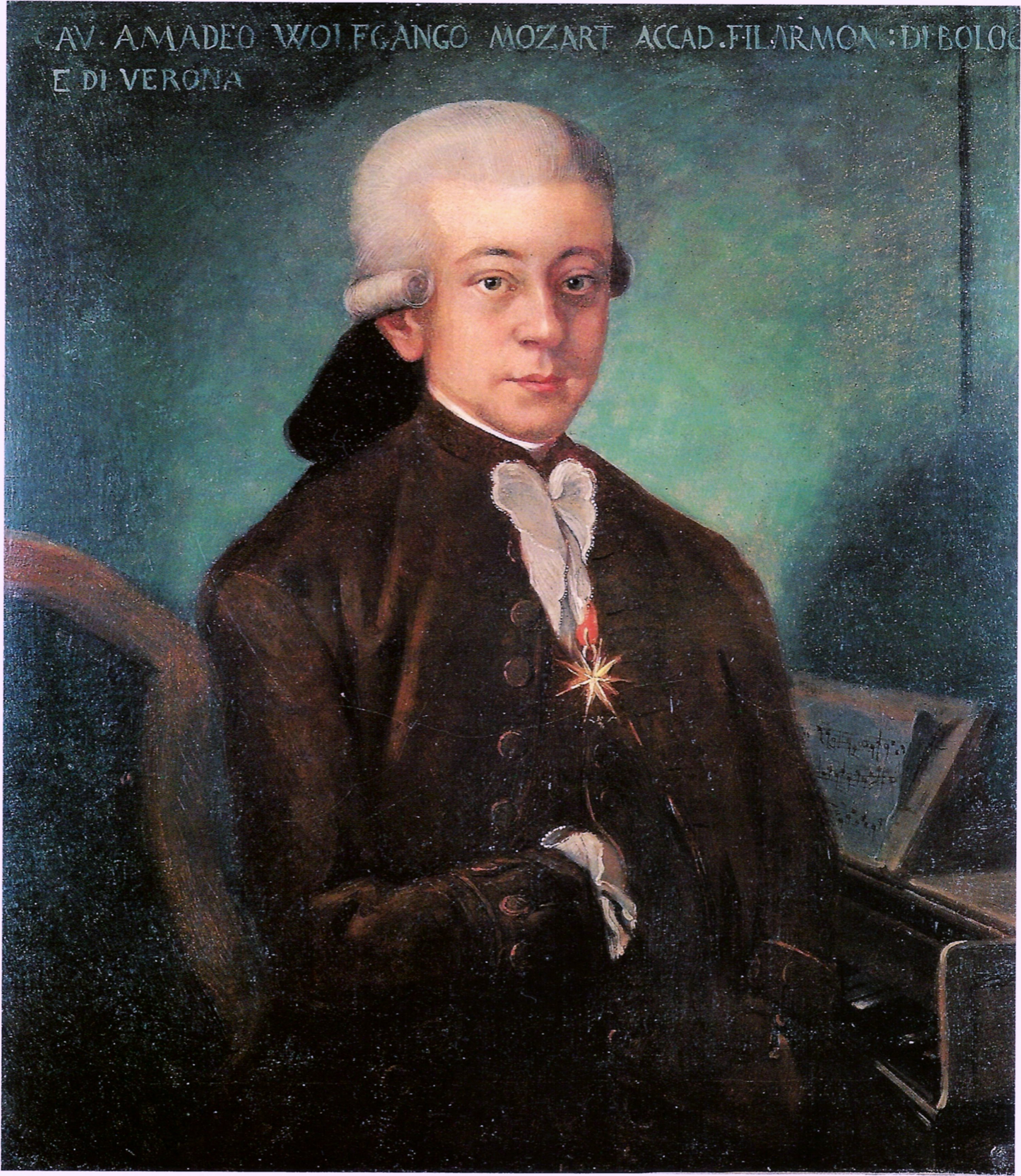
After that, the pair traveled around Italy, until reaching Bologna in July where Wolfgang took lessons in counterpoint from Padre Martini for three months. The lessons obviously kept going even when they returned to Salzburg, because the transcription of Ligniville’s Stabat Mater was done in 1773. One of things that makes the manuscript so important is that it captures the young artist in the very act of mastering the finer technical points of the composer’s craft. From the Sotheby’s catalog note:

The importance of the manuscript lies particularly in the light it sheds on Mozart’s contrapuntal studies, complementing as it does the scattered complex of manuscripts … in which Mozart wrestled with the puzzle canons from Padre Martini’s Storia della musica. When in 1785 Joseph Haydn famously stated to Leopold Mozart, then visiting his son in Vienna, that Mozart possessed ‘taste and, what is more, the most profound knowledge of composition’, he was stating no more than the truth. [This] autograph … is a testament to the fact that such knowledge was not acquired easily by Mozart, but rather was the result of painstaking and concentrated effort.
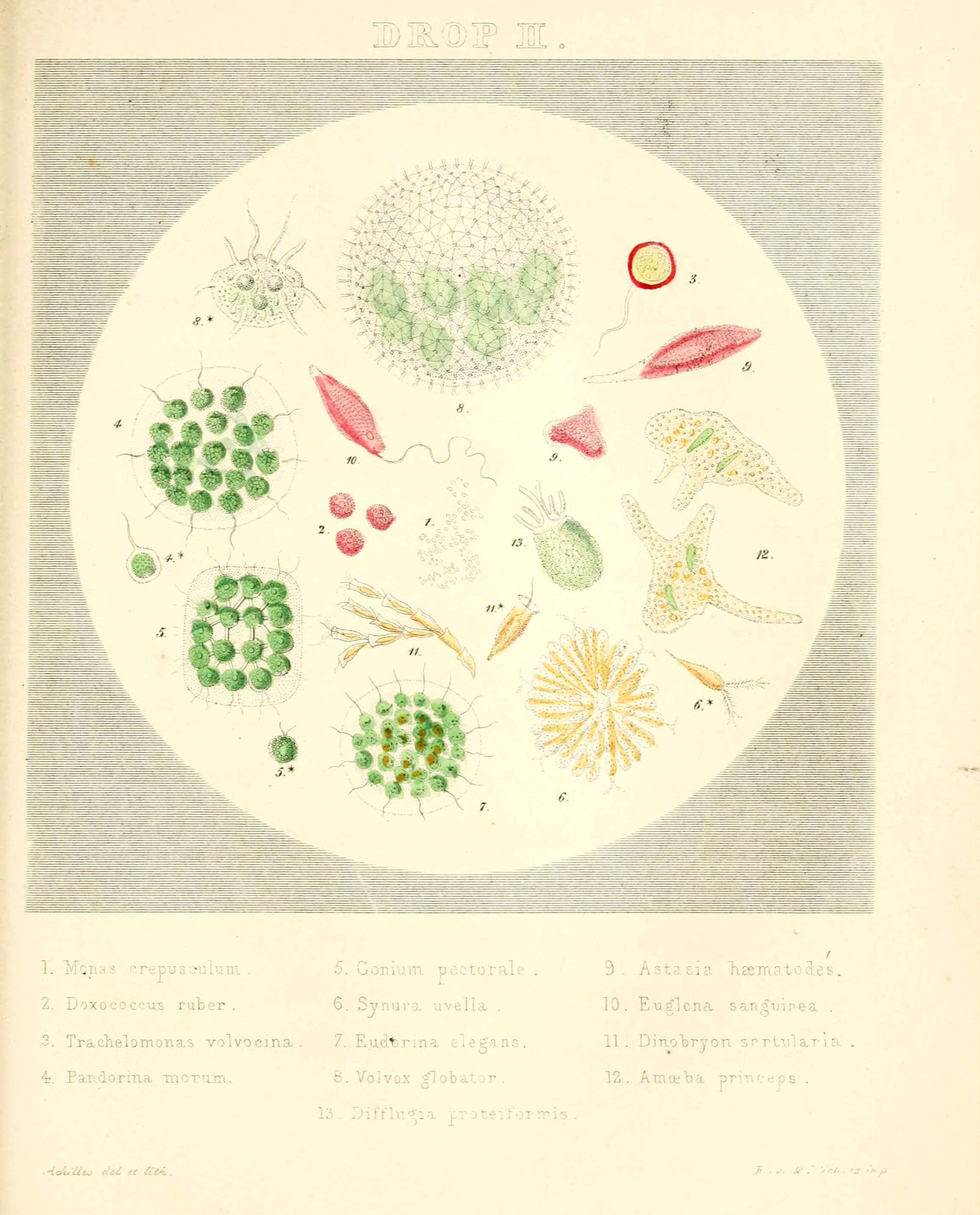
From Monster Soup to beautiful microscopic sirens

Microscopes had been used by scientists before Anton van Leeuwenhoek perfected the lenses that allowed him to see the unseen in the late 17th century, but it was Leeuwenhoek who first viewed animalcules in a drop of water. For almost two centuries after him, the microscope remained the province of the scientist and the wealthy amateur. Advancements in technology and mass-production in the 19th century made the microscope more widely accessible. If you didn’t have your own, a traveling showman would let you enjoy his, for a modest fee, of course. That meant regular people could peer into a drop of water and find it teaming with creatures.

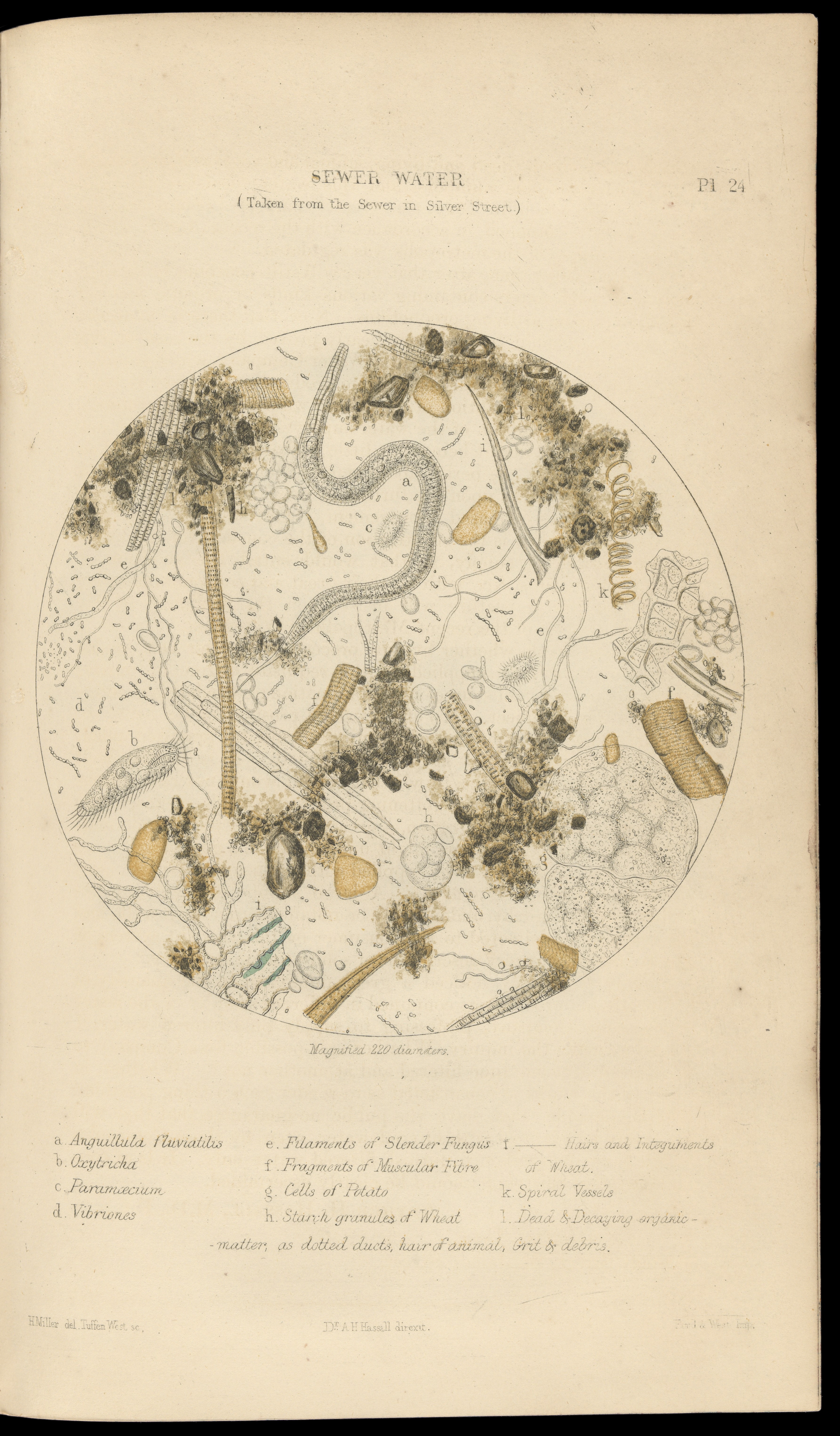
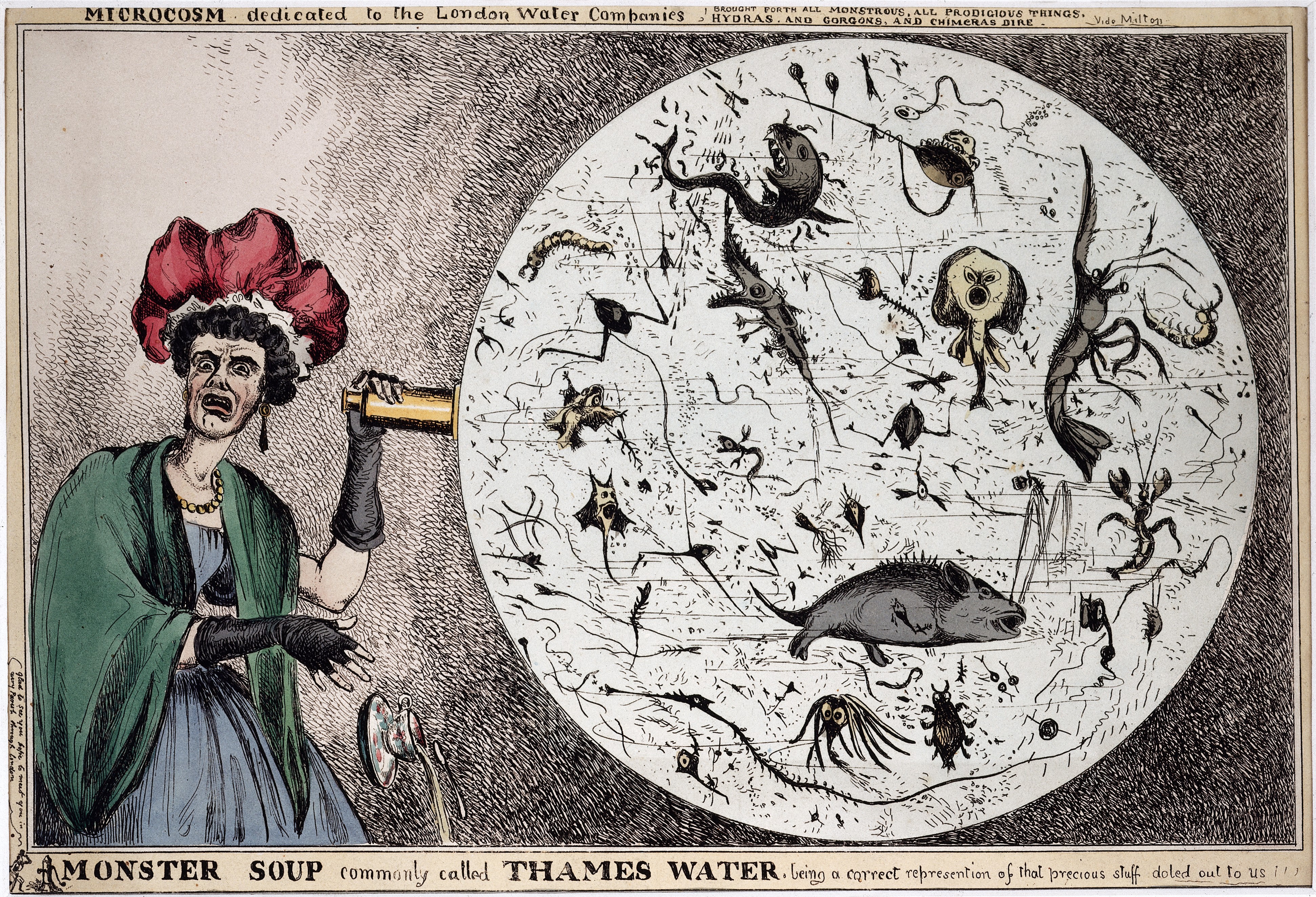
This was disconcerting at first. In 1828, after the Commission on the London Water Supply reported that the Thames, supplier of drinking water for the capital, was contaminated by raw sewage, William Heath illustrated people’s reaction at their impure water with a caricature in which a woman views the “Monster Soup commonly called Thames water” through a microscope with horror. In the United States, even as late as 1846 the thriving social life in a drop of water from New York’s recently built Croton Reservoir alarmed the erudite gentlemen of Scientific American.

Yet, just a few years after that, with microscopes getting stronger, cheaper and more portable every day, the “creatures of malignant and voracious propensities” in the Croton reservoir that had so disturbed Scientific American were seen as a source of viewing pleasure, live entertainment for anyone with the technology to enjoy them. Amateur naturalist Agnes Catlow, author of books on botany, entomology, zoology and shells, wrote Drops of Water: Their Marvelous and Beautiful Inhabitants Displayed by the Microscope in 1851 specifically for the beginner.

General interest and literary magazines stepped on the microscopy bandwagon as well, for instance Charles Dickens’ magazine Household Worlds. Dickens published his own serialized works in the magazine as well as the work of other writers like his protegé Wilkie Collins. He wanted this to be a family periodical — uplifting, wholesome, socially responsible – and exerted total control over its content. In keeping with this ethos, the Microscopic Preparations article published in the fall of 1857 showed readers how, from the comfort of their own homes, they could enjoy the fascinating world of microorganisms while unconsciously improving their understanding of nature.

The popular English philosopher and polymath Herbert Spencer went further, insisting that an active exploration of the natural world was necessary not only for the development of reason and the intellect, but for the development of aesthetic understanding as well. In “What Knowledge Is of Most Worth,” first published in the Westminster Review then with three other related essays in an 1860 book Education: Intellectual, Moral and Physical, Spencer wrote:

The truth is, that those who have never entered upon scientific pursuits know not a tithe of the poetry by which they are surrounded. Whoever has not in youth collected plants and insects, knows not half the halo of interest which lanes and hedge-rows can assume. Whoever has not sought for fossils, has little idea of the poetical associations that surround the places where imbedded treasures were found. Whoever at the seaside has not had a microscope and aquarium, has yet to learn what the highest pleasures of the seaside are.

Those who seek truth and understanding from the study of history, art and literature while ignoring science, Spencer believed, are bogged down by surperficialities and minutiae, depriving themselves of the greatest form of poetry: “that grand epic written by the finger of God upon the strata of the Earth.”

And thus seaside microscopy became a popular hobby in the second half of the 19th century. In less than 15 years, the tiny creatures in water went from malignant to beautiful to edifying to the greatest thing a beach vacation has to offer, and that was just in non-fiction. The January 1858 issue of The Atlantic Monthly (the now-venerable magazine’s third issue ever), featured a story by Irish author Fitz James O’Brien called The Diamond Lens in which a microscopist speaks to the spirit of Leeuwenhoek through a medium and gets instructions from the master on how to craft the perfect microscope: by using a 140-carat diamond lens bombarded with electro-magnetic currents. With this ultimate microscope, our hero sees past the “grosser particles” of the animalcules into a radiant paradisiacal realm where he finds the most beautiful wee blond lady ever. He names her Animula and of course falls madly in love with her.

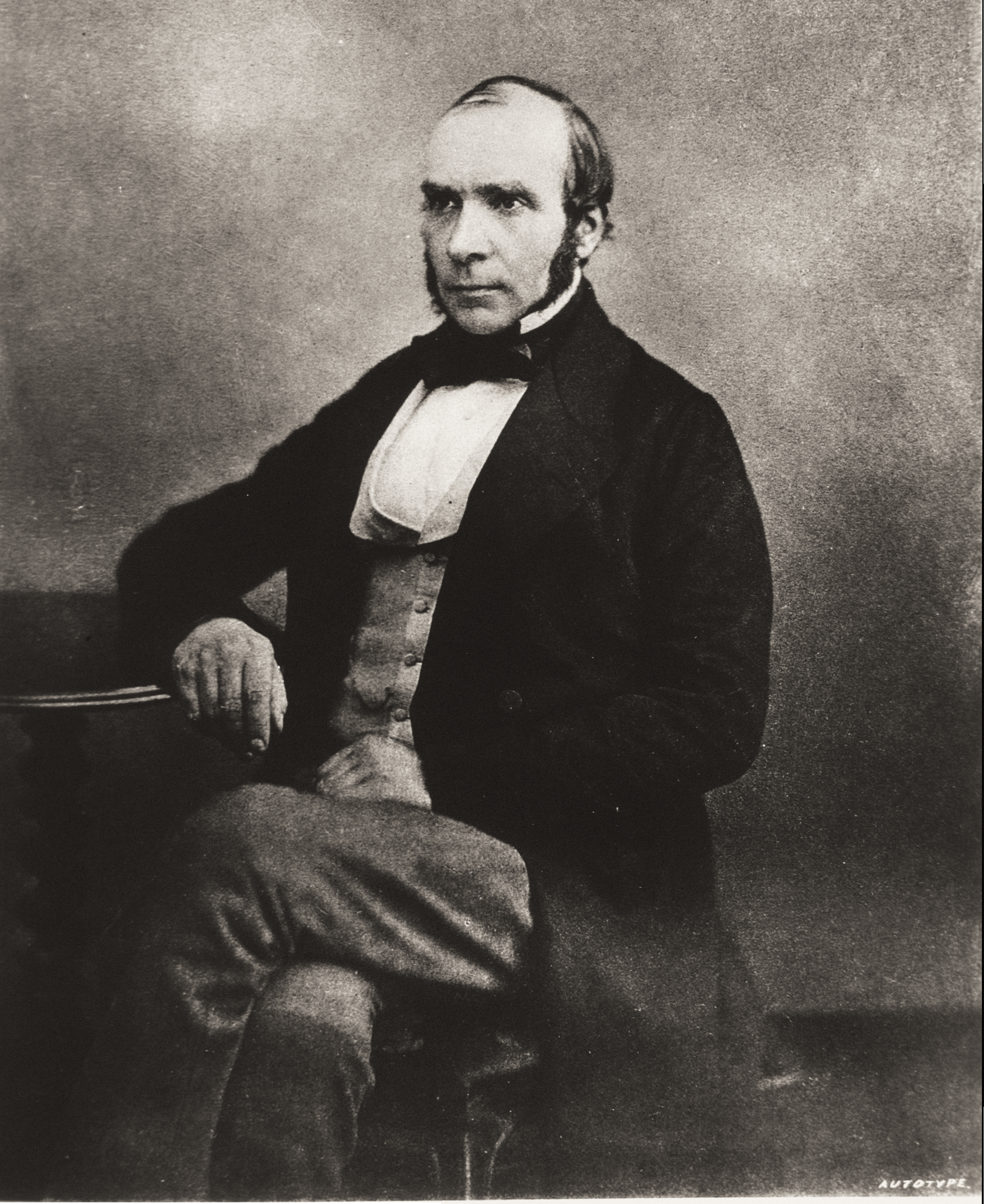
I find it fascinating that microorganisms transformed in the public imagination from voracious beasts to otherworldly naiads just as people were beginning to figure out that there actually IS stuff in the water that can kill you. For example, pioneering epidemiologist John Snow had some understanding that something in water caused cholera. He didn’t know what exactly, but he thought water contaminated with the feces of cholera victims transported material to the digestive tracks of healthy people, material that would then reproduce itself avidly infecting its hosts with cholera. He published his first paper on the subject in 1849 and nobody believed him. They didn’t believe him five years later when he helped end an 1854 cholera outbreak by having the handle of the Broad Street water pump located in the thick of the infection zone removed. Miasmas (putrid fogs emanating from decomposing tissue) were still widely believed to be the transmitters of disease.

The official report (pdf) of the government committee tasked with studying the cholera epidemic of 1854 went out of their way to reject Snow’s unappealing idea, twisting the facts he had established to fit the miasmic theory.

The water was undeniably impure with organic contamination ; and we have already argued that, if, at the times of epidemic invasion there be operating in the air some influence which converts putrefiable impurities into a specific poison, the water of the locality, in proportion as it contains such impurities, would probably be liable to similar poisonous conversion. Thus, if the Broad Street pump did actually become a source of disease to persons dwelling at a distance, we believe that this may have depended on other organic impurities than those exclusively referred to, and may have arisen, not in its containing choleraic excrements, but simply in the fact of its impure waters having participated in the atmospheric infection of the district.

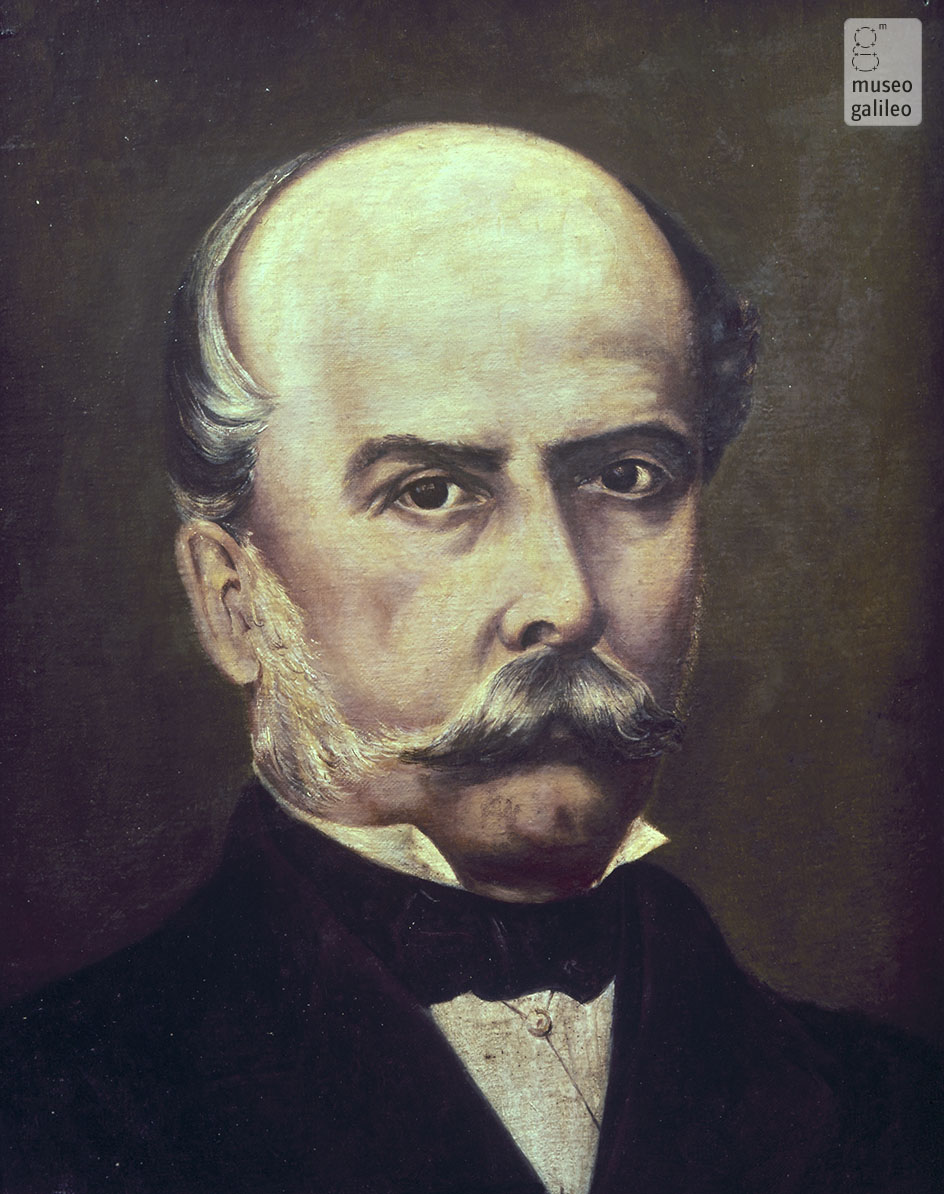
In fact, the very year cholera hit Broad Street, anatomist Filippo Pacini at the University of Florence isolated the cholera bacillus from the intestinal muscosa of one of its victims. He published his discovery that year, but it got no traction in the international scientific community, nor did his several subsequent studies connecting to the pathogen to the pathology. Thirty years later, Robert Koch made the same discovery independently and, even though the miasma theory was still predominant for a few years, eventually Koch’s ideas were accepted. Pacini finally got wide credit for being the first when his last name was added to the bacillus — Vibrio cholerae Pacini — in 1965.

Threads of Power: superb tapestry porn

The Kunsthistorisches Museum in Vienna has one of the greatest collections of tapestries in the world thanks largely to the Imperial collection of the Hapsburg dynasty. Most of the tapestries are kept in careful storage for conservation purposes and are too delicate to be on public display. Now the museum has placed select rare masterpieces of 16th century Belgian tapestry on display in Threads of Power, an exhibition that explores how the elite used the expense, subject matter and sumptuous materials of tapestry as propaganda tools to broadcast their status and wealth. The 14 tapestries will be on display along with preparatory sketches, cartoons, woodcuts, engravings, etchings, oil paintings on canvas, coins and other artworks associated with the tapestries from July 14th through September 20th, 2015.

With the exception of one tapestry made in the early 1700s from a 16th century design (the tapestry makers kept original cartoons and drawings of their most popular pieces for decades, even centuries, so entire series could be reissued upon request), all of the tapestries were manufactured in Brussels during the 16th century. Influenced by Raphael whose cartoons for Pope Leo X in 1515 ushered in the era of prestigious artists drawing for tapestries, top court artists like Barend van Orley and Jan Cornelisz Vermeyen created the designs that were woven into textiles by the greatest Brussels workshops.

Using precious materials like gold and silver thread, silk and wool, weavers took years to make a single wall hanging. Tapestries were far more expensive than paintings, the exclusive province of the most moneyed nobles and royals. The subjects depicted on these large, luxurious canvases matched the size and importance of the medium. Scenes of royal courts, battles, Biblical stories, mythological figures were idealized versions of the grand personages and who commissioned the works to decorate their walls.

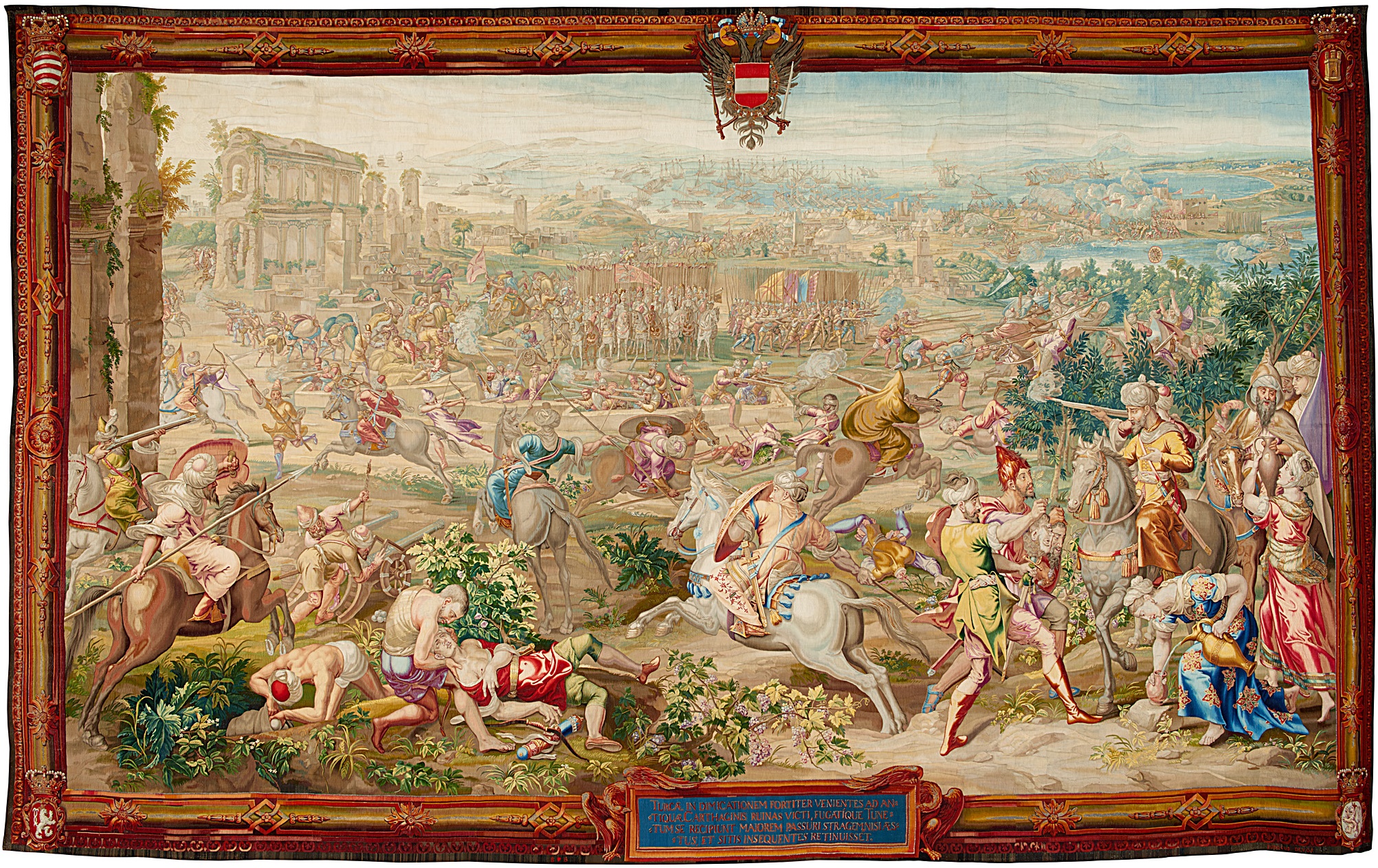
And not just their walls, either. The tapestries were used on state occasions, hung on a dais or as a baldachin over the throne. One of the tapestries in the exhibit, An Unsuccessful Turkish Sally from La Goleta, is a 1712-21 reissue of one of 12 tapestries in a series first commissioned in 1546 by Holy Roman Emperor Charles V to celebrate his capture of Tunis from the Ottoman Turks 11 years earlier. The Conquest of Tunis series was designed by Jan Cornelisz Vermeyen and woven by Willem de Pannemaker’s workshop in Brussels. The contract between Charles and Pannemaker stipulates in detail which materials were to be used: 63 colors of silk from Granada, worsted thread from Lyon, seven kinds of gold thread and three of silver provided directly by Charles V. Charles required that Pannemaker employ seven weavers to work on each tapestry all day. It still took them five years to complete the series for a total cost of 26,000 pounds ($1 million today).

The full series traveled with Charles V and was unfurled at every state occasion and religious ceremony. They were draped in the royal receiving rooms of the Brussels palace and in Madrid’s Alcázar palace under Charles V and his son Philip II of Spain. They were so famous and so well-used that they had to be retired for their own preservation less than a century after they were made and replacements ordered from the original cartoons.

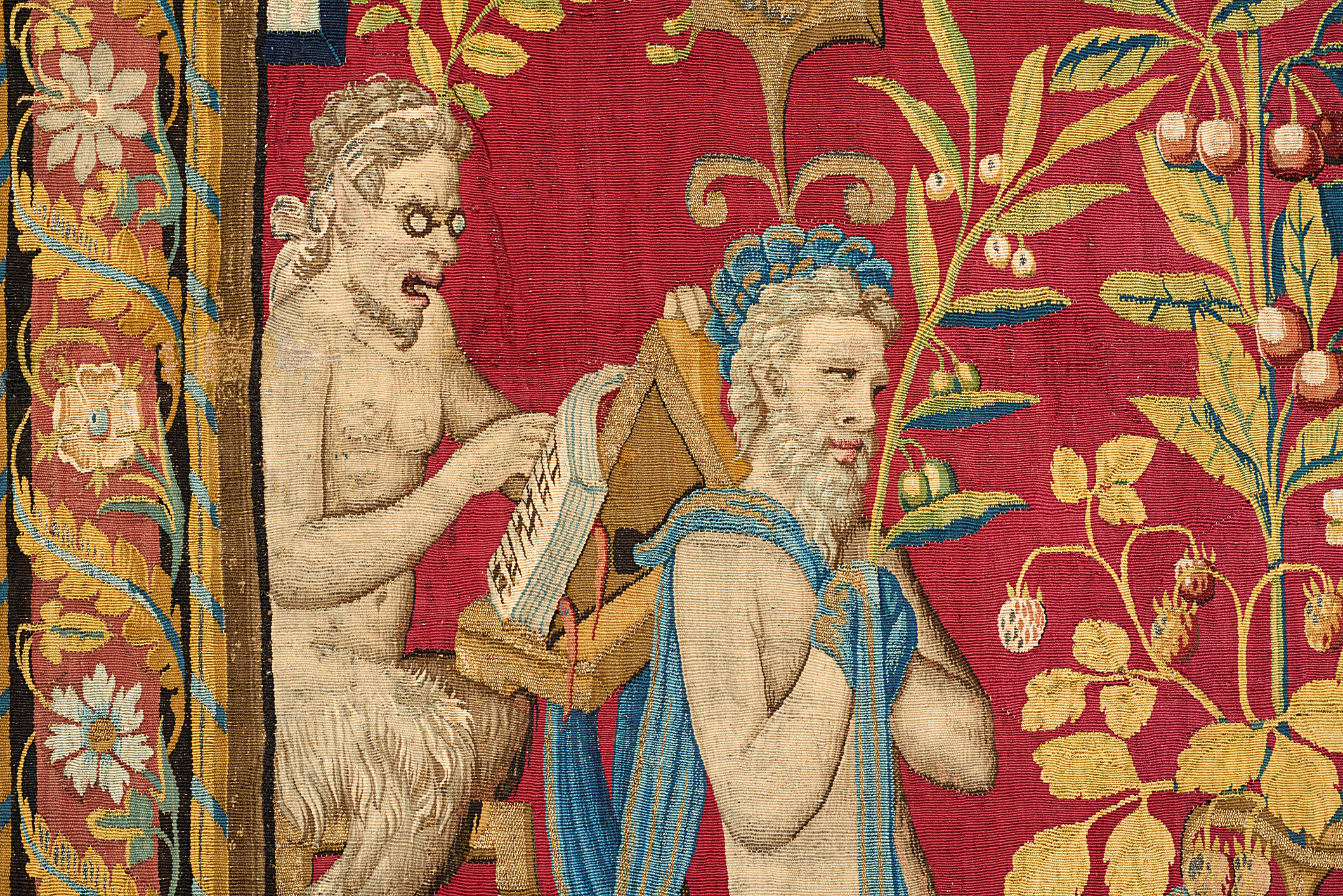
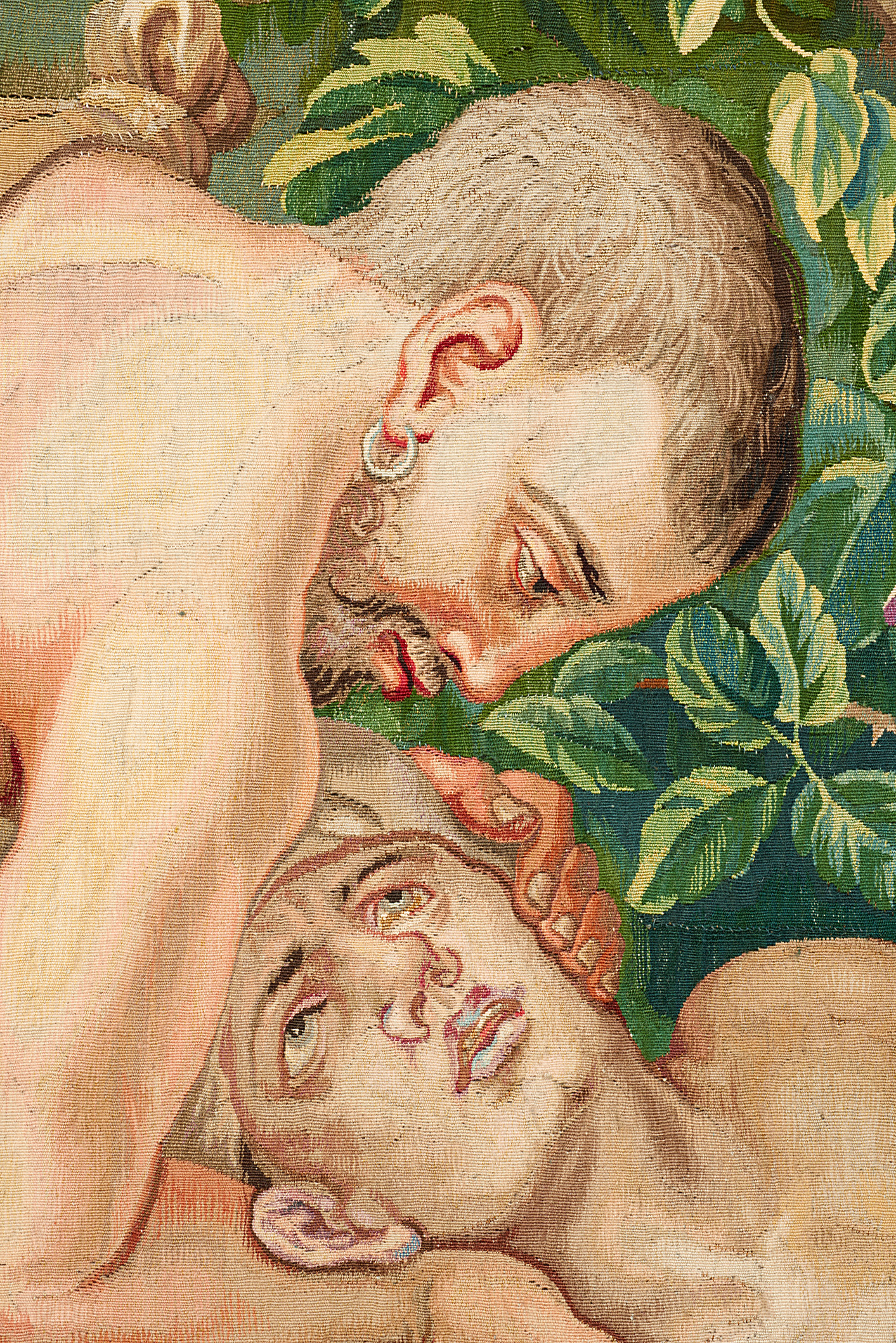
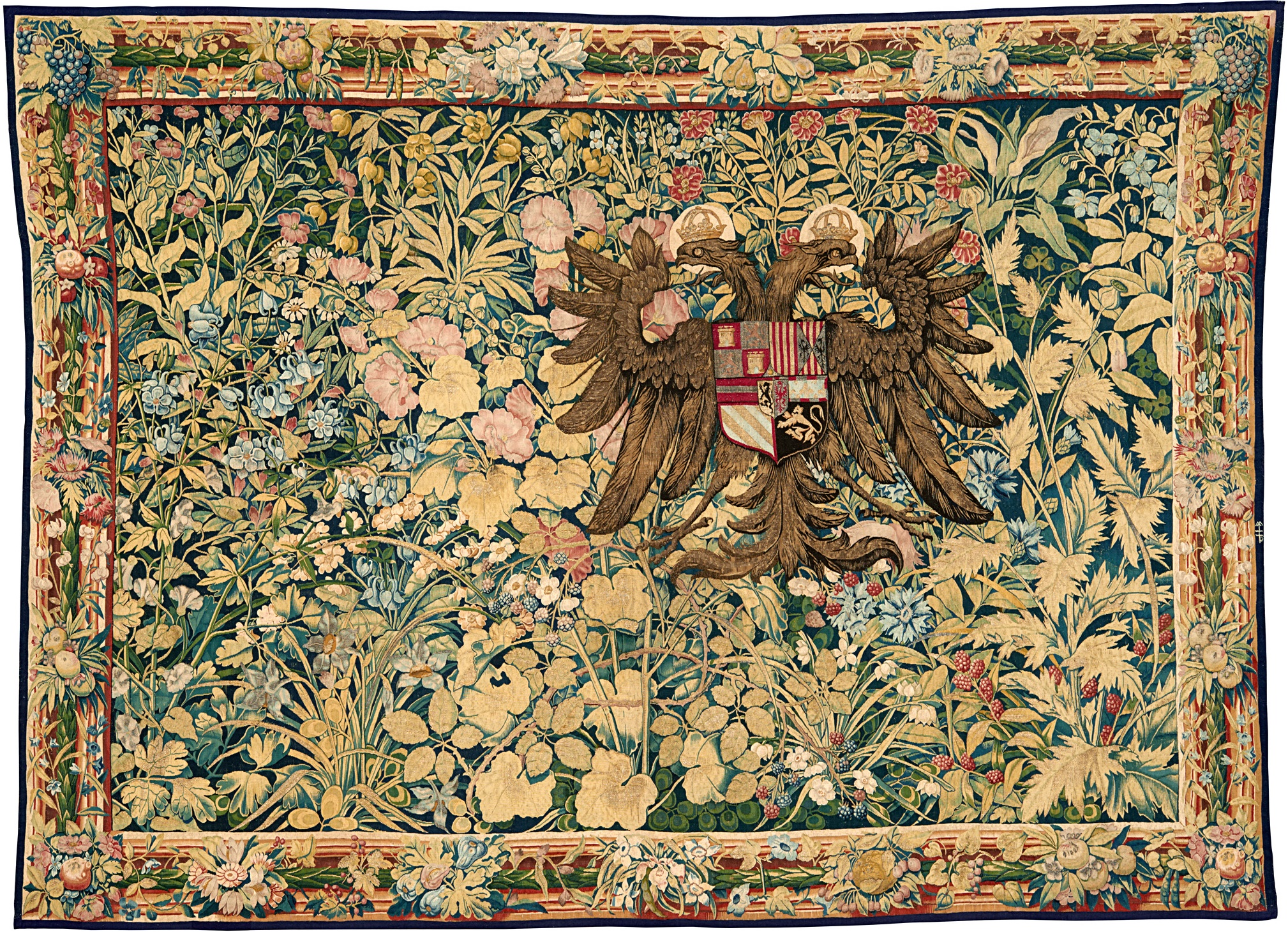
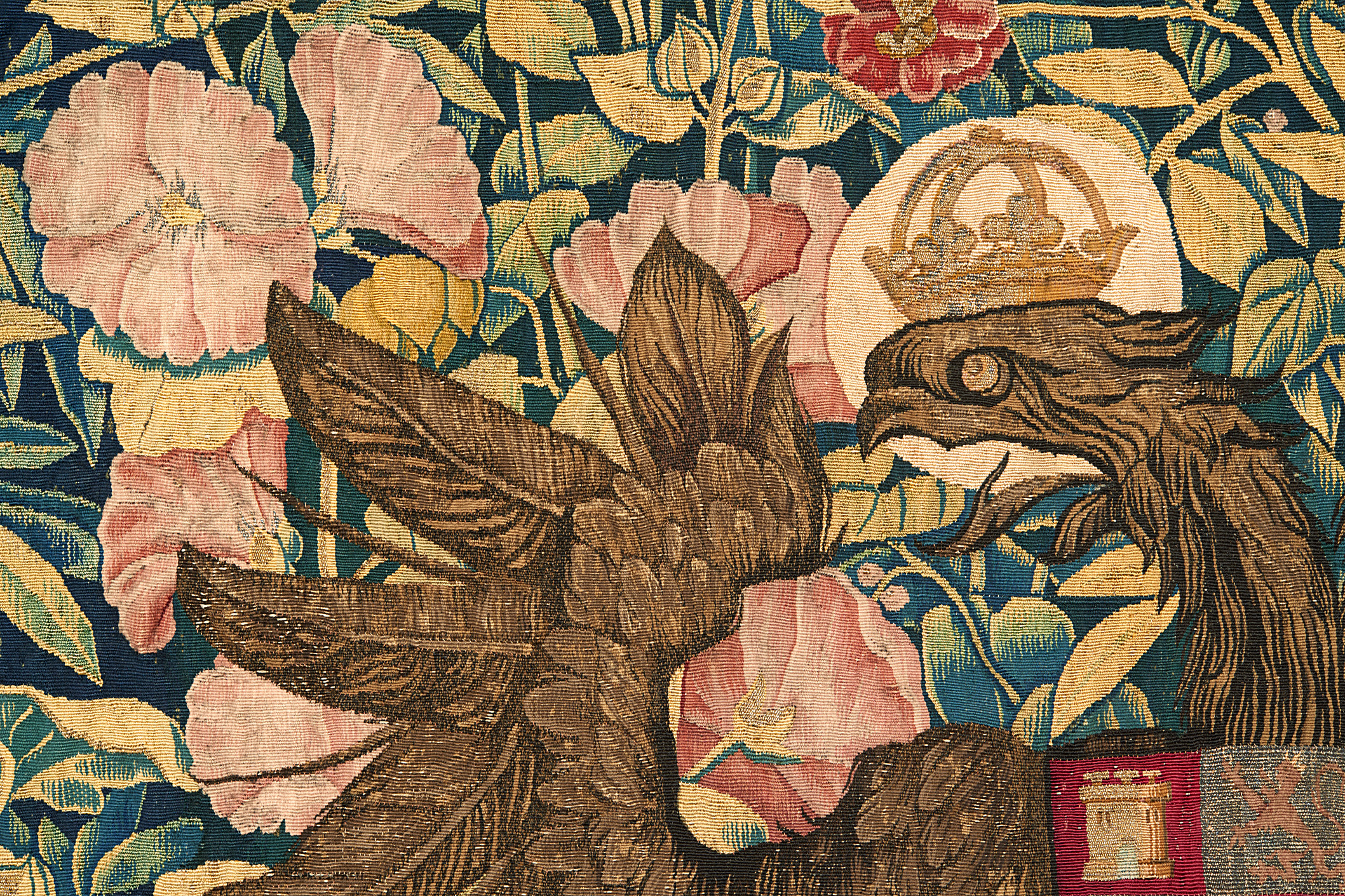
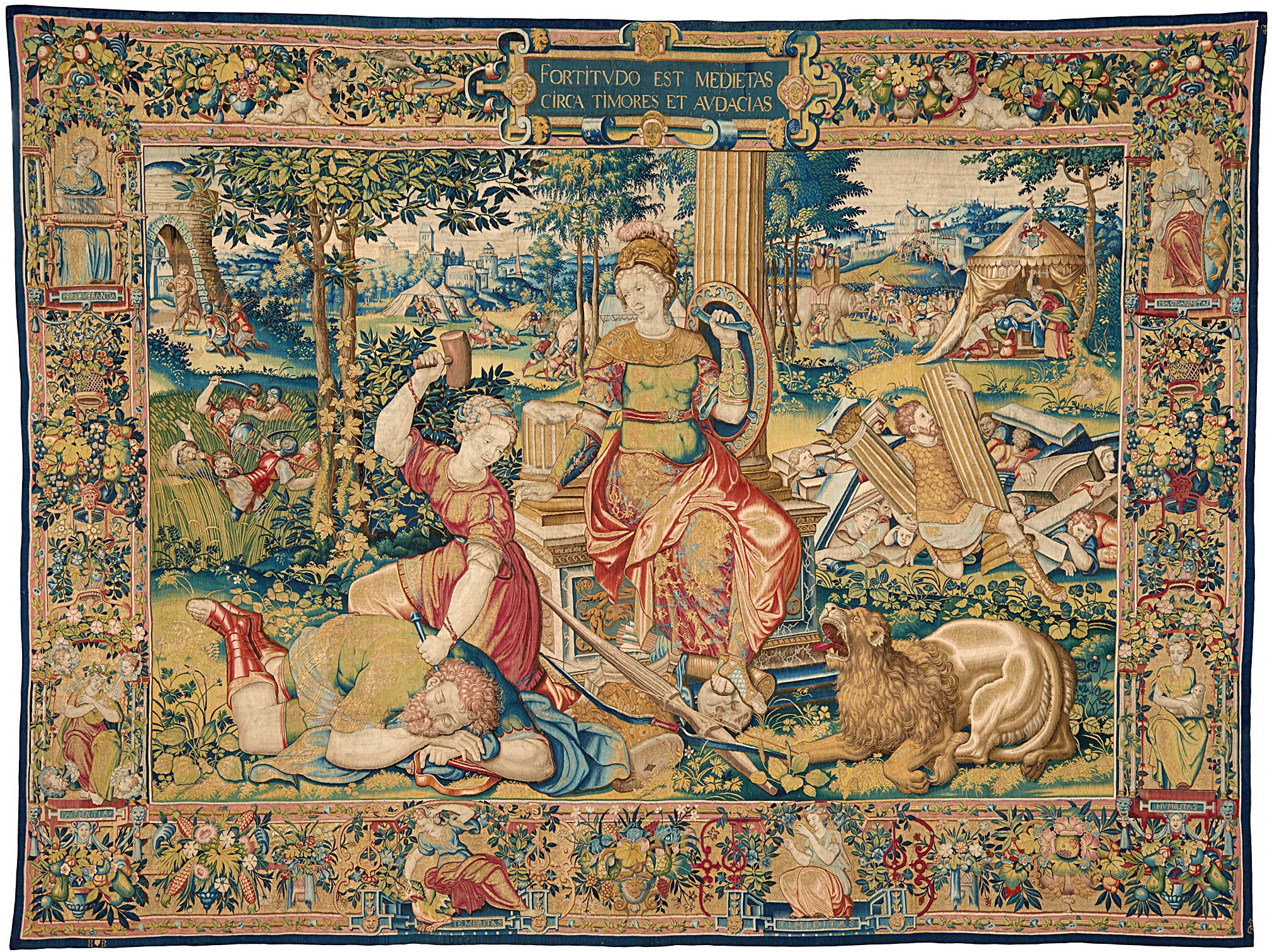
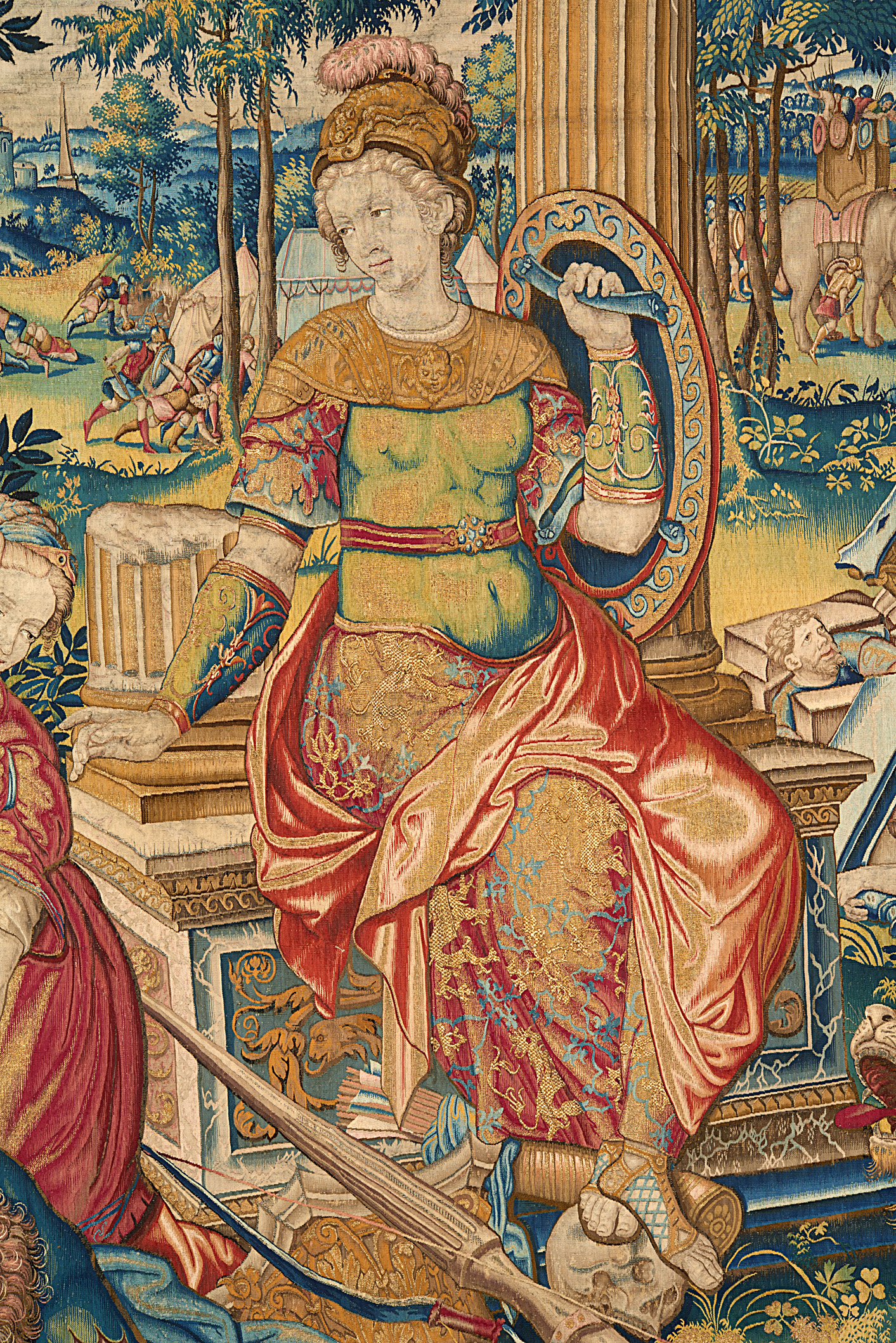
But let’s face, this post is really all about the textile porn. The Kunsthistorisches Museum has been kind enough to provide lovely pictures of some of the tapestries on display at the exhibition. I wish the photos of the complete tapestries are larger (it’s rare that even a high res picture of a monumental piece fully satisfies me), but coupled with extreme close-ups of details, you can get a real sense of the glorious materials and exquisite craftsmanship of Low Country Renaissance tapestries.

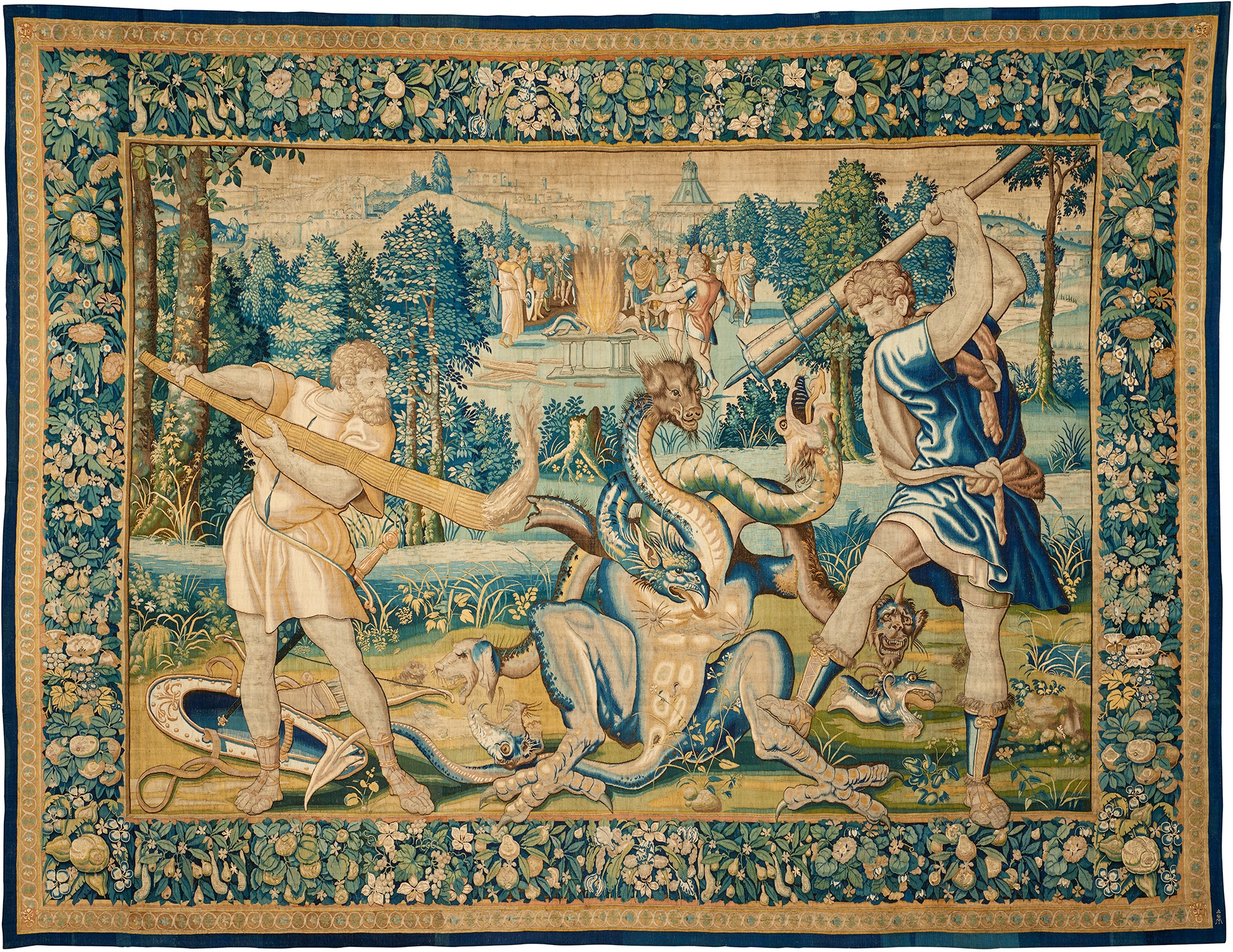
Heracles Decapitating the Lernaean Hydra, Tapestry from the series “The Labours of Heracles,” produced under Michiel van Orley, Oudenaarde, c. 1550/65, wool, silk; 418 x 544 cm. Kunsthistorisches Museum, Kunstkammer © KHM-Museumsverband.

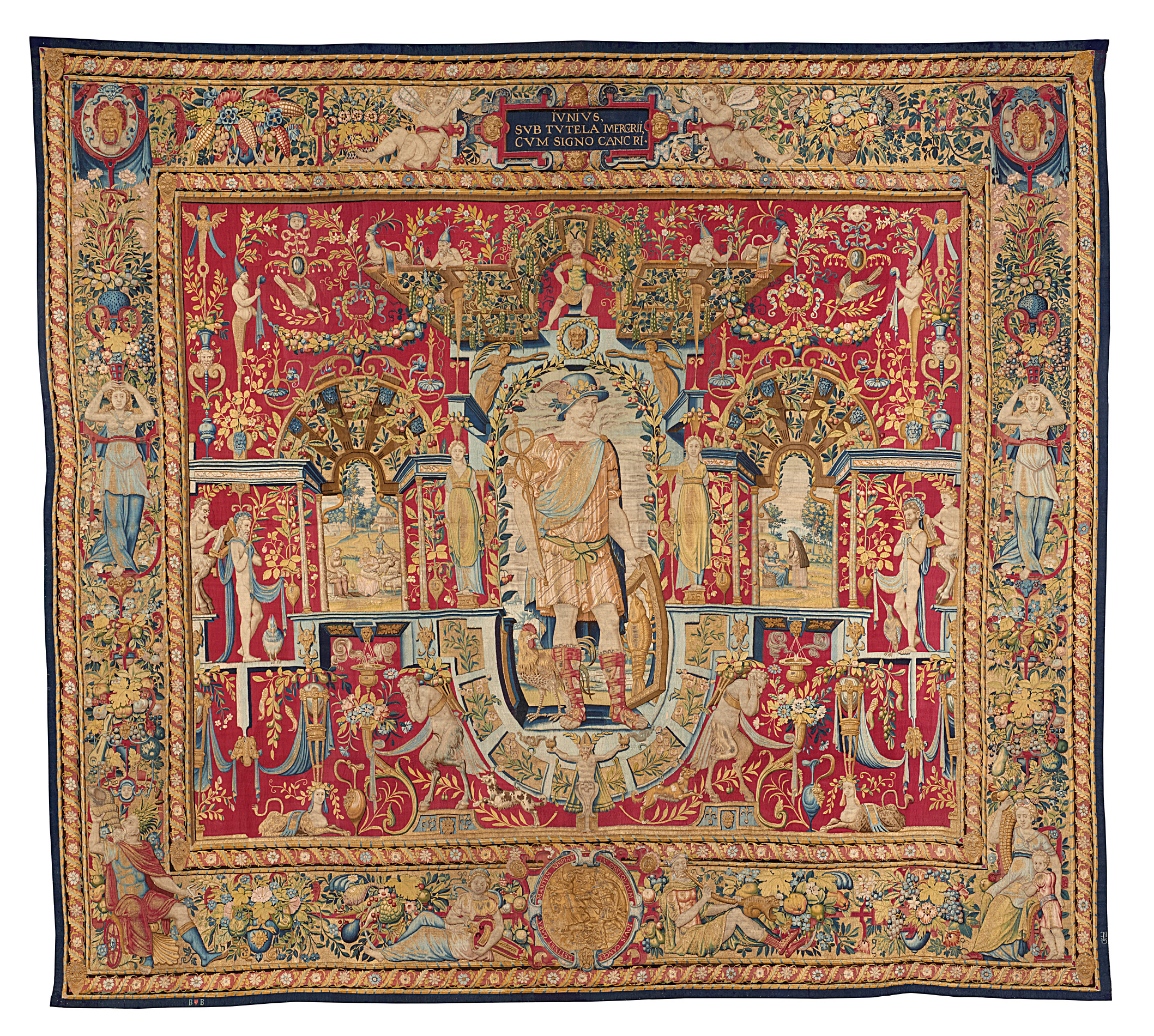
Mercury with the Zodiac Sign “Cancer” (June), Tapestry from the series “The Twelve Months,” produced in Brussels, c. 1560/70, wool silk, metal threads; 419 x 468 cm. Kunsthistorisches Museum, Kunstkammer © KHM-Museumsverband

An Unsuccessful Turkish Sally from La Goleta, Tapestry from the series “The Tunis Campaign of Emperor Charles V” design: Jan Cornelisz. Vermeyen (c. 1500 – 1559), 1545/46, produced under Jodocus de Vos, Brussels, between 1712 and 1721, wool, silk, metal threads,; 520 x 850 cm.Kunsthistorisches Museum, Kunstkammer © KHM-Museumsverband

Tapestry Featuring the Arms of Emperor Charles V, produced under Willem de Pannemaker, Brussels, c. 1540, wool, silk, metal threads; 197 x 273 cm. Kunsthistorisches Museum, Kunstkammer © KHM-Museumsverband

Fortitude, Tapestry from the series “The Seven Virtues,” design: Michiel Coxcie (c. 1499 – 1592), produced under Frans Geubels, Brussels, before 1549, wool, silk, metal; 352 x 469 cm. Kunsthistorisches Museum, Kunstkammer © KHM-Museumsverband

The Apostle Paul before King Agrippa, Tapestry from the series “Scenes from the Life of the Apostle Paul,” design: Pieter Coecke van Aelst (Aalst 1502 – 1550 Brussels), c. 1529/30; produced under Paulus van Oppenem, Brussels, c. 1535, wool, silk, metal; 423 x 453 cm. Kunsthistorisches Museum, Kunstkammer © KHM-Museumsverband

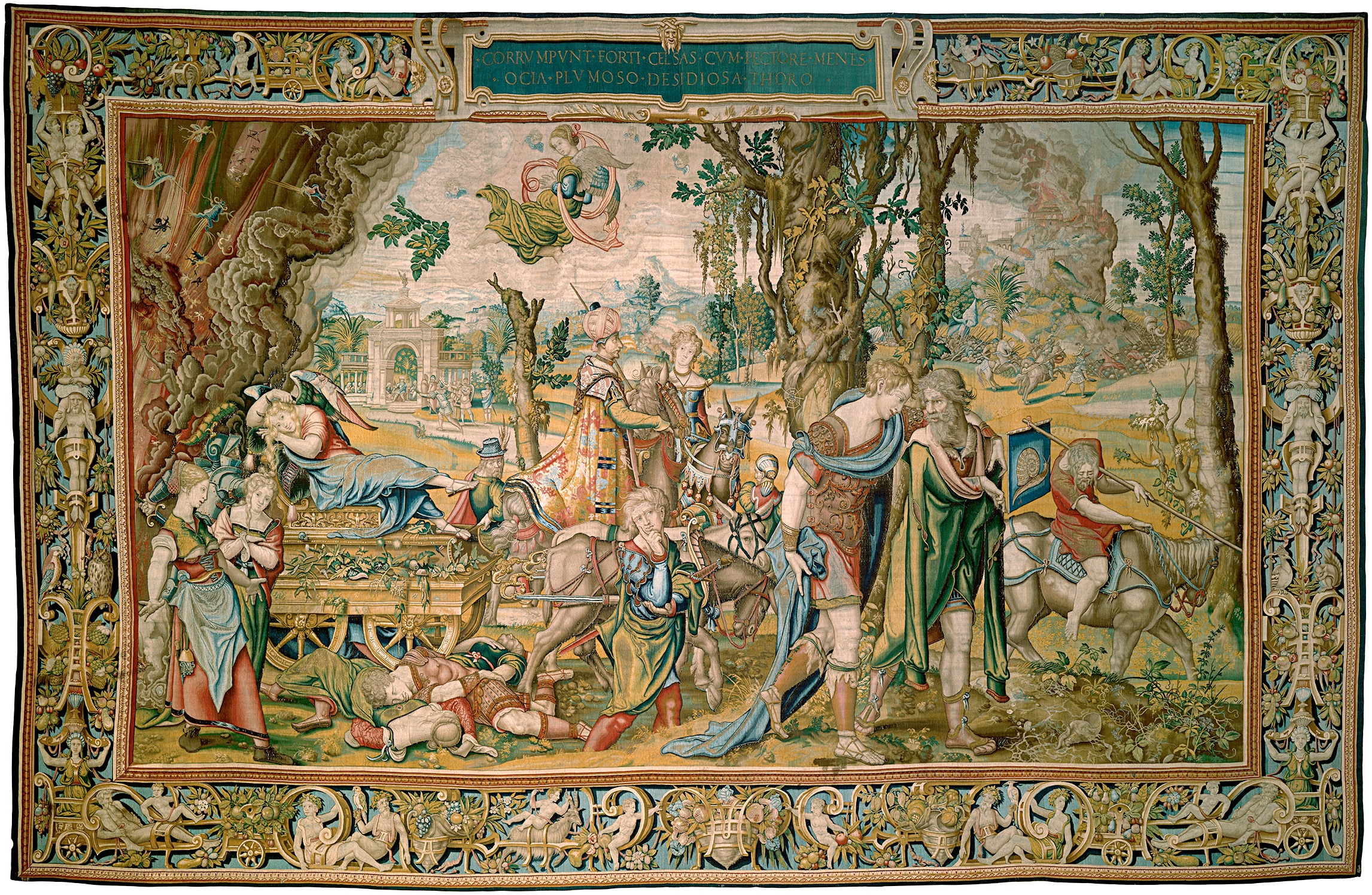
Acedia, Tapestry from the series “The Seven Deadly Sins,” design: Pieter Coecke van Aelst (Aalst 1502 – 1550 Brussels), c. 1533/34, produced under Willem de Pannemaker, Brussels, c. 1548/49, wool, silk, metal; 456 x 708 cm. Kunsthistorisches Museum, Kunstkammer © KHM-Museumsverband

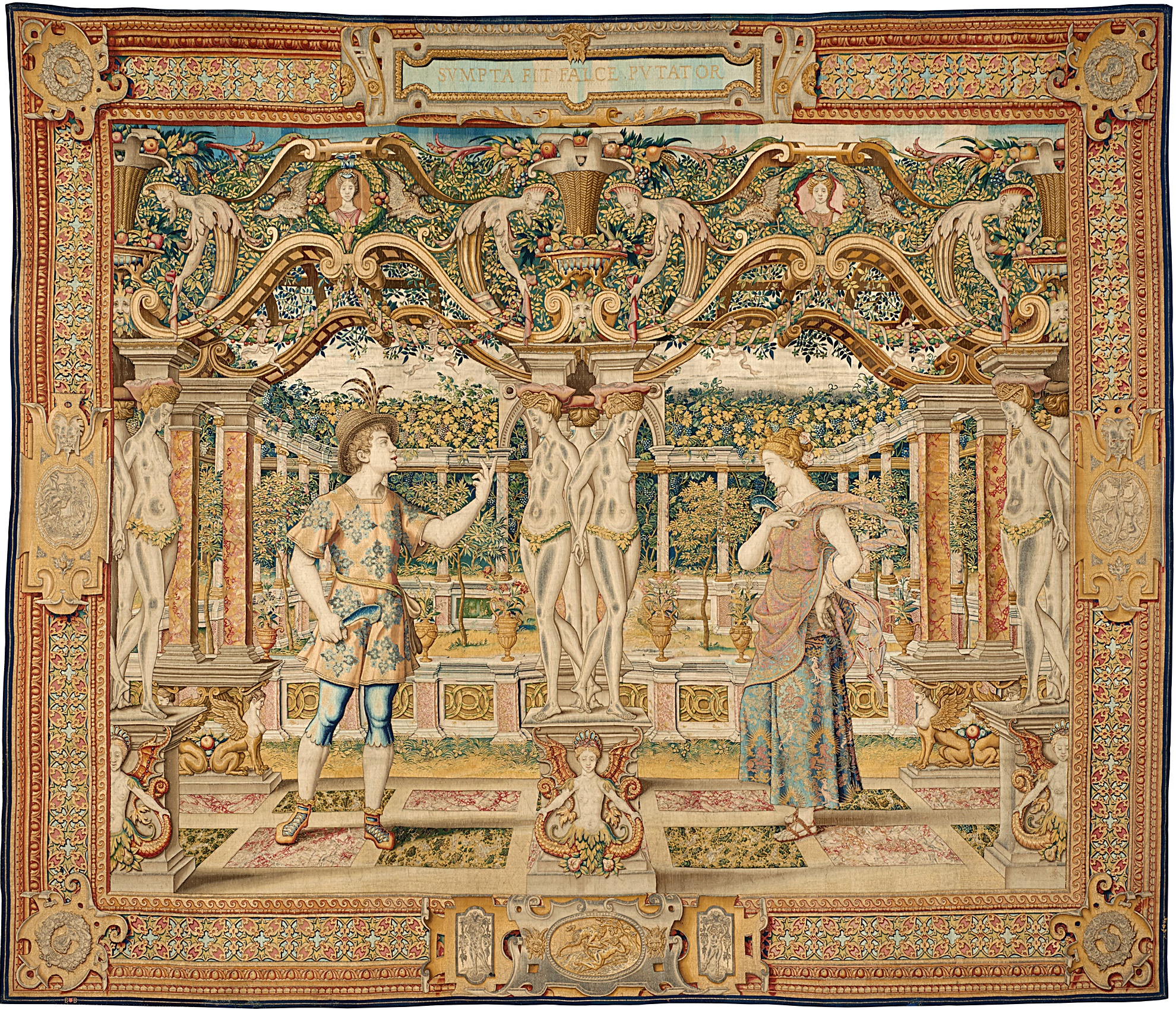
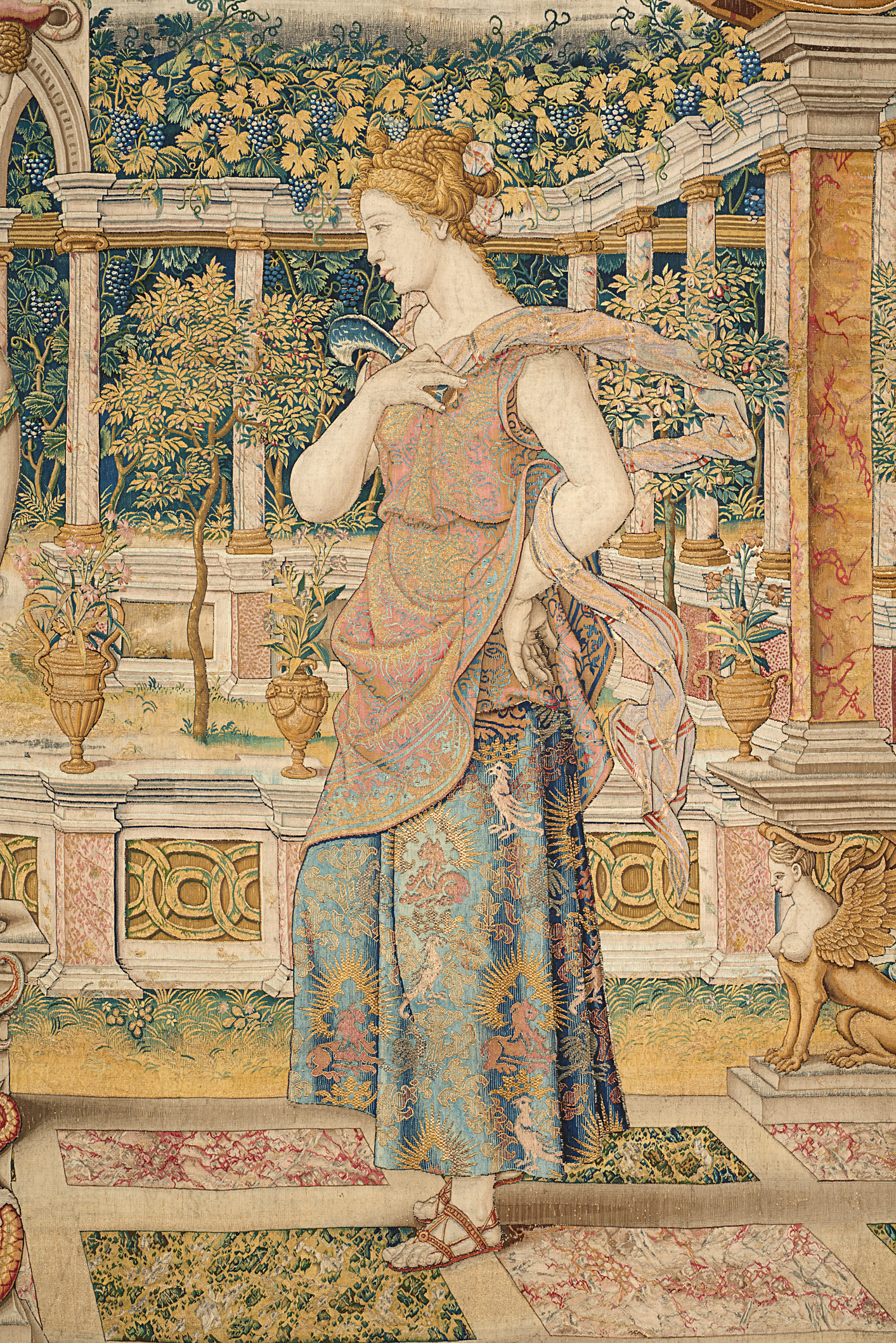
Vertumnus Approaching Pomona Disguised as a Vintner, Tapestry from the series “Vertumnus and Pomona after Ovid’s Metamorphoses,” design: Pieter Coecke van Aelst (Aalst 1502 – 1550 Brussels), Brussels, c. 1544, produced in Brussels, between c. 1548 and 1575, wool, silk, metal threads; 425 x 503 cm. Kunsthistorisches Museum, Kunstkammer © KHM-Museumsverband

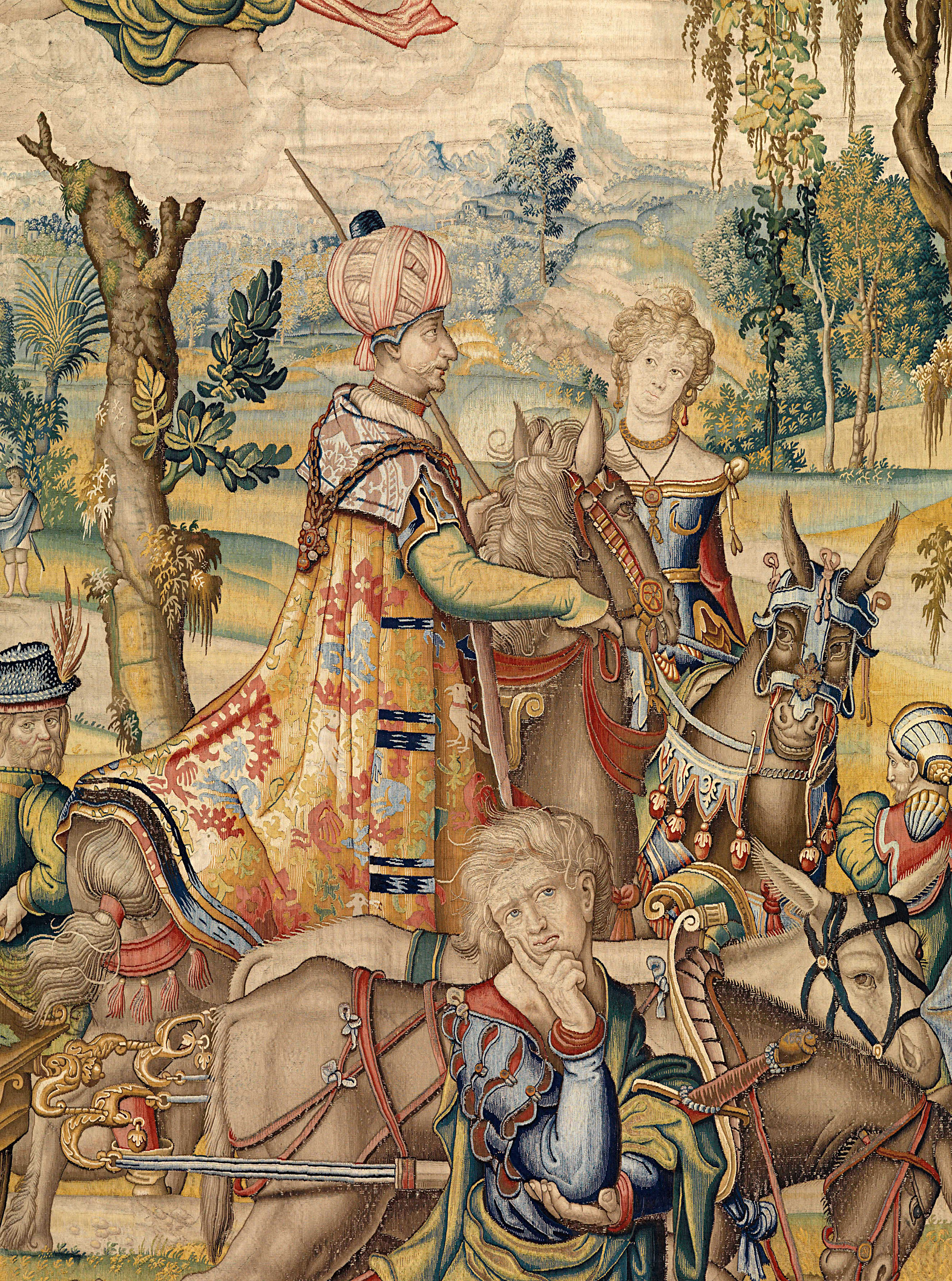
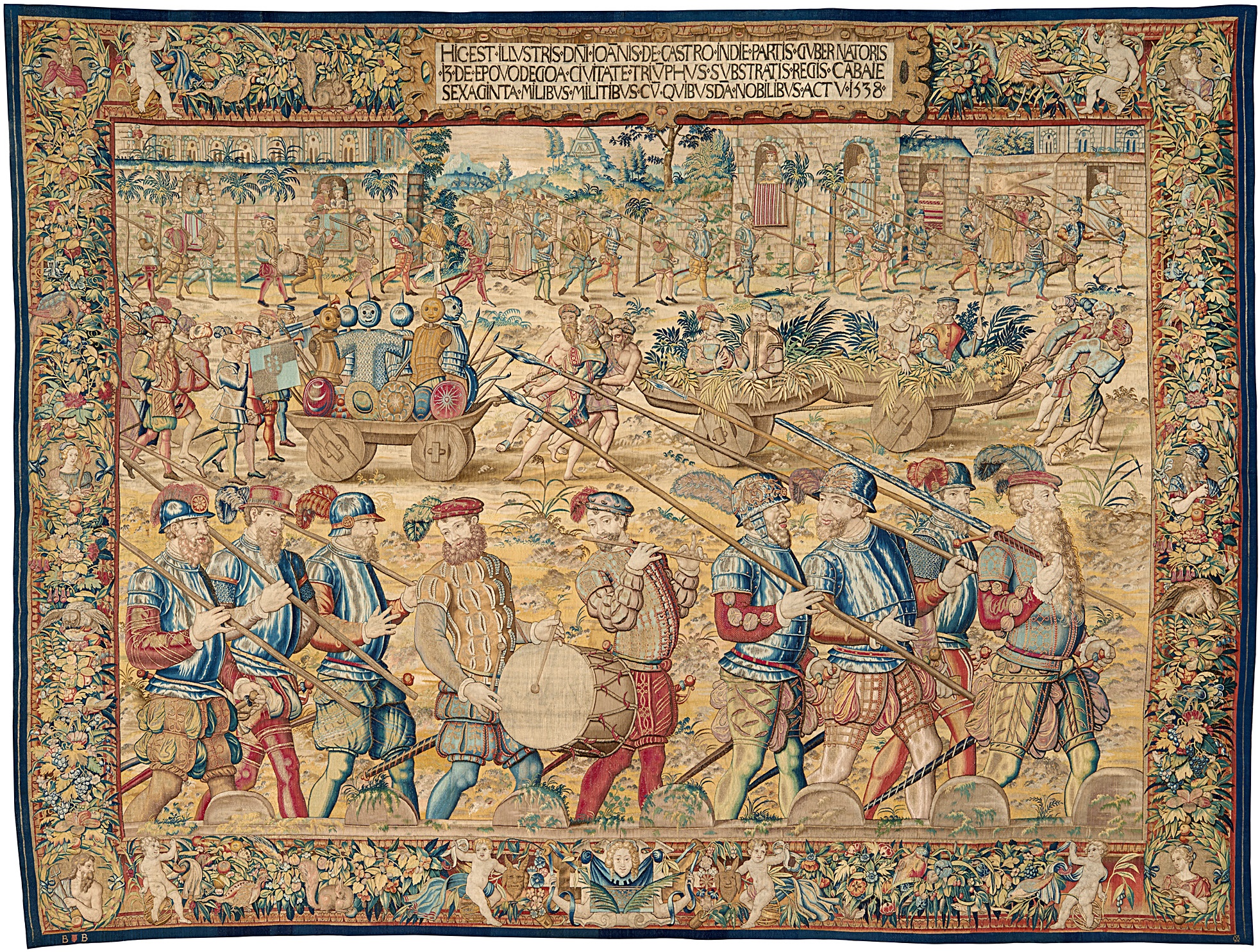
The Triumphal Procession Continued: Displaying Captured Arms and Armour, Tapestry from the series “Deeds and Triumphs of Dom Joao de Castro,” design: c. 1550/57, produced under Bartholomeeus Adriaensz (?), Brussels, after 1557, Wool, silk, metal; 354 x 473 cm. Kunsthistorisches Museum, Kunstkammer © KHM-Museumsverband

Throne Canopy, design: Hans Vredeman de Vries (1527 – c. 1606) and Michiel Coxcie (c. 1499 – 1592, figures), Brussels, c. 1561 (dated), wool, silk, metal threads; back: 419 x 271 cm. Kunsthistorisches Museum, Kunstkammer © KHM-Museumsverband

For more details about the tapestries and related artwork on display, read the exhibition booklet (pdf). Here’s an introductory video from the museum about the show. Keep your eye open for an amazing close-up view of gold metal threads around the 1:40 mark. Click the CC button for English subtitles.
[youtube=https://youtu.be/7RSHEseDr9o&w=430]

WWII vet gets back wallet lost in Austria in 1945

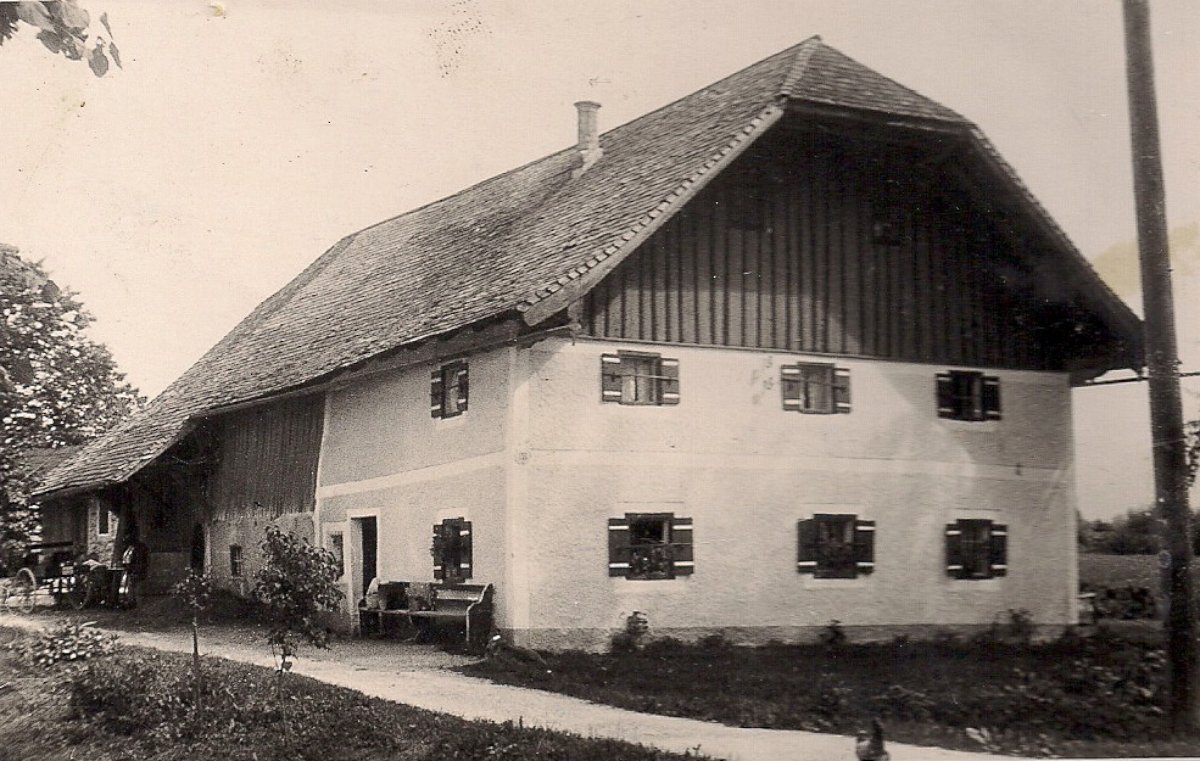
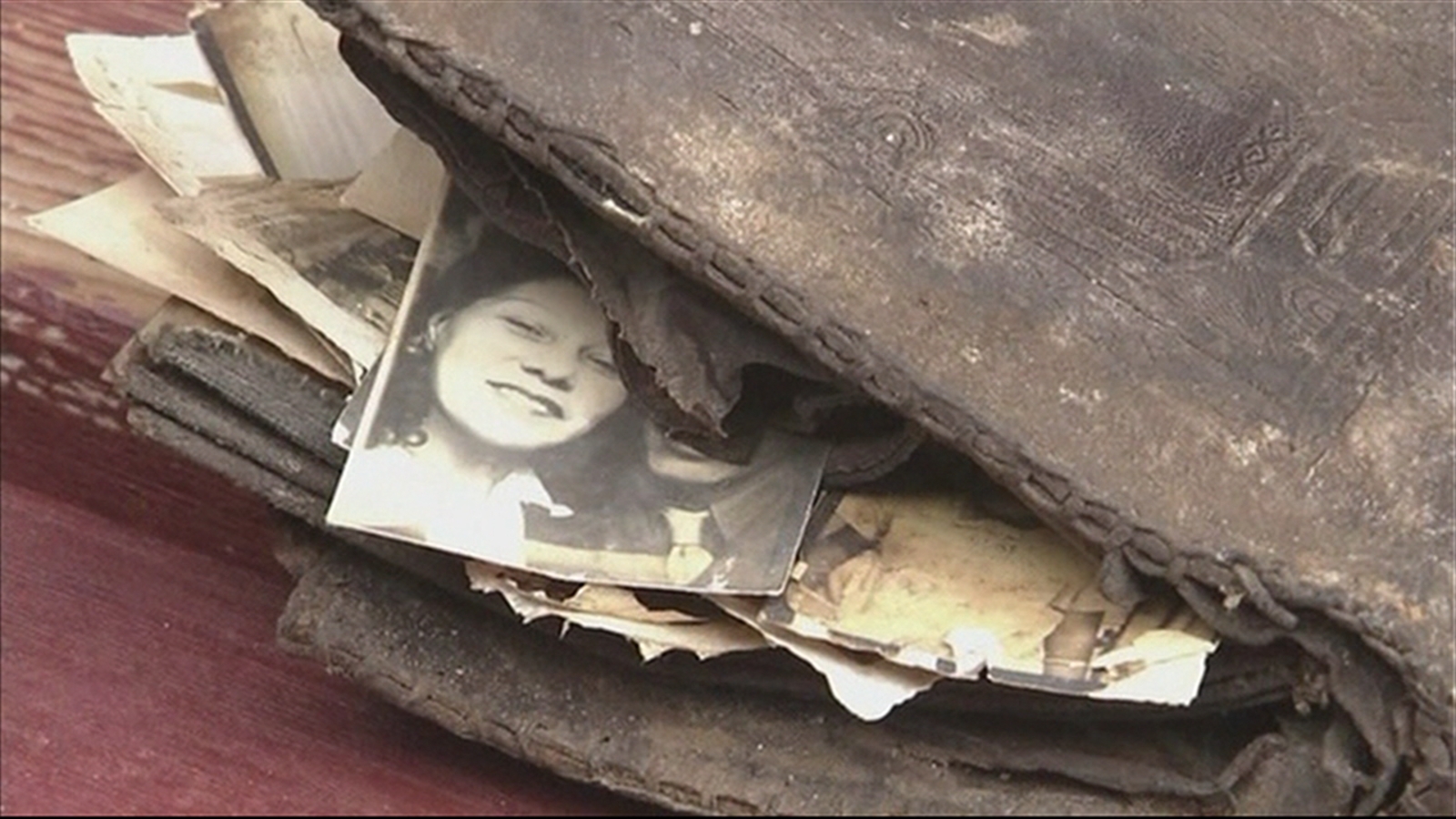
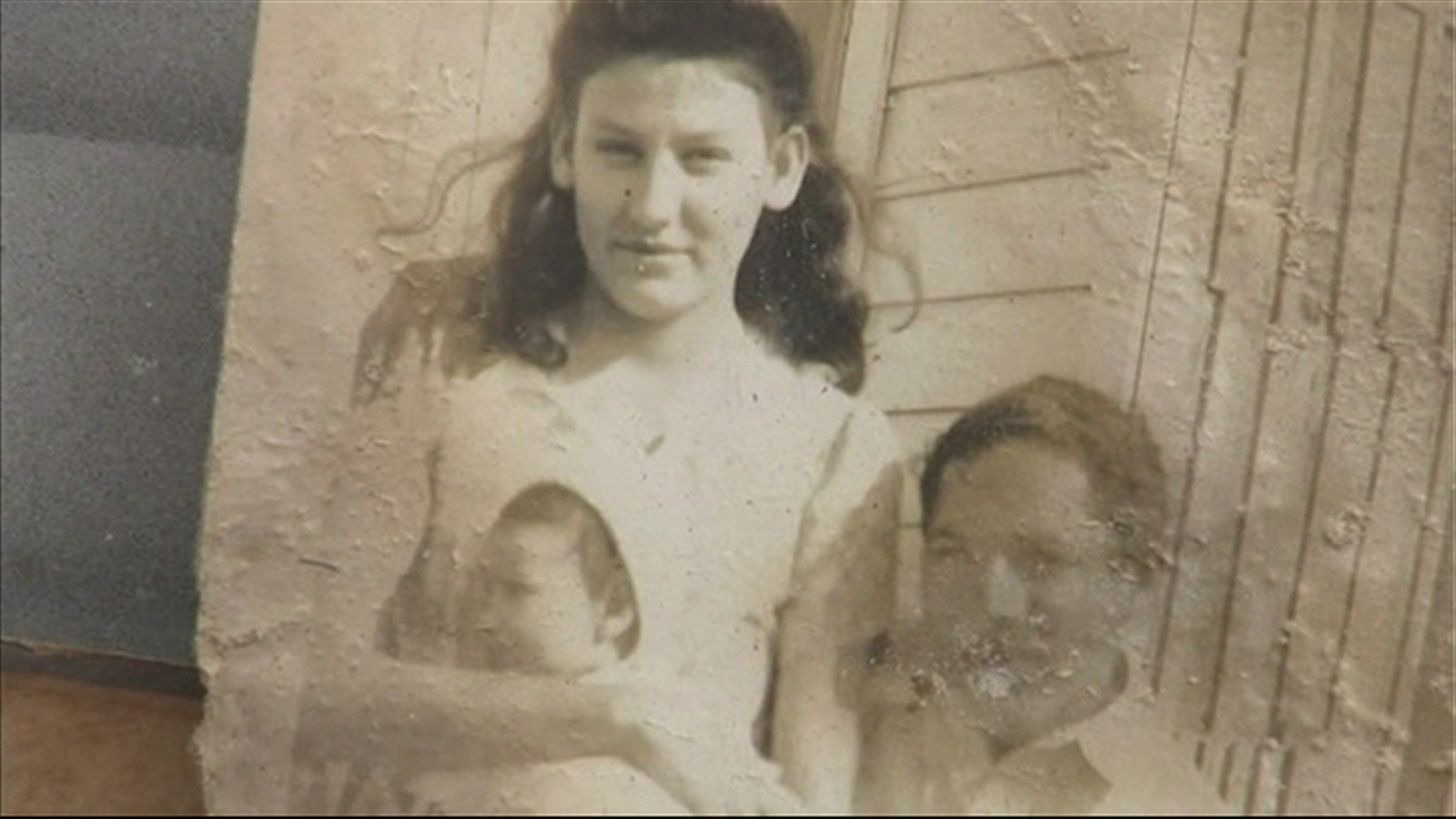
This June, Dr. Josef Ruckhofer was renovating the farmhouse near Salzburg his late grandfather had left him when he discovered an old leather wallet hidden underneath some floorboards. The wallet had no money in it but there were family pictures, some stamps, money order receipts and most fortunately, a military ID card which identified the wallet’s owner as Eligio Ramos of Texas. Ruckhofer searched through Texas telephone directories online but wasn’t able to find an Eligio Ramos. When he expanded the search to all of the United States, he found an Eligio Ramos born on the proper date (August 27th, 1923) at an address in Fresno, California.

On the morning of June 18th, Eligio Ramos, now 91 years of age and living in a Fresno VA hospital, was having breakfast with his 72-year-old daughter Sylvia Gonzalez when she opened a letter from Salzburg, Austria. It was from Dr. Ruckhofer asking if the Eligio Ramos at this address could be the one who left his wallet behind after spending a night in an Austrian farmhouse in 1945. He including some copies of the military ID card and family photos.

“I was having breakfast at home with my dad like our usual routine three days out of the week, and I was reading through the mail when I stumbled upon the letter,” Gonzalez, 72, said. “I said, ‘Dad! Look! Somebody found your wallet you lost in 1945 in Austria.”

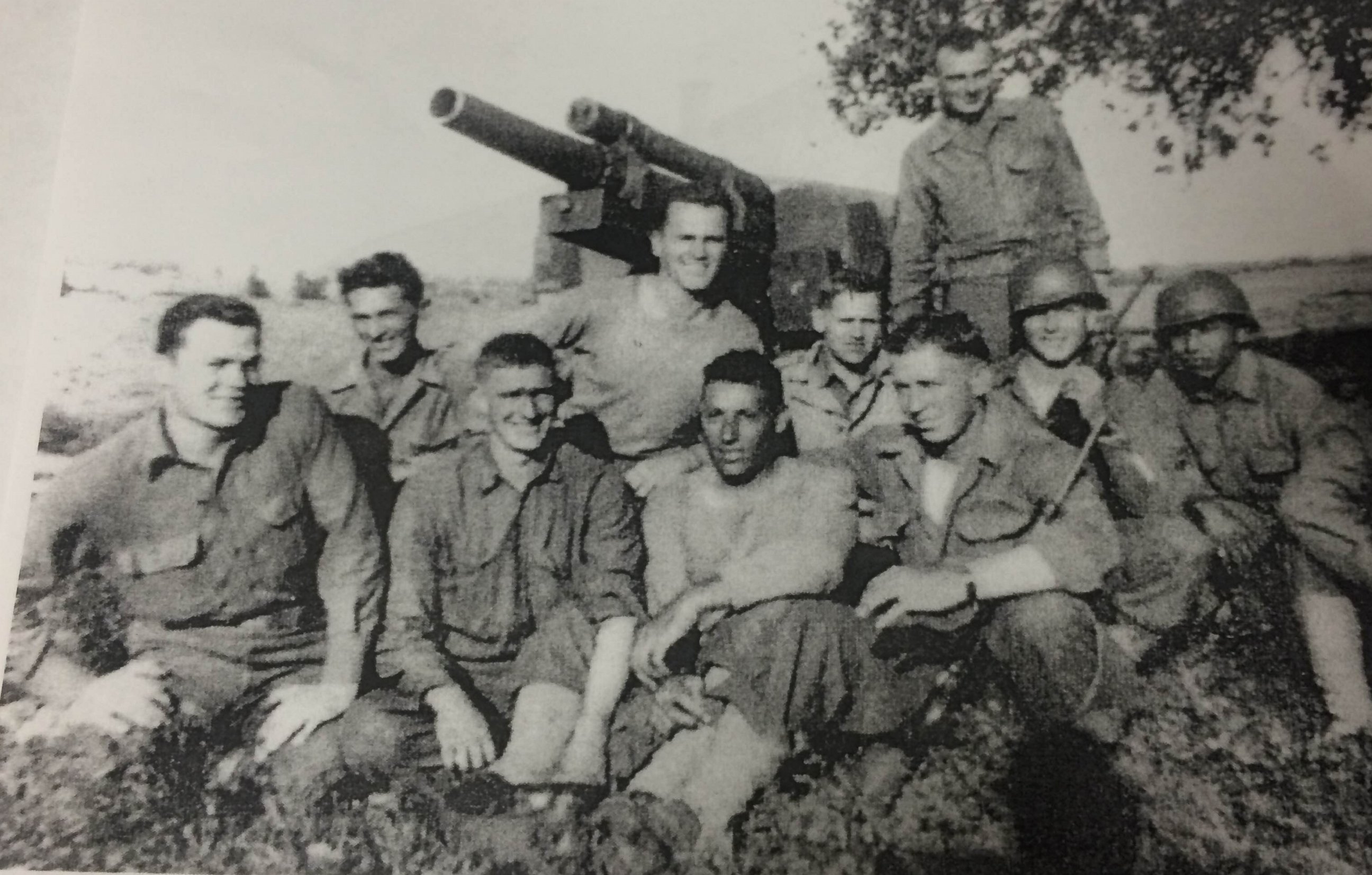
It turns out Eligio Ramos and his platoon of the 250th field artillery had been in the Salzburg area in 1945 while going town to town liberating prisoners in the slave labor subcamps of the vast Mauthausen-Gusen complex. Ruckhofer’s grandfather offered Ramos and his comrades a place to stay for the night. Ramos secreted his wallet under the floorboards but forget to retrieve it before the soldiers left the next morning. Over the decades he forgot about the wallet he’d lost in Austria, until it all came back to him the morning he received Dr. Ruckhofer’s letter. Eligio Ramos is now the only surviving member of his battalion.

Ramos’ son Rosando emailed Ruckhofer and confirmed he’d found the long-lost wallet’s owner. They made arrangements for the precious memento to be sent back to Eligio who was able to hold it in his hands for the first time in 70 years.

The wallet contains a “treasure-load” of family photos, including baby photos of relatives now in their 70s who showed up at a special reunion celebrating the lost-and-found at Fresno VA Hospital, [VA public affairs specialist Carmichael] Yepez said. […]

“Everything in the wallet is of sentimental value,” vet’s son said at the reunion.”He had a ton of pictures in his wallet in case he didn’t make it back. He wanted to have his family with him in his heart.”

The family plans to have the wallet and its contents framed so they can display this personal and historic treasure with pride on their walls.

Spanish Armada artifacts recovered off Irish coast

This April, the remains of a shipwreck began washing up on the long sandy beach of Streedagh Strand in County Sligo on the west coast of Ireland. A man walking along the beach found a weathered piece of wood and alerted authorities who identified it as the rudder from one of three ships from the Spanish Armada known to have wrecked off the Streedagh coast on September 21st, 1588. The wrecks were discovered in 15 to 30 feet of water in 1985 and have remained untouched, protected by layers of sand, on the seabed ever since. Severe winter storms over the past two years are believed to have dislodged some of the looser objects from the wrecks while the remains of the ships themselves are still safe under their cover of sand.

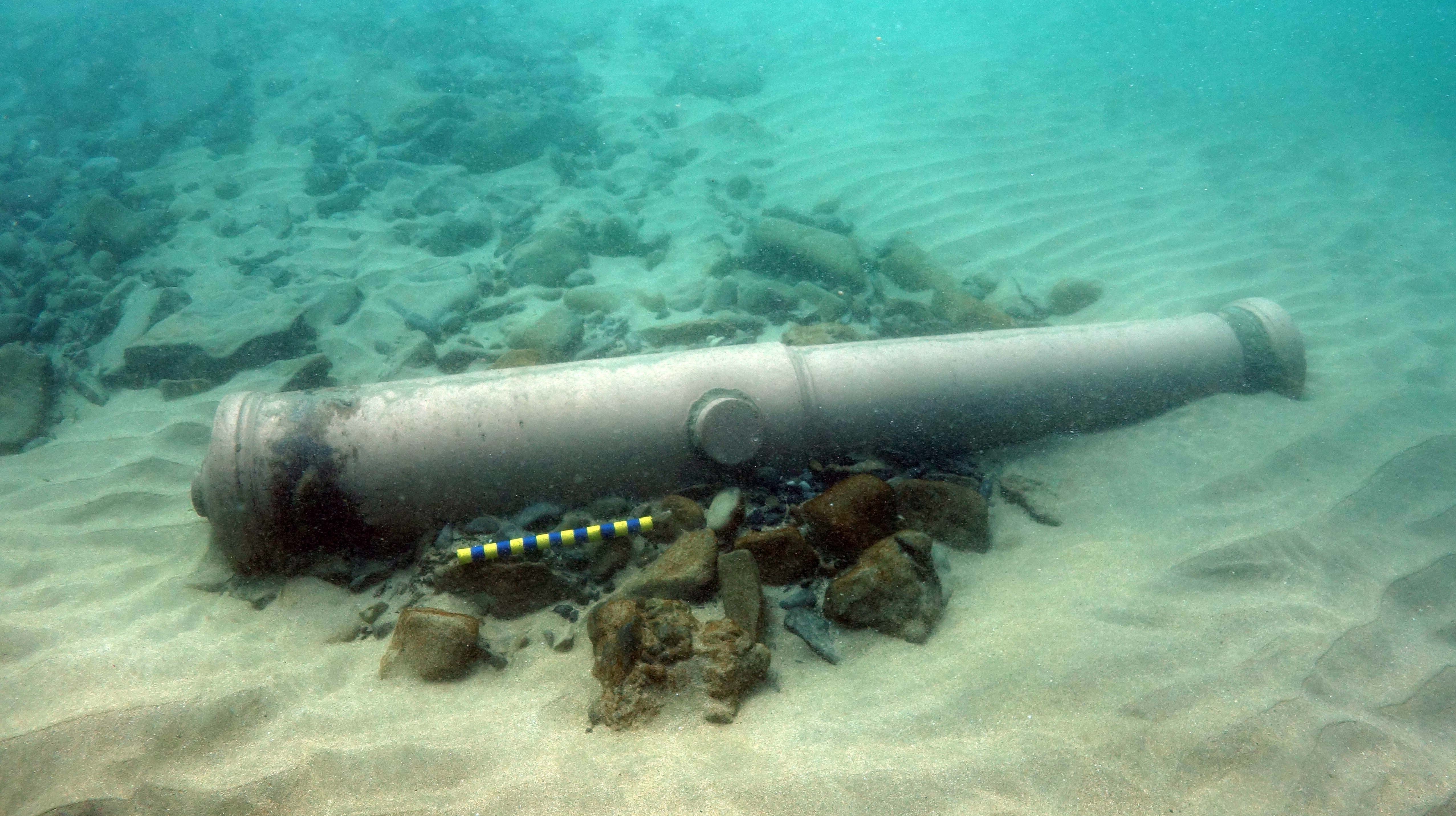
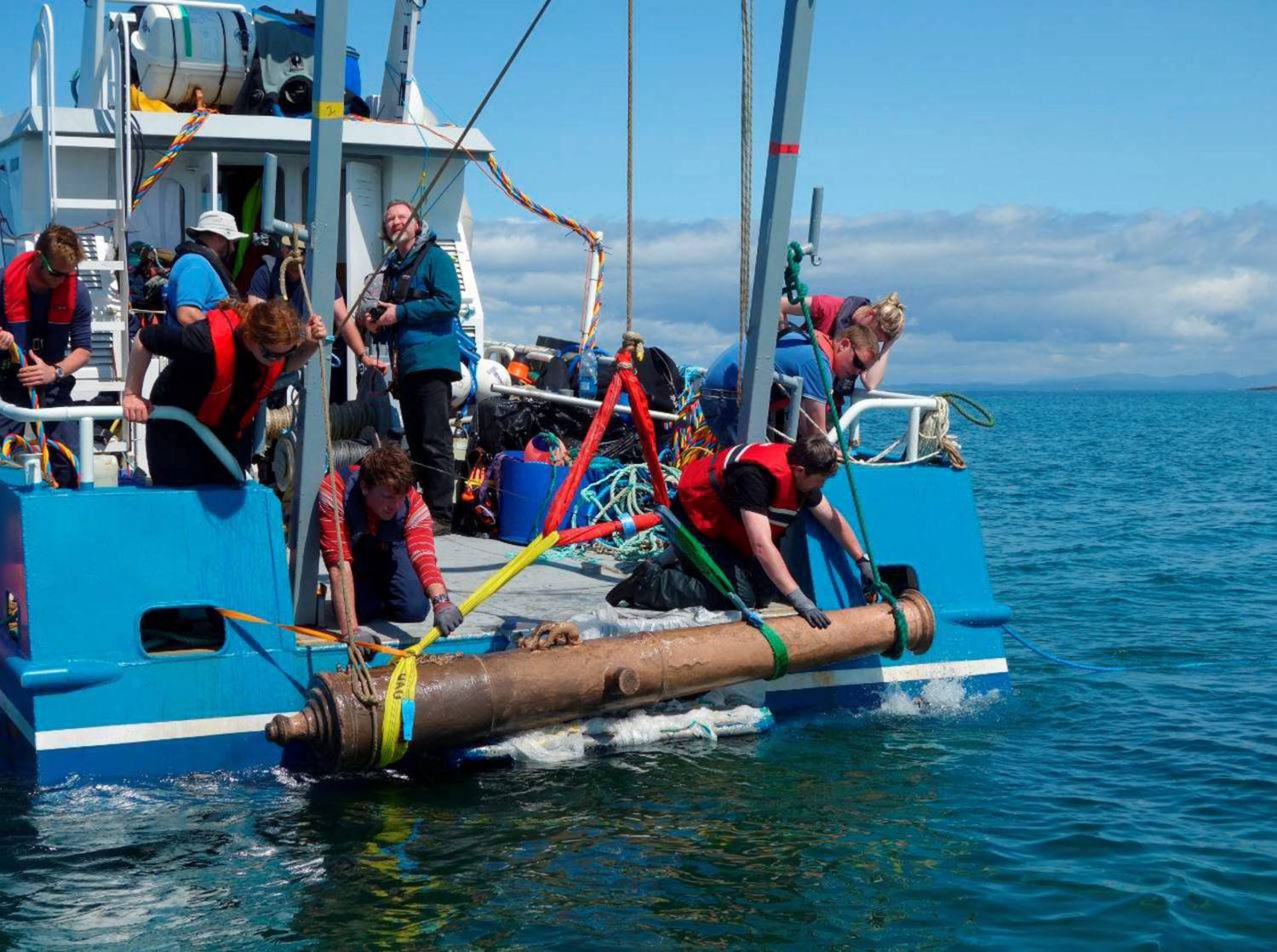
To ensure the artifacts would not be looted or washed out to sea, Ireland’s Department for Arts, Heritage and the Gaeltacht sent a team of divers to recover them from the seabed. Recovery operations ended last week and they were remarkably successful. Divers retrieved nine bronze cannons, a gun carriage wheel, cannon balls, a ship’s cauldron and numerous smaller objects. The artifacts appear to be in excellent condition and will be conserved by experts at the National Museum of Ireland for future display. The conservation process will take at least two years, however, so they won’t be on public view for a long time.

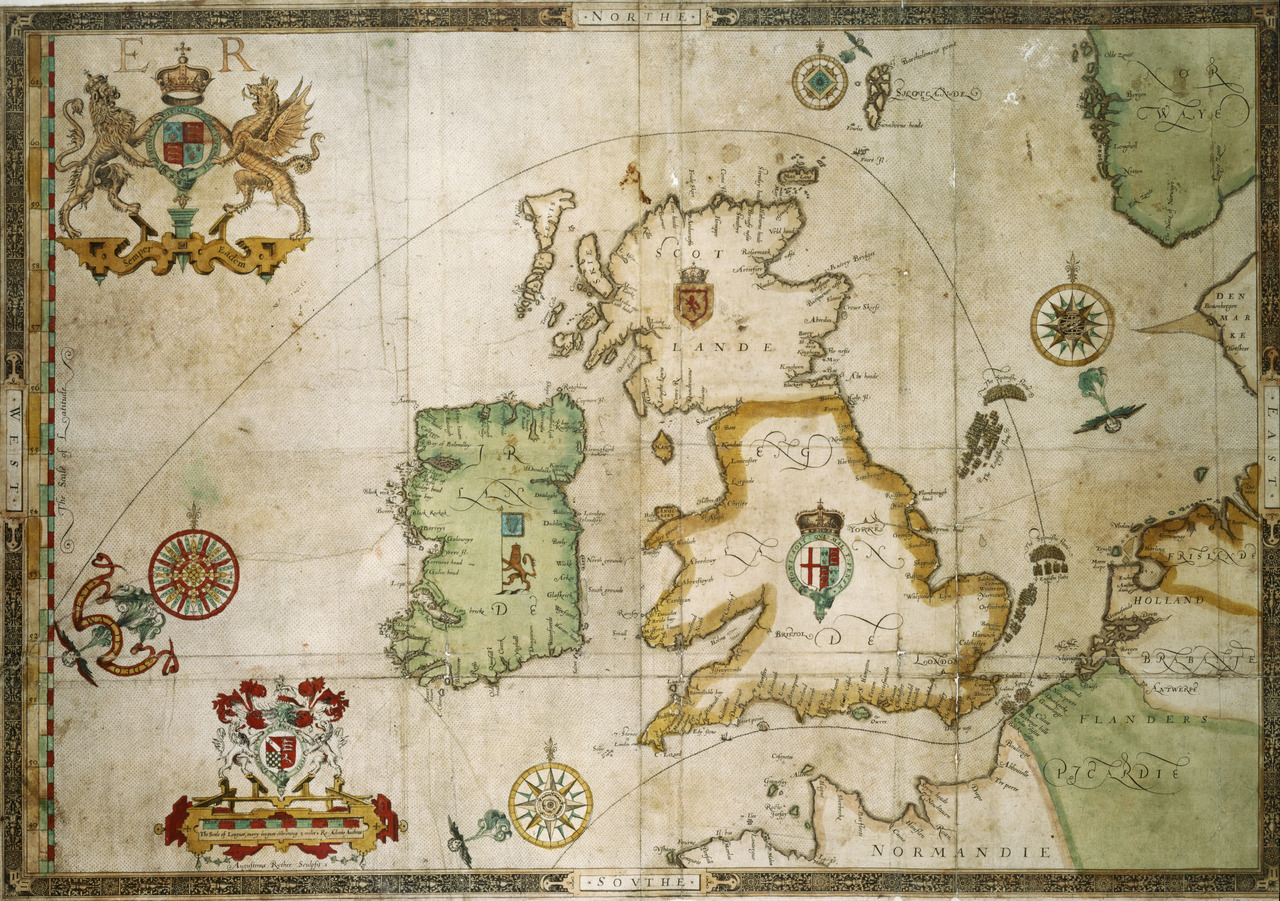
The coast of Ireland is something of a graveyard for the soldiers and sailors of the Spanish Armada. When King Philip II’s purportedly invincible fleet of 130 heavily armed ships was defeated by the English navy and its deadly fireships, the Armada fled north, sailing around the coast of Scotland and over to western Ireland into the North Atlantic where it was welcomed by a particularly brutal storm season. As many ships had had to cut away their anchors in their hasty flight from the English fireships in Calais, they were unable to drop anchor somewhere protected and weather out the storm. An estimated 5,000 men of the Spanish Armada died from drowning, starvation, disease and execution by English soldiers in Scotland and Ireland.

Around 1,000 sailors and soldiers were aboard the three ships that fell victim to one of those North Atlantic storms off of Streedagh. They were hugging the coast, trying to avoid the worst of the Atlantic storm, but the storm won, battering the ships so viciously that within an hour all three had sunk. Out of the 1,000 soldiers and crew, 140 men made it to shore only to be killed by the English garrison at Sligo. Others were killed by Only a handful of men managed to make it out alive, protected by local Irish chieftains who, although threatened by the English authorities with execution should they attempt to lend succor to any Spanish survivors, were more than glad to risk their lives to stick it to the hated (Protestant) English by supporting their (Catholic) enemies.

One of those survivors, Franciso de Cuellar, captain of the 24-gun galleon San Pedro, wrote of his experience in a letter, a remarkable testimony that has thankfully survived for our edification. A quick bit of context: he writes in the beginning of the letter of being condemned to death unjustly. That’s because he was accused of disobedience when the San Pedro broke from the rest of the fleet in the North Atlantic to get some sleep and repair his ship, was sentenced to die and transferred to the galleon San Juan de Sicilia for execution. They never got around to killing him before the storm cast him ashore at Streedagh with 300 other Armada survivors, most of whom were not survivors for long. With all his talk of savages (the native Irish) and misadventure after misadventure, it reads like something from Gulliver’s Travels.

The enemies and savages, who were on the beach stripping those who had been able to reach it by swimming, did not touch me nor approach me, seeing me, as I have said, with my legs and hands and my linen trousers covered with blood. In this condition I proceeded, little by little, as I could, meeting many Spaniards stripped to the skin, without any kind of clothing whatsoever upon them, chattering with the cold, which was severe, and thus I stopped for the night in a deserted place, and was forced to lie down upon some rushes on the ground, with the great pain I suffered in my leg. Presently a gentleman came up to me, a very nice young fellow, quite naked, and he was so dazed that he could not speak, not even to tell me who he was; and at that time, which would be about nine o’clock at night, the wind was calm and the sea subsiding.

His silent companion died soon thereafter, but Cuellar, thanks to the help of “savages” and Irish lord Sir Brian O’Rourke of Leitrim who would in 1591 be executed for lending aid to Spanish Armada refugees, eventually made it to Scotland and thence to Flanders and home. Not before surviving one more shipwreck, though, when his vessel was attacked by the Dutch off the coast of Dunkirk.

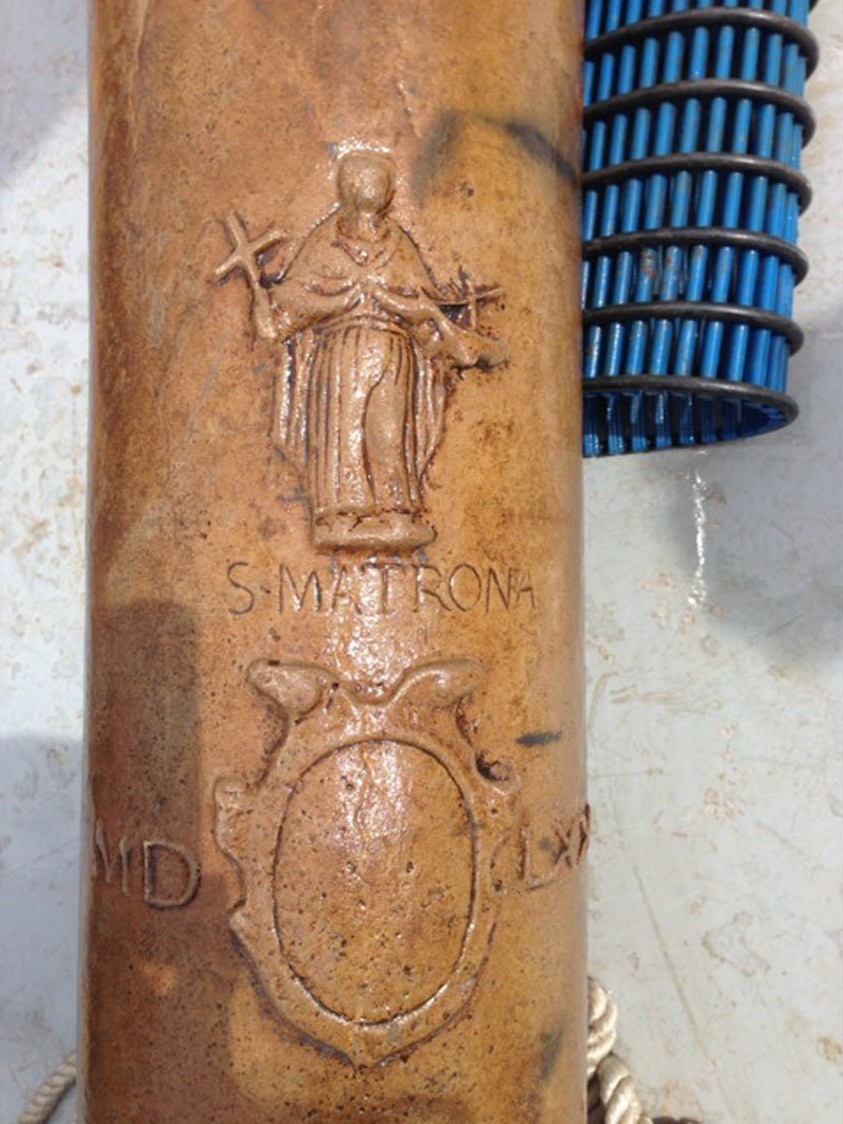
Two of the Streedagh shipwrecks were identified in the 80s as the 25-gun La Lavia and the 18-gun Santa Maria De Vison, and the third was thought to be merchant vessel La Juliana commandeered by King Philip II for his fleet and outfitted as a 32-gun warship, but there was some question that it might be Cuellar’s galleon the San Pedro. The recently recovered artifacts prove that it is indeed what remains of La Juliana. One cannon in particular is the smoking gun, so to speak. The bronze cannon is decorated with the image of Saint Matrona of Barcelona, a saint venerated in Barcelona and in other towns of Catalonia, and is stamped with a date of 1570. La Juliana was built near Barcelona in 1570.